
EPISODE · Jan 30, 2026 · 41 MIN
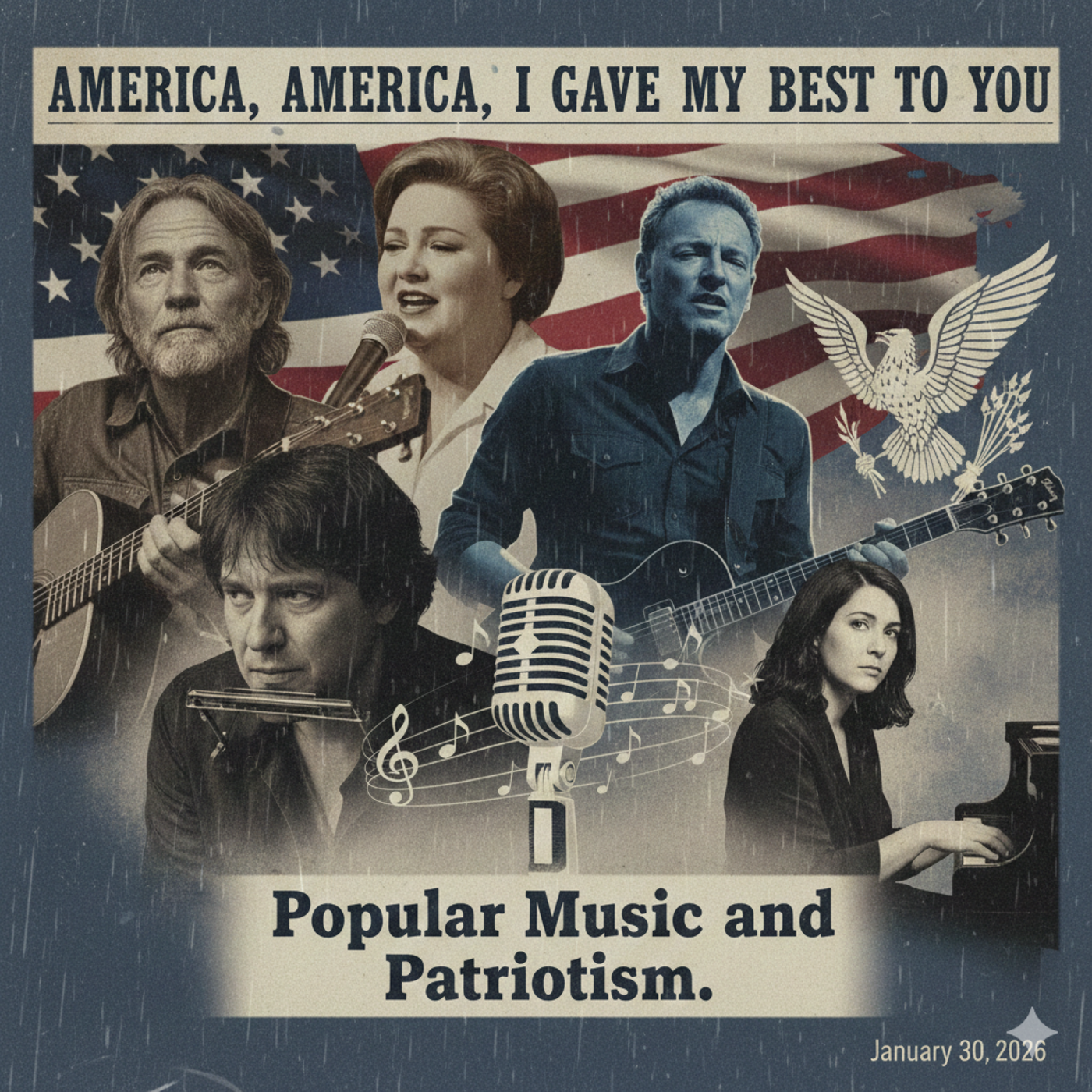
Episode 451: America Today - Patriotsim & Popular Music
from Pacific Street Blues & Americana · host Rick Galusha
Understanding "Streets of Minneapolis" With Springsteen's latest single reaching #1 in 19 countries, we're witnessing a significant cultural moment. I'm proposing an exploration of the controversial, "Streets of Minneapolis"—examining it within a powerful American musical tradition that stretches back over eight decades. A Tradition of Musical Commentary This story begins in 1944, when Woody Guthrie (not Arlo—Woody was his father) wrote "This Land Is Your Land" as a response to Irving Berlin's "God Bless America." What seemed like competing patriotic songs represented something deeper: different visions of what it means to love your country. Berlin offered celebration; Guthrie offered reflection—including verses about inequality and hardship that rarely get sung today. Guthrie embraced a form of patriotism rooted in the Declaration of Independence—one that believes loving your country includes acknowledging where it falls short of its ideals. Writing during World War II and the aftermath of the Depression, Guthrie demonstrated how music could both honor and challenge the nation simultaneously. How Music Reaches Us Differently That approach influenced Pete Seeger, Joan Baez, and Bob Dylan—artists who discovered that songs could communicate social commentary to audiences who might not engage with traditional political discourse. A three-minute song on the radio could spark reflection in ways other media couldn't. Consider "Born in the U.S.A." How many of us have heard it as a celebration when Springsteen wrote it, in Guthrie's tradition, as a pointed critique of how America treats its veterans? Forty years later, it's still frequently misunderstood—even used at political rallies in ways that contradict its message. This pattern raises important questions about how we engage with art. When Music Captures a Moment In 1970, after the Ohio National Guard killed four students at Kent State University, Neil Young wrote "Ohio" almost immediately. Released by Crosby, Stills, Nash & Young within weeks, the radio-friendly song brought that tragedy into millions of homes, forcing a national conversation. What "Streets of Minneapolis" Asks of Us "Streets of Minneapolis" follows in this tradition—echoing "Ohio" across five decades. Like those earlier songs, it's not primarily about comfort; it's about bearing witness and prompting reflection. The question worth considering: Will we engage with what the song is actually saying, or will it become another anthem whose meaning gets lost over time? An Invitation to Listen Thoughtfully. An opportunity to make your own decisions. This isn't about taking political sides. It's about recognizing a form of patriotism that asks something of us—the kind that believes loving your country includes honest examination of difficult moments. Hosts: Rick Galusha & Mike Olson Kate Smith / God Bless America (1939) Woody Guthrie / This Land is Your Land (1940) Carter Family / The World's On Fire (1925) Bruce Springsteen / Born in the USA (1984) [Nebraska] Neil Young / Ohio (1970) Bruce Springsteen / Streets of Minneapolis (2026) Norah Jones / American Anthem
Embed this episode
Ready to play
Episode 451: America Today - Patriotsim & Popular Music
No transcript for this episode yet
Similar Episodes
No similar episodes found.