
EPISODE · Nov 10, 2025 · 18 MIN
Episode 5: French Polynesia 1940
from History of Elections Podcast · host Mathew Nicolson
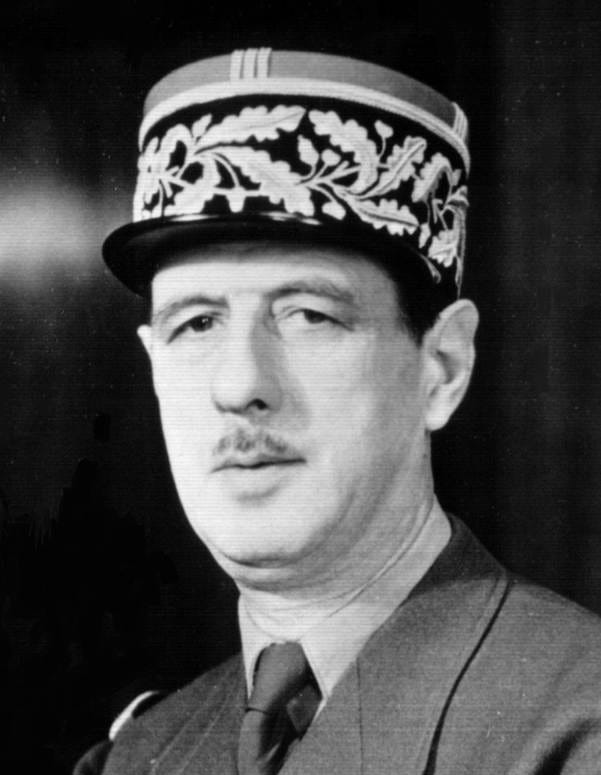
Transcript:Hello and welcome to episode 5 of the History of Elections podcast, where we will travel back in time to 1940, when a generally less well known referendum was held in the colony of French Polynesia to decide its loyalty during the Second World War.August, 1940. The Second World War raged. Italy conquered British Somalia; Britain endured what came to be known as the “hardest day” in the four-month aerial Battle of Britain, in which both sides lost around 60 fighter planes over the course of a single day; the British Royal Air Force in turn conducted the first air raid of Berlin during the war—it would not be the last; and two British Royal Navy destroyers were sunk in a minefield off the Dutch coast, causing the loss of 300 lives. Elsewhere, Lithuania, Latvia and Estonia were formally annexed into the Soviet Union, seven weeks after being invaded; the Second Vienna Award saw Romania forced by Germany and Italy to cede parts of Transylvania to Hungary; British film stars Laurence Olivier and Vivien Leigh were married in California; and, in French Polynesia, French citizens prepared to vote on whether to give their support to the Free French Forces led by Charles de Gaulle.The islands that comprise French Polynesia—121 in total, most notably the 14 Society Islands of Tahiti, Mo’orea, Raiatea, Bora Bora and Huahine—have been inhabited for 1,000 to 2,000 years. The islands were first settled by the Polynesian people during their migrations across the Pacific Ocean, and European explorers first made contact with the islanders in the sixteenth and seventeenth centuries. At this point, the islands were governed in a decentralised and varied system of chieftains with monarchical and theocratic traditions. In Tahiti, the power of a class of priests appears to have grown over the chieftains throughout the pre-colonial period, and there is evidence of conflict between adherents of different Gods.Spanish, British and French missionaries subsequently spread across the Pacific in the eighteenth century with significant success. At the end of the century, a new state, the Kingdom of Tahiti, unified the island of Tahiti as a Christianised state. Later in the eighteenth century, it developed into a constitutional monarchy based on western liberal constitutions, further indicating the success of the missionaries in achieving European cultural infiltration. Tahiti had a parliament comprised of chiefs, other hereditary members and the elected representatives of landowners. As an aside, I would love to one day do a podcast episode on the elections that were held for this parliament, although sources do not seem easy to come by.The islands were forcibly brought under French imperial control throughout the nineteenth century as part of France’s post-Napoleonic empire building. Denise Fisher has summarised the French motivation as “national prestige, a quest for scientific knowledge, and religious proselytization.” Led by Queen Pomaré IV, who ruled for 50 years, the Kingdom of Tahiti fought a war with France in the 1840s as French imperial influence expanded. Although France suffered some defeats, it ultimately emerged victorious, and Tahiti became a French protectorate in 1842. Later, in the 1880s and 1890s, France also fought a ten-year conflict known as the Leewards war across multiple other islands.France’s imperial expansion took place alongside British, German and American expansion elsewhere in the Pacific. During the first half of the nineteenth century, France and Britain particularly competed for influence and control across the Pacific, including in Polynesia. Notably, France was the earliest of the imperial powers to formally claim territory in the Pacific, if we exclude Australia and New Zealand: the formal establishment of a protectorate in Tahiti and the Marquesas in 1842 predated Britain’s colonial rule of Fiji in 1874, Germany’s rule over New Guinea in 1885 and American rule over Hawaii in 1898.Tahiti was formally annexed in 1881 and, by the beginning of the twentieth century, the islands of French Polynesia were brought together as one administrative unit, legally known as the French Establishments in Oceania, also translated as the French Pacific Establishments. This period brought an increase in French settlement in the islands. The islands were administered by a colonial governor with an advisory council elected by the minority of French citizens on the islands. Of the council’s 18 members, 10 were elected from Tahiti and Mo’orea, two from Marquesas, four from Tuamotus, one from Gambiers and one from the Australs and Rapa.The governors were generally recruited from either the French colonial administrative elite or the French naval command. For example, Léonce Jore, the governor of French Polynesia between 1930 and 1932, also served periods as the governor of Niger, Senegal and New Caledonia. I.C. Campbell described the administrative setup of French Polynesia at this time as, essentially, a “dictatorial regime” that provided only basic state functions and which had a difficult relationship with the French minority population, who regularly sought more political rights—an important point to keep in mind as we come to the 1940 referendum.The indigenous Polynesian majority population, most of whom were not French citizens, had even fewer rights. The prevailing colonial ideology remained one of European supremacy, whereby Europeans justified their rule as paternalistic and in the interests of the Polynesian people. The French settler population, even though they themselves felt they lacked appropriate political rights under the colonial system, formed a social and cultural elite in the islands.French Polynesia’s population rose above 40,000 in the 1930s, a large majority of which was ethnically and culturally Polynesian. It should be noted that this was likely still far below the islands’ pre-colonial population, as the indigenous Polynesian population had suffered greatly from diseases brought by Europeans such as tuberculosis and smallpox. Residents of European descent, largely French in background, comprised fewer than one in five people in the islands, although I haven’t been able to find precise statistics for this period.There was also a substantial mixed-race population known locally as “demis”, the product of over a century of intermarriage between European settlers and native Polynesians. The European and mixed-race population formed a social elite who gained an increasing share of land ownership throughout the colonial period.Like much of France’s colonial empire, French Polynesia was thrown into turmoil during the Second World War. The fall of France to Nazi Germany in June 1940 nine months into the war resulted in the establishment of a collaborationist rump state in the south of the country. This state was titled the French State, although it is popularly known as Vichy France after the city it was administered from, and it was led as a dictatorship under its collaborationist leader, Marshal Philippe Pétain. The north fell under direct German occupation.Under the terms of the armistice, the Vichy state was permitted to retain French overseas colonies, although the size of the colonial army was to be reduced. It had also been permitted to retain the French Navy, but the British Royal Navy succeeded in seizing and destroying numerous warships to prevent them from falling into German hands. This restricted the Vichy state’s ability to project power and control across the colonial empire.France’s capitulation to Nazi Germany was not universally accepted. Charles de Gaulle, a French general who was in London at the time of the French surrender, issued his famous appeal of 18 June 1940 calling on French servicemen to continue the fight against Germany. The appeal centred on the role of France’s overseas empire; de Gaulle said, “France is not alone! She has a great empire behind her! Together with the British Empire, she can form a bloc that controls the seas and continues the struggle.”De Gaulle subsequently formed a government in exile, based in London but seeking support across the empire, and he established the Free French forces. Support gathered slowly, in part due to the chaotic situation, in part due to a belief that the Allied cause was now doomed—an invasion of Britain seemed only a matter of time—and in part due to the continuation of a French state that meant joining the Free French Forces might be considered an act of rebellion. However, by 1942, the Free French Forces reported having up to 62,000 combatants, 20,000 of whom came from the colonies.The colonies did not response immediately, many governors choosing to wait and see how events unfolded. However, some soon began to make a choice in the decision that had been forced on them. The first overseas colony to join the Free French Forces was French India. Comprised of a series of small enclaves, the colony announced its decision on 27 June. It had faced the risk of an occupation by British forces in India if it had aligned to Vichy France, so this was perhaps not a surprising decision.Then, on 20 July, one month after de Gaulle’s speech, the New Hebrides—ruled jointly as a condominium with Britain—joined the Free French Forces. New Caledonia also joined the Free French after a brief internal power struggle featuring street protests, competing governors and an assassination attempt on the pro-Vichy governor. The French concession of Guangzhouwan in China also came under Free French control. Vichy France was ultimately unable to project its power at such a distance, despite some ongoing naval presence in the region, and the Australian navy helped the Free French faction assert control.Perhaps more substantially, most of French Equatorial Africa—made up of the modern states of Chad, the Central African Republic, the Republic of Congo and Gabon—joined in August, after its pro-Vichy governor was reassigned to Senegal.Not all overseas colonies flocked to the Free French cause, however. Vichy France was able to maintain control over the much closer colonies of French West Africa and Madagascar for another two years, until joint British and American invasions seized the territories. French Indochina also remained under Vichy control, in large part due to regional Japanese influence; Japanese soldiers formally entered the territory in September. In the Pacific, the French colony of Wallis and Futuna also remained under nominal Vichy control, finding itself economically isolated for 17 months until being occupied by French and American troops in 1942.The summer of 1940 was thus a period of contestation across the French empire, as individual colonies chose whether to regard the Vichy regime as the legitimate French state or to affiliate with the Free French Forces. This was a contestation in which colonies further from the imperial core had greater freedom to decide their own loyalties. Located on almost the exact opposite side of the world from France, French Polynesia thereby had considerable scope to make a decision.The colonial governor at the time was a man called Frédéric Chastenet de Géry. Having risen up through the ranks of the French Navy, de Géry was appointed the governor of French Polynesia in 1937. As with other colonial governors, he initially refused to make a clear decision between Vichy France and the Free French. This was in part due to the confused situation and poor communications with the outside world; the British consulate in Tahiti reportedly possessed a more reliable radio transmitter than the actual French administration, and there were concerns about German interference with French naval codes. De Géry genuinely seems to have had limited information about events that were unfolding in Europe.Pressured by some naval officers based in Tahiti, de Géry made a proclamation on 24 June pledging to continue the fight against Germany, six days after de Gaulle’s speech. The Allies had also threatened to cut French Polynesia off from crucial trade and supplies, as had also been inflicted on Wallis and Futuna. Yet, de Géry began to backtrack on his stance. Indeed, his instinctive sympathies appear to have been in favour of Pétain and the Vichy regime; according to the British consul, de Géry described de Gaulle as “an upstart and a traitor to his country.”In July, de Géry followed orders from Vichy to close the British consulate, and generally appeared to be aligning the colony with the Vichy regime. Colin Newbury’s impressively detailed 1971 account portrays a political situation defined largely by a power vacuum and political incompetence on the part of de Géry, as the colonial institutions struggled to cope following the collapse in authority from the French metropole.The French settler population was itself divided. At the beginning of August, a group called the Committee of French Oceania published a proclamation urging citizens to support the Vichy regime, while also condemning Jews and Freemasons—which gives you an idea of where their political leanings lay.Two weeks later, another group calling itself the Committee of Action for a Free France was formed seeking to respond to de Gaulle’s call for support. This latter, pro Free French committee was comprised of a number of French Polynesian elites, including multiple municipal councillors, the president of the Chamber of Agriculture, four departmental heads, the medical administrator and four chiefs. Pouvana’a a O’opa, a Polynesian veteran of the First World War and future politician—more on him later—was also a member. However, it is noteworthy that no senior military officers involved themselves at this time.De Géry responded by implementing a Vichy law banning illegal gatherings, which had been passed in the metropole two weeks earlier. Yet, confident that they represented majority opinion among the citizenry, members of the Committee of Action met with de Géry to demand a referendum be held on the matter. He reluctantly agreed, perhaps further underscoring his confused, uncertain approach and lack of any great political conviction, or perhaps this marked a recognition of his lack of full authority in the islands.A referendum was quickly organised and held on 1 September in the islands of Tahiti and Mo’orea, which were—and remain—the most populated islands in French Polynesia, comprising over half the territory’s population. The referendum was only open to French citizens, meaning that the overwhelming majority of indigenous Polynesians were denied a vote on the colony’s future.5,582 citizens participated in the referendum. As I mentioned, I haven’t been able to find precise population breakdowns for the period, but such turnout probably comprised a clear majority of French citizens living in the islands. The result was unequivocal: 5,564 voters, or 99.7% of those who cast a ballot, voted in favour of affiliation with the Free French Forces. Just 18 voters, or 0.3%, voted against the initiative. Although most pro-Vichy citizens presumably boycotted the vote, the results undoubtedly represented a clear majority of French citizens in the two islands.A power struggle immediately ensued. A provisional council was declared by senior members of the French settler community, the authority of which was tacitly recognised by the civilian administration. However, the naval commandant refused to recognise its authority, and the naval armoury was seized by Free French supporters to ensure it remained under their control. However, the commander of the colonial infantry and internal police force, Félix Broche, did give his support to the provisional council, ensuring that the balance of military power in the islands—such that it was—fell in line with the new authorities. The new administration also made use of local newspapers in the colony to communicate its stance and introduce de Gaulle and the Free French cause to the general populace.Without any means to assert his position, de Géry was forced to resign as governor the following week. He and a handful of pro-Vichy naval officers promptly left the colony to return to metropolitan France via Indochina—I am not quite sure of the transport logistics involved in that journey—having effectively been overthrown in a peaceful revolution.The provisional council’s programme included repealing all instructions from the Vichy Government, breaking ties with Vichy, resuming diplomatic and economic relationships with Britain, New Zealand and Australia, continuing the war against Germany and, in the words of one British press account, keeping “a close watch on Germans and persons likely to foment disorders.” The islands’ military intendant, Edmond Mansard, was appointed the colony’s governor, who confirmed the affiliation to the Free French Forces.Afterwards, French Polynesia would not play any direct role in the Second World War. Although the colony was a planned target of Japanese conquest following its declaration of war against the Allies in December 1941, Japanese forces were unable to advance that far across the Pacific. French Polynesia thereby avoided being the site of direct combat between Japan and the Allies during the four-year Pacific War. Nevertheless, thousands of islanders enlisted in the Free French Forces, many of whom fought in campaigns in North Africa and Italy, and 94 lost their lives. A limited American military and economic presence developed in the islands during the war, providing a small economic boom. There was also another political crisis in 1941, which saw two successive governors arrested or forced out of office—over financial and resourcing issues rather than questions of loyalty—but the political situation remained stable thereafter.Some Polynesians used the political disruption during the war as an opportunity to push for greater autonomy. For example, in Tahiti, Pouvana’a a O’opa, who we last met as a member of the local Free French committee in 1940, led a campaign for autonomy and independence. Although he did not succeed, he went on to play a major role in the postwar politics of French Polynesia, founding what I believe to have been the first Polynesian political party, the Democratic Rally of the Tahitian People, and later representing the islands in both the French National Assembly and the French Senate.Although French Polynesia never gained independence, there was a liberalisation of French policy towards after the war. The territory gained its own elected assembly and, later, formal autonomy; citizenship was extended to all indigenous Polynesians; and French Polynesia gained representation in the French parliament. Some historians have credited these decisions, made in the immediate aftermath of the war, to the territory’s decision to align itself with De Gaulle and the Free French Forces—though the move to autonomy and greater political rights for Polynesians would presumably have been the direction of travel in any case.The 1940 referendum in French Polynesia was an interesting if relatively small part of the crisis that hit the French empire in 1940, as individual colonies and territories found themselves forced to choose between pledging their loyalty to Pétain’s Vichy regime or de Gaulle’s government in exile. French Polynesia was one of the few—or perhaps only—territory to make this decision by a direct vote, although the referendum was largely a mechanism to enforce the decision upon an indecisive but Vichy-leaning governor. The events of 1940 were essentially a revolution by and within the French colonial elite. The referendum excluded the indigenous Polynesian majority population, although some Polynesians participated in the mobilisations that took place that summer.The process shone a spotlight on the colonial system that had governed French Polynesia for 60 years, revealing it to perhaps be more brittle than many had expected. It did not presage or contribute to any collapse in French authority, unlike many other colonies after the Second World War, but I think these events contributed to a recognition—here, as elsewhere—that the colonial status quo was no longer tenable.And what of Frédéric Chastenet de Géry, the governor who was overthrown in 1940? After—somehow—returning to France, he continued to serve the Vichy regime, becoming chief of staff of the State Secretariat of the Colonies. After the war, he was stripped of his official decorations as punishment for his collaboration, although these were reinstated just a few years later. Later in life, he wrote a memoir providing his account of his time as the governor of French Polynesia, titled The Last Days of the Third Republic in Tahiti: Memoirs of a Governor. He lived to the age of 87, dying in 1976.Further Reading“Pacific Islands”, Encyclopedia Britannica, accessed on 3 November 2025 at https://www.britannica.com/place/Pacific-Islands.Campbell, I.S., A History of the Pacific Islands (Berkeley, University of California Press: 1989).Fisher, Denise, France in the South Pacific: Power and Politics (ANU E Press, Canberra: 2013).Gille, Bernard, “Parliamentary Life in Tahiti 1824 – 1903,” Victoria University of Wellington Law Review 23.4 (Nov 1993), pp. 81-123.Newbury, Colin, Tahiti Nui: Change and Survival in French Polynesia, 1767-1945 (University of Hawai’i Press, Honolulu: 1971).Rallu, Jean-Louis, “Patterns of population decline following European contact and colonization: the cases of Tahiti and the Marquesas,” Population and Economics 6.2 (2 August 2022), pp. 88-107. This is a public episode. If you would like to discuss this with other subscribers or get access to bonus episodes, visit historyofelections.substack.com
NOW PLAYING
Episode 5: French Polynesia 1940
No transcript for this episode yet
Similar Episodes
Mar 26, 2026 ·1m
Mar 19, 2026 ·34m
Feb 18, 2026 ·11m
Feb 11, 2026 ·45m