Hello and welcome to Risk Chats with a Firm. I'm your host Paul Marshall. Today we're going over the report that was recently written about the 2021 ERM workshop. It was a joint event held by a firm in AGA, so we're actually going to dual cast as I call it.
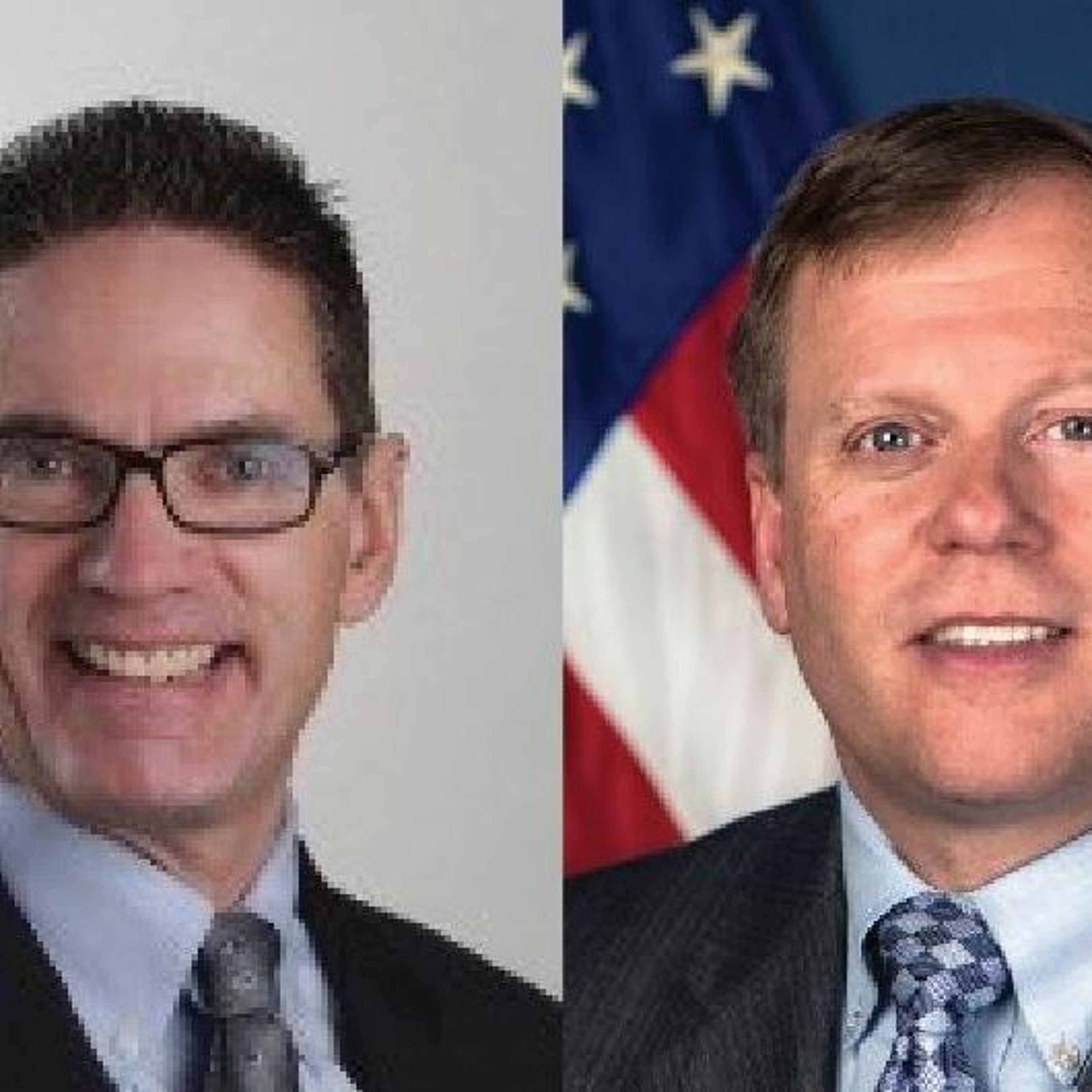
So you'll see this over on our AGA podcast as well as our firm podcast. So to discuss the report and the workshop we have Bert Nuring and Steve Coons. And let's get into the show here and see what we learned. Hello and welcome to the podcast.
All right, another exciting Affirm podcast here and we have a couple really good guests. We're going to be talking about last year's ERM workshop that was put on in combination between a firm and AGA. That was a report that came out, summarizing the session a little while ago. And we've brought Bert Nuring here as well as Steve Coons.
And we're going to see if they can give us a little more insight into that. So why don't we just start off with introductions. So Bert, say hello there. Yeah, hi Paul.
Thank you so much. My name is Bert Nuring, I'm a partner with Crow. And it's been my pleasure to serve in the capacity of helping with the organization of the AGA ERM workshop for the last couple of years. And so it's a great opportunity to be here with you today to talk about last year's workshop.
Awesome. And Steve. Yeah, my name is Steve Coons. I'm the deputy CFO for the Department of Commerce as well as working on the Workforce Modernization Executive Engineering Committee as part of the Federal CFO Council.
Thanks for having me. Great. Absolutely. Welcome to you both.
So Bert, why don't you kick us off maybe just tell us a little bit about the report you guys wrote just a high level. What did the workshop cover and you know, what's some of the contents of that report? Yes, we have to be careful. The workshop focused on three key areas and no surprise in 2021 in the midst of the pandemic.
We had several themes around the effective COVID. The first one was on the entity mission and priorities. And so the session covered, you know, how COVID affected the entities mission and priority are assisted with the reaction and response. The second session that we talked about related to the effect of COVID-19 on the workforce.
And then the third was related to ERM in times of budget uncertainty. So those sessions really talked about, you know, with the circumstances that we were facing in 2021, how ERM can play an important role within those particular areas and really focused on, you know, some good examples of how entities were able to address those particular matters through ERM. The session then kicked off. I'll just talk a little bit about what we covered Tom Brandt, who was the Chief Risk Officer of the Internal Revenue Service, opened up the workshop and kicking off that theme, talking about ERM's maturity and how that level of maturity really helped the government address some of the issues around COVID.
You know, one of the things that Mr. Brandt noted was that the federal government is still developing at ERM programs and the emphasized that a standardized approach will help the maturity model. And I think that kind of bared itself out as related to looking at how agency strategized around managing their mission and priorities as well as the workforce and budget during this time. Also, Mr.
Brandt noted that the risk appetite and tolerance and adjustments and resulted in adjustments to those particular risk appetites and tolerances because of the COVID-19 pandemic. And so a lot of those aspects really helped frame up the discussion for the day as we went into then three different working sessions covering topics of COVID-19. Right, makes sense. Now, two years of this is not going away.
You have to keep talking about it, but that's okay. It's actually a great risk management case study, so to speak, that we're all living, so it makes sense to me. So why don't we cover, yeah, let's talk about those three major areas. If Bert maybe don't mind kicking us off and then we'll have Steve jumping here too with some of his thoughts.
And when we start off with that, the one you all did about the actual COVID effect on energy mission and priorities. Yeah, absolutely. And I think with regards to this particular session, you know, the pandemic really reinforced the need for agencies to assess their risk management processes, understand how the risk related to COVID-19 affected their mission and business operations, and also identified areas where there might be weaknesses and opportunities that they needed to address. So some key themes in this session really focused on how a couple agencies, so we had representatives from the Defense Logistics Agency, Eric Babbers, and then Kyle Bettis from Chick-fil-A.
And it was really interesting getting their respective perspective on how things have changed due to the pandemic and how they utilize ERM in that particular area. And a couple of themes that they really touched on related to the increased broad risk. Also, how they presented new and creative thinking that ERM really, that process really helped them look at things a little differently and come up with new ways to approach their activities. And also really addressed how do they approach IT and how can IT help with some of the challenges and the opportunities that an organization might have.
So with regards to increased broad risk, the speakers talked about, you know, the funding that was available through the federal government in response and, you know, how this created a risk of fraud. And so from the standpoint of the agency's perspective, they really needed to take that into account and really look for what they've incorporated into their ERM processes around broad risk. And, you know, as agencies really look at, you know, how do they incorporate new ways of thinking? And I think ERM really had an opportunity to help organizations look at how they prioritize items as it related to even procurement as well as some of the restrictions that they followed as an agency.
And so what I think the speakers talked about is ways that they were able to better communicate some of the risk because it was apparent that they really needed to increase their communication under these circumstances because they weren't able to do business the way they normally did. And an interesting element, you know, really from Chick-fil-A is that you don't think about this as often, but when they had to shut down operations, they, you know, had to go from, you know, a dine-in service with the ability to service customers through the drive-up operations, but they really had to go through a process of expanding their order processing operations because they could not use dine-space. And so they were able to really focus on improving wait times as well as the overall customer experience. And something that, you know, we really somewhat take for granted.
And, you know, the Caiels really talked about how they were able to utilize some of the things they learned through the ERM process to better handle those operations. And I think that finally, you know, they really touched on, you know, some of the challenges that they faced with regards to IT. And, you know, what they really had to do was change from a standpoint of, you know, maybe an organization that is used to meeting in person. And, you know, really, they had to focus on how do they look at technology to help them with communication.
And in some respects, you know, being a complete remote for a while, that was the only way to communicate was through technology. And how does that tone at the top get impacted if we're not doing business as we normally do? And so I think those were the key themes from that workshop. Steve, I'd be interested to hearing if you had any perspective from your agency.
Sure. At the Department of Commerce and just in general, was able to leverage all of the tools of enterprise risk management to be able to give them the ability to understand where there might be areas for focus and improvement as we moved into this era of remote work and having the ability to deal with the resources that started to flow in. So we kind of leverage that process to ensure that we have the sufficient internal controls in place to be able to manage and that the employees have the tools that they needed to have from a technology standpoint in order to get their job done. Well, great.
Thanks to you both on that. So, yeah, some great lessons there. I enjoyed that. You know about that Chick-fil-A.
I noticed that every time you go there now, like a hundred people waiting outside to take your order. So maybe that's what happened with COVID. I don't know. It was good.
I like that. So Bert, let's go into the actually, are we doing Bert or Steve? I'm sorry. The next one here, we're going to be talking about the effective COVID on the workforce.
I think Steve's going to kick us off on that one if you don't mind. Yes. Thank you very much. I basically do want to talk about what the, you know, and this is playing on obviously what I had discussed during the seminar, but, you know, the CFO Council prior to COVID actually had an effort underway to look at how we were going to modernize the workforce.
And we basically started that process. Interestingly enough, about six months prior to the, you know, shutdown when COVID hit. And that didn't necessarily fall out down because we then turned to a complete remote environment, which is obviously what the entire federal government did as we were trying to manage that. But what we also were able to do is leverage our experiences in working in that environmental and store that we incorporated as much as what we were experiencing in our day to day, working of coming up with what that modernization efforts look like for the financial management workforce and taking our experiences in developing that modernized strategy and incorporating those into sort of lessons learned, I guess you could call it, for how do we leverage a remote workforce?
So the outcome of that, which I'm happy to say after 18 month period, which basically was right smack dab in the middle of the pandemic, we issued our version 1.0 of our workforce strategic plan, which is basically our 10 year strategy for modernizing the financial management workforce. We identified, you know, seven areas of strategic focus that we wanted to ensure that we had the necessary skill set and drivers for ensuring the workforce was ready. Two of those are supporting the current workforce and recruiting for the future workforce. And in those areas, you know, that is where the experience of the pandemic and a remote workforce environment, how influenced what we came up with as far as the things that we needed to be focusing on as a community within the financial management workspace.
So we were looking at identifying new skill sets, being able to have a stronger reliance on IT, obviously because information technology and communication is essential for a remote workforce to actually be able to do the jobs that they're doing. Working on things such as robotic process automation and critical thinking and creativity. Those are areas that we felt needed to be emphasized in the new areas of what the financial management workforce would need to be successful in the future, because those are things that you can leverage, whether you're in person or remote. And in addition to the strategic plan, we also are putting forward efforts to create a career planning and training tools that can be accessed remotely, which will allow a centralized resource for all of the financial management community to basically plug into what are the training opportunities that they have.
Again, looking at hybrid approaches, as opposed to your the traditional in-person training that was done, has been done obviously previously to the pandemic. And it will also help to standardize access for all of the financial management community, which again, because of an electronic portal, it gives access to folks regardless of geographic location, it gives us access to a more diverse set of training opportunities. And again, they don't need to be in a location that has a classroom that they would have to travel to. They would be able to just do it either in their office space, if their office was obviously local, or they could be doing it at home, which is what we leverage basically for the past 20 months.
And then finally, what I wanted to just put a touch on our, and I think you can kind of see it at the theme in what I was talking about as far as our 10 years or two plan, there's obviously going to be some long-term impacts to the way the workforce will be structured within the financial management community as it relates to the pandemic and the effects of the fact that we actually experienced a significant, I would call it a pilot during the pandemic for remote work. And having us being able to experiment may not be the right word, but we learned a lot. It was like an ongoing learning process of what can be done remotely versus what needs to be done in person. I would say that the financial management community from a long-term impact would be moving towards more of a remote and not remote hybrid workforce.
That would be a combination of remote versus in person, because there are certain aspects of what we do. We need to have that face-to-face communication and not just electronic communication with your stakeholders, for those in the financial management community that do, you know, appropriation presentations. The appropriators want to have those presentations, briefings and hearings in person, whenever possible, because you get a better dialogue going back and forth. But then there are other aspects like the transactional component and the analytical and policy component that may suit itself to that remote environment.
And so the financial management community is participating in the government-wide future of work efforts that's being led by the Office of Management and Budget. I'm actually a part of that effort as the chairman of the Workforce and Modernization Executive Steering Committee. And so we're looking at how do we leverage our experiences during the pandemic to help create better balance from a work-life standpoint, taking advantage of the fact that being remote allows for more access to a more diverse workforce that will get us access to skill sets that aren't necessarily in the immediate geographic region, that we have traditionally had our brick-and-mortar in-person activities when it comes to financial management function. So that's basically saying, sure, a lot more work needs to be done.
But I think the experience of the past 20 months has definitely allowed us to see how we can increase our flexibility for work for working and allowing folks to have a combination of teleworking and remote work and still can get the job done, can still meet our mission requirements, while also recognizing that we're providing a benefit to the employees as far as giving more flexibility, work-life flexibility, work-life balance, and things of that nature. I don't know, but if you would like to add the overarching perspective on that from the workforce and the effect of COVID? Yeah, thank you, Steve. I do think I'm struck by your comments as it relates to the changes in the pilot in kind of a new work environment that we kind of entered into.
And I kind of look at it as that work environment was changing, but at a much slower pace than now. And so I really do think, from the standpoint of as it relates to the workforce, ERM is going to continue to play and will need to play a critical role in how you manage risks within the organization in a hybrid model, or whatever that model is going to be in the future. And so that's what I really have kind of been struck by is that the importance of looking at this from an enterprise standpoint and really understanding the risks of your workforce, and not only the risk from the standpoint of some of the things that we think about that might cause losses to an agency, but also the risk of maintaining that workforce, keeping the workforce engaged and keeping them on that entity and mission as a whole. So I think it's an area that is really going to become very prime and focused with regards to enterprise risk management in the way it can be helped to manage your workforce.
Absolutely. Yeah, I'll put my two cents in. And yeah, I also think it's, I'm just thinking of this almost as if we've already done a pilot, right, the last two years of what works and what really doesn't work remotely or hybrid. It's really been an eye-opener.
And even a lot of people are, you know, they only want to work remote jobs now. And there's companies and agencies maybe that will allow that. And again, it's not, it's looked at differently. You actually could accomplish this 100% remote.
There's no real reason for us to force you to come in here, but for this position, you at least need to be nearby or you do need to come in. So yeah, this is in a way, definitely almost been a pilot in itself, just having to go through this effort. So yes, very interesting what you guys are doing. Yep.
It definitely shows where some of the challenges are as well, because although there are aspects of where people can do 100% of their job remotely, it also puts a strain on, you know, one of the core fundamentals of a high-performing team, because you're, you have to figure out other ways to create those interpersonal relationships that are the essential to people knowing that we are one team and we're not just one person in one location and one person in another location, because you typically would have that dynamic in an in-person environment. So you have to do the challenges, how do you do that in a remote or hybrid environment and still maintain that high-performing team? Yeah, and I argue that's still pretty hard. I haven't seen anybody do it too well yet.
I'm sure somebody's figuring it out, but they have to tell us about it. Well, great. So I think we have one more topic and then we'll just talk a little bit high level about some of the breakout sessions and talk about the next training session coming up. But Bert, why don't you lead us off here on that third topic, the role of ERM in budget uncertainty?
Yeah, thank you, Paul. You know, the the 2019 shutdown of the federal government as well as the, you know, COVID-19 pandemic really caused us to look at how do we utilize ERM in the time of budget uncertainty and how do we, you know, manage our budget process? And so this session really explored those disruptions and looked at how do you integrate the ERM process? Also, you know, looking at a situation where there was a massive supplemental funding to respond to the COVID-19 situation and how do you manage all of that and the operational changes that you need to make as well as the long-term strategic relationships that you need to understand with all of these facets.
And so, you know, the speaker really talked about, you know, how the budget should be built around risk. Also, what do you do in times of budget uncertainty as well as the transition of utilizing ERM for improvement opportunities in your budget process? And so, as we looked at, you know, building your budget around risk, you know, some of the ERM principles that were considered, you know, look at the old practices and the budget formulation and look at those areas that have been rated in a higher risk category and look at what do you need to do from a budget perspective to reduce those particular risks? And so that helped.
Agencies, especially in situations where there was increased funding due to the pandemic to address some of those risk areas in their budget response. And so that was an area that, you know, really, I think agencies were forced to focus on, you know, during that budget process and really understand that a little better. And then also, the speakers talked about that just the ERM transition improvement and by incorporating ERM functions into the budget development, there were some clear benefits that the speakers identified. Several advantages included organizations have been able to fund operating expenses and IT equipment to support the transition to a telework environment or remote environment.
Also, you know, agencies were able to get that additional funding to get those technology systems up and running within a shorter period of time because they needed to get the workforce working again and getting those systems secure. So the agencies were able to find out ways to expedite that process and to incorporate some of the group discussions and group participation in the budget process so that they could, you know, really work on incorporating those into the budget themselves. And then also, you know, that group activity really helped in the area of communication between the various budget departments and the risk teams to understand the need for funding, understand what they needed to do as to address some of those issues that had been prompted by the pandemic itself and how those can be enforced and addressed within the budget. It's uncertainty that we've been facing and continue to face to some respects.
And so I think that the speakers from the US Department of Housing and Urban Development and Department of Justice really were able to kind of focus on some great ideas as to utilizing ERM in that budget process itself. Steve, I'll turn it over to you to add any comments that you've been able to use at the Commerce. Oh, absolutely. I'd like to focus on two aspects.
First, the Department of Commerce has tried as best as it can because obviously no processes ever perfect. But we've, you know, incorporated ERM into our budget process to allow us to ensure that giving us that proper tie between the program and the budget so that we understand what the programmatic risks are and how does that influence the budget requirements so that way during a budget, you know, because the budgets tend to always be uncertain in this day and age, you know, that we are positioning ourselves so we can ensure that we have the resources identified for the highest priority, biggest risk areas to ensure mission delivery. So that's one of the benefits that ERM has played for us within a budget, uncertainty times of budget uncertainty. The second part I would say that because we have been using ERM for several years now, it also helps to identify where are our biggest risk points from a financial perspective when it came to getting that major influx from the American Recovery Act, you know, that American Recovery Plan that we were able to get ourselves positioned very quickly to know where do we need to have a focus on the areas of the process of getting the money out to the American public as quickly as possible so that the impact of the resources would be that were anticipated or desired could actually be felt, but not do it in a way where we reduce our ability to ensure that we could account for the money correctly.
And so we had that already laid out. We already knew in our grants process, in our financial assistance process, where those areas of high risk were, where the areas of potential fraud could be increased and allowed us to apply our resources appropriately to ensure that we didn't increase that risk any more than what we would normally have had during our regular budget and appropriated process. And that was what IC is one of the major benefits that the ERM process allows you to do is it allows you to position yourself appropriately and be prepared. And so when you do have those influxes of resources, which will be coming, we just have the infrastructure bill passed and we don't know if it will be additional resources coming from Bill Backed Other, that I think it positions the agencies who have even the beginnings of an ERM program to be able to position themselves appropriately to know where to target and where they need to be watchful from a compliance and oversight standpoint.
Great. Well, thanks for that. And I think we'll just have one more topic here and we'll probably wrap it up in a minute. But so maybe, yeah, why don't we just talk a little bit high level, you know, anything that you thought was interesting from the breakout sessions, kind of wrapping up the report there and yeah, we'll just get some final words from the both of you after that.
Yeah, sure, Paul. I think with regards to the breakout sessions, you know, after the three sessions on internet emission workforce and budget uncertainty, there were separate breakout sessions. And this is, I think, really the value of this workshop is getting that perspective from all of the participants. And that's a true value of you think about it, enterprise risk management, you know, is really getting that collaboration, getting that communication and that discussion to talk about the various subjects and learn from each other, how some agencies do it well, some agencies can figure out better ways to approach it by listening to what others have to say.
So I think those workshop breakout sessions were very valuable in covering these topics because as we've been, you know, addressing for these, you know, going on two years, I guess now, you know, the COVID situation, there's no better way than to work through a crisis like this by working together. And, you know, I think ERM really facilitates that ability to really come together as a team and really address your problems, which is going to be essential for us working through these issues as we manage our mission and agency agencies through this process. Great. Well, I guess I can see one more chance.
Anything else you want to mention about the conference or just any final words of encouragement for us here? I guess the words of encouragement, I would say, from a workforce perspective is the fact that one of the key pillars of the new president's management agenda is a focus on strengthening the federal workforce. And so I think that lends a lot of credibility to the need to recognize that the most important and largest resource that we have and are responsible for being stewards of is the workforce itself. That delivers on the missions and the priorities of each of the individual agencies.
And so from a financial management standpoint, it's obviously that's where my subject matter expertise is. I'm extremely encouraged about having that pillar in the PMA. And what we are working towards within the federal CFO Council is to align our workforce modernization strategy to that PMA so that we can assist not only within our FMS community, but to try and leverage the work we're doing across all the executive councils that we have, whether it be acquisitions, the data, the data councils, the EIRM group, all of the performance groups so that we can make sure that each aspect of the workforce within our purview is getting the levers that they need in order to get the job done and that we're taking into account what is actually happening today through this whole pandemic and making the work life balance even better than it is now. Great.
Well, appreciate that. All right. Bert, why don't you tell us about the next one coming up here? Well, it's already 2022 and the next session is we're doing another workshop.
It is scheduled for an in-person on April 14, 2022 at the DC Convention Center. So we're looking forward to putting over in the process of planning for that workshop right now. And you'll see in the next few weeks that you'll see some information coming out about the workshop and the plans for the topics to be covered during the workshop. So this is a great opportunity for agencies as well as others that work in the agency to really understand how EIRM can better impact their work and better impact their agency's mission and to accomplish that mission.
Great. Well, we look forward to that. And Bert and Steve, thanks again for coming on the podcast and really got some great insights. Thanks again for being here.
Thank you for having me. Thanks so much, Paul. That's the show. Thanks for joining us.
A firm.org is where you go to learn more about over federal ERM, government ERM, listen to some more podcasts, provide us some feedback. We'd love to hear it. And now we're in 2022, the new year, new opportunities, new risks. So we'll definitely be talking all about that.
So until next time, this is your host, Paul Marshall, signing off for Risk Chats with a firm.