
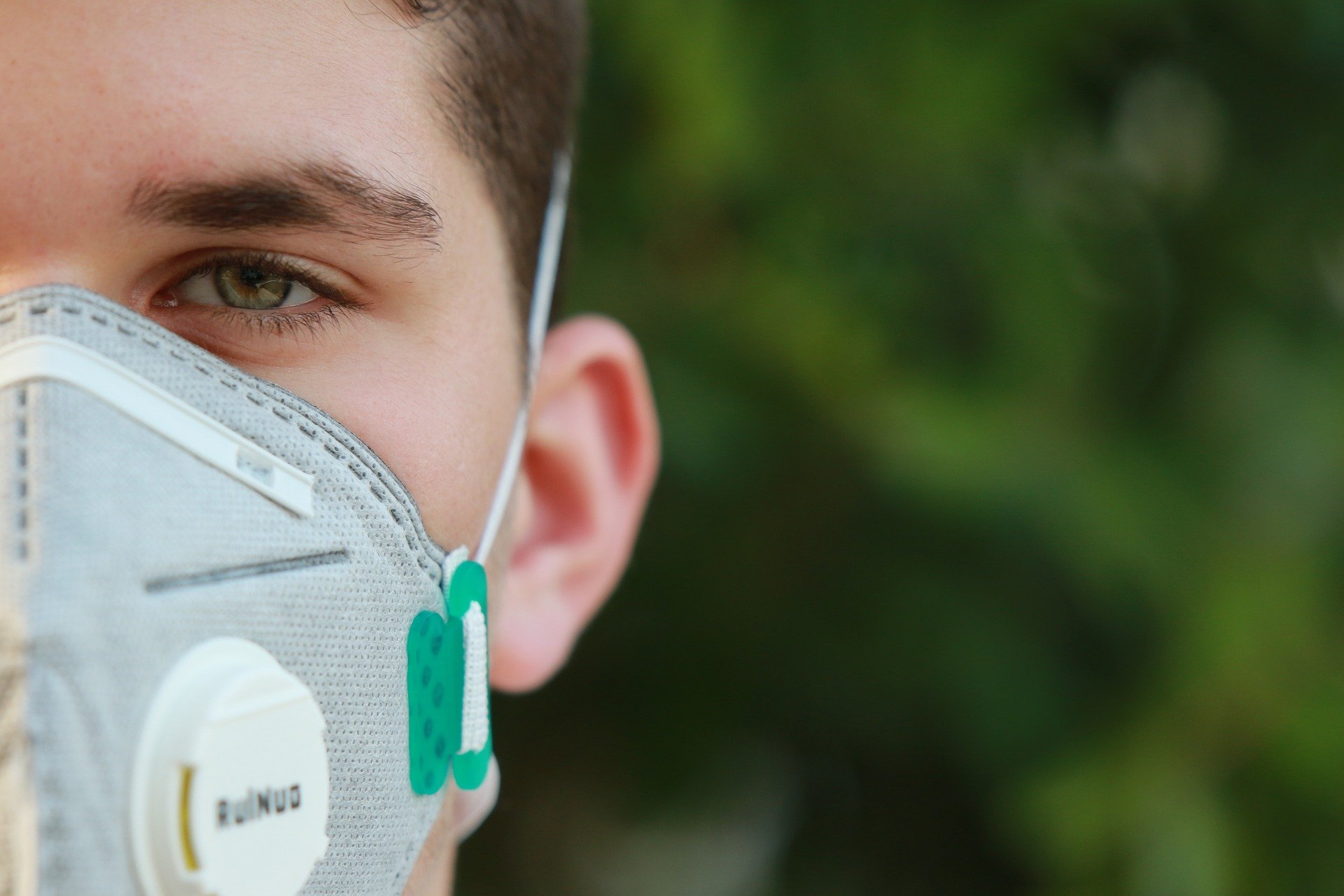
Welcome to the Movement Movement, the podcast for people who want the truth about having a healthy, happy, strong body. Remember your body was meant to move. Now here's your host, Stephen Sashin. How can you run safely and without endangering others during this COVID crisis?
Well, let's take a look at that in today's episode of the Movement Movement, the podcast for people who want to know the truth about what it takes to have a happy, healthy, strong body starting with the first those things are your foundation after all, where we take a look at the propaganda, the mythology, sometimes the outright lies that you may have heard about what it takes to run to walk the hike, to do yoga, cross-fitter, whatever it is that you do, dance, dance, revolution, we've heard about that one, zoom over, we've heard about that one. So, enjoyably, effectively, easily. I think I sort of enjoyably, I'll end with enjoyably too, because we want to focus on that. If it isn't fun, don't do it.
Do something different until it's fun. Oh, by the way, really quick, if you like what you hear here, obviously we want you to share and like and give us a thumbs up and subscribe and hit the bell on YouTube. And if you have any questions, you can just drop an email too. Move at jointhemovementmovement.com.
Obviously, you can go to jointhemovementmovement.com and find out, well, every place that you can find all of our content, our social media channels, et cetera, you can find past episodes. And well, in short, if you want to be part of this tribe, please subscribe. If you don't know what that means about being part of the tribe, we call it the movement movement, because we're creating a movement. That's the tribe part.
That's you, about movement. We're making natural movement the obvious, better, healthy choice way natural food is. And we're not even making it that way. We're just helping people realize the truth of that, because it is.
Let's jump into this whole topic of what to do during the COVID crisis if you're a runner. Or this is actually true if you're a walker in a hike or two to a different extent. But I want to focus on those of you who are runners and discuss this whole thing about safety. Now, obviously, I'm using the word obviously a lot today.
I don't know why, obviously, because I'm using it. I'm not a doctor. I don't play one on TV. I don't play one on podcast.
I'm getting you the best information that I have based on what my experience has been and my research and reading. If I'm incorrect, please let me know. And I will update things. We're getting new information all the time.
And so this might be out of date by the time you're hearing it. I'm hoping not. Actually, I'm hoping that today is I'm hoping that this is completely moot by the times when people are hearing this and you don't need to pay attention to this at all. But it seems like it's going to be with us for a little while.
So I just want to do the best that I can. Again, if there's anything factually inaccurate, feel free to chime in with a comment, etc. And we'll keep this conversation going. So there's two major points here.
One is how to run and do that comfortably. And the other is how to be safe. And the safety thing is interesting because it's not just about you being safe. It's about you being safe for others.
This is one of the things that I think people are really missing. Yes, it is a pain in the butt to wear a mask. Yes, it's a pain to stay indoors or to self isolate or quarantine. And yes, this isn't all about you.
We're doing a lot of these things for other people. It's been, I don't want to say entertaining because that would be really crass. I'm not accurate, but it's been very interesting, let's say, to watch the arguments that people made a couple of weeks ago about, well, these people are doing it this way and it's working fine for them. Why don't we do what they're doing?
And now a couple of weeks later, those people are having bigger problems than we had. So this is the lack of coherent information and rational discourse is overwhelming. But I'm not going to get into the politics of that or the cognitive biases that influence our ability to come up with cogent arguments or understand statistics or realize what actions are appropriate or not. That's not the point of this one.
Anyway, let's start with the comfort thing first. So I'm a competitive sprinter. Many of you, if you've listened to previous podcast know that and if you don't know that, I'm a competitive sprinter. My master's all American means for men over the age of 55.
I will soon be 58. I run in a certain time. I'm someone of the fastest guys over 55. So far in the 60 meters indoors, I was going to test that 100 meters outdoors, but I'm not sure if we're going to have any meets this year or not.
I might have to wait until I'm actually 58 to put that one to the test. And running with a mask on is really, really difficult for a couple of reasons. One is I'm just not getting enough air in and out as fast as I need to. When I'm running it, I mean, as a sprinter, frankly, I only breathe twice maybe and 60 meters and maybe three times and 100 meters.
So that's not the issue. It's immediately afterwards where I'm just sucking air like crazy or trying to and doing that with a mask undeniably harder. So the thing that you may want to try and I haven't explored this frankly is a bandana where it's not covering everything quite so tightly. To be totally candid though, I, when I'm on the track, have not worn a mask.
And that's because typically when I've been on the track, there's only been two or three other people, one or two of them are my training partners and we say a good distance apart and we've been around each other during this whole time. So we're, well, anyway, it seems like it's safe. It may not be. I may be wrong, but we're staying very far apart from each other and from anybody else who may be on the track, typically they're on the other side of the track.
Now, if you're going to look for a place to run, obviously the safest thing you can do, well, okay, let's talk about safety. Obviously, the safest thing you can do for you and others, run indoors on a treadmill. It's kind of obvious. Don't have a treadmill.
Maybe now's the time to get one. I don't know. I'm going to put the curved non-motorized treadmill from our friends at TrueForm Running, and I'll put a link in description and wherever you're viewing this. The reason I like it is it basically teaches you to run with proper form.
When you're on a curved non-motorized treadmill, you can't really over-stride. You can't really rely on the treadmill to carry you around. You basically end up running with your feet landing mostly underneath your center of mass, pushing off properly, lifting properly. They're really, really splendid.
Our friend Dr. Mark Cozzello, when I asked him on a previous episode of the podcast, how he teaches people to run barefoot, he says I put him on a TrueForm treadmill and then I haven't got on the street. So if you're interested, take a look at those. They're not inexpensive, but boy, they are awesome.
Let's talk about the other safety issue for you. Clearly, you want to try to avoid humans. I mean, that's kind of the bottom line. And the easiest way I found to do that is A, find a track and B, go off hours.
Go at times where there's a high probability that other people aren't going to be there. And if you can't find a track like in our county, in Boulder County, Colorado, they've closed all the tracks in the public schools and it's now a ticketable offense if they find you on one. Just so happens though, that there's private schools, charter schools that are not subject to the same laws and they've kept their tracks open. So I was on charter school track on Sunday and it was busier than any track I've been on up until that point.
There's a bunch of families, there was people playing soccer on about a quarter of the soccer pitch. There was four other people running and they were all young people and they all clearly did not give a crap about anybody else or what was going on. So the biggest thing is take care of yourself in that situation. Don't be glib.
Don't think that it's okay. I didn't even want to walk up and talk to these kids because that was going to be a whole other universal I didn't want to get into. So what I was doing was just adjusting my workout and running different distances or running different parts of the track, running curves by hand to if they weren't taking the turns, if they were training on the straights. So the simple thing, social distance, track distance, just stay away.
Now if you weren't on a trail, obviously same thing. Now here's where I want to bring up. Let's call it an interesting point. I've been on some trails where runners have come by and pretty much without exception the runners were complete douchebags.
What I mean is they just kept running and did not have any intention of altering where they were running or how they were running or what they were doing. They certainly didn't think about stopping and figuring out a way that we could pass each other and be socially distant. They were rude douches. I mean frankly I want to say things that are more upsetting or more annoying than that but I've had a couple of people say they don't like it when I say certain words and usually I don't care but I'm in that kind of mood now where I'll tone it down and just call them rude douches.
So be on the lookout. If you're out on a trail, A, if someone's coming towards you, give them the right away. I mean get out of the way. Don't play a game of chicken.
Don't try and guess who's right and don't work on the assumption that you're fine if you're just passing quickly. I saw a video and you can look it up for what a mask does to your breath basically when you cough in a mask versus not in a mask. And if you're not in a mask, the particulate matter that comes out when you cough and it's different than breathing heavy when you're running but I'll just use coughing as an example. The particulate matter that comes out, the aerosol matter that comes out, travels for about 12 feet and hovers in the air for up to a couple of minutes.
I want you to think about that for a bit. Up to 12 feet for up to a couple of minutes. Now when you're running by someone, clearly not coughing, but they are breathing heavily probably. And if you're in a mask, here's what gets even crazier when you think about passing people on a trail.
In a mask, the particulate matter of the aerosol matter only went about three or four feet in front of you but a bunch of it went out the size of the mask. So you could be running by someone. You could both be a mask and you're swapping spit across the trail that way. So my recommendation, get out of the way.
Don't wait for someone else to do it. And if there's people walking or hiking on the trails that you're on, get out of the way. It is your responsibility to not be a rudouche and give runners a bad name, frankly. If they're cyclists, same idea.
So I'm just looking at my notes to see if there's some other thing that I really want to mention about that. Those are kind of the bigs, you know, bandana versus mask, get out of the way. You know, there's another thing. When you are, if you are coming towards somebody and they're coming towards you, make eye contact.
Use hand gestures to make sure everyone knows what you're going to do and to give them ideas about what you want to do. If it's impractical for you to get off the trail, stop running. There's no bonus points for continuing. Your workout's not going to sacrifice if you stop for a moment so you can communicate properly.
So everyone knows what they do to have the appropriate social distance. This is not rocket science, anything that I'm saying here. If you're going to be passing someone, give them a big heads up, yell, scream, whistle, do whatever it is so they know you're coming and then make eye contact and do the appropriate hand gestures to suggest, you know, if you can't get out of the way, stop, see if they can get out of the way, if you can't get out of the way, just get out of the way. Again, I would argue that for runners at this time, it is our responsibility to be the better citizens.
It's our responsibility to get out of the way. It's our responsibility to take care of others. And if you disagree with me, I don't get a crap because it's our responsibility to do the right thing. I don't know about where you live, but in Boulder, Colorado, there's always arguments like this about cyclists who want to take over the entire road and get in the way of cars.
And on the one hand, they're kind of right. They do have the right of way and they should kind of get enough attention so that cars do pay attention to cyclists in the way they should. On the other hand, don't be a bonehead where you're going to get run over. So what I'm really saying is you don't want to make yourself or other runners the cyclists of Boulder County who are always going to yelled at and argue with and people don't like them and they are often very rude for good reasons, arguably, but it's not necessarily the best way to achieve your goal and or make your point.
And it's the same thing here. There's no bonus points for being right and then putting yourself or other people in danger. And back to the other people think, look, you all know this, that you can be asymptomatic, you can be asymptomatic and still be a carrier and still transmit and be contagious. Let's just make like easy and just assume that you are just for fun.
Assume that you have COVID-19 and that your job is to protect other people. How would you behave if that was the case and you wanted to go for a run? I kind of probably should have opened with that because that's really the big umbrella thought for this concept or for this episode. So whatever you can think of to do where you're trying to protect other people first by taking the appropriate actions, do that because most of what you're going to do in that case is going to protect you as well.
I'm open to this conversation. I'm here, what you've done, what you've experienced, both pro and con, both in terms of keeping yourself safe and keeping others safe because that's really the only thing we can all do right now is do the best we can to focus on both of those, keeping us and others safe. The comfort thing, do the best you can. You know, and look, if it's not comfortable, if you can't find a way to take care of yourself and others, here's an idea.
Don't run. Look, I know that's going to be annoying. I know that you won't like that if you want to run, but these are unprecedented times. And this is a time where I would argue that it's better to make that bit of a sacrifice and do by not working out what my sister says she did is did nothing but eat instead of work out and put on the COVID-19.
That's kind of like a freshman 15 from college. But I would argue that now is the time where better to, you know, sacrifice a little bit because of the unknown than to demand your comfort and getting it your way. Just the way I see it. Again, other people I know disagree.
I don't really care. I mean, I'll talk to them, but you're not going to say anything is going to make me say, oh, yeah, do whatever the hell you want. Be comfortable. Just breathe all over other people.
Just suck it all in. It'll be fine. We don't know if it's going to be fine or not. It's too early to tell.
So just err on the side of safety is my recommendation. I hope that's useful. I hope it sparks a conversation. I hope there's a couple of tips in there that maybe you could use.
I got one two weeks ago when we went to the track and it was locked up and we didn't know that was the case. We did something else. We just changed our workout. We went to a trail that was predominantly empty and we ran hills and we could have done the same thing not on a trail on streets where there was just nobody.
And so that's another thing. Be creative. Think about what else you could do to change your workout. And you know, again, you're not going to get what you want necessarily.
You might have to be flexible and adaptable. But what can you do to be flexible and adaptable that will allow you and other people to stay safe? Be creative. Okay.
That's the other message. Anyway, I hope you stay safe. I hope you and your family are safe and your loved ones who may not be your family and your friends who may be kind of like family and you wish they were and people that you don't even know. I hope that you just don't even know anyone who's been dealing with this because this is unbelievable in the truest sense of the word and I have nothing but I hope that we all make it through this better than we could and certainly not better than we imagined because we never imagined this and the only thing better would be it not happening.
Anyway, I know I'm kind of rambling on this because like you I don't even know what date is. Every day feels like a Saturday that I have to work. I rarely know what time it is. The only good that's come out of it for me is I've gotten really, really good at cooking my favorite Thai dishes.
I've got one more to master before. I feel like I don't ever have to go back to a Thai restaurant, which is not a great idea because I want to support that Thai restaurant, but you know, so be it. I've also got a pre-gut of Chinese and Dutch babies. I can make an awesome Dutch baby, which I might even do this Sunday if I know what day Sunday is.
All right. Thanks again for being part of the podcast. If you want to be part of the movement movement, go to jointhemovementmovement.com to check out the previous episodes. You hear some of the wonderful, interesting, brilliant people that I've had conversations with or some of my rants as well.
Drop me an email, move at jointhemovementmovement.com if you have recommendations for people who should be on the show, people who are hip to making natural movement. The obvious better healthy choice, whether it's running or yogish or we don't think about breathing and you name it. You'll know if there's someone who you think is right for the show or you have comments or questions, you can do it there or leave those in any places for comments and questions on YouTube and Facebook and Instagram and Twitter and all those other places where you can find the movement movement podcast. I'm Steve Sashan.
I want to thank you again. As always, be safe, have fun, live life, be first.