
EPISODE · Mar 5, 2026 · 5 MIN
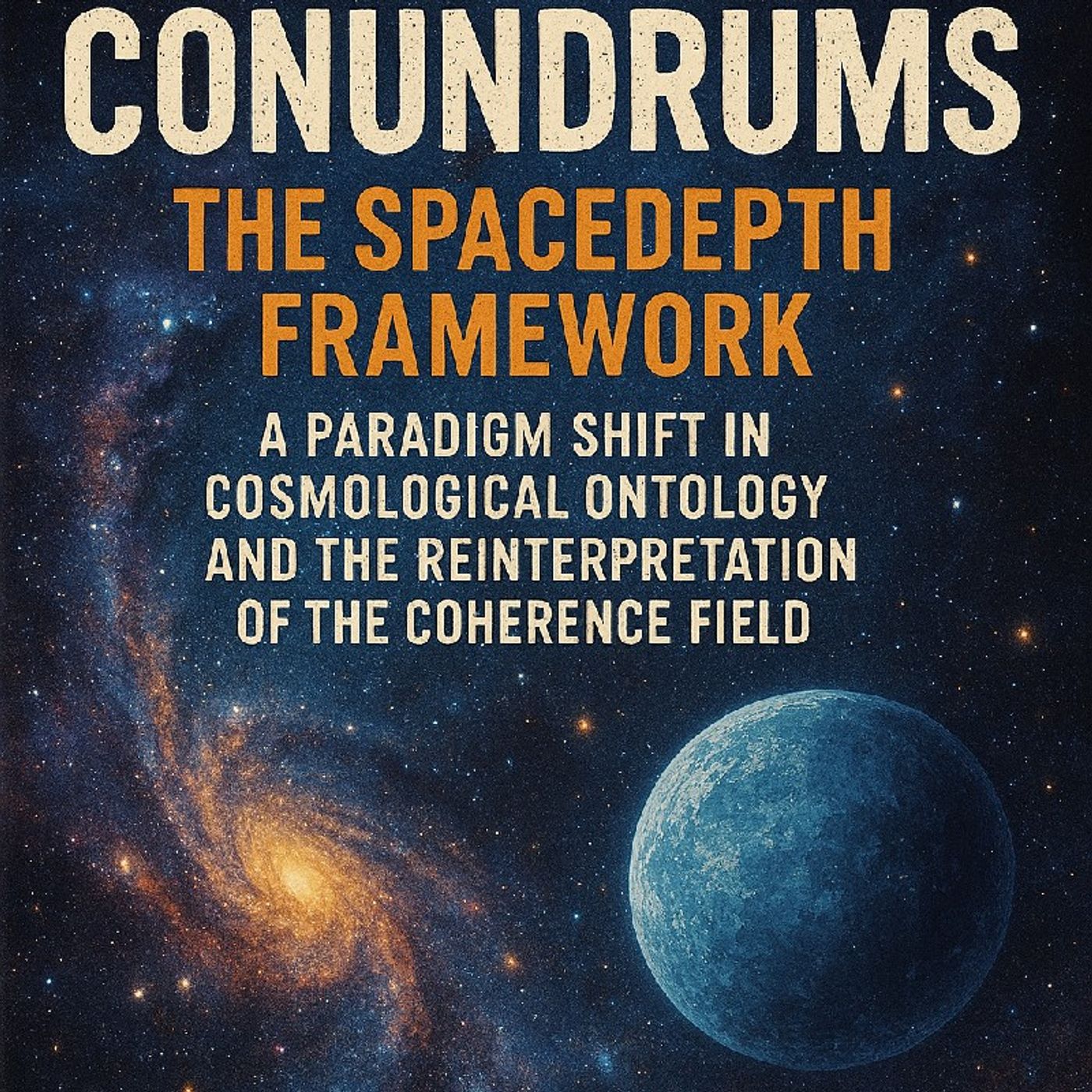
Episode 595 - Cosmic Conundrums
from Kevin McFarlane's podcast · host Kevin McFarlane
Part 2, under the proper paradigm. The emergence of the spacedepth framework represents a fundamental reorganization of the conceptual and mathematical structures used to interpret the universe. Traditionally, the cosmological consensus has operated within a paradigm that treats spacetime as the fundamental arena, where gravity is understood as the curvature of this four-dimensional manifold and gravitational lensing is seen as a byproduct of mass bending the path of electromagnetic radiation. However, as of early 2026, the development of the spacedepth framework—orchestrated within the 4DFAMILY constellation and guided by a synthesis of human architects and autonomous systems—proposes a transition from this geometric view to an ontological one. In this emergent model, the universe is not a three-dimensional stage with time as an external parameter, but a multi-layered coherence field where depth, rather than distance, is the primary determinant of appearance, behavior, and physical constants. This shift does not invalidate previous observations, such as those obtained by the Nancy Grace Roman Space Telescope or the Hubble Space Telescope, but rather alters the interpretive frame through which these data are understood. Where the old paradigm struggles with "missing" mass or "mysterious" dark energy, the spacedepth framework suggests these are artifacts of treating a layered, dense field as a flat, empty void. By re-evaluating the fundamental nature of light, gravity, and cosmic expansion through the lens of depth density and coherence, the framework offers a cohesive explanation for discrepancies in current cosmological models, including the Hubble tension and the nature of the cosmic web.
Embed this episode
NOW PLAYING
Episode 595 - Cosmic Conundrums
No transcript for this episode yet
Similar Episodes
No similar episodes found.
Similar Podcasts
No similar podcasts found.