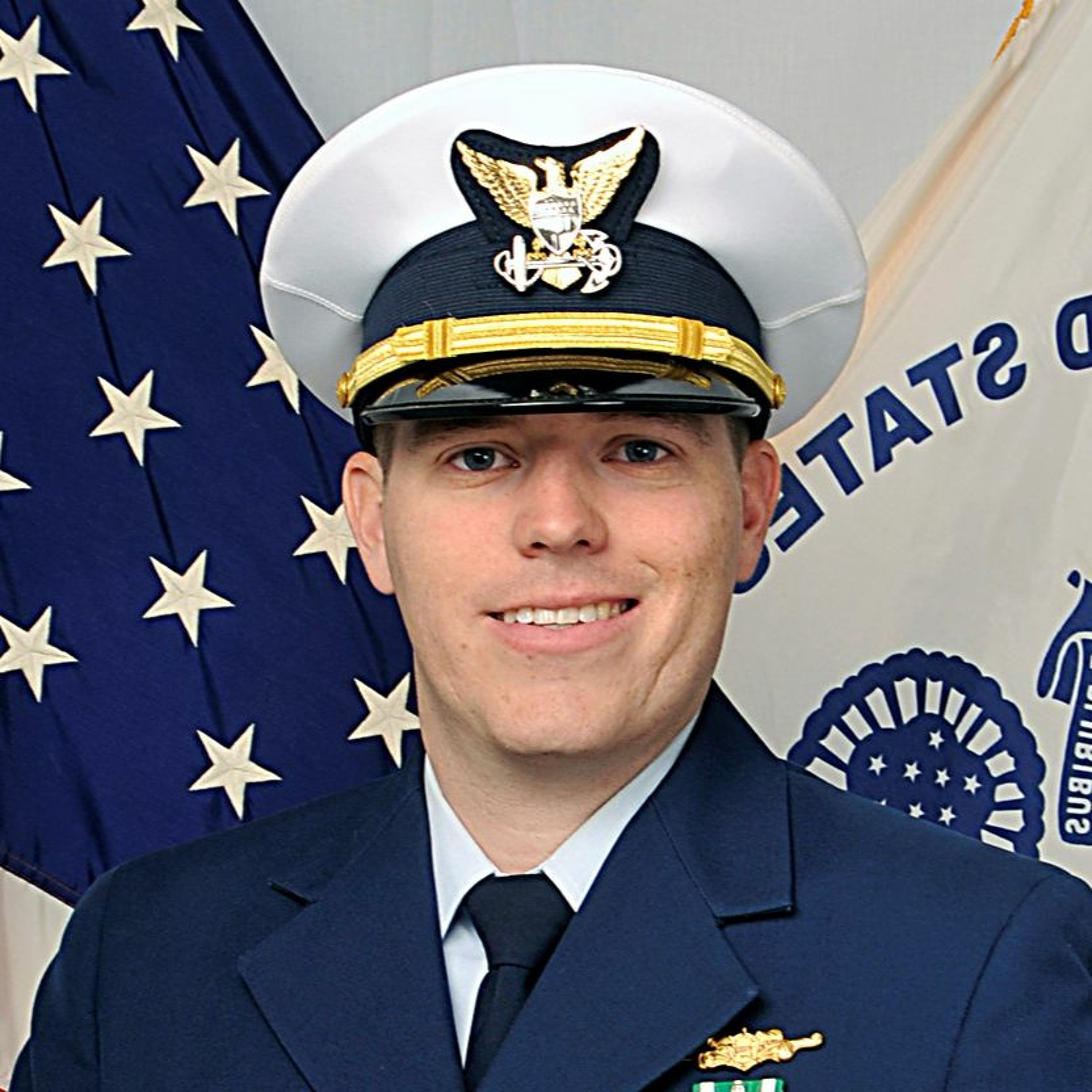
Hello and welcome to Risk Chats with a Firm. I'm your host, Paul Marshall. Today we're talking with Lieutenant Commander Scott Nichols from the US Coast Guard. He was one of our firm award winners last year, and he's come on here to talk about how the Coast Guard's ERM program has continued to evolve over the last couple years.
So without further ado, let's get to the show. Hello and welcome to the podcast. All right, so one of our very first Risk Chats, section number one, was with the US Coast Guard, Mr. Bennett.
And I'm happy to say we've got the Coast Guard back here today with Lieutenant Commander Nichols. So good morning. How are you doing today? Good morning, Dan.
Good. Thanks for having me. Absolutely. And again, we have our co-host, Dan.
How are you doing, Dan? Doing well, Paul. Always excited to talk ERM, specifically this episode. I'll Coast Guard.
All right, yeah, Coast Guard's always fun. Here we go. All right, well, we'll call you Scott here. I know who's in Commander Scott Nichols.
So Scott, yeah, if you don't mind, just please tell us a little bit about your background before you came to this position at the Coast Guard and a little bit about what you're doing now. Sure. So being in military service, the Coast Guard moved up the round to various positions all the time. So my background is a, we call it, Cutterman.
So I drive Coast Guard ships as my primary specialty. So I spent six years with the time to ship that three years in the Coast Guard command center doing command and control of our operations. And then the Coast Guard sent me to get a Master of Public Administration degree. And then I reported it into this job here at the Coast Guard Office of Programs, Analysis, and Evaluation.
I knew I was going to be assigned to the Coast Guard headquarters after my grad degree. But I had no idea I'd be doing Enterprise Management, or even what Enterprise Management was. That was interesting for me to learn. My first day on the job was I'm going to have to get a lot on the job training of what ERM is and how to carry out my duties.
Yeah, I love that. I've met some of your guys that are like pilots and all kinds of stuff and they're working in finance. That's kind of fascinating. So good for you.
Jumping into this thing. So if you don't mind, I want to give us a little bit about the history of the Coast Guard ERM program. I know it's just been up and running a few years. And you know, when it started, how it was organized and maybe how it's evolved since then?
Yeah. So we set up our program in 2018 within our Office of Internal Control. And that was Lewis Motion, who showed it up. I know he was active with the firm.
And he did a great job getting the program off the ground and getting it moving. And then in 2020, the Coast Guard conducted a reorganization of all of our resourcing offices throughout the organization. And through that, it's where they created my Office, the Office of Program Analysis and Evaluation. And as part of that, they tagged ERM as a program that would make sense to move into this newly created office.
And I came into my job just pretty quickly after they created that office. Hey, Scott, could you give us a little more detail on why PA? Why did the Coast Guard move it under there? And what the rationale was behind that?
Sure. So PA was really created to focus on the first P PPE process and get that planning horizon in a three to 20 year range with the goal of integrating strategy, performance, risk, and evaluation. And we get after that through a number of different ways. We facilitate strategic studies, which are enterprise-wide evaluations of organizational change initiatives, where we're really looking at the impact of those initiatives in the out years, really on a three to 20 year scale.
And we're also responsible performance management. So we're tracking all the reportable performance measures for the organization, all those great problem measures. And it was kind of logical to move ERM into PAE due to the linkages with the long range strategic planning, performance, evaluation, and the long range resource allocation consideration. And I think one of the key things is we still fall under the CFO.
So along with the internal controls office, we can maintain that linkage as being part of that CFO team. But it really allowed us to kind of get out of a backwards looking internal control style function and get more into that. What can ERM do for us in the future lens by integrating it in with strategy, budgeting, planning, all those other aspects? Yeah, that makes a complete sense to me.
So you mentioned it still falls under the CFO in the internal control shop. So how do you guys integrate it with obviously internal control shop and it's Iqapar, right? They're looking at control over financial reporting. But how do you integrate the controls over operations?
Where are you guys and that maturity of it? Yeah, so our internal controls shop still runs Iqapar reporting. They're looking at the controls over operations fees. We're really trying to use our enterprise risk register to help feed the prioritization of what needs to get those priority look at and reviews by the internal controls office.
But I think that linkage of making sure that we aren't duplicating efforts and still where we're feeling out that relationship and how can we pull things out of our enterprise risk register to feed that Iqapar risk register to feed all the other pieces that internal controls are looking at as well. So I think that's our point where we're still trying to feel out that relationship and make sure we have it correct. Yeah, that's wonderful. I think you guys made the right decision moving on your PA and it sounds like you've got the pathway ahead to fully integrate it.
Scott, what changed the last couple years with the ERM program at Coast Guard? Yeah, so I think one of the biggest things is when I came into the job, we had a well-established program that was being executed, but it wasn't yet integrated back in. We had the exercise that everyone entered their risk, but that was kind of where it went. We had the risk, we reported the risk.
But we didn't integrate it back into the day-to-day operations of the Coast Guard, and particularly those business operations. So that's really what we'd worked on in trying to change over the last year and change. So some of those big things that I think we got done were we were able to charter our enterprise management council and that reports through our executive decision making structure. So we're leading that risk up through our council to those senior level decision makers who are making those trade-offs decisions for the Coast Guard every day.
Historically, we were reporting through the audit and compliance side to our EMC Arc Committee. Additionally, we were able to document a Coast Guard ERM playbook to really get after our procedure, kind of flowing from that federal ERM playbook in the procedures there. But by getting that signed out, we were able to document our process and have a guide that people could go to so that we make sure we had a repeatable and consistent effort across the organization so that we could do that enterprise level comparison between all the risks and make sure we were using that same unified scale throughout that. And right now, I do have a ERM policy document in routing to make sure that not only do we have the procedure down, but we have the policy in place.
Hopefully, we can get that signed out here soon. So we have kind of all that governance part in place between the charter for our enterprise management council, policy and procedure all locked down. And then last year, we were able to deliver the Coast Guard's first standalone risk profile. Historically, we've been delivering our risk as part of the Statement of Assurance.
So when we moved over from the internal control shop to PAE, we really tried to separate those two and make the distinction between what they are and that risk piece is separate from the Statement of Assurance, the effectiveness of our controls. So last year was our first time that we provided a standalone risk profile, I think, which was well receptive. And we were able to brief that through leadership and get it approved. And we really took a data-driven approach to doing that and coming up with those top risks with the Coast Guard, which I think was a really good effort.
That's fantastic. So as Paul mentioned earlier, you guys have a real broad range of missions. So I'm curious, what is the composition of your own council? Who's on that?
Yeah, so we have 11 different statutory missions that cover a broad range of topics. So to kind of account for everything, including those business processes that support it, our Enterprise Management Council consists of representatives from our two area commands, which are Atlantic Area and Pacific Area Command. They control the operational forces of the Coast Guard. And we have representatives of our deputy common offer operations directorate, which is our policy shop or how we execute our operations.
And then we have representatives from the deputy common offer mission support, which is really that support side of the house, where a lot of the business processes reside. That's our acquisitions, our engineering support, our IT systems, all that reside under the deputy common offer mission support. And then it's chaired by my captain, who is the office chief for PAE. So we have that CFO representation as well in there.
So it's five members. And we do it at the GF15, O6 military level. And that allows that day-to-day engagement. And then we've embedded it within our executive decision-making structures that we beat that up to the senior executive service and flag officer level for that engagement as well.
Yeah, and I want to follow up one more thing here in this topic. So you guys are still under technically the CFO shop right. And I think you don't want to smoke a Mr. Bennett.
Way back when? It might have been the first year. It was stood up. Even though he was the deputy CFO, it seemed like he was looking at risk very much from mission across the board.
It wasn't just a CFO focus. I mean, is that fair to say that that's still how you guys are looking at this? Yeah, absolutely. I routinely repeat that this is not just about financial risk.
We are trying to capture all of the rest of the Coast Guard goals and objectives, whether those be financial, operational, or otherwise. So really trying to drive that high with the strategy through that. And even though we are the resourcing shop and part of the resourcing shop, we're trying to take an enterprise view to account for all those different flavors, which is why we have those representatives on our Enterprise Risk Management Council. Yeah, that's awesome.
So another question for you. So you mentioned you got the risk profile up and running here. And you had a data-driven approach. Can you tell us a little bit more about what is your analytics approach for ERM?
And I believe you guys also have a risk register tool, maybe you can tell us about? Yeah, so we developed our risk register tool on SharePoint. And the way that it set up, it's functionality allows individual offices to enter those risks. And they're attracted to the office level.
But the tool allows us to continue to roll that up within the organizational tree. And so silos as it goes up. And doing that, we can maintain the ability to analyze and review the data across the organization. But offices can also pull their data out very easily in their own view.
But what it does is for us is it produces a structured risk data set that collects both quantitative and qualitative data elements. On an quantitative side, we have the onset, the likelihood, the impact rating, all in there, all documented on the same scale. And then the tool feeds into a SharePoint list where we can do the data analytics on that. And we can get a risk magnitude score out of that.
And we can also break it down. We capture all of our risk based on risk type and risk categories. And we can sort it by those as well and do the analysis and all of those different pieces. And our risk profile development really starts with prioritization within those silos.
So our Gen-B common-oper operations can go in and look at all the risk to his organization, prioritize that, and then send me that his prioritization of the risk within his organization. And we do that for each of our seven accessible organizational elements that we have, which are our four three-star commands and then three other senior level commands within the headquarters organization. And they each provide their prioritization, which then I can get their prioritization, roll that up into an enterprise view, and again, do another data-driven effort where we take their prioritization factor, that in, to then try to come up with the profile for the entire post-doc. And then once we've kind of done that data-driven piece, we brief it through our executive decision-making process, incorporating those qualitative inputs from senior leaders to make sure that we have it right and we have that prioritization right.
Yeah, that's great. Yeah, I mean, I'm happy to hear you have some kind of a qualitative approach here, because I know a lot of folks think that ERM is kind of wishy-washy qualitative, you know, and you really need some real numbers for decision-making, right? Definitely. And, you know, there's obviously a little bit of a qualitative piece in establishing what is your risk magnitude score and all that.
But we've tried to set a pretty clear set of criteria and definitions as you select those scores so that, you know, it can be as close to quantitative as possible throughout the process. Right. Great. Well, so, you know, what are some things that you're looking to do with the program next?
You know, are some things you're working on right now or in the next few months or years? What are some things that you guys are looking to add to your program? Yeah, so we adopted the federal maturity model for ERM and we've been trying to assess and move ourselves along that. And so I think the first thing that we've been trying to tackle right now is risk appetite statement.
So we haven't so far, so we're trying to build that out. And the process we went through to do that is we really took a data and evidence-based approach to risk appetite to try to form non-declarative practical risk appetite statement as a starting point. So rather than taking a lengthy time of trying to interview all the senior leaders and engage their risk appetite posture, we instead went into our risk register and we took all the data we had and said, can we identify what the costar's attitude toward risk is right now based on this data? And we knew we wanted to write our appetite statement for our 12-risk category.
So we just started by breaking down the data in there and started to really look at those and say, okay, what was the breakdown of how often do people select risk that a risk response of control or transfer or avoid? And that kind of told us like, that might be indicating we have a low appetite for those kind of risk where we have accept or pursue perhaps we had a higher appetite. We started to break that down. We looked at how percentage of the risk fell into that category.
What was the average magnitude score of risk in that? We really tried to fold all that together to come up with an initial as is risk appetite level and then we folded in how many ties to our Coast Guard goals and objectives out of our strategy are related to each category and to fold that into another layer. And so through that we kind of established what we thought was our as is risk appetite level and now we're going to go ahead and present those to senior leadership so we have a starting point for these conversations and to really then get their qualitative input on where their appetite actually compared to what we say is coming out of the risk register. And what our hope is that that leads to a more fruitful conversation and perhaps a little bit of a faster process than just kind of going in blind and starting to have these conversations from there.
So our goal was to really leverage the collected feedback for each category to get a solid evidence based draft that they can then work on. Yeah, and actually that evidence based, am I right? Do you guys also, are you guys also in charge of the, you know, kind of supporting that evidence based policy making act? Is that part of your charter too?
Yeah. So the evidence, the Coast Guard evidence officer is in another office within the CG-8. Our CFO organization, but we're trying to weave it all together. And so our risk register is set up to capture evidence to support the risk that we can untie that together as well.
We can capture performance measures, key performance indicators, key risk indicators in our risk register. So we're really trying to get a repository of all that so it can all be tied together to inform that PPE cycle as we go through the process. And a little follow up on that one too. So and again, like you said, you're forming PPE.
You're in the PPE of the PPE and the strategy and all that. So are you seeing some progress in that area? Do you really feel like, you know, kind of a budgeting time and strategy time to kind of pull in your inputs into this or just kind of early stages? You know that your inputs into that piece of the cycle.
Yeah, we're definitely still in the early stages, but I think that we're going to have some good success with integration there this year, particularly as we feed into the fiscal year 26 budget cycle this coming summer. And so that's our target. We've aligned kind of our risk profile build process and our annual required review of all risks for our offices with that in mind. And we're trying to work toward that of having a refresh on our risk register and our risk profile in time to inform that budget cycle.
So that's really what we're trying to do right now. Aside from this appetite, my focus is on strengthening those integrations and formally documenting those integration points with our resource allocation shop as we move forward. That's awesome. So Dan, you got any last questions for us here?
Any observations before we get signed off here? Yeah, thanks, Paul. So Scott, it sounds to me like you guys are well along your journey of integration. That's the key to me is what I'm hearing.
And I'm hearing you say integration and you're pulling in the data to then support the risks that are out there. So that kind of negates the concern that, hey, I'm the loudest person in the room. My risk is going to get the budget. So is that kind of where you guys are headed using the evidence-based integration and then tying it into the budget?
And how long do you think it will take for you guys to get to a totally mature program? Yeah, I think we're still several years off from a fully mature program. My goal is to, my assignment here ends in 2025. So my goal is to get us toward that level five of the maturity model by 2025.
I think that integration, I think we're going to see the first real signs of success with that this year and continue to build on it as we go. But I think we're here and loud and clear that OMB is asking for more integration of evidence of risk and all that into the budget. And I think our CFO is definitely attentive to that and is looking at the ways that we continue to integrate and make that less of the loudest person in the room and more of we are taking all this information and putting it together. And now risk will not be the sole decider.
Evidence will not be the sole decider of how those resources get allocated. But it will help with that prioritization, help with that conversation as senior leaders work through that. So we're really just trying to provide the tools and information so that they can make the best decisions for the service. And certainly not saying this is our number one risk on the thing.
It needs to be our number one budget piece. But this has got to inform and play into the conversation so that we can continue to weave together and make good strategic decisions for the Coast Guard moving forward. Yeah, exactly. I think you have it as a data point.
It's not going to be the deciding factor in those decisions, but have it as a data point to restore the conversation. Great. Yeah, absolutely. Well, just final thoughts here.
But I guess I failed to mention the beginning here that you were a recipient of one of the Affirm Awards last year. And we wanted to get you on the podcast a little bit earlier last year. But here we are now. So I'm happy you're here.
I'm going to tell you why you and Coast Guard are getting some accolades for what you're doing. Just want to ask if you had any last final thoughts or words of encouragement for the rest of the ERM community out there. No, I appreciate being out there and being able to participate. And I want to appreciate all the support that's come out of the community practices and affirm the training summit.
And I got a lot out of that coming into this job without a formal enterprise management background. I've relied on a lot of resources that have been out there on the Affirm site and a lot of resources just even learning at the training summit. I've had great support from our contract support, which is Deloitte, just really getting me up to speed so that I can continue with the Coast Guard program forward. So just appreciate all that support.
There's a lot of resources out there and they've helped me a ton. All right. Well, with that, we'll wrap it up. Scott, thanks again for joining us today and I really appreciate it.
Thank you. That's our show, Affirm.org. Where you go? Find all the other podcasts, all that other good Affirm content.
And we've lined up quite a few podcasts here soon. So we're going to flood the airwaves. And I hope you all can take a listen. Until that next time, this is Paul Marshall signing off for RISC Chat's with Affirm.