
EPISODE · Oct 1, 2024 · 38 MIN
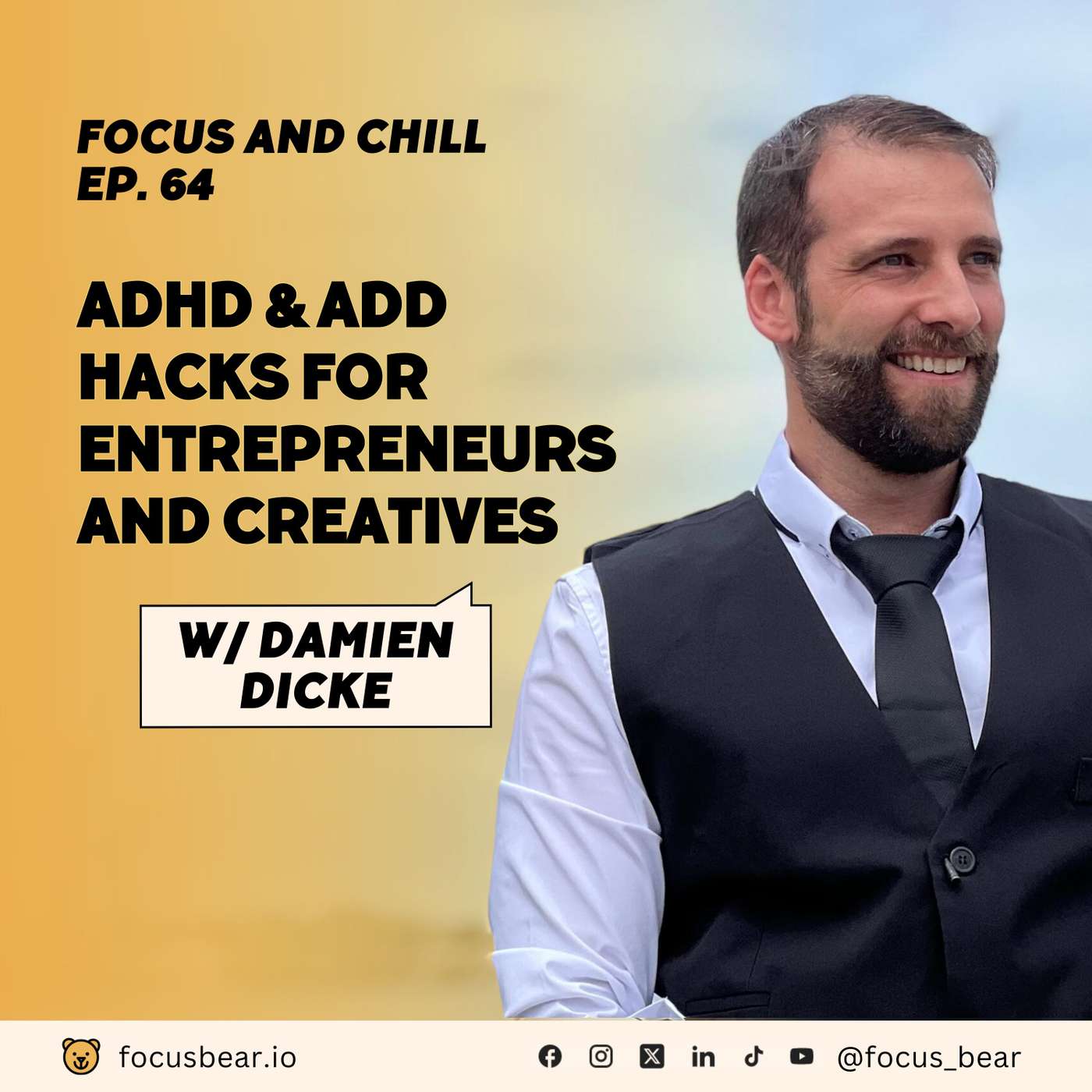
Episode 64: Damien Dicke
from Focus and Chill - productivity tactics for AuDHDers and other neurodivergent folks · host Jeremy Nagel
Welcome to episode #64. We’re thrilled to be joined by Damien Diecke today. Damien is the founder of the School of Attraction and The Dangerous Man. He is the author of the award-winning book Sincere Seduction. He's been a coach and professional speaker in over 25 countries. He was diagnosed with ADHD at the age of 10 and struggled until he started his company at the age of 25, which he’s still running today 15 years on. Damien has developed unique working styles to enable him to be productive. Many of his clients have ADD and he’s here today to share these working styles and how his work can help those with ADHD and ADD. Welcome to the show Damien!QuestionsCan you tell us about your experience with neurodiversity? When did you realise that you weren’t neurotypical?Other people realised long before I did - as a kid you don’t thnk about these things as much - except I never had friends in primary school which hurt a lot. I never ‘felt’ neurodivergent until I was an adult - even though I had been medicated as a kidDiagnosed at 10What challenges did you face? Couldn’t keep focussed on university, dropped out of a double degreeCouldn’t complete anything that I started - DJ work, courses, study, business ideas etc. When people knew I had ADHD they told me certain things I couldn’t do - I learned to be obsessed with finding a way to turn the ADHD into a strength, a way to use it to my advantage - this obsession has served me well I think.Feeling misunderstoodOften had only one friendStruggled with homeworkWondered what trouble he was going to get intoWhich knocked the love of learning out of himUniversity was tough because the pressure to achieve was no longer there.What is it like now?I suppose it’s a part of who I am - I live a life where it’s completely integrated and accounted for - I just live a little differently but don’t feel it’s a negative in any wayI had to learn to adapt because most useful drugs are off the table for me - hormone disregulation issues. I default to logic when things get emotionally hardLoves learning againStill loses interest in things that are repetitive (e.g. some board games).Schoolofattraction was the only thing that he was able to see throughThe difference was that he was able to get a lot of praise (because everyone wants to get better at dating).Consistent progress: 5 minutes per day.What neuroexceptional strengths are you leaning into now?Definitely hyper-focus… I can get amazing amounts of work done in short periods of time when I get into hyper-focus area. Knowing strengths:Great at designing and building websites. Not great at writing sales emailsNow delegates work that he finds hard to hyperfocus onI also hyper focus on electronic toys (drones) - Why is this useful? I buy and sell toys on a profit - so it’s a side-hustle I can only pursue because I’m hyper focussed on the toys and the marketplace they live in - I see the trends and take advantage of playing with new electronic toys for a while. Because I had to learn to be hyper-structured - it’s useful in a business context - at least a lot of the time.What "work" projects are you concentrating on? Two parts:School of AttractionDating coachingGoal is to be confident but not manipulative (not pickup artist style)Men’s retreatsPersonal development work separate from dating coachingHard to sell spirituality/self development - easier to sell dating coaching (but actually dating goes better if you do self development)Helps to dissolve illusion that a partner will solve self esteem issuesDealing with inner demonsAdvertising and PR mostly - I have spent too long focussing on what I’m good at and not other parts of the business that need attention. So my hyperfocus righ tnow is on designing ads, landing pages, and writing copy - thank god for AI it helps a lot with ideas. How about the rest of the time? What do you enjoy doing in your off time? I fly FPV racing drones, watching movies, photographyFPV (first person view)Exercise (helps with hormone dysregulation).Goes to a gymGoes with his partner but only because they’re partneredDoes weights (but doesn’t do much for mental health)Lot’s of readingAvoiding alcohol (since 21)Bars / clubsSpending time with partnerNoveltyCars / buggiesRecommends that people find hobbies that force you to be part of a communityProductivity tips What do you do to optimise productivity during your working hours? I’m hyper-structuredStart work at the same timeMy whole day is the same every dayOn Sundays plans out entire week down to 30 minute levelLong term goalsI have to block entire days dedicated to hyper-focus tasks otherwise I can’t even consider starting them. I have to bounce my thoughts off other people to really process themVerbally processing - doesn’t need feedbackWhat is some unhelpful productivity advice that doesn’t work for you?Pomodoro technique - better to stay in hyperfocusBut needs breaks during creativity crashesTaking walks every hour or twoBREAK What does your morning routine look like and how has it evolved over time? I eat the same thing every day until I get bored of it - adding a new decision every morning would create cognitive fatigue that would make starting with work harderI avoid dopamine activities prior to starting workReduce decision fatigueHow is your sleep? How do you switch off at night? My sleep is often rough - not sure if that’s about neurodivergence - or my hormone dysregulation - maybe those are related, who knows? I read at night in bed, takes about an hour to get to sleepDoesn’t watch TVBecause my brain is always firing on overdrive, waking up in mornings is almost never an issue even with just a few hours sleepWhere can people connect with you or find your work? schoolofattraction.comyoutube/schoolofattraction School of attraction podcastDo you have any final words or asks for our audience? I think it’s hard to give overall advice to neurodivergents because all forms of neurodivergence are spectra, and more than that the symptoms between identical diagnoses tend to be vastly different as well - everyone is a bit unique. In many ways I still don’t consier myself neurodivergent because that feels like a way of seeing myself that would just hold me back - this is probably not the ideal advice for everyone, but for me, it was important to my success. Actually I think that it’s good advice for EVERYONE NT and ND - Create a life where you can capitalise...
Embed this episode
NOW PLAYING
Episode 64: Damien Dicke
No transcript for this episode yet
Similar Episodes
No similar episodes found.
Similar Podcasts
No similar podcasts found.