
EPISODE · Jan 1, 2026 · 1H 1M
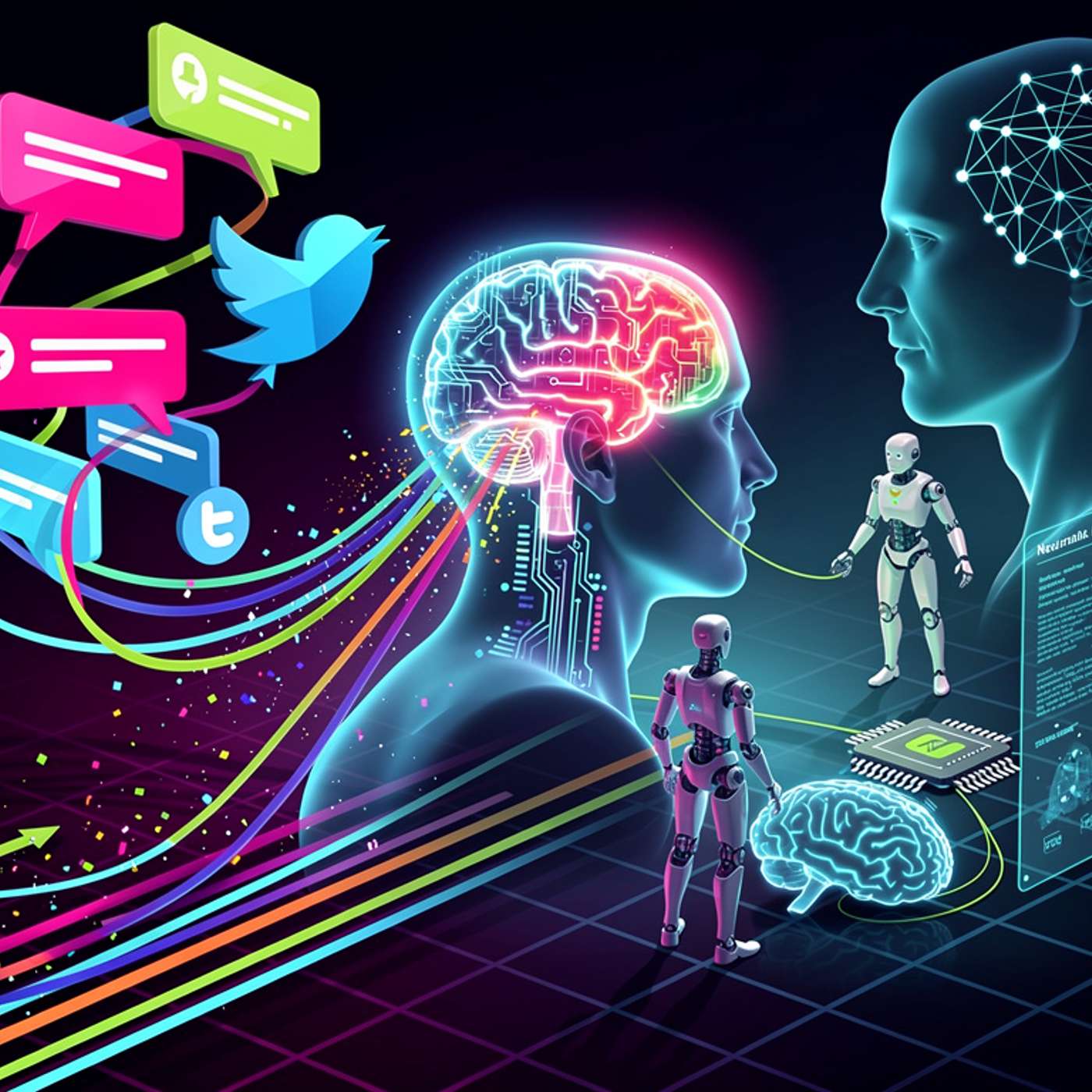
Episode #70: From Twitter to Threads: Escaping the Training Data Mines of Late Capitalism
from Stewart Squared · host Stewart Alsop II, Stewart Alsop III
In this episode of the podcast, host Stewart Alsop III engages in a wide-ranging conversation with Stewart Alsop II about data training, social media competition between X and Threads, and the broader technological landscape from semiconductors to AI. The discussion covers everything from Taiwan's dominance in chip manufacturing through TSMC, the evolution of supercomputers from Seymour Cray's innovations to modern GPU clusters, and the challenges facing early-stage companies trying to scale specialized technologies like advanced materials for semiconductor manufacturing. The conversation also touches on the complexities of cryptocurrency adoption, the changing nature of work in an increasingly specialized economy, and the implications of AI data centers on power consumption and infrastructure.Timestamps00:00 The Rise of Threads and Competition with X03:01 The Semiconductor Landscape: TSMC vs. Intel06:03 The Role of Supercomputers in Modern Science09:00 AI and the Future of Data Centers11:46 The Evolution of Computing: From Mainframes to Clusters14:54 The Impact of Moore's Law on Semiconductor Technology17:52 Heat Management in High-Performance Computing31:01 Power and Cooling Challenges in AI Data Centers33:42 Battery Technology and Mass Production Issues35:33 The Importance of Specialized Jobs in the Economy38:54 The Evolution of ARM and Its Impact on Microprocessors42:49 The Shift in Software Development with AI46:50 Trust and Data Privacy in the Cloud49:45 The Democratization of Investing and Its Challenges53:52 The Regulatory Landscape of CryptocurrencyKey Insights1. TSMC's foundry dominance stems from strategic focus, not outsourcing. Taiwan Semiconductor Manufacturing Company became the global chip leader by specializing purely in manufacturing chips for other companies, while Intel failed because they couldn't effectively balance making their own chips with serving as a foundry for competitors. This wasn't about unions or cheap labor - it was about TSMC doing foundry work better than anyone else.2. Scale economics have fundamentally transformed computing infrastructure. The shift from custom supercomputers like Seymour Cray's machines to clusters of networked mass-produced computers represents a broader principle: you can't compete against scale with handcrafted solutions. Today's "supercomputers" are essentially networks of standardized components communicating at extraordinary speeds through fiber optics.3. AI infrastructure is creating massive resource bottlenecks. Sam Altman has cornered the market on DRAM memory essential for AI data centers, while power consumption and heat dissipation have become national security issues. The networking speed between processors, not the processors themselves, often becomes the limiting factor in these massive AI installations.4. Trust is breaking down across institutions and platforms. From government competence to platform reliability, trust failures are driving major shifts. Companies like Carta are changing terms of service to use customer data for AI training, while social media platforms like Twitter/X are being used as training data farms, prompting migrations to alternatives like Threads.5. Personal software development is becoming democratized while enterprise remains complex. Individuals can now build functional software for personal use through AI coding assistance, but scaling to commercial applications still requires traditional expertise in manufacturing, integration, and enterprise sales processes.6. Cryptocurrency regulation is paradoxically centralizing a decentralized system. Trump's GENIUS Act forces stablecoin issuers to become banks subject to transaction censorship, while major Bitcoin holders like Michael Saylor introduce leverage risks that could trigger broader market instability.7. User experience remains the critical barrier to technology adoption. Despite decades of development, cryptocurrency interfaces are still incomprehensible to normal users, requiring complex wallet addresses and multi-step processes that prevent mainstream adoption - highlighting how technical sophistication doesn't guarantee usability.
Embed this episode
NOW PLAYING
Episode #70: From Twitter to Threads: Escaping the Training Data Mines of Late Capitalism
No transcript for this episode yet
Similar Episodes
No similar episodes found.
Similar Podcasts
No similar podcasts found.