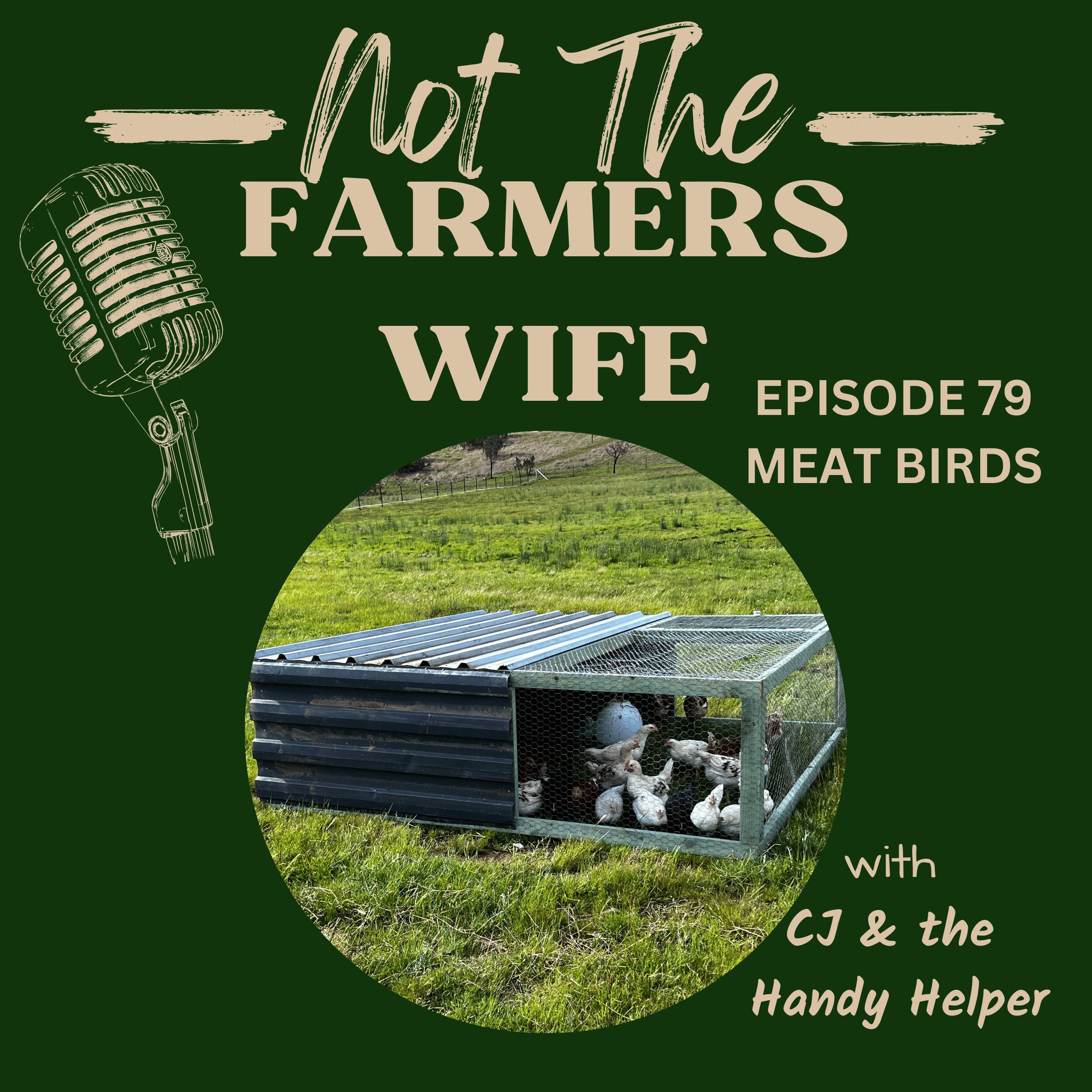
Episode 79 - Meat Birds episode artwork

EPISODE · Sep 1, 2024 · 1H 1M

Episode 79 - Meat Birds

from Ditch The Store · host CJ Steedman

Meat Birds Kill Cones - https://amzn.to/4fUYt9N Butchers Aprons that we use - https://amzn.to/3SXujZp Rubber Fingers for Plucker - https://amzn.to/4cwIwnk Butcher Knife that we use - https://amzn.to/46VIFzd  Raising chickens as meat birds, also known as broilers, requires careful planning and attention from day-old chicks to processing. Here’s a comprehensive list of everything a homesteader needs to consider:    Choosing the Right Breed    - Broiler Breeds: Select a breed known for meat production, such as Cornish Cross or Red Rangers (USA), Cob (AUS) and Broiler (UK). Cornish Cross, Cobs and Broilers are fast-growing, typically ready for processing at 6-8 weeks, while Red Rangers grow slower but are hardier and more suited for pasture.  Heritage breeds take longer to grow but are becoming more popular with homesteaders and small farmers. Any of the dual-purpose breeds can be used for meat in this way.  Australop, Brahma, Plymouth Rock, Orpingtons, Rhode Island Red and White, Sussex and Wyndottes.    - Source: Purchase chicks from a reputable hatchery or breeder to ensure healthy, disease-free stock.    Housing & Space Requirements    - Brooder Setup: For the first few weeks, keep chicks in a brooder with a controlled temperature. Provide 0.05 square meters (0.5 square feet) per chick, increasing as they grow.    - Coop or Shelter: Once they’re feathered, move them to a coop or shelter. Provide 0.28-0.37 square meters (3-4 square feet) per bird inside the coop and 0.93-1.4 square meters (10-15 square feet) per bird in outdoor space.    - Ventilation: Ensure adequate ventilation to reduce moisture and ammonia buildup.    - Protection: Secure housing to protect from predators, ensuring doors and windows can be locked or closed securely.    Feeding    - Chick Starter Feed: Start with a high-protein chick starter feed (18-20% protein) for the first 4 weeks.    - Broiler Grower Feed: Transition to broiler grower feed with 20-24% protein until processing time.    - Feed Consumption: Expect rapid growth; monitor feed consumption closely and ensure there’s always enough available.     - Feeding Schedule: Some homesteaders restrict feed access to 12 hours on, and 12 hours off after the first few weeks to prevent health issues like leg problems and heart failure.    Watering    - Constant Access: Broilers need constant access to clean, fresh water. Ensure waterers are large enough to meet their needs.    - Waterer Type: Use sturdy waterers that can’t be easily knocked over as the birds grow larger and heavier.    - Maintenance: Clean waterers regularly to prevent bacterial growth.    Health & Disease Prevention    - Vaccination: Vaccination is a personal consideration, so do your own research. Consider vaccinating chicks against common diseases like Marek’s disease.    - Biosecurity: Practice good biosecurity by limiting access to the coop and cleaning tools and boots before and after handling the birds.    - Observation: Regularly check for signs of illness, such as lethargy, coughing, or abnormal droppings.    - First Aid Kit: Keep a poultry first aid kit with essentials like electrolytes, probiotics, and wound care supplies.    Growth Monitoring    - Weight Tracking: Regularly weigh a sample of birds to monitor growth and ensure they’re on track for the processing date.    - Adjust Feed: Adjust feeding if growth is too fast or slow to avoid health issues or poor meat quality.    Bedding & Coop Maintenance    - Bedding Type: Use absorbent bedding such as pine shavings or straw. Avoid cedar shavings due to their potential toxicity.    - Bedding Depth: Start with 5-8 cm (2-3 inches) of bedding, adding more as needed to keep it clean and dry.    - Cleaning Schedule: Clean the coop and replace bedding regularly to prevent ammonia buildup and disease.    Pasture Raising     - Tractor or Mobile Coop: For pasture-raising, use a chicken tractor or mobile coop to rotate birds on fresh grass, providing them with a more varied diet and better meat flavour. The fast-growing meat birds can leave the brooder usually around the 3-week mark, heritage breeds closing the 6 weeks. It's about being fully feathered.    - Pasture Management: Rotate pasture regularly to prevent overgrazing and reduce disease risks from soiled ground.    Processing Preparation    - Processing Date: Plan the processing date, typically around 6-8 weeks for Cornish Cross, and 10-12 weeks for slower-growing breeds, maybe even later.    - Fasting Before Processing: Remove feed 12-24 hours before processing to empty the birds' crops, but continue providing water.    - Processing Supplies: Gather all necessary supplies, such as killing cones, knives, scalding pot, plucker, evisceration tools, and cooling containers.    - Processing Station Setup: Set up a clean, organised area for processing with easy access to water for scalding and cleaning.    Processing & Butchering    - Humane Dispatching: Use a humane method for dispatching the birds, such as a killing cone and sharp knife.    - Scalding: Scald the birds in hot water (60-65°C or 140-150°F) for 30-60 seconds to loosen feathers for plucking.    - Plucking: Use a plucking machine or hand pluck the birds, ensuring all feathers are removed.    - Disassemble: Carefully remove internal organs, saving desired parts like the liver, heart, and gizzard.    - Cooling: Immediately cool the birds in ice water to bring down the internal temperature and prevent spoilage.    Post-Processing Care    - Resting the Meat: Let the processed birds rest in the refrigerator for 24 hours before freezing to allow the meat to relax and improve tenderness.    - Packaging: Packaging the meat in freezer-safe bags, removing as much air as possible to prevent freezer burn.    - Labeling: Label packages with the date of processing for easy inventory management.    Record Keeping    - Growth Records: Keep detailed records of feed consumption, growth rates, and health issues.    - Processing Records: Record processing dates, weights, and yield to track efficiency and plan for future batches.    - Expense Tracking: Track all costs associated with raising the birds, including feed, bedding, and processing supplies, to evaluate profitability.    Legal Considerations    - Processing Regulations: Be aware of local regulations regarding on-farm processing. Some areas require inspection or specific handling practices.    - Sales Laws: If planning to sell meat, check for local laws on meat sales, which may require licensing or inspection.    Sustainability Considerations    - Composting Waste: Compost feathers, offal, and other processing waste, or use them as fertiliser if regulations allow.    - Rotating Pastures: If pasture-raising, use rotational grazing to maintain soil health and reduce parasite loads.  

Meat Birds Kill Cones - https://amzn.to/4fUYt9N Butchers Aprons that we use - https://amzn.to/3SXujZp Rubber Fingers for Plucker - https://amzn.to/4cwIwnk Butcher Knife that we use - https://amzn.to/46VIFzd  Raising chickens as meat birds, also known as broilers, requires careful planning and attention from day-old chicks to processing. Here’s a comprehensive list of everything a homesteader needs to consider:    Choosing the Right Breed    - Broiler Breeds: Select a breed known for meat production, such as Cornish Cross or Red Rangers (USA), Cob (AUS) and Broiler (UK). Cornish Cross, Cobs and Broilers are fast-growing, typically ready for processing at 6-8 weeks, while Red Rangers grow slower but are hardier and more suited for pasture.  Heritage breeds take longer to grow but are becoming more popular with homesteaders and small farmers. Any of the dual-purpose breeds can be used for meat in this way.  Australop, Brahma, Plymouth Rock, Orpingtons, Rhode Island Red and White, Sussex and Wyndottes.    - Source: Purchase chicks from a reputable hatchery or breeder to ensure healthy, disease-free stock.    Housing & Space Requirements    - Brooder Setup: For the first few weeks, keep chicks in a brooder with a controlled temperature. Provide 0.05 square meters (0.5 square feet) per chick, increasing as they grow.    - Coop or Shelter: Once they’re feathered, move them to a coop or shelter. Provide 0.28-0.37 square meters (3-4 square feet) per bird inside the coop and 0.93-1.4 square meters (10-15 square feet) per bird in outdoor space.    - Ventilation: Ensure adequate ventilation to reduce moisture and ammonia buildup.    - Protection: Secure housing to protect from predators, ensuring doors and windows can be locked or closed securely.    Feeding    - Chick Starter Feed: Start with a high-protein chick starter feed (18-20% protein) for the first 4 weeks.    - Broiler Grower Feed: Transition to broiler grower feed with 20-24% protein until processing time.    - Feed Consumption: Expect rapid growth; monitor feed consumption closely and ensure there’s always enough available.     - Feeding Schedule: Some homesteaders restrict feed access to 12 hours on, and 12 hours off after the first few weeks to prevent health issues like leg problems and heart failure.    Watering    - Constant Access: Broilers need constant access to clean, fresh water. Ensure waterers are large enough to meet their needs.    - Waterer Type: Use sturdy waterers that can’t be easily knocked over as the birds grow larger and heavier.    - Maintenance: Clean waterers regularly to prevent bacterial growth.    Health & Disease Prevention    - Vaccination: Vaccination is a personal consideration, so do your own research. Consider vaccinating chicks against common diseases like Marek’s disease.    - Biosecurity: Practice good biosecurity by limiting access to the coop and cleaning tools and boots before and after handling the birds.    - Observation: Regularly check for signs of illness, such as lethargy, coughing, or abnormal droppings.    - First Aid Kit: Keep a poultry first aid kit with essentials like electrolytes, probiotics, and wound care supplies.    Growth Monitoring    - Weight Tracking: Regularly weigh a sample of birds to monitor growth and ensure they’re on track for the processing date.    - Adjust Feed: Adjust feeding if growth is too fast or slow to avoid health issues or poor meat quality.    Bedding & Coop Maintenance    - Bedding Type: Use absorbent bedding such as pine shavings or straw. Avoid cedar shavings due to their potential toxicity.    - Bedding Depth: Start with 5-8 cm (2-3 inches) of bedding, adding more as needed to keep it clean and dry.    - Cleaning Schedule: Clean the coop and replace bedding regularly to prevent ammonia buildup and disease.    Pasture Raising     - Tractor or Mobile Coop: For pasture-raising, use a chicken tractor or mobile coop to rotate birds on fresh grass, providing them with a more varied diet and better meat flavour. The fast-growing meat birds can leave the brooder usually around the 3-week mark, heritage breeds closing the 6 weeks. It's about being fully feathered.    - Pasture Management: Rotate pasture regularly to prevent overgrazing and reduce disease risks from soiled ground.    Processing Preparation    - Processing Date: Plan the processing date, typically around 6-8 weeks for Cornish Cross, and 10-12 weeks for slower-growing breeds, maybe even later.    - Fasting Before Processing: Remove feed 12-24 hours before processing to empty the birds' crops, but continue providing water.    - Processing Supplies: Gather all necessary supplies, such as killing cones, knives, scalding pot, plucker, evisceration tools, and cooling containers.    - Processing Station Setup: Set up a clean, organised area for processing with easy access to water for scalding and cleaning.    Processing & Butchering    - Humane Dispatching: Use a humane method for dispatching the birds, such as a killing cone and sharp knife.    - Scalding: Scald the birds in hot water (60-65°C or 140-150°F) for 30-60 seconds to loosen feathers for plucking.    - Plucking: Use a plucking machine or hand pluck the birds, ensuring all feathers are removed.    - Disassemble: Carefully remove internal organs, saving desired parts like the liver, heart, and gizzard.    - Cooling: Immediately cool the birds in ice water to bring down the internal temperature and prevent spoilage.    Post-Processing Care    - Resting the Meat: Let the processed birds rest in the refrigerator for 24 hours before freezing to allow the meat to relax and improve tenderness.    - Packaging: Packaging the meat in freezer-safe bags, removing as much air as possible to prevent freezer burn.    - Labeling: Label packages with the date of processing for easy inventory management.    Record Keeping    - Growth Records: Keep detailed records of feed consumption, growth rates, and health issues.    - Processing Records: Record processing dates, weights, and yield to track efficiency and plan for future batches.    - Expense Tracking: Track all costs associated with raising the birds, including feed, bedding, and processing supplies, to evaluate profitability.    Legal Considerations    - Processing Regulations: Be aware of local regulations regarding on-farm processing. Some areas require inspection or specific handling practices.    - Sales Laws: If planning to sell meat, check for local laws on meat sales, which may require licensing or inspection.    Sustainability Considerations    - Composting Waste: Compost feathers, offal, and other processing waste, or use them as fertiliser if regulations allow.    - Rotating Pastures: If pasture-raising, use rotational grazing to maintain soil health and reduce parasite loads.

NOW PLAYING

Episode 79 - Meat Birds

0:00 1:01:12

No transcript for this episode yet

We transcribe on demand. Request one and we'll notify you when it's ready — usually under 10 minutes.

Big Old Life: Heather Blackbird interviews people on planet earth. Heather Blackbird loves asking questions. This podcast is a learning experience. Join me, Heather Blackbird, as I talk to people about their lives. Frequency of new episodes is a little all over the place and I'm learning as I go. Big Old Life is a small way of talking about the vastness of life, one person at a time. If you are reading this or found this podcast it's probably because someone you know gave you a link to it. :) Explicit Tales Of A Superstar DJ The Insomniac Spun seemingly out of nowhere from her complacent life in the corporate world, turned seemingly overnight from 16-Hour shift work and into the life of a literally starving artist and working musician, The Protagonist navigates her supposed rise to fame and superstardom on a journey through spiritual awakening, coming-of-age, and intimate self-realization--guided by an omnipresent force and equipped with the power of love, magic, and music. {Enter The Multiverse.} [The Festival Project] The Festival Project, Inc.™ is a multidimensional multimedia platform which encompasses exploratory and artistic social personifications and expressions on cosmic theory, spirituality, growth, health & wellness, philosophy and theoretic dynamics in entertainment such as music, design, film, television, radio, dance and festival culture, art, fashion, literature, and science. The Festival Project™ and its subsidiary Non-Profit, The Collective Complex © aims to challenge modern artistic and philosop Explicit Bitcoin Is Dead Trey Carson Welcome to Bitcoin is Dead, the ultimate Bitcoin variety show where host Trey takes you on a journey through the ever-evolving world of Bitcoin. Each episode brings new personalities, fascinating locations, and insightful conversations with politicians, educators, and innovators shaping the future of Bitcoin. Whether you're a seasoned Bitcoiner or just starting your journey, tune in for thought-provoking discussions, unique perspectives, and a deep dive into the ideas and people driving the Bitcoin revolution. Explicit The Sacred +Profane Podcast nephtaragrace The Sacred + Profane Podcast is a provocative conversation dedicated to cementing a better future for all. We specialize in unpacking the nuances of what is considered sacred and profane, particularly focusing on sex, death, and all that pertains to the circle of life. Our aim in focusing on such ”taboo” subject matter is to demystify what is unconscious, bring to light what has been known for centuries as ”the occult,” and empower the rapid transformation that is occurring on the Planet. Explicit

Frequently Asked Questions

How long is this episode of Ditch The Store?

This episode is 1 hour and 1 minute long.

When was this Ditch The Store episode published?

This episode was published on September 1, 2024.

What is this episode about?

Meat Birds Kill Cones - https://amzn.to/4fUYt9N Butchers Aprons that we use - https://amzn.to/3SXujZp Rubber Fingers for Plucker - https://amzn.to/4cwIwnk Butcher Knife that we use - https://amzn.to/46VIFzd  Raising chickens as meat birds, also...

Can I download this Ditch The Store episode?

Yes, you can download this episode by clicking the download button on the episode player, or subscribe to the podcast in your preferred podcast app for automatic downloads.
URL copied to clipboard!