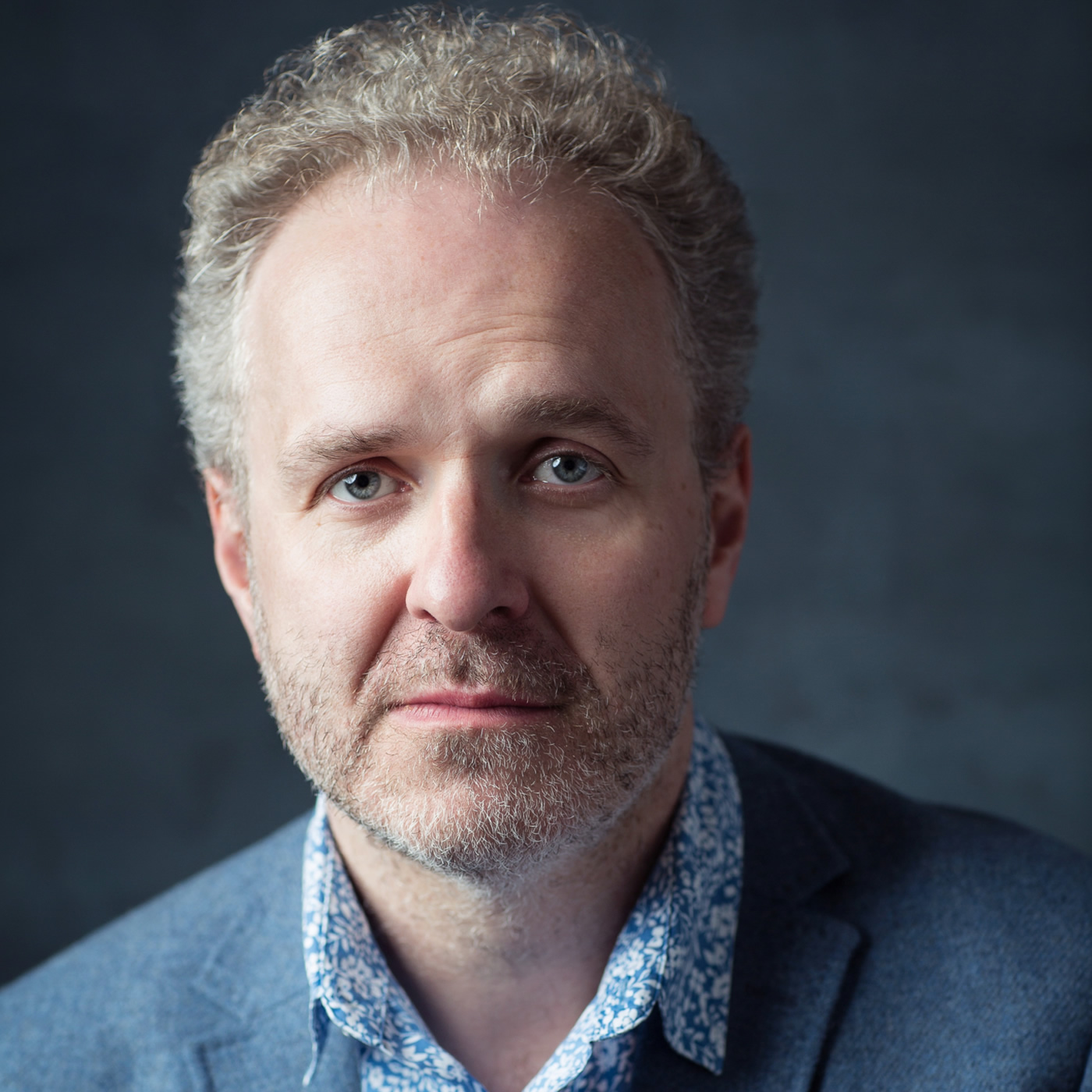
Welcome to SickCom Geeks. We are at the Clandered No Craft of Comedy Festival. I'm Dave Kerwin. And I'm Dave Kerwin.
And we're joined today by great comedy writer and performer as well actually. You said to be a performer is a bit of an afterthought surprise. Yeah, I was remembering all the writing. I was remembering all the writing and then I was still remembering the show that I saw you do with Gus Brown.
But Lawrence, how is with us? Hello James. Hello James. Very nice to be here.
We go to talk to you about your writing, SickCom and Sketch writing. But actually, you are the news at this point, don't you? Because you are... I'm not David Baddiel.
You're not David Baddiel. You're the man they tried to silence. And part of his own is conspiracy or something? I'm either part of one or I'm against one.
I can't remember. You are basically the man who wrote the Jeremy Corbyn sketches on the Tracy Almond. Yes, that's right. So this slightly strange situation occurred.
A series of sketches about Jeremy Corbyn for Tracy Brakes and news, Tracy Almond's topical sketch show. And the first one of the series, which we speak as just finished, caused a bit of a fuss from Jeremy Corbyn supporters. They didn't like it because it was a sketch about Corbyn's history to do with Sinn Fane and to do with links with Hamas and Hezbollah. Understandably, perhaps, that this was an area...
I mean, it was an area that the sketch was about Corbyn not wanting to go into all of that, and it supported echo those sentiments as it were. But particularly what's happened was that one of the people who objected to the sketch tweeted, I think unintentionally giving the impression that David Baddiel had written the sketch. He was unhappy that something that David had done on Frankie Boyle's show previously. Well, I think it was that...
Oh. Anybody who criticises Jeremy Corbyn on anti-Semitism, it can only be David Baddiel because he did it. Therefore, all criticism of Jeremy Corbyn on the BBC is by David Baddiel, and that was kind of the thrust of it. I'm sure that the guy doesn't think that that's what he was saying, but as we write it particularly now, once you put something out there, the meaning of it isn't you don't own the meaning of it.
And what he actually said was, I mean, one of those things where if you'd written it as a character, a producer would have said, I think nobody would be quite that, would betray themselves quite that blatantly. He more or less said, to me, I thought it was very clear, he said, this sketch about how the left has a problem with anti-Semitism is so wrong, it could have been written by a Jew. It was pretty much what he was saying. And you think, wow.
The ironyometer has exploded and you're just with the smoke going around your ears and you've not noticed it. He's got a ticket. He's got a ticket. He's got a ticket.
Quite extraordinary. So can you talk us through then the next kind of 48, 72 hours of the fallout? Yeah. So I'm not on Twitter, which I've sometimes thought is about decision, but currently seems a pretty solid.
Very good. And so I wasn't aware of this at all until the Sunday, so there's a joke on the Friday nights, but it had been, I'm sorry, I'm not going to be found out, all over Twitter and the David Bideal. It had gone around. I think this original tweet had been picked up by other people who took it to me that David Bideal had literally written it.
It was such an outrage. It's as if David Bideal had written it. The correction doesn't make you better. That's absolutely correct.
That's absolutely correct. And George Galloway amongst others started attacking David Bideal over this. That doesn't sound like the George we know. And it became this, you know, you always have to caveat these things with going with Twitter.
Probably the number of people who were actually getting waded was 20 or something. I mean, there wasn't that many people, but various people involved in the show sort of got involved. Caroline Norris, the producer, he found her Twitter handle and this main guy got her into the whole conversation as well and just kept at her and sort of was extremely unhappy and calling the sketch propaganda and saying it was effectively saying that we were just trying to, the point of the sketch was to try and keep Jeremy Corbyn out of power. And so by the Sunday night I'd be playing cricket on Sunday.
Not only are you not on Twitter, but you were playing cricket. Yes, quite. And when I came up with Scorny, I was keeping wickets. I was tired, tired, tired, but you were tall man for a wikikeeper.
I'm sort of, I'm average-wise, I'm average-wise. That's the sort of question that the son of a dairy farmer was. A man from sunset would make me. Anyway, so I came off the picture and there were lots of misqualls and the BBC were having a little bit of a panic overstating it, but they were not so horrible to do.
A bit of a wobble. Thank you, James. Yeah. And they, because they thought to themselves well, is it going to help things if we say actually the person who wrote the sketch was this person, or is that going to make it worse?
It was a very, I thought, so I was really conflicted about it. In fact, I talked to other writers and you guys amongst them. The reason I was conflicted about it was that there was one part to me that thought, well, I did write the sketch. I mean, the sketch goes through other hands and it's the team writers, we would all talk about every, all the sketches and how we can prove them and trace shapes the sketches with her sensibility extremely well.
But I thought, well, I did write the sketch and I'm proud of the sketch and I think it was a funny sketch and so why shouldn't I get the credits anyway? It's quite rare that writers get these specific credits, so there's a bit of me thinking that way. But there was also a bit of me thinking, what, the fact that I wrote it is in terms of the story completely material, because nobody knows me in that way really. It's not like the fact of me writing it means that the sketch is different in some way.
And also there was a bit of me that felt that people said more or less said, are you happy for us to name you? Which I'd have sort of slightly sinister in that slightly bubble of insecurity we had about it. That's slightly sinister, if they were going to push me forward one step and take two steps back and say, let's see what's on the other side. We'll be right behind you.
Yes, exactly. 15 or 23. Now that's not to say that they weren't supported because they were, but it felt like either decision that I took would have problems with it really. And so I talked to my agents and I talked to other writers, talked to my wife and in the end came down, because the other interesting thing was that quite a few other writers contacted me and say, right, you need what you need to do is name yourself and then get your agent to speak to the guardian and write a column about that.
And I was saying this is a great opportunity for you, which depending on how your mind is to approach these things and what sort of career you would like to get into it. I could have done that probably, but that wasn't for me. Is the guardian obvious newspaper to be right? The guardian had, was the first newspaper to pick up on the thing and they put an article about it.
So that was that stage, the obvious person to approach because it would be linked to the article they'd already done. Fine. I'm subsequently running the sun and in the... You could have written for the sun.
I could have written for the sun, yes, that was my moment. Yeah, that was my moment. But in the end we did was we, the British comedy guide who I think are, you guys... They host the whole cast and they are...
We have nothing bad to say about these times. No, likewise. And the guy who runs that I think knows Caroline Norris, the producer, and got in touch and said, look, we want to do a story about it. It's completely up to you.
Would you want to tell us who actually wrote the sketch? And we felt in the end that was a good way to go about it because then A, it would be in the public domain and that would hopefully sort of have some effect of stopping the absolute nonsense around it. Because the sketch could have been written by David Einck. It would probably be written by then and David Einck would have been playing the lizards.
But at the same time, and also from a... I have to say, it meant that probably the people in the industry would know that it was... I thought, well, I don't know, people in the industry knowings me because I think it's a good sketch. But it will also not push me into the sort of limelight particularly, which I was...
Very definitely did not want to. I did not want to get into an argument with these people on Twitter because I thought it would be a big waste of time. And you don't want to publicly set the record straight in a look at me way, but do I? No.
For your factual information here is what you need to know. And if somebody was really interested and did a bit of research they could find out. And it was there. But they weren't because they don't like to research and find out.
What was quite interesting we were chatting about this just when we came up yesterday. And the important point being, I know you have only 15, 20 years or so, you're not a new writer. But the point, if it had been somebody just starting out, it really felt like it was bullying and intimidation. Really of the worst kind.
And it would have been quite a traumatic thing for a new writer. I think Caroline had a pretty unpleasant few days of... Because people, including her in every single tweet they were sending, they were tweeting and tweeting and tweeting and tweeting. And not necessarily the things they were saying were not outright abuse as it were, but it was the relentless nature of it was troubling.
And also the fact is you don't know people on the internet. You don't know whether these people are angry but sane or angry and insane. Or you don't know these people. Or something might be robots.
Something might be robots. Or part of the problem is that they will defend themselves by saying, oh, but I'm not that sort of person. We don't know that. But if somebody keeps tweeting you hour after hour after hour, I see you.
I know where you are, even online. That feels incredibly sinister. And as you say, David, I think that is a really important point. It could easily, I mean, I certainly looked at it and thought, I would look back at the sketch and thought, I really did research the sketch very carefully and I stand by every detail of it.
But even then I felt, oh, blimey. I'm very glad I had a Jacob Reese Mogg sketch in the same show because it felt like, but then I thought, well, hang on, why? It's a funny thing. You shouldn't have to be thinking that.
I'm not sure you're writing that one sketch of many sketches in that show. You are one writer of other writers in that show. And also that one Jeremy Corbyn sketch is one of a number of sketches about Jeremy Corbyn. Yes.
I mean, there's so much time to be typical, actually, because it probably was a tougher sketch in terms of what was the implication of it. Though I don't think it was a critical sketch at all in that way. It was just about how there was, there was the Jeremy Corbyn of the 1980s who was this guy. And I don't have to remember that Jeremy Corbyn from then.
And let's not say it's right or it's wrong, but he was a very different figure to who he is now. And part of what's funny about that is that people always say, Jeremy Corbyn hasn't changed. He's the same guy he's always been through. And that can never be true of anybody.
We all change. And we all, also the context around us changes. And therefore what gets emphasized in your political career changes as well. So the sketch is really about that.
But yeah, no, exactly. The job of when you're writing a sketch, you don't have to be balanced within a sketch. The sketch is that you take a line on somebody. It's one idea.
It's one idea. But the show overall has, and you know, sketches about loads of stuff. Those are stuff about conservatives, SMP, stuff about the liberal democrats. So I mean, to suggest that the show has this particular political bias was so blitheringly foolish.
It's a willfully. It has to be not worth really commenting. So good job that we haven't commented on it. What particularly annoyed me as well when I started to see that people were piling in on Caroline as well was that I know from personal experience of working with Caroline, the amount of incredibly controversial stuff that she has managed to get on to TV through horrible histories.
And the kind of stuff that we're allowed to write about on children's TV, really heavy stuff about empire and about violence and history and things and attitudes and approaches to history that are very, very different to mainstream attitudes. And she got, you know, she was always pushed to get alternative views on that. That was particularly annoyed me because I mean, it's interesting what you're saying about. You don't know if these people, why the anger comes from it.
I think the important thing is about a lot of people is a lot of people don't know themselves and they wouldn't say themselves. They actually don't see it in the way that we see it. They see it as we're labor, we always get to time from the press, whether that's true or not is debatable. But this is one more case of the BBC, of the establishment attacking this poor, helpless character.
And I feel that people don't even necessarily know, I think someone said this the other day, oh, it's a great phrase. They don't know what they don't know. And so they feel more involved. It's stunning, the Dunning-Krieger effect, isn't it?
People with less knowledge tend to have more confidence. Miss a place of confidence. Thanks for listening to the Sick Con leaks podcast. Hope you're enjoying this chapter with Lawrence Howarth at the Craft of Comedy Festival in Clundered.
No, apologies that the room is a little bit echoey, but we're grateful to Steve Doherty for making that room possible. And the whole conference, in fact, thanks, Steve. We did our best to record on ever-improving equipment. Thanks to our Patreon subscribers who contribute to the costs of recording.
So thank you very much to you, you know who you are. And you could be one too. Loads of benefits, sneak previews, free e-books and an inside track as well as that warm fuzzy feeling of helping out your fellow man or men in our case. And if you subscribe, we will read your first 10 pages of a sitcom script and do a little podcast about it for Patreon subscribers.
In fact, we did one in person with one of our subscribers who was at the Craft of Comedy Festival. So we got her in and you'll be able to hear that soon on a secret page of Patreon only podcasts. So do Google Sick Con leaks Patreon and you'll find out more information, but let's get back to the delightful Lawrence Howarth. So, one of the very interesting things about this business was for the BBC, it's relatively news in my career for the BBC to be attacked from the left.
And the general line of attack has been that it's a leftly organisation and it's been attacked from the right and it's been relentlessly attacked by the Daily Mail and the other. And one of the things I'm reflecting on this is that I thought is obviously the BBC there's a lot about balance and that's right, so that's absolutely right. But balance doesn't mean that you have to make the same types of jokes about the left and the right because they're not funny in the same way. And one of the reasons I think that there's a particular outrage around Sketchup at Jeremy Corbyn is that the people who support him do so with extraordinary zeal and feel that he is not just, I like that guy, I'm an evoked for that guy.
They feel he is the most important thing potentially to happen in British politics in 50 years, 100 years. Yes, since that was the NHS. Whereas I don't know but I would imagine that even Theresa May's biggest fan would say, I think she's a competent and sensible person, so the joke against Theresa May is floundering and incompetence. Whereas the joke against Jeremy Corbyn is that he partly and his supporters largely set him up as this extraordinary, sure socialist figure.
This is our chance. It is a bigger joke. The one thing I can see is that the joke against Jeremy Corbyn is a harder joke because of who he is. You can't make the same joke, you can't make those Theresa May types jokes about Jeremy Corbyn because that's missing the point.
In the same way that you had jokes about, well, you had Thatcher-Kinnock jokes, very different in tone on spitting images. They turned Margaret Thatcher into a man, smoked cigars and ate raw meat and raw steaks. And kidding was always a joke. No, no, no, no.
Where you didn't do a joke about Margaret Thatcher being bumbly. No, no. That just wouldn't ring true. The one thing that has come out of it, the strange upshot, and similarly I think with the Frankie Boyle show we mentioned earlier, was the one thing that has come out of it, the strange upshot.
And similarly I think with the Frankie Boyle show we mentioned earlier where David Baddiel, Frankie Boyle who has always been a very strong supporter of the Palestinian rights nevertheless took Jeremy Corbyn to task about anti-Semitism. So there was a ferruri about that. So the ferruri was already in the air. Two weeks later, the Tracy show happens there's another ferruri.
One of the upshots I think is probably Frankie's German Tracy show have had fantastic publicity. Well, there is that. Absolutely. You've had almost that you've managed to develop almost a narrative arc of the Corbyn story out of that.
It was very funny as well because it so happens that we'd filmed two of the German film two of the German Corbyn sketches in the block of filming we do in advance of the series. And then it's only three episodes. And then we knew that for this week two we would film a topical one. And it just fell perfectly because then the sketch there was a little glancing reference to the whole thing in the sketch where Jeremy Corbyn's talking about doing something on Twitter.
I've been on there, John. Someone should tell them to tone it down a bit. Which I thought was how much to acknowledge what happened in the sketch. It's just a very glancing little thing because Jeremy himself wouldn't probably be aware of it.
We thought he might not well know about any of this stuff. But as if he's just looking at something a bit strange going on over there. It fell very nicely. Tracy played that moment beautifully as Corbyn.
So it was a great thing of actually being able to react in a minuscule way. But hopefully, because also it was one of those things. We thought we can't make a big thing of it because most of our audience won't know what we're talking about. It's a Twitter story and it had been in the papers but it wasn't a big story.
But it was lovely to be able to just tip the windgevers and tell you about that. How maybe it's too soon to tell really. But how has this little experience changed you as a writer maybe? Or made you think differently about what you're doing?
Was it more like this? You know what? Overall, I think I have really enjoyed being reminded of the fact that people care about this. Now I think the way in which some of these people have expressed that interest has been completely out of order.
At best. At best, clumsy. But funny enough, one of the things that you get quite often is that people worked in radio quite a lot. And quite often you put something out and it sort of into a void.
It's hard to know that it's out there. And particularly when you're talking about political things and politics is obviously very febrile and people are extremely... It's clear that what is happening at the moment is important. Which however you feel about it.
And I actually have really... I thought, well actually this is great. It sort of steals me to go. I'm glad that I wrote a sketch that was about important things to do with Jeremy Corbyn.
It was about that aspect of he is this complex figure. Really that's pretty much what the sketch was saying is he's a complex guy. Which is why it's so ridiculous that people reduce it. So you're either for him or against him.
I've never really talked about my political views and I'm not really going to hear. But what I will say is that people are saying I hate Corbyn or I hate John McDonough. I play John McDonough in most of the Corbyn sketches. They're not this one that was controversial.
And the truth is what I suspect it is for most people that I would meet. Which is I have mixed feelings. You know there are aspects of him then that I like and aspects that I'm not so keen on. And what I'm really proud of with that sketch is it's a sketch about a man having had a life before where he is at that moment.
And being about people have things in our past that we were burr-spy as it were. And I thought, well actually that's a great... It took a bit of time to get to that angle because partly this was the second series of this format that we've done. And I wrote three Corbyn sketches before.
And you're looking for new bits of the character that you can look at, obviously. I'm following up that came about because Liam Hurricken who plays Jerry Adams in the sketch was in the show to play Jacoby Smocks. So he'd come along to a read through and we'd stop talking. And he said, you know I do Jerry Adams as well.
And then I sort of thought, yeah of course Jerry Adams and Jeremy Corbyn. That's very interesting. I thought, I don't know I might do something with that, don't know. But it just sat in my mind of going, that would be fascinating to see them.
Because you know Corbyn was a big supporter of Sinn Féin. His supporters would say made great efforts to bring them into the political mainstream and was ahead of the time. And so they are now in the political mainstream. But at the same time I remember just that feeling of the feeling in the room that we all had when Jeremy Corbyn suddenly Jerry Adams says, Jeremy, that's funny straight away.
But also has that freeze on of, oh God where's this going? Which is what sat in the beat? It should make you a little bit uncomfortable on your toes. Has it made you sort of hanker after the simpler times of, you know, because you're also writing deadringers and stuff as well, which is not without its controversy.
And I'll Brexit as well. But does it make you hanker after the days of writing rigor mortis for Radio 4 and safety catch? Because you are a sick one by the way. And you're all right by us.
We're doing a run of deadringers at the moment and once that finishes I'm going to go and write a sick on strips. No, I don't know. I do know, I think the doing the satirical shows that I've done, Tracy Show, Deadringers in the last couple of years has been the most enjoyable period of writing on satirical shows that I've ever had in my career and I've been doing these shows on and off for 20, 25 years. Because the audience cares and because what we're discussing matters, it's serious.
I mean it's funny to even remember this, that for years and years people used to say politics doesn't matter. It's not who care. West Minnesota doesn't matter. It's the other history.
But what we started was mostly Radio 4 spoofs and TV spoofs and some politics, but the politics was not front and centre and we certainly wouldn't do sketches about every single member of the cabinet and shadow cabinet in the way that we do now. Because no one cared. They think it was not important and they thought, oh God, it's a boring. Nobody said no one said no.
It was a better or worse. Back to the weekending days I just record the sale end of it and it was like the shadow housing minister didn't really get much of a mention and you were really scrubbing around public schools. And Europe was toxic. No one wrote about it.
Now we've done Chris Grayling, we've done Javed recently, we've done Dainabas obviously, all these people. So it's great because people are interested. In a way it's a sitcom on its own right. It's a cast of characters that is not about making really, but in one sense I suppose it is.
We voted for them. I think to go back to that time of weekending when we were writing on it together nearly 20 years ago, that was kind of the end of the previous phase of the impressionist as the star. And so what happened was that people like Chris Barry and Rory Bremner had voices of not necessarily people that everybody knew. Like I mean, Rory Bremner was Peter Alice, the golf commentator who 90% of the population had no idea he was, but Rory's impression was so great that audiences loved Rory doing Peter Alice and Peter Alice became like a bigger star.
And so you're kind of coming to the end of that phase of Chris Barry and Rory, then you've got John Colshaw who's still obviously the main stream of the show and Jan Ravens and both have been, well, Jan had been spitting images as well. So you had these kind of the big TV personalities and the sports commentators and those kind of things. That was deadringers then. And now it was big on it.
In fact, John Holmes was in one of the sessions earlier and was talking about that it was sort of forgotten that deadringers came out to show that John and Andy Hearst called Grievers Bodley Radio, which was pretty much a radio for Spoof. And that whole strain of it came from there and John and Andy raised all the Brian Perkins stuff. That was the thing everyone remembers. It was Brian Perkins on the side of that.
God fuck the thing. That's the end of the video. Which was a big thing in the early deadringers but it originated on a different show on the network, which said originally tried to sell to Radio 1 and then Radio 1 didn't want to Radio 4 and it was strange the way these things come. But yeah, it's odd.
I mean, a bit like what I'm saying about Jeremy Corbyn having changed over this period of time. Deadringers appears. Everyone would say it's the same show as it was when it was coming. It first came on the air 18 years ago.
It really isn't. It's fascinating. And it's a topical show in a way that it never was. Yes, it was.
And then when it's TV as well. I remember the Simon Sharma, Perparities and stuff. And it was a lot of nice, lovely genre spoons. But politics was not high.
It wasn't. No, it was. It was. We would do probably Blair and George W.
Bush. That might well have been it. I don't remember us doing Michael Howard or Ian Duncan Smith particularly. Yeah.
And as a consumer, I've never written much of this kind of stuff. But as a consumer of politics, I've always loved Rory Bremner. And I remember his first BBC 2 series, which actually half of it was not, wasn't even impression that thing. No, no, no, no.
Jeremy Hardy was a sort of spare part of it. And I liked it because he did Driti Beno in that kind of really good he came to the forum. But then he sort of, when he moved to Channel 4, it's suddenly all got quite cool. And it was the rise of Blair.
And then there was the House to Campbell sketches and stuff. And there was lots of hidden camera footage style of very detailed policy. And I was just like, phew. I'm not so fussed about politics.
Can I have some jokes? Would you mind doing your Ritchie Beno again? Yes. Yeah.
Because the politics felt a bit, and then the Iraq war made everybody much more agitated. Well, actually it didn't because the majority of people did sort of think the war was justified. The second one. And then once it seemed that people were being lied to, then suddenly politics blew up.
But there was quite a long period where people talked about the end of history. Yeah. And then the two main, but there was no different, the other thing people would say is the two main parts are the same. Yeah.
And again, no one's saying that anymore. No. Which is probably healthy. It's funny to reflect how difficult it was to get political material into topical circumstances.
Because there was a resistance to it from the audience. Whereas now, if we try and do, we used to write quite a lot of dead rings in advance. But now if we have a sort of gentle gardener's question time smooth as it were, I think I just don't care. Let's get to the meat.
Let's get to the extent of waste of time with this. Which used to be the bit that they liked. Yeah. They sort of sit through the medicine of the political stuff.
Yeah. Yeah. That's right. Before you then got on to the...
What was interesting as a topical writer, I remember that certainly around that time as well as dead rings, I was writing a show called The Treatments on Radio 5. I was writing something like Four Sketches a Week for 40 weeks a year. And so, you know, Europe, however hard you're trying, there was never anything funny that you could say about Europe. You know, you had your comment.
What they should have said was, you do realise that most people want to leave and aren't telling you. The other thing we're not mentioning in that context is the financial crisis. Yeah. Which, funny, the dead rings came off, I'm not saying that you think it's a link.
Just before the financial system fell apart. And so, when we... I remember thinking... I'm talking to Tom Nerve to main writer and dead rings and thinking...
It felt like Britain was a relatively contented place when we were last on air. And we came back and it just... You suddenly, in writing for the show, you sort of... It's a show that's...
We worked very hard to sort of try and get an emotional connection to how people are feeling about the news as it were. And it was... That side of things was completely different than how it had been before. And I really linked it more...
I mean Brexit hadn't happened when we came back. So we were off air from 2007 to 2014. That's long periods. Yeah, a long time.
And I'd not written for the last couple of series of it, so I'd probably done it for eight or nine years or something. But the actual sort of sense of how the country was relating to what was in the weeks' news and what it felt about it. As much as we could diagnose that was completely different. And I'm thinking, and it felt like the country was in such a different place emotionally as it were.
And this was even before the 2015 election, which was shocked to many people. And then Brexit of course, which was the seismic event. So here's a big thought then to maybe finish off with. Because at this comp-crass comedy thing, David Gabe, Keynote, Speech, saying, you know, bang in the drum for Audience sitcom, which is something that we all three of us really love.
And therefore I wonder if one of the byproducts of politics feeling more like the Grand Soap Opera, even though we've never needed a Delboy to pull us all together more, then we do now in a shared comic experience. Absolutely. I wonder if subconsciously a sofa-based 2.4 children sitcom feels rather trivial compared to the great themes. And now we've got loads of dark shows on BBC2 and Channel4 and loads of dystopian nightmares and stuff.
And I think that's the idea that you've got two parents, three children and a wacky neighbour. I think that's true. And I think those sorts of shows sort of assume the fundamentals of a society are fine, as it were. And that is in question at the moment.
Well, my feeling is always that you don't write it on the nose. It isn't actually, you know, we've talked about, you watch a show like Modern Family, which is an American sitcom about modern families, and they're all rich and happy and live in lovely houses. But actually, there's a lot of darkness in there. And I show like Horrible Histories, which interestingly was a horrible history started in 2009.
So that was the first, you know, I hate to use them on a topic because it's a history show. But actually, you know, the kids watch it and they love that it's about poo and farting and people getting their heads chopped off and things. That's the only bit my kids don't like that. Oh, that's interesting.
They don't like the first series because it is very rude. Too much poo. But if you look at the themes of Horrible Histories, they are very much, a lot of what goes out there comes very much through the prison all now. And I'm very aware of that when I'm writing.
I mean, just the series that's going out next year, I've just written a song about the history of democracy. And, you know, it's set in, it starts in Athens and it kind of ends with, you know, Winston Churchill, the democracies that were formed until something better comes along. It's back. And, you know, writing that song last week, literally, I was just very much aware of how I would have written this song completely differently even, say, five years ago.
And one of the challenges, I think, in almost everything I'm writing, is to think, I'm trying to bring these two halves of the country together, in my tiny, tiny way. The radio-ship-comscript that I'm going to write as soon as the ring is finished is a sort of hidden rexit-com, really, which is to say, it's not, I won't use that word in it at all. I've made that one of my rules. But it's about where the country is, it's sort of partly about where the country is.
And the main characters are going to be voted by rexit, but again, I'm not going to say that. That's just going to be the end line with the somewhere. And one of the things I'm thinking a lot about is, do I try and write it for everyone? Do I try and write it specifically?
Because the BBC would love to have a sitcom that was pro-Brexit. They keep saying they do. I don't say that. Okay, maybe that's true.
They never asked me to write one of my pro-Brexit. Well, yes, exactly. So, I mean, maybe they wouldn't want that. So that's probably my underlying suspicion is that they say they want that.
But at the same time, they, I'm sure, do want a sitcom that it cannot be dismissed simply as, I'll listen to the BBC, put it's sort of, you know, it's media-y and all in London-cented and all that sort of thing. But the fascinating challenge is to think, well, you're almost like reinventing the wheels, right? These are questions that would never have occurred to me previously. Although you do have past form on this because you did do a sitcom about an author.
Yes, that's right. Again, it's not two people. No, of course, lots of complaints as well. Can tell us a little bit about this.
Yes, so this is a sitcom called Safety Cats, which was about the main character was a guy who worked for a company, a bit like a sort of BAE Systems type of company. So, absolutely legal. And everything that he did was absolutely legal. And he sort of felt bad about it, but not so bad that he actually got around to leaving the job.
And it was based partly on a lot of people I knew at that time who would just, I'd meet them, go down pub and meet them and they would just moan about their jobs. And we as writers moan at, we, no, but I don't think we would ever do it in that way because it's obviously- We're not selling hand grenades to the Saudi government. No, but also we're not, you know, we're not just working for a marketing company where we go, I have no real interest in this. No one's a writer unless they have some personal investment in the idea of being one.
And so, funnily enough, the joke almost was to take that seed of truth of how a lot of people feel about their jobs and amplify it. But it's a really awful thing. It then became about how this person squares what he does with his own conscience. So he narrated it and I found it very difficult to get the rights technical way of doing it on the radio.
I would have been much easier on TV in certain ways. That aspect would have been more complicated, probably. But it was really about how, the things we tell ourselves to square, to keep ourselves square with our conscience, but magnified the fact that he was doing something that people would generally feel guilty about. Which I guess is we finish up because we need to finish, but therefore for people listening who aren't, you know, fundamentally want to write sitcoms and stuff, actually the times that we live in are a factor.
And not only are your characters in a world that you are creating, your show is in a world that actually exists. And the audience have their own worldview that they are bringing to it and their own feelings and aspirations. And it's just always worth having a think. Absolutely.
Not just why am I uniquely qualified to write this show, but when the commission has asked those infuriating questions, why am I watching this show or why is this, you know, George Costanza responses? Because it's anti-bake. It's not actually good enough. There needs to be a why now.
It does. There absolutely does. And also I think, as I say, I'm trying to work it out for myself, but I would imagine most writers are thinking, you don't necessarily have to be directly addressing these issues, but there are certain unspoken assumptions about, you know, this is very true working Radio 4, of what the Radio 4 audience is. And actually that's been blown out of the water.
So we recorded Dead Ringers not here on Thursday nights, and it was, there was a couple of Brexit jokes, and they didn't like it. They did not like it. In a way that actually London recording, I mean, we always make sure there are last both ways. But they were definitely a Radio 4 audience.
And so you go, yeah, that's a very useful corrective to assume that the Radio 4 audiences are sort of southern home countries, or since it's from North Wales, you know, and I think it was a Lee Varian here. And you sort of, you must make sure that you are not assuming that you know the country, that you're on the safe ground. You all agree on this as it were. Those things, a lot of those sort of things have been undermined, and that's a useful thing, creatively.
I think one other thing as well for a new writer, or for any writer when you're writing, and I think this is an important lesson from your experience of the last two, three weeks, is if you are writing about the world, you know, and you're writing topical stuff, you kind of do need to know in your head. 99% of the times it's nothing that's going to happen. But if someone picks you up on your sketch, you need to be able to say, actually, I stand by every line that I've written. Absolutely.
That's always been for me a thing anyway. But I think sometimes you can feel like there's a great joke to be had that isn't necessarily the thing you believe. Or quite based on truth. Yeah.
And it's a little bit easier. I think that's absolutely right, Dave. I had that experience of, you know, I think I sort of half knew that this might do because of the nature of the sketch. So when I was extremely careful and I looked into it all and looked not just at things that were from, you know, there were lots of articles about Jeremy Corbyn and Gene Fane, which were effectively hatched jobs on him.
So I thought, well, I've got to look beyond that because otherwise I'm disspouting, you know, attack lines against Jeremy Corbyn. So then you went on to design his mainframe? Yes, I spoke to the Jewish conspiracy. They put the reindeer up there.
And I, you know, we also talked a lot about it a bit of the sketch and we went through it very carefully and says, so I mean, funny enough, one of the things that is amusing about it is that if anything, there is more, it's close to the edge on Jeremy Corbyn, because it says, so there's an exchange where Jeremy Adams says to Corbyn, I tell you this guy, he was always a great supporter of the Irish public and armed struggle. And Corbyn goes, right, I've got to correct you there, Gerry. All I ever did was try to bring about peace in Northern Ireland. And Jeremy goes, you know, I never supported your military campaign.
And Gerry Adams says, right, right, and I was never a member of the IRA. Now, give him a little look. Now, give him a little look, which one of those things he says is, right about that is that Gerry Adams does not say that he was a member of the IRA. He just gives him a look and whatever that means, between the two of them is whatever you think it means.
The sketch doesn't say. And in the sketch, it also means it's very clear that Corbyn is saying what he would say, which is that he didn't support the military campaign. Gerry Adams has misunderstood his enthusiasm for chinfain in that situation. So, it's a very, that for me was a sort of beautiful moment in that sketch because it was also, you know, that you could interpret it five different ways.
Exactly. That was a key moment for me. I just thought this is brilliant. No one, I'm yet to have the, I shouldn't be inviting such things, but it is interesting that nobody's objected to that for the next time.
That means it's always a thing. But the take home is also where your words heavily. Yes. Yes.
When your cricket match is interrupted with an ex-lating phone, then you need to make sure that... You need to make sure that... And I was, I remember thinking, you really check that sort of real sigh of relief because I went back mentally over the sketch, and I think we watched it, maybe that again, that night, and thought, Oh, right, that's fine. That's absolutely fine.
Well, Lawrence, thank you so much for coming to talk to us. We would have to talk to you again at greater length about situation comedy, but we are very grateful for bearing your soul slightly on this moment. So, thank you very much indeed. Thank you very much indeed.
And thank you for listening at home, and we'll speak to you again soon. Bye bye.