PodParley PodParley

Episode 82 - Revolution, Part 1

Episode 82 of the The Leopard and the Lily's podcast podcast, hosted by JF Gagné, titled "Episode 82 - Revolution, Part 1" was published on August 20, 2021 and runs 21 minutes.

August 20, 2021 ·21m · The Leopard and the Lily's podcast

0:00 / 0:00

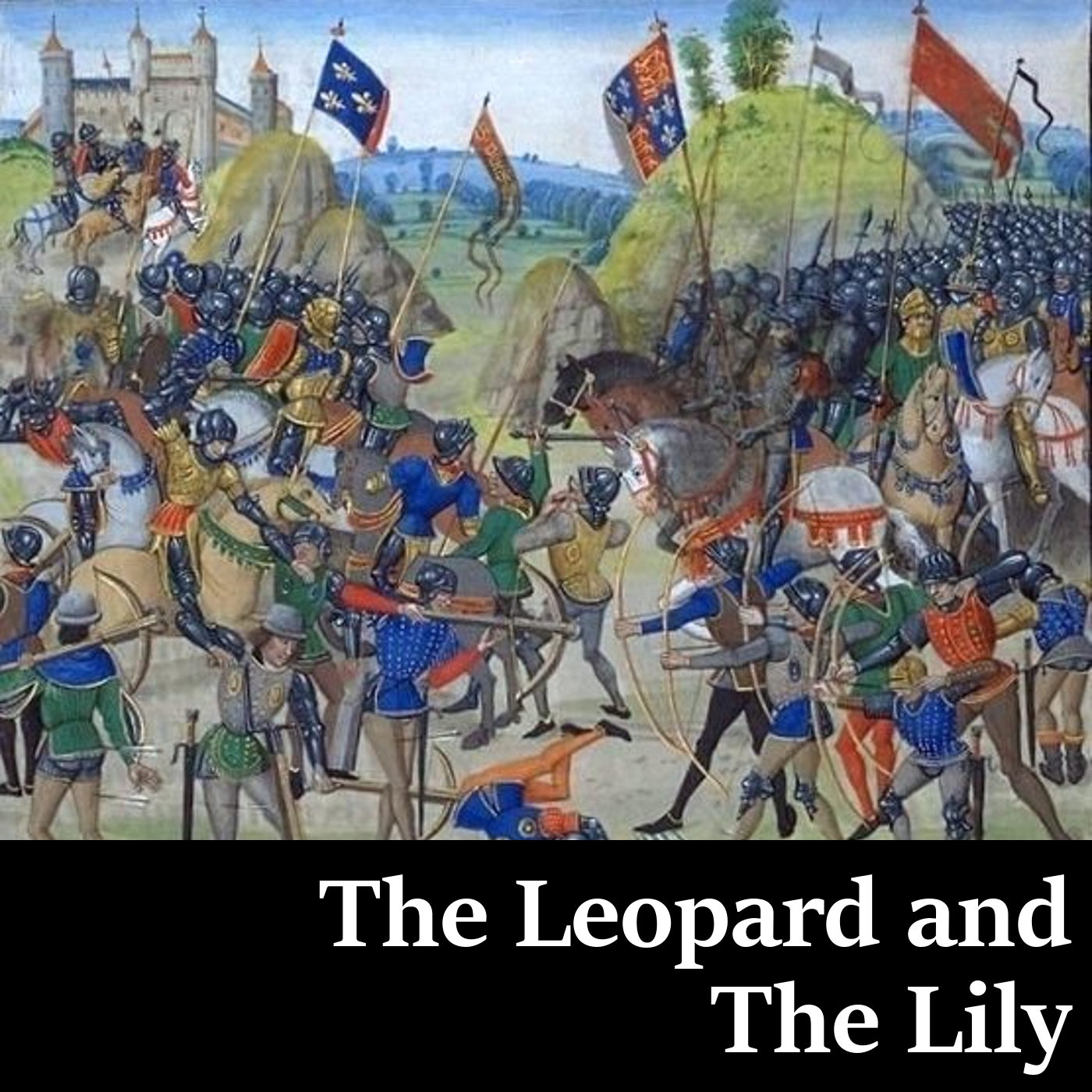
In this episode, Étienne Marcel and Robert Le Coq continue to rule, and the Dauphin struggles to free himself from their power. His supporters and his enemies supporters clash in the streets of Paris. 

Chapter 3

Apr 11, 2026 ·9m

Chapter 4

Apr 11, 2026 ·16m

Chapter 5, 1

Apr 11, 2026 ·25m

Chapter 5, 2

Apr 11, 2026 ·53m

Chapter 6

Apr 11, 2026 ·24m

Chapter 7, 1

Apr 11, 2026 ·41m

Fort Not Lost in the Woods Podcast Tracy O'Quinn Fort NOT Lost in the Woods Podcast showcases the Fort Leonard Wood and Pulaski County Area. Find out history of the area, what it has to offer, and all the adventures that await you and your family. Observable Stream Observable Stream A podcast about technology, philosophy, and science. Hosts Regan Koopmans and Philip Leonard talk about trends and developments in software engineering, distributed systems, and software architecture. They delve into how this interlinks with the science of the universe and the philosophy that surrounds modern and future technology. On the Nature of Things (Leonard translation) by Titus Lucretius Carus Loyal Books On the Nature of Things, written in the first century BCE by Titus Lucretius Carus, is one of the principle expositions on Epicurean philosophy and science to have survived from antiquity. Far from being a dry treatise on the many topics it covers, the original Latin version (entitled De Rerum Natura) was written in the form of an extended poem in hexameter, with a beauty of style that was admired and emulated by his successors, including Ovid and Cicero. The version read here is an English verse translation written by William Ellery Leonard. Although Leonard penned his version in the early twentieth century, he chose to adhere to both the vocabulary and meter (alternating between pentameter and hexameter) of Elizabethan-era poetry.While the six untitled books that comprise On the Nature of Things delve into a broad range of subjects, including the physical nature of the universe, the workings of the human mind and body, and the natural history of the Earth, Lucretius repeatedly assert Village in the Jungle, The by Leonard Woolf (1880 - 1969) LibriVox Woolf wrote this novel based on his experience as a government agent for British imperialist-controlled Ceylon in the early part of the twentieth-century. He focuses his story on one poor family in a jungle village as they struggle to survive, not just faced with a very harsh environment but with their own human prejudices, superstitions, jealousies, violence, ignorance, and greed. In the background is the other enemy: the foreign government that controls them but does not really understand or care for these uncivilized, not really human beings. It was an important work because its point of view was sympathetically a native one. JL
URL copied to clipboard!