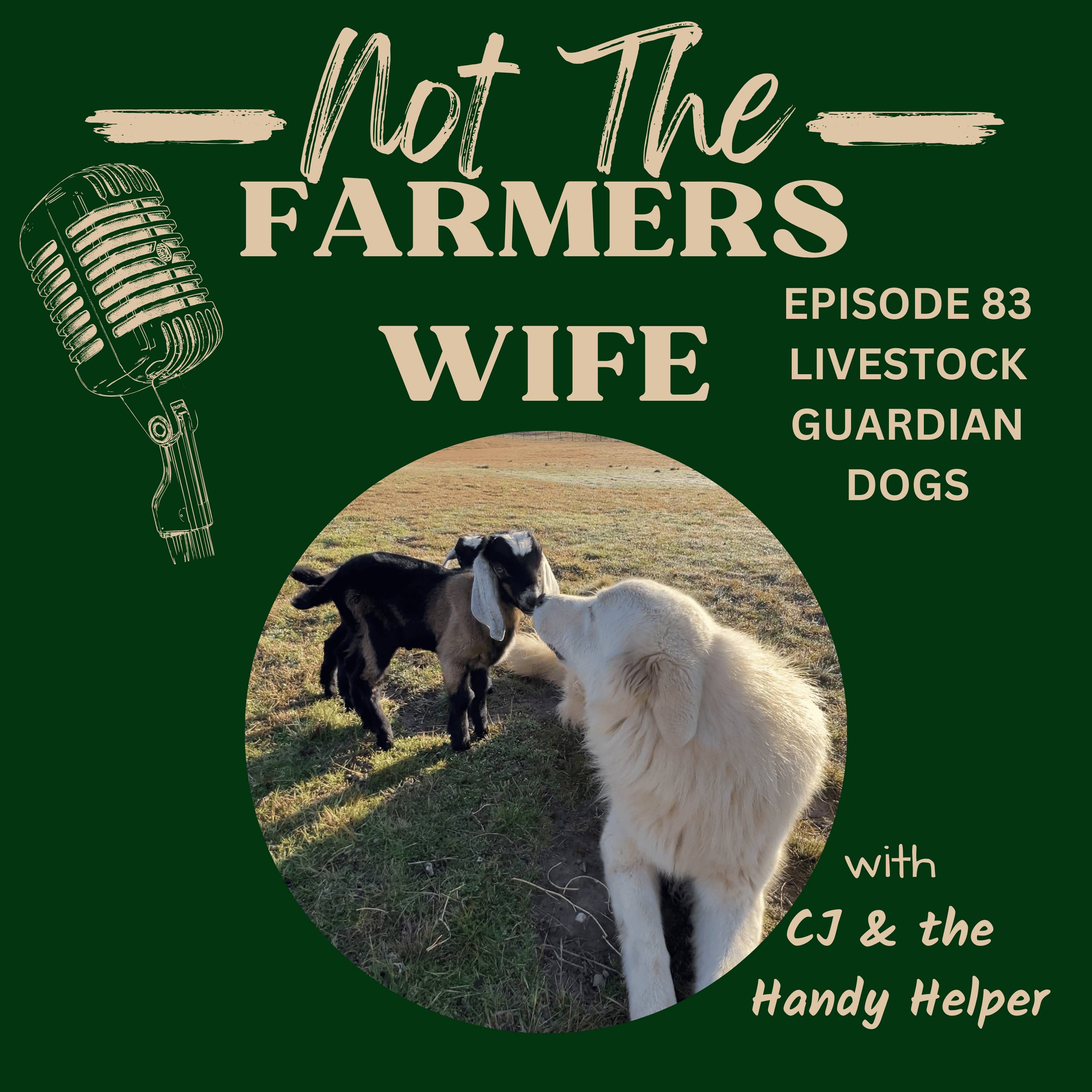
Episode 83 - Livestock Guardian Dogs episode artwork

EPISODE · Sep 29, 2024 · 55 MIN

Episode 83 - Livestock Guardian Dogs

from Ditch The Store · host CJ Steedman

Introduction  Episode 83 Livestock Guardian Dogs (LGDs) play a crucial role on small farms and homesteads by protecting valuable livestock from predators. In this episode, we’ll break down the essentials of LGDs for beginners—everything from choosing the right breed to caring for your new farm guardian. Whether you're worried about foxes, hawks, or stray dogs, LGDs can be your first line of defence.   What Are Livestock Guardian Dogs?   LGDs are a specific group of dogs bred for centuries to live with and protect livestock from predators. Unlike herding dogs, which move livestock, LGDs are bred to defend the animals they live with. They instinctively bond with the flock and see it as their responsibility to keep them safe, often through patrolling, barking, and sometimes direct confrontation with predators.    Popular LGD Breeds for Small Homesteads   Some of the most popular LGD breeds include the Great Pyrenees, Anatolian Shepherd, and Maremma Sheepdog. There are about 45 different types.  Each breed has its strengths:  the Great Pyrenees is gentle and patient with livestock,  the Anatolian Shepherd has the stamina for large properties,  the Maremma is known for its quiet but effective guarding, especially for poultry.    The Maremma has a solid, muscular build, a thick white coat, a large head and a black nose. Dogs weigh some 35–45 kg and stand 65–73 cm at the shoulder, while bitches weigh 30–40 kg and stand 60–68 cm. Some dogs may be considerably larger. The coat is long and thick; it is rough to the touch, and forms a thick collar around the neck. It should be solid white; some minor yellowing may be tolerated. The nose, the lips and the skin round the eyes are black.   Understanding each breed's personality and working style is key to picking the right one for your needs.   Choosing the Right Dog for Your Farm   When selecting an LGD, consider your farm size, the type of livestock you need to protect, and the predators in your area. For example, a larger breed like the Kangal may be better for properties with large predators, while a Maremma might excel in guarding smaller poultry flocks. Also, consider your ability to train and maintain the dog—some breeds are more independent, while others need a bit more guidance. Training an LGD   Training LGDs is a slow but rewarding process that usually takes 12 months. Puppy training starts with bonding the dog to the livestock it will protect, with minimal human interaction during work hours to keep its focus on the animals. Avoid treating the LGD like a pet, and instead focus on teaching it boundaries and to patrol its territory. Remember, patience is key, as these dogs naturally grow into their roles over time. Housing and Containment for LGDs   LGDs need space to roam, but they should be contained in a secure, fenced area to keep them close to the animals they protect. Fencing not only keeps the LGD with the livestock but also helps prevent the dog from wandering too far, which is a common issue. While they don’t need elaborate housing, providing a basic shelter from the elements is essential, especially in extreme weather.   Feeding and Nutrition   An LGD’s diet is vital to maintaining its strength and stamina for guarding livestock. High-quality meat or kibble designed for working dogs or a raw diet can be considered, depending on your preferences. LGDs have a slower metabolism, so overfeeding can lead to weight issues, which can affect their ability to guard effectively. Make sure fresh water is always available, especially in hotter climates, and keep an eye on their weight and energy levels.   Maintenance and Health Care   Just like any other dog, LGDs need regular vet care, including vaccinations, parasite control, and grooming. Many of these breeds have thick coats that need brushing to avoid matting and to keep them comfortable. Hip dysplasia and other joint issues are common in larger breeds, so regular checkups are important. Staying on top of your LGD's health will keep them in peak condition for their demanding job.   How LGDs Protect Poultry and Small Livestock   LGDs have instinctual behaviors that make them effective at protecting smaller livestock. They patrol their territory, bark at threats, and even create scent boundaries to ward off predators. When it comes to poultry, some LGDs, like the Maremma, excel at keeping aerial predators like hawks away by constantly watching the sky. LGDs fit well into a broader farm protection system and work alongside secure fencing and coops.   Do LGDs Make Good Pets?   Although LGDs can form strong bonds with their owners, they are primarily working dogs. It’s important to strike a balance between providing affection and allowing them to remain focused on their guarding duties. Oversocializing an LGD with humans can diminish its instincts to protect livestock, so it’s important to remember they are not traditional pets. They thrive on respect, trust, and a clear purpose.   Is an LGD Right for Your Homestead?   Bringing an LGD onto your farm is a serious commitment. It takes time, patience, and resources to train and care for these dogs, but they can provide immense value by keeping your livestock safe. If you have persistent predator problems or are simply looking for peace of mind, an LGD may be the perfect solution. Weigh the pros and cons carefully to decide if you’re ready for the responsibility of owning a livestock guardian. Closing Thoughts   Livestock Guardian Dogs can be an invaluable asset for homesteaders and small farmers, but they require a unique approach to training and care. Take the time to research, connect with experienced LGD owners, and plan for the longterm commitment. Thank you for joining us for this introduction to LGDs—be sure to explore more homesteading tips and resources in our next episode.

Introduction  Episode 83 Livestock Guardian Dogs (LGDs) play a crucial role on small farms and homesteads by protecting valuable livestock from predators. In this episode, we’ll break down the essentials of LGDs for beginners—everything from choosing the right breed to caring for your new farm guardian. Whether you're worried about foxes, hawks, or stray dogs, LGDs can be your first line of defence.   What Are Livestock Guardian Dogs?   LGDs are a specific group of dogs bred for centuries to live with and protect livestock from predators. Unlike herding dogs, which move livestock, LGDs are bred to defend the animals they live with. They instinctively bond with the flock and see it as their responsibility to keep them safe, often through patrolling, barking, and sometimes direct confrontation with predators.    Popular LGD Breeds for Small Homesteads   Some of the most popular LGD breeds include the Great Pyrenees, Anatolian Shepherd, and Maremma Sheepdog. There are about 45 different types.  Each breed has its strengths:  the Great Pyrenees is gentle and patient with livestock,  the Anatolian Shepherd has the stamina for large properties,  the Maremma is known for its quiet but effective guarding, especially for poultry.    The Maremma has a solid, muscular build, a thick white coat, a large head and a black nose. Dogs weigh some 35–45 kg and stand 65–73 cm at the shoulder, while bitches weigh 30–40 kg and stand 60–68 cm. Some dogs may be considerably larger. The coat is long and thick; it is rough to the touch, and forms a thick collar around the neck. It should be solid white; some minor yellowing may be tolerated. The nose, the lips and the skin round the eyes are black.   Understanding each breed's personality and working style is key to picking the right one for your needs.   Choosing the Right Dog for Your Farm   When selecting an LGD, consider your farm size, the type of livestock you need to protect, and the predators in your area. For example, a larger breed like the Kangal may be better for properties with large predators, while a Maremma might excel in guarding smaller poultry flocks. Also, consider your ability to train and maintain the dog—some breeds are more independent, while others need a bit more guidance. Training an LGD   Training LGDs is a slow but rewarding process that usually takes 12 months. Puppy training starts with bonding the dog to the livestock it will protect, with minimal human interaction during work hours to keep its focus on the animals. Avoid treating the LGD like a pet, and instead focus on teaching it boundaries and to patrol its territory. Remember, patience is key, as these dogs naturally grow into their roles over time. Housing and Containment for LGDs   LGDs need space to roam, but they should be contained in a secure, fenced area to keep them close to the animals they protect. Fencing not only keeps the LGD with the livestock but also helps prevent the dog from wandering too far, which is a common issue. While they don’t need elaborate housing, providing a basic shelter from the elements is essential, especially in extreme weather.   Feeding and Nutrition   An LGD’s diet is vital to maintaining its strength and stamina for guarding livestock. High-quality meat or kibble designed for working dogs or a raw diet can be considered, depending on your preferences. LGDs have a slower metabolism, so overfeeding can lead to weight issues, which can affect their ability to guard effectively. Make sure fresh water is always available, especially in hotter climates, and keep an eye on their weight and energy levels.   Maintenance and Health Care   Just like any other dog, LGDs need regular vet care, including vaccinations, parasite control, and grooming. Many of these breeds have thick coats that need brushing to avoid matting and to keep them comfortable. Hip dysplasia and other joint issues are common in larger breeds, so regular checkups are important. Staying on top of your LGD's health will keep them in peak condition for their demanding job.   How LGDs Protect Poultry and Small Livestock   LGDs have instinctual behaviors that make them effective at protecting smaller livestock. They patrol their territory, bark at threats, and even create scent boundaries to ward off predators. When it comes to poultry, some LGDs, like the Maremma, excel at keeping aerial predators like hawks away by constantly watching the sky. LGDs fit well into a broader farm protection system and work alongside secure fencing and coops.   Do LGDs Make Good Pets?   Although LGDs can form strong bonds with their owners, they are primarily working dogs. It’s important to strike a balance between providing affection and allowing them to remain focused on their guarding duties. Oversocializing an LGD with humans can diminish its instincts to protect livestock, so it’s important to remember they are not traditional pets. They thrive on respect, trust, and a clear purpose.   Is an LGD Right for Your Homestead?   Bringing an LGD onto your farm is a serious commitment. It takes time, patience, and resources to train and care for these dogs, but they can provide immense value by keeping your livestock safe. If you have persistent predator problems or are simply looking for peace of mind, an LGD may be the perfect solution. Weigh the pros and cons carefully to decide if you’re ready for the responsibility of owning a livestock guardian. Closing Thoughts   Livestock Guardian Dogs can be an invaluable asset for homesteaders and small farmers, but they require a unique approach to training and care. Take the time to research, connect with experienced LGD owners, and plan for the longterm commitment. Thank you for joining us for this introduction to LGDs—be sure to explore more homesteading tips and resources in our next episode.

NOW PLAYING

Episode 83 - Livestock Guardian Dogs

0:00 55:27

No transcript for this episode yet

We transcribe on demand. Request one and we'll notify you when it's ready — usually under 10 minutes.

Big Old Life: Heather Blackbird interviews people on planet earth. Heather Blackbird loves asking questions. This podcast is a learning experience. Join me, Heather Blackbird, as I talk to people about their lives. Frequency of new episodes is a little all over the place and I'm learning as I go. Big Old Life is a small way of talking about the vastness of life, one person at a time. If you are reading this or found this podcast it's probably because someone you know gave you a link to it. :) Explicit Tales Of A Superstar DJ The Insomniac Spun seemingly out of nowhere from her complacent life in the corporate world, turned seemingly overnight from 16-Hour shift work and into the life of a literally starving artist and working musician, The Protagonist navigates her supposed rise to fame and superstardom on a journey through spiritual awakening, coming-of-age, and intimate self-realization--guided by an omnipresent force and equipped with the power of love, magic, and music. {Enter The Multiverse.} [The Festival Project] The Festival Project, Inc.™ is a multidimensional multimedia platform which encompasses exploratory and artistic social personifications and expressions on cosmic theory, spirituality, growth, health & wellness, philosophy and theoretic dynamics in entertainment such as music, design, film, television, radio, dance and festival culture, art, fashion, literature, and science. The Festival Project™ and its subsidiary Non-Profit, The Collective Complex © aims to challenge modern artistic and philosop Explicit Bitcoin Is Dead Trey Carson Welcome to Bitcoin is Dead, the ultimate Bitcoin variety show where host Trey takes you on a journey through the ever-evolving world of Bitcoin. Each episode brings new personalities, fascinating locations, and insightful conversations with politicians, educators, and innovators shaping the future of Bitcoin. Whether you're a seasoned Bitcoiner or just starting your journey, tune in for thought-provoking discussions, unique perspectives, and a deep dive into the ideas and people driving the Bitcoin revolution. Explicit The Sacred +Profane Podcast nephtaragrace The Sacred + Profane Podcast is a provocative conversation dedicated to cementing a better future for all. We specialize in unpacking the nuances of what is considered sacred and profane, particularly focusing on sex, death, and all that pertains to the circle of life. Our aim in focusing on such ”taboo” subject matter is to demystify what is unconscious, bring to light what has been known for centuries as ”the occult,” and empower the rapid transformation that is occurring on the Planet. Explicit

Frequently Asked Questions

How long is this episode of Ditch The Store?

This episode is 55 minutes long.

When was this Ditch The Store episode published?

This episode was published on September 29, 2024.

What is this episode about?

Introduction  Episode 83 Livestock Guardian Dogs (LGDs) play a crucial role on small farms and homesteads by protecting valuable livestock from predators. In this episode, we’ll break down the essentials of LGDs for beginners—everything from...

Can I download this Ditch The Store episode?

Yes, you can download this episode by clicking the download button on the episode player, or subscribe to the podcast in your preferred podcast app for automatic downloads.
URL copied to clipboard!