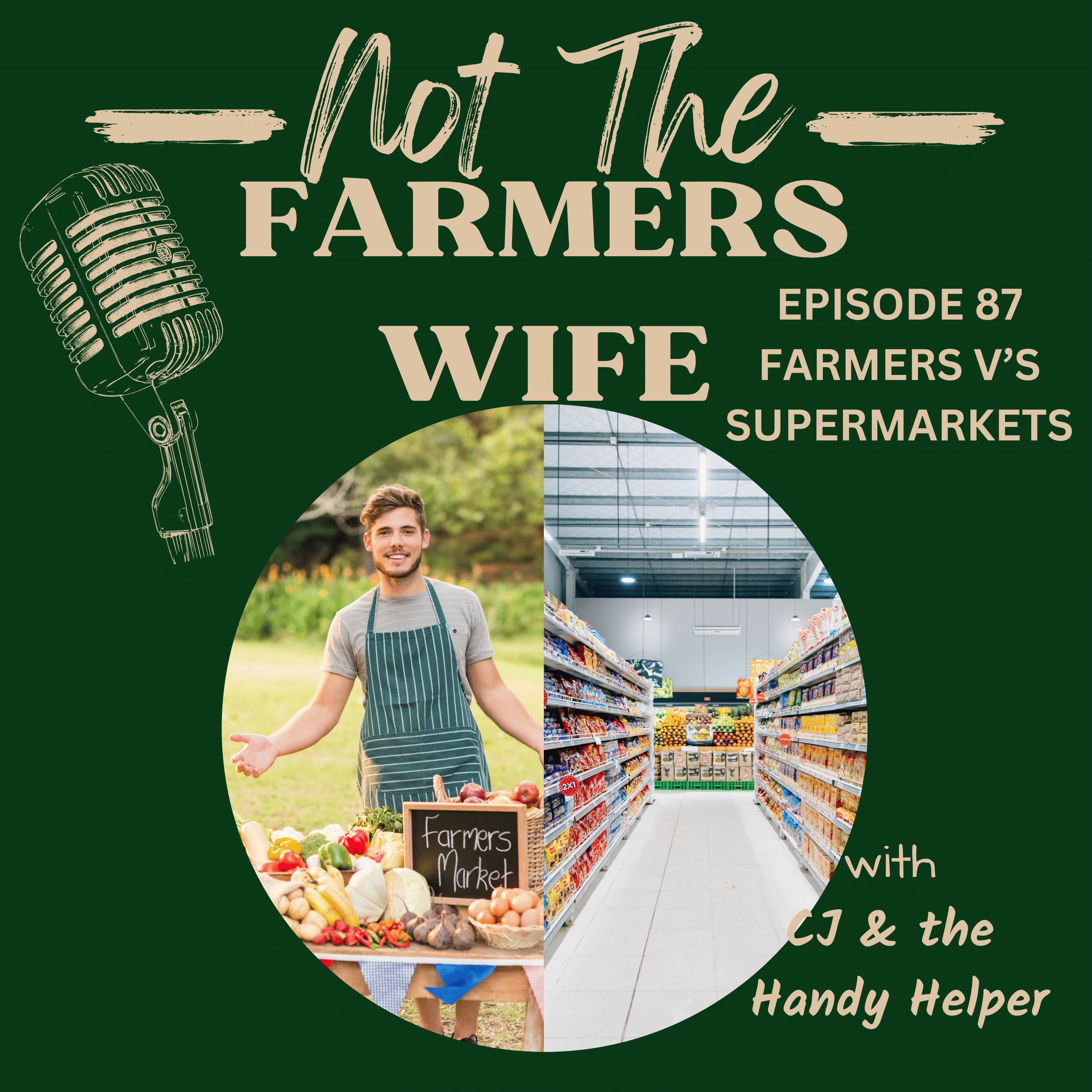
Episode 87 - Farmers Vs Supermarkets episode artwork

EPISODE · Oct 27, 2024 · 50 MIN

Episode 87 - Farmers Vs Supermarkets

from Ditch The Store · host CJ Steedman

Farmers vs Supermarkets  Why You Should Shop Direct   The relationship between farmers and supermarkets is often unbalanced, with large retail chains exerting immense pressure on farmers to lower their prices. While this benefits the supermarkets and consumers who seek the lowest possible prices, it often comes at the expense of the farmers’ livelihoods. In this post, we explore how farmers are being squeezed by supermarkets and why supporting local farmers or shopping at farmers' markets is a better choice for you and your community.   Farmwashing Farmwashing is a marketing tactic used by large food companies, supermarkets, or brands to create the perception that their products are sourced directly from small, local, or family-owned farms, even when this is not the case. Essentially, it’s a form of greenwashing where companies exploit consumers' trust and preferences for locally sourced, sustainable, or ethically produced food.  The Imbalance of Power   Low Prices and Price Pressure Supermarkets use their buying power to demand rock-bottom prices from farmers. With their large networks and vast resources, they negotiate prices that are often too low for farmers to cover their costs. This leaves many farmers with slim profit margins, or in some cases, none at all. This practice doesn’t reflect the time, labour, and investment that go into growing the produce, leaving farmers struggling financially.   Delayed Payments Another tactic supermarkets use is delaying payments. It’s not uncommon for supermarkets to take weeks, or even months, to pay farmers for their produce. This might not be a problem for large corporations, but for small farmers who need immediate cash flow to cover expenses and reinvest in their operations, these delays can be disastrous.   Rejecting Produce Over Cosmetic Standards Supermarkets enforce strict cosmetic standards on fruit and vegetables, rejecting perfectly good produce if it doesn’t meet their appearance criteria. This includes minor flaws like size, shape, or colour. As a result, farmers are left with large quantities of unsellable goods, leading to waste and financial loss. Consumers rarely get to see the variety and natural imperfections of produce, which is something farmers' markets embrace.   The Unfair Practices of Supermarkets   Pitting Farmers Against One Another Supermarkets often pit farmers against one another to secure the cheapest possible contract. By encouraging competition among farmers, they can drive down the prices they pay for produce. Farmers are aware that if they don’t meet the supermarket’s demands, their contract could go to a competitor who is willing to accept a lower price. This constant pressure to undercut one another weakens farmers’ bargaining power and forces many to accept prices that barely cover their production costs.   Short-Term Contracts and Switching Suppliers Supermarkets also use short-term contracts to keep farmers on edge. With no guarantee of renewal, farmers face uncertainty, which forces them to lower their prices to maintain their contracts. Additionally, supermarkets threaten to switch suppliers, often looking to cheaper international markets with lower production costs. This tactic forces local farmers to cut prices even further, making it harder for them to sustain their businesses.   Burdening Farmers with Marketing Costs While supermarkets push promotional costs onto farmers, the farmers bear the brunt of this burden. Supermarkets might run a sale or promotion on certain produce, but the cost of these discounts often comes out of the farmer’s pocket, not the supermarket’s. In other words, the farmer has to absorb the cost of making the supermarket look good to consumers.   Why You Should Support Farmers Directly   Shop at Farmers' Markets Farmers' markets allow farmers to sell directly to consumers without the interference of middlemen like supermarkets. This means that the money you spend goes directly to the farmer, allowing them to earn a fair price for their produce. You’re also more likely to find a wider variety of produce, including fruits and vegetables that don’t meet supermarkets’ cosmetic standards but are still perfectly fresh and delicious.   Support Local Agriculture When you shop locally, you’re not only supporting farmers but also helping to strengthen your local economy. Money spent at farmers' markets or directly with farmers tends to stay in the community, contributing to local businesses and services. Supporting local agriculture reduces food miles, minimises the carbon footprint, and ensures that your food is fresher and more sustainable.   Get Fresher, Healthier Produce Produce sold at farmers' markets is often picked at the peak of freshness, sometimes even the same day it’s sold. This means you get fresher, tastier, and more nutritious food than what you’d typically find in a supermarket, where produce can sit in storage for days or weeks before reaching the shelves.   Conclusion   The relationship between farmers and supermarkets is heavily skewed in favour of the big retail chains, leaving many farmers struggling to make ends meet. From unfair pricing tactics to rejecting perfectly good produce, supermarkets exploit farmers in a race to maximise profits. By shopping directly from farmers or at local farmers' markets, you can help ensure that farmers get a fair price for their hard work while also enjoying fresher, healthier food for your family.   So next time you’re thinking about where to buy your groceries, consider making the switch to your local farmers' market—you’ll be making a difference for both farmers and the planet.

Farmers vs Supermarkets  Why You Should Shop Direct   The relationship between farmers and supermarkets is often unbalanced, with large retail chains exerting immense pressure on farmers to lower their prices. While this benefits the supermarkets and consumers who seek the lowest possible prices, it often comes at the expense of the farmers’ livelihoods. In this post, we explore how farmers are being squeezed by supermarkets and why supporting local farmers or shopping at farmers' markets is a better choice for you and your community.   Farmwashing Farmwashing is a marketing tactic used by large food companies, supermarkets, or brands to create the perception that their products are sourced directly from small, local, or family-owned farms, even when this is not the case. Essentially, it’s a form of greenwashing where companies exploit consumers' trust and preferences for locally sourced, sustainable, or ethically produced food.  The Imbalance of Power   Low Prices and Price Pressure Supermarkets use their buying power to demand rock-bottom prices from farmers. With their large networks and vast resources, they negotiate prices that are often too low for farmers to cover their costs. This leaves many farmers with slim profit margins, or in some cases, none at all. This practice doesn’t reflect the time, labour, and investment that go into growing the produce, leaving farmers struggling financially.   Delayed Payments Another tactic supermarkets use is delaying payments. It’s not uncommon for supermarkets to take weeks, or even months, to pay farmers for their produce. This might not be a problem for large corporations, but for small farmers who need immediate cash flow to cover expenses and reinvest in their operations, these delays can be disastrous.   Rejecting Produce Over Cosmetic Standards Supermarkets enforce strict cosmetic standards on fruit and vegetables, rejecting perfectly good produce if it doesn’t meet their appearance criteria. This includes minor flaws like size, shape, or colour. As a result, farmers are left with large quantities of unsellable goods, leading to waste and financial loss. Consumers rarely get to see the variety and natural imperfections of produce, which is something farmers' markets embrace.   The Unfair Practices of Supermarkets   Pitting Farmers Against One Another Supermarkets often pit farmers against one another to secure the cheapest possible contract. By encouraging competition among farmers, they can drive down the prices they pay for produce. Farmers are aware that if they don’t meet the supermarket’s demands, their contract could go to a competitor who is willing to accept a lower price. This constant pressure to undercut one another weakens farmers’ bargaining power and forces many to accept prices that barely cover their production costs.   Short-Term Contracts and Switching Suppliers Supermarkets also use short-term contracts to keep farmers on edge. With no guarantee of renewal, farmers face uncertainty, which forces them to lower their prices to maintain their contracts. Additionally, supermarkets threaten to switch suppliers, often looking to cheaper international markets with lower production costs. This tactic forces local farmers to cut prices even further, making it harder for them to sustain their businesses.   Burdening Farmers with Marketing Costs While supermarkets push promotional costs onto farmers, the farmers bear the brunt of this burden. Supermarkets might run a sale or promotion on certain produce, but the cost of these discounts often comes out of the farmer’s pocket, not the supermarket’s. In other words, the farmer has to absorb the cost of making the supermarket look good to consumers.   Why You Should Support Farmers Directly   Shop at Farmers' Markets Farmers' markets allow farmers to sell directly to consumers without the interference of middlemen like supermarkets. This means that the money you spend goes directly to the farmer, allowing them to earn a fair price for their produce. You’re also more likely to find a wider variety of produce, including fruits and vegetables that don’t meet supermarkets’ cosmetic standards but are still perfectly fresh and delicious.   Support Local Agriculture When you shop locally, you’re not only supporting farmers but also helping to strengthen your local economy. Money spent at farmers' markets or directly with farmers tends to stay in the community, contributing to local businesses and services. Supporting local agriculture reduces food miles, minimises the carbon footprint, and ensures that your food is fresher and more sustainable.   Get Fresher, Healthier Produce Produce sold at farmers' markets is often picked at the peak of freshness, sometimes even the same day it’s sold. This means you get fresher, tastier, and more nutritious food than what you’d typically find in a supermarket, where produce can sit in storage for days or weeks before reaching the shelves.   Conclusion   The relationship between farmers and supermarkets is heavily skewed in favour of the big retail chains, leaving many farmers struggling to make ends meet. From unfair pricing tactics to rejecting perfectly good produce, supermarkets exploit farmers in a race to maximise profits. By shopping directly from farmers or at local farmers' markets, you can help ensure that farmers get a fair price for their hard work while also enjoying fresher, healthier food for your family.   So next time you’re thinking about where to buy your groceries, consider making the switch to your local farmers' market—you’ll be making a difference for both farmers and the planet.

NOW PLAYING

Episode 87 - Farmers Vs Supermarkets

0:00 50:00

No transcript for this episode yet

We transcribe on demand. Request one and we'll notify you when it's ready — usually under 10 minutes.

Big Old Life: Heather Blackbird interviews people on planet earth. Heather Blackbird loves asking questions. This podcast is a learning experience. Join me, Heather Blackbird, as I talk to people about their lives. Frequency of new episodes is a little all over the place and I'm learning as I go. Big Old Life is a small way of talking about the vastness of life, one person at a time. If you are reading this or found this podcast it's probably because someone you know gave you a link to it. :) Explicit Tales Of A Superstar DJ The Insomniac Spun seemingly out of nowhere from her complacent life in the corporate world, turned seemingly overnight from 16-Hour shift work and into the life of a literally starving artist and working musician, The Protagonist navigates her supposed rise to fame and superstardom on a journey through spiritual awakening, coming-of-age, and intimate self-realization--guided by an omnipresent force and equipped with the power of love, magic, and music. {Enter The Multiverse.} [The Festival Project] The Festival Project, Inc.™ is a multidimensional multimedia platform which encompasses exploratory and artistic social personifications and expressions on cosmic theory, spirituality, growth, health & wellness, philosophy and theoretic dynamics in entertainment such as music, design, film, television, radio, dance and festival culture, art, fashion, literature, and science. The Festival Project™ and its subsidiary Non-Profit, The Collective Complex © aims to challenge modern artistic and philosop Explicit Bitcoin Is Dead Trey Carson Welcome to Bitcoin is Dead, the ultimate Bitcoin variety show where host Trey takes you on a journey through the ever-evolving world of Bitcoin. Each episode brings new personalities, fascinating locations, and insightful conversations with politicians, educators, and innovators shaping the future of Bitcoin. Whether you're a seasoned Bitcoiner or just starting your journey, tune in for thought-provoking discussions, unique perspectives, and a deep dive into the ideas and people driving the Bitcoin revolution. Explicit The Sacred +Profane Podcast nephtaragrace The Sacred + Profane Podcast is a provocative conversation dedicated to cementing a better future for all. We specialize in unpacking the nuances of what is considered sacred and profane, particularly focusing on sex, death, and all that pertains to the circle of life. Our aim in focusing on such ”taboo” subject matter is to demystify what is unconscious, bring to light what has been known for centuries as ”the occult,” and empower the rapid transformation that is occurring on the Planet. Explicit

Frequently Asked Questions

How long is this episode of Ditch The Store?

This episode is 50 minutes long.

When was this Ditch The Store episode published?

This episode was published on October 27, 2024.

What is this episode about?

Farmers vs Supermarkets  Why You Should Shop Direct   The relationship between farmers and supermarkets is often unbalanced, with large retail chains exerting immense pressure on farmers to lower their prices. While this benefits the supermarkets...

Can I download this Ditch The Store episode?

Yes, you can download this episode by clicking the download button on the episode player, or subscribe to the podcast in your preferred podcast app for automatic downloads.
URL copied to clipboard!