
EPISODE · Feb 20, 2026 · 49 MIN
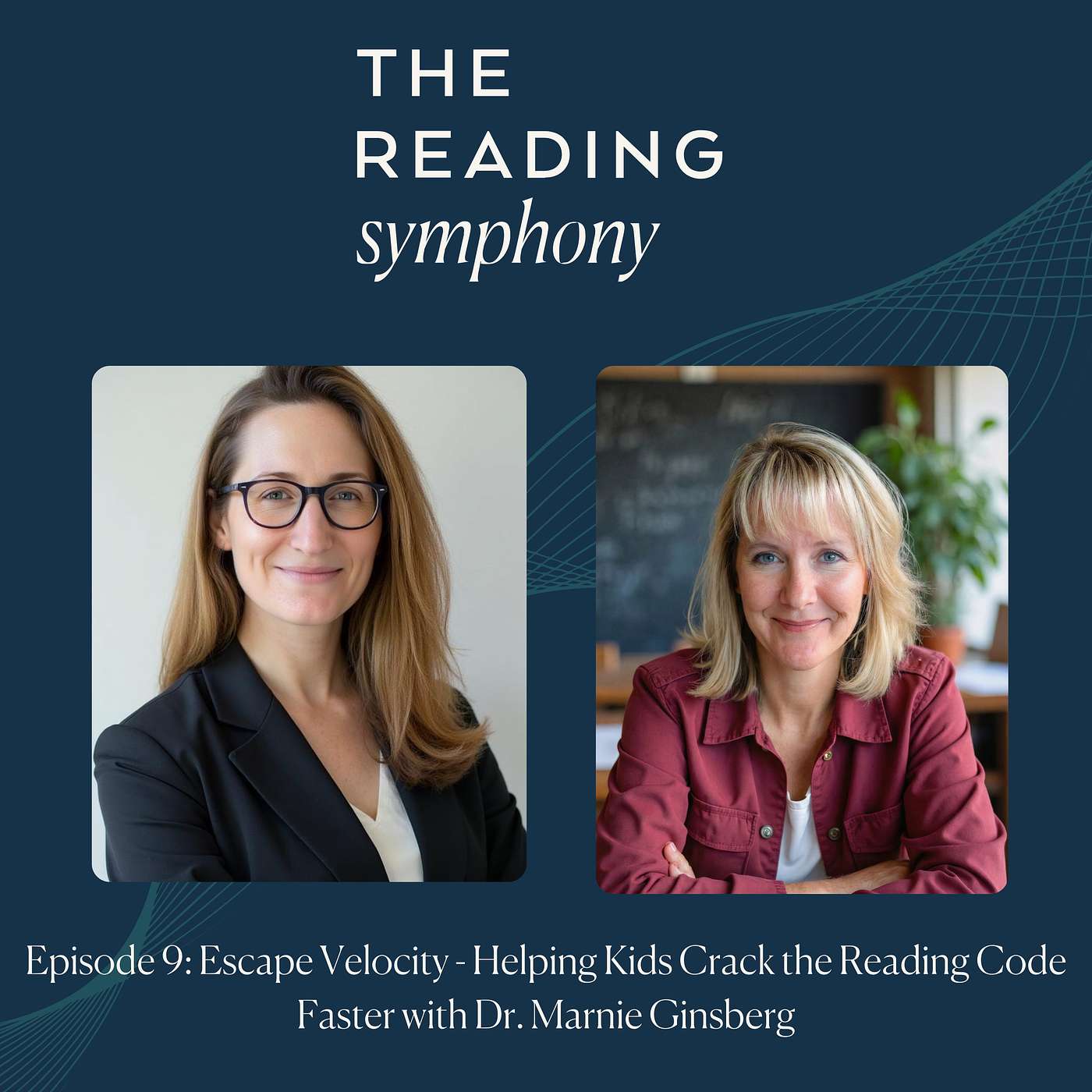
Escape Velocity: Helping Kids Crack the Reading Code Faster with Dr. Marnie Ginsberg
from The Reading Symphony
Episode SummaryIn this episode, Katie talks with Dr. Marnie Ginsberg about what helps kids learn to read and why so many teachers were never given the tools to fix word-reading problems. Dr. Ginsberg shares the story that launched her career: sixth-grade students reading years below grade level and a breakthrough approach that helped them make dramatic gains in a single spring.Together they unpack the research-to-practice gap (and why effective interventions still “sit on a shelf”), and then get very practical: Marnie explains how Reading Simplified teaches phonics without over-relying on rules, using the brain’s pattern detection (statistical learning) plus carefully designed contrast (sit/sat, mat/map/mop) to accelerate decoding.You’ll also hear a clear explanation of phonemic awareness vs. phonics, why separating them often creates inefficiency, and how Marnie integrates them through simple routines like Build It and Switch It—activities that feel like games but powerfully build the alphabetic principle.Finally, Marnie and Katie talk state curriculum lists, why implementation details matter, and what parents can advocate for during literacy reform—plus Marnie’s direct call to limit screens and protect attention.Key TakeawaysMany struggling readers don’t need “more exposure”—they need explicit instruction that helps them attend to the inside parts of words.The research-to-practice gap isn’t only about evidence. It’s also about incentives, funding streams, and the skillset of dissemination.“Good phonics” doesn’t have to mean a heavy diet of rules. Pattern-based learning can be explicit and still leverage kids’ natural ability to detect patterns.Keeping kids in “short-vowel land” too long can starve them of the data they need to reach reading “escape velocity.”Integrating phonemic awareness and phonics—rather than teaching them in separate lanes—can unlock the alphabetic principle faster.Parents should push for early identification and support (including dyslexia screening and services) and for true expertise in curriculum decision-making.Reading grows in a home environment that protects attention: limit screens, read aloud longer than you think, and listen to kids read longer than you think.Topics We CoverMarnie’s path from sixth-grade teacher → tutor → researcher → founder of Reading SimplifiedWhy whole language/balanced literacy didn’t solve decoding strugglesWhat TRI is and how it connects to Reading SimplifiedThe “17-year research-to-practice gap” and why it persistsLinguistic phonics / speech-to-print and organizing the code by soundStatistical learning, contrast, and “set for variability” (without turning into guessing)Why context is part of reading—but print must be primary for beginnersPhonemic awareness vs phonics: what they are, why both matterTry This at Home / In the ClassroomSwitch It (5 minutes, feels like a game): Use letter tiles/cards to build a simple word (mop). Then “switch” one sound at a time to make a new word (mop → map → sap → sip). The magic is in the contrast and the attention to each sound position.Free resources and demo videos: readingsimplified.com/switch-itConnect with Dr. Marnie GinsbergWebsite: ReadingSimplified.com Free Switch It resources: ReadingSimplified.com/switch-it Instagram: @readingsimplifiedConnect with Katie / The Reading SymphonySubstack: katiemegrian.substack.com Instagram: @thereadingsymphony
Embed this episode
NOW PLAYING
Escape Velocity: Helping Kids Crack the Reading Code Faster with Dr. Marnie Ginsberg
No transcript for this episode yet
Similar Episodes
No similar episodes found.
Similar Podcasts
No similar podcasts found.