
EPISODE · Dec 13, 2021 · 53 MIN
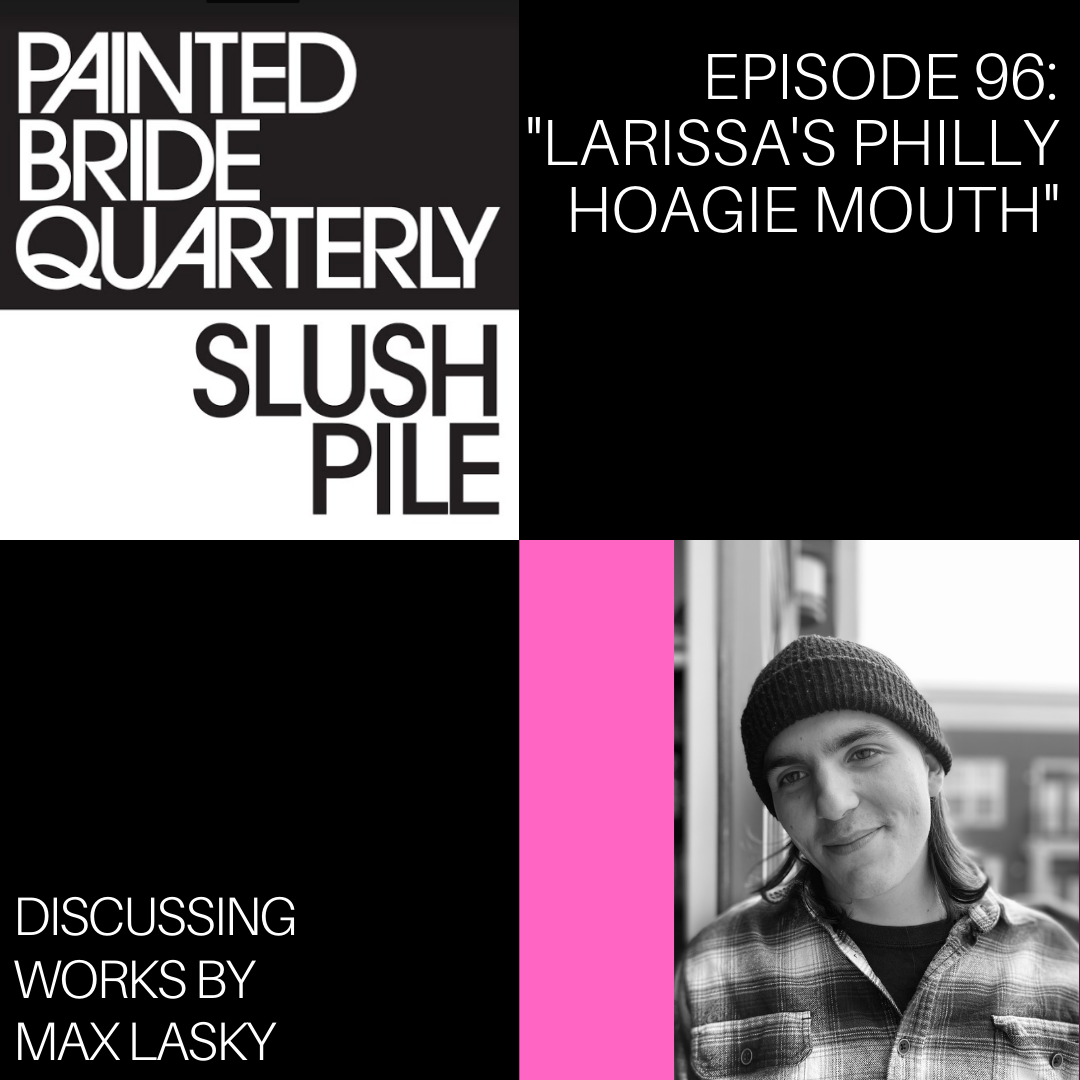
Episode 96: Larissa‘s Philly Hoagie Mouth
from Painted Bride Quarterly’s Slush Pile · host Painted Bride Quarterly
Slushies, do you know your shades and types of blue? Do you know how to say blue in Russian? When we talk of St. Petersburg, are we talking about Russia? Or Florida? When we discuss Max Lasky’s poems we discuss what we call things and how we write things and what to call the things we write. (Discuss what ‘lyric’ means amongst yourselves.) “Come Here” takes the table to a scene in Maryland, once home to Jason and his long “O,” and is heavy in Hikmet. After reading “Prothalamion Poured from a Copper Cezve,” a love poem or a poem about love, we continue to praise Lasky’s juggling of images and figurative tight-rope walking. This episode is brought to you by one of our sponsors, Wilbur Records, who kindly introduced us to the artist A.M.Mills, whose song “Spaghetti with Loretta” now opens our show. At the table: Samantha Neugebauer, Alex J. Tunney, Kathleen Volk Miller, Jason Schneiderman, and Marion Wrenn Max Lasky is a poet from New Jersey, currently living in Maryland with his fiancé where they are raising two plant children: a hardy mum named Thomas, and a basil plant named Bunting. Max is finishing up his final year in the MFA program at the University of Maryland and earned his B.A. from Ramapo College. His poems have been published by Trillium and Frontier Poetry, and he is the co-founder and editor of the literary magazine Leavings. He lives in and for the slush. Come Here We read Hikmet during what she called a picnic, though we brought no wicker basket, no plaid blanket, we rolled our jeans up under our knees to wade across the river, wide and knee high, the entire riverbed bedded with sharp rocks covered in moss, slick enough beneath our bare feet to make us walk slow, half cautious, as a group of five men flyfishing spoke Spanish, reeling in fish too small to keep, taking swigs from warm beer cans at the shore when they turned bored, wanting us to leave. We stayed. As did the birds pitching in a nearby thicket, almost inaudible near the pop blaring from a portable speaker, and a quiet drone flew high above the water. Which is to say nature’s no more, at least not there in Catonsville, Maryland, mid August, where the Patapsco flowing toward the Chesapeake could double as the sound of traffic passing on a highway. All the plastic, all the tin cans and wrappers littered across the rocks, the sand— and yet hopeless is not something to be, not for me or Hikmet or my love, who smirks when I say a new Turkish word correctly. My love, what are we to do? We lounged on that ripped towel, smoking, when we should’ve scoured the shoreline picking up trash. In masks because of a pandemic, not one person walking past on the trail looked us in the eye or said hi, how are you? I lose a little hope… I hope a little less and learn a new language, or try. I learn how the river was commandeered from Native American tribes by dead men, white men who wanted to fuel their new plants and mills, men who never imagined the future here, hundreds of years later, or else just didn’t care, not for us or the two women who walked hand in hand, a leashed dog barking at their feet, not the men who spoke Spanish and looked at me confused when I asked what kind of fish is that? I already knew it was a trout. I already knew Hikmet was a communist who loved Marx and Lenin and each of his three wives. Some of us strive to better the world, some strive to better ourselves, and the striving sometimes transcends joy. Hikmet tried both not long ago when he wrote “My strength is that I’m not alone in this big world. The world and its people are no secret in my heart, no mystery in my science. Calmly and openly, I took my place in the great struggle.” I turned to face a warm wind that laced my face with sand, for the future’s everchanging, before it even happens… Come here and change me, you whose tongue on my tongue tastes of Turkish tobacco, and sun, you who say the unsayable. Come here, aşkım, lend me your hope, teach me how to grin again after two decades of elegy and a broken language rife with misogyny, and god. We took Nazım to the water’s edge and read the translations energetically, sweating, as the park closed and the sun lowered, and for a few moments, it seemed as if it was just us three and the river, carving through the earth like the blood through our veins, I learned a new word for landscape. Prothalamion Poured from a Copper Cezve Zuleyha read my fortune in the dried coffee grinds and tossed the saucer toward the future, its arc across left a chem trail renting the sky, and I didn’t ask why, I didn’t point it out or make a scene about the vision I’d been led to believe, as if with a shovel in a lame novel, as if my ears were a septic chute that accepted every story, no matter how far from true. I didn’t mention my nomad past or how my brain’s forced from place to place in caravans, canal boats, tents reeking of frankincense, pine, or how that’s just another story I’d been fed with a shovel. I realized somewhat early on in this early life that most people are eager to live their lives like stars beyond a projector, a drive in, seemingly unaware of the dark screen, and willing to wrong anyone if it means someone lifts the loose noose from their own bowed necks— they almost sprint down the steps. I crawl up the steps to every bad decision I’ve let happen, happy to say I’ve changed, took notes on each mistake and if I ever turned back I was sure to take a different path. When I go home to the house I grew up in, it’s not to stay. As for the story, neither one of us could say if it was imagined. I wake some mornings to find signs that don’t make sense, suspicious of my own breath and the sunlight through the slats, because the world’s senseless and nonsensical and tense. A paranoiac and a high priestess make for one hell of a couple, our studio’s more like a circus, we’re trapeze swingers swooping from corner to corner, blowing clown horns as we paint our faces in a shattered mirror. Our strict schedule requires us to weep all day and dance at night, saying I’m so fucking lucky I met you. I’m so fucking lucky… I rejoice, I digress, I paint two red lines under each of our eyes and step in line, waiting stone like. I’m well aware it could be me paranoid and schizophrenic on the side of the street, paranoid past repair, not knowing where the self ends and society begins, it could easily be me if not for five or six good people. As for the lover, I’m damn sure. I put a poem around her finger because I couldn’t afford a ring, which means I’m always already all in. I push the stack of chips to the center of the table. I grin.
Embed this episode
What this episode covers
Slushies, do you know your shades and types of blue? Do you know how to say blue in Russian? When we talk of St. Petersburg, are we talking about Russia? Or Florida? When we discuss Max Lasky’s poems we discuss what we call things and how we write things and what to call the things we write. (Discuss what ‘lyric’ means amongst yourselves.) “Come Here” takes the table to a scene in Maryland, once home to Jason and his long “O,” and is heavy in Hikmet. After reading “Prothalamion Poured from a Copper Cezve,” a love poem or a poem about love, we continue to praise Lasky’s juggling of images and figurative tight-rope walking. This episode is brought to you by one of our sponsors, Wilbur Records, who kindly introduced us to the artist A.M.Mills, whose song “Spaghetti with Loretta” now opens our show. At the table: Samantha Neugebauer, Alex J. Tunney, Kathleen Volk Miller, Jason Schneiderman, and Marion Wrenn Max Lasky is a poet from New Jersey, currently living in Maryland with his fiancé where they are raising two plant children: a hardy mum named Thomas, and a basil plant named Bunting. Max is finishing up his final year in the MFA program at the University of Maryland and earned his B.A. from Ramapo College. His poems have been published by Trillium and Frontier Poetry, and he is the co-founder and editor of the literary magazine Leavings. He lives in and for the slush. Come Here We read Hikmet during what she calleda picnic, though we brought no wicker basket,no plaid blanket, we rolled our jeans upunder our knees to wade across the river,wide and knee high, the entire riverbedbedded with sharp rocks covered in moss,slick enough beneath our bare feet to make uswalk slow, half cautious, as a group of five menflyfishing spoke Spanish, reeling in fishtoo small to keep, taking swigs from warmbeer cans at the shore when they turned bored,wanting us to leave. We stayed. As did the birdspitching in a nearby thicket, almost inaudiblenear the pop blaring from a portable speaker,and a quiet drone flew high above the water.Which is to say nature’s no more, at leastnot there in Catonsville, Maryland, mid August,where the Patapsco flowing toward the Chesapeakecould double as the sound of traffic passingon a highway. All the plastic, all the tin cansand wrappers littered across the rocks, the sand—and yet hopeless is not something to be,not for me or Hikmet or my love, who smirkswhen I say a new Turkish word correctly.My love, what are we to do? We loungedon that ripped towel, smoking, when we should’vescoured the shoreline picking up trash. In masksbecause of a pandemic, not one personwalking past on the trail looked us in the eyeor said hi, how are you? I lose a little hope…I hope a little less and learn a new language,or try. I learn how the river was commandeeredfrom Native American tribes by dead men, white menwho wanted to fuel their new plants and mills,men who never imagined the future here,hundreds of years later, or else just didn’t care,not for us or the two women who walkedhand in hand, a leashed dog barking at their feet,not the men who spoke Spanish and looked at meconfused when I asked what kind of fish is that?I already knew it was a trout. I already knewHikmet was a communist who loved Marx and Leninand each of his three wives. Some of us striveto better the world, some strive to better ourselves,and the striving sometimes transcends joy.Hikmet tried both not long ago when he wrote“My strength is that I’m not alone in this big world.The world and its people are no secret in my heart,no mystery in my science. Calmly and openly,I took my place in the great struggle.” I turnedto face a warm wind that laced my face with sand,for the future’s everchanging, before it even happens…Come here and change me, you whose tongueon my tongue tastes of Turkish tobacco, and sun,you who say the unsayable. Come here, aşkım,lend me your hope, teach me how to grin againafter two decades of elegy and a broken languagerife with misogy
Ready to play
Episode 96: Larissa‘s Philly Hoagie Mouth
No transcript for this episode yet
Similar Episodes
No similar episodes found.
Similar Podcasts
No similar podcasts found.