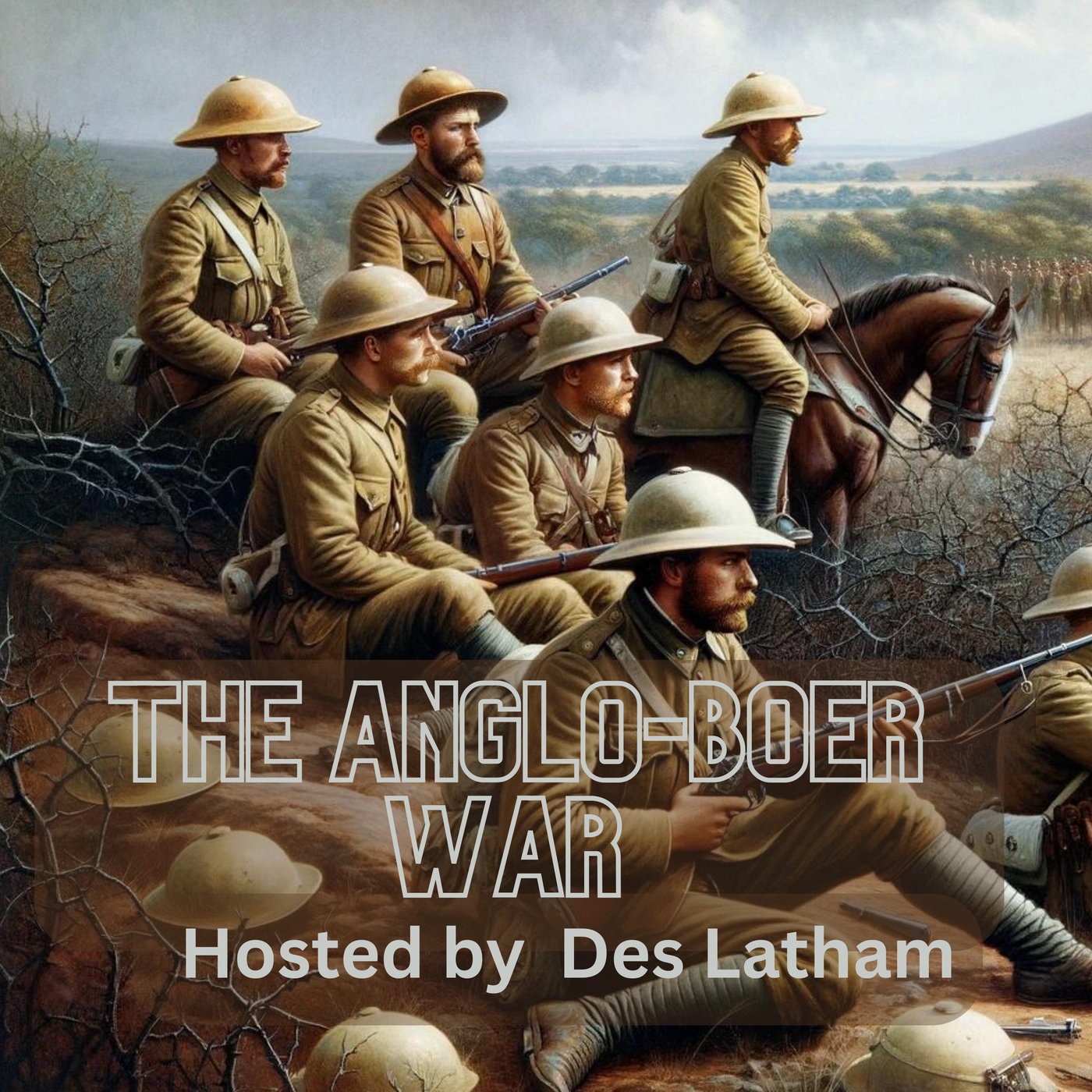
Episode 98 - Lord Kitchener issues an exile proclamation and de Wet lays an IED episode artwork

EPISODE · Aug 4, 2019 · 18 MIN

Episode 98 - Lord Kitchener issues an exile proclamation and de Wet lays an IED

from The Anglo-Boer War · host Desmond Latham

It’s time for an exchange of letters and a proclamation or two. General Jan Smuts and his commando have broken into smaller units and are traveling from the Transvaal to the Free State / Cape border. They’re going to launch an invasion in a last-ditch attempt to entice their Afrikaner brothers living in the Cape Colony into an uprising. So far it's failed. The Cape Afrikaners are threatened with execution should they take part in the Boer war, as the British consider the Cape their Colony and all citizens should support the Empire. The Free State and Transvaal have also been seized by the British, but the rules of warfare still govern these two territories. That means any Boer citizen seized or taken prisoner is accorded the protection of the rules. But it also means that the Cape Afrikaners have much more to loose if they take part in this war. Not only will they be executed for treason, but it's likely their property will be seized and their families will lose everything. The cost of the war rose and by this period it was around 1.25 million pounds a week. The British government has been borrowing money to pay for the material and men its poured into South Africa - 250 000 in all. Lord Kitchener, who is commander-in-chief in South Africa, is trying to rush the war to an end but the bitter-einders are refusing to stop fighting. General Christiaan de Wet is active in the Free State and President Steyn has not been captured yet, although he has had two narrow escapes as we’ve heard. The British were also quickly building their blockhouse system along the railway line between Cape Town and Pretoria. They were also extending these military defensive positions along the lines to the western and eastern transvaal. They were immediately successful, as Boer generals have attested in their personal memoirs, including de Wets called "Three Years War" and published in 1902 at the war’s conclusion. “I now impressed upon my officers as forcibly as I could the importance of intercepting the communications of the enemy by blowing up their trains…” he writes. “A mechanical device had been thought of by which this could be done. The barrel and lock of a gun in connexion with a dynamite cartridge, were placed under a sleeper so that when a passing engine pressed the rail on to this machine, it exploded and the train was blown up…” Thus the Boers devised one of the first ever examples of an IED or improvised explosive device. I mentioned right at the beginning of this series how this war produced a number of firsts - or at least a modern use of new technology and the IED here was the first of its type. “It is terrible to take human lives in such a manner, still however fearful, it was not contrary the rules of civilised warfare and we were entirely within our rights in obstructing the enemy’s lines of communication in this manner…” But he must have felt discomfort in the idea that it was not a direct attack - it was indirect. It was a tactic we’ve come to know and fear as conventional soldiers in the world today. The carnage that has been sewn by IEDs and its more extreme cousin, the suicide bomber, is so established in guerrilla armies now its more usually found in training schedules than a knowledge of mine laying or grenade use.

It’s time for an exchange of letters and a proclamation or two. General Jan Smuts and his commando have broken into smaller units and are traveling from the Transvaal to the Free State / Cape border. They’re going to launch an invasion in a last-ditch attempt to entice their Afrikaner brothers living in the Cape Colony into an uprising. So far it's failed. The Cape Afrikaners are threatened with execution should they take part in the Boer war, as the British consider the Cape their Colony and all citizens should support the Empire. The Free State and Transvaal have also been seized by the British, but the rules of warfare still govern these two territories. That means any Boer citizen seized or taken prisoner is accorded the protection of the rules. But it also means that the Cape Afrikaners have much more to loose if they take part in this war. Not only will they be executed for treason, but it's likely their property will be seized and their families will lose everything. The cost of the war rose and by this period it was around 1.25 million pounds a week. The British government has been borrowing money to pay for the material and men its poured into South Africa - 250 000 in all. Lord Kitchener, who is commander-in-chief in South Africa, is trying to rush the war to an end but the bitter-einders are refusing to stop fighting. General Christiaan de Wet is active in the Free State and President Steyn has not been captured yet, although he has had two narrow escapes as we’ve heard. The British were also quickly building their blockhouse system along the railway line between Cape Town and Pretoria. They were also extending these military defensive positions along the lines to the western and eastern transvaal. They were immediately successful, as Boer generals have attested in their personal memoirs, including de Wets called "Three Years War" and published in 1902 at the war’s conclusion. “I now impressed upon my officers as forcibly as I could the importance of intercepting the communications of the enemy by blowing up their trains…” he writes. “A mechanical device had been thought of by which this could be done. The barrel and lock of a gun in connexion with a dynamite cartridge, were placed under a sleeper so that when a passing engine pressed the rail on to this machine, it exploded and the train was blown up…” Thus the Boers devised one of the first ever examples of an IED or improvised explosive device. I mentioned right at the beginning of this series how this war produced a number of firsts - or at least a modern use of new technology and the IED here was the first of its type. “It is terrible to take human lives in such a manner, still however fearful, it was not contrary the rules of civilised warfare and we were entirely within our rights in obstructing the enemy’s lines of communication in this manner…” But he must have felt discomfort in the idea that it was not a direct attack - it was indirect. It was a tactic we’ve come to know and fear as conventional soldiers in the world today. The carnage that has been sewn by IEDs and its more extreme cousin, the suicide bomber, is so established in guerrilla armies now its more usually found in training schedules than a knowledge of mine laying or grenade use.

NOW PLAYING

Episode 98 - Lord Kitchener issues an exile proclamation and de Wet lays an IED

0:00 18:03

No transcript for this episode yet

We transcribe on demand. Request one and we'll notify you when it's ready — usually under 10 minutes.

No similar episodes found.

No similar podcasts found.

Frequently Asked Questions

How long is this episode of The Anglo-Boer War?

This episode is 18 minutes long.

When was this The Anglo-Boer War episode published?

This episode was published on August 4, 2019.

What is this episode about?

It’s time for an exchange of letters and a proclamation or two. General Jan Smuts and his commando have broken into smaller units and are traveling from the Transvaal to the Free State / Cape border. They’re going to launch an invasion in a...

Can I download this The Anglo-Boer War episode?

Yes, you can download this episode by clicking the download button on the episode player, or subscribe to the podcast in your preferred podcast app for automatic downloads.
URL copied to clipboard!