
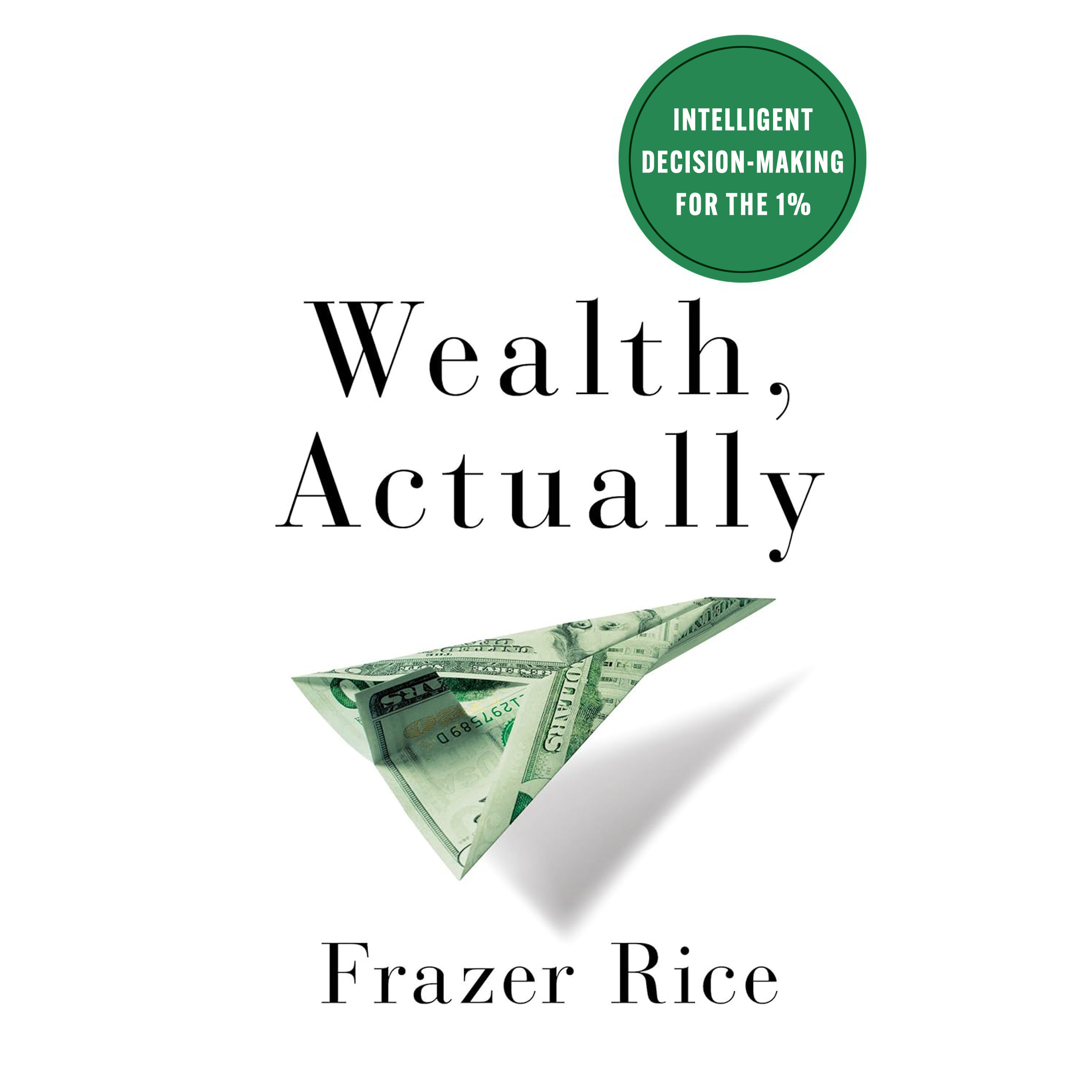
EPISODE · Jan 3, 2025 · 35 MIN
ESTATE SETTLEMENT
from Wealth Actually · host Frazer Rice
Estate Settlement is one of the most feared parts of wealth transition. It is where trust and estate planning meet their first real test- usually when a will is put in front of the probate court system. JOEL SCHOENMEYER, Head of the Family Wealth Group at a Major Regional Bank joins us to discuss the ins and outs. https://youtu.be/OwepMwX0uao?si=YKevHbmDrtrRv12b What is Joel's background? I spent the first 15+ years of my career as a trusts and estates attorney. First at a few different law firms, including Sidley Austin – back when they had a T&E group. Then as a solo practitioner for more than a decade. In 2012 I made the transition to working for financial institutions, where I have held a number of roles: Legal department, in the trust counsel group Senior Trust Advisor on an ultra-high net worth team National Head of Estate Settlement Senior Wealth Strategist in a multi-family office group I’m now in charge of the Family Wealth group at Fifth Third, which is an offering for ultra-high net worth clients and families. Just broadly, can you explain what happens from a legal perspective when someone dies? Sure. First, a little terminology: “Estate settlement” is the overall process of wrapping up a deceased person’s affairs, a job that’s usually handled by an “executor”. That settlement process can include lots of different things, but it can be broken down into a few broad topics: Inventorying and collecting all assets; Identifying and then paying debts and expenses, including taxes (both final income taxes and, if the estate is large enough, estate taxes); and Distributing what remains according to the decedent’s estate plan (or if they didn’t have one, according to state law). “Probate” can be a part of estate settlement, and involves court supervision of the above process, to make sure that it is handled correctly. I spent some of my time as an attorney drafting Wills and Trusts. However, I spent even more time in court, dealing with probate issues (including litigation). We are going to be talking about messy estate settlement issues and how to avoid them. Why is this important? I will say that, throughout my career, I have met clients (or potential clients) who say, “I don’t care what happens when I die – that’s someone else’s problem.” However, most people do NOT want to cause problems for their loved ones. The death of a parent or spouse or sibling is difficult enough without having to figure out where their stuff is, or what they wanted to do with it.There’s also the positive aspect. You have family and friends – and possibly charities – that you hope will thrive after your passing. Why wouldn’t you want to set things up so that they actually get your hard- earned money? Do you want to have that money go to the IRS or some probate litigators? How should people start to think about their estate? I break the issues to consider down into four interconnected categories: Assets Debts and expenses (including taxes) Personal Relationships Estate Plan (Will, Trust, etc.) One thing you will notice is that your estate plan is only one category here. A lot of people think that having a Will and/or Trust in place means that they are “done” with planning for their death. That’s just not true. So let’s start with assets in the estate settlement process. What is the big mistake people make with their assets in the context of planning for death? The main mistake is not paying attention to how your assets are titled. This is especially the case where people have an estate plan but then also have assets with a listed beneficiary, or assets owned jointly. For instance, I once handled an estate where the decedent’s Will gave away her interest in a home – but the decedent already owned the home in joint tenancy with her sister! As a result, the gift under her Will was ineffective (but the situation created a lot of litigation as well as conflict). Too often people don’t have a handle on how assets will pass when they die, so they don’t have a holistic plan. One other example: husband marries later in life, then dies with a $5 million life insurance policy. That policy was purchased before he got married, and the initial beneficiary was his mother. After the decedent got married, he should’ve updated the beneficiary to his spouse, but he never got around to it. Another asset-related issue that I encounter: “dead” assets, which is my term for assets that really have little or no value but that are painful to get rid of. Timeshares are the quintessential dead asset, to my mind – estate settlement folks HATE them. It sounds like there could be estate settlement issues with debts and expenses. That’s correct. Keep in mind that debts survive your death – they don’t just disappear. If you name beneficiaries for all of your assets but then die with debts, your executor will have to figure out how to come up with the money to pay those debts – and that will probably involve a court proceeding. Another issue – specific to wealthy individuals – involves the estate tax. That tax is due nine months after death, with very few exceptions. Now, nine months might seem like a long time, but it really isn’t. That’s especially the case if the decedent owned a lot of illiquid assets, like real estate, or private equity, or even a working business. For instance, what if the decedent dies with an estate of $100 million and gives all of his assets to his children? The estate tax will be roughly $40 million, which is a LOT of money to raise in a short amount of time. Do you obtain a loan? Do you sell the business or real estate quickly? What’s the best solution for a living person looking to simplify things with respect to both assets and debts? Speaking generally, you need someone to take a deep dive into both your assets and your debts/expenses/taxes. Who this “someone” is depends on your personal situation. Some people pay their attorney to do this work, although that can an expensive proposition. Other people use their financial institution, or their financial planner, or even an accountant. But the important point is that you – with the assistance of an advisor – need to have eyes on all of your assets and liabilities. You mention personal relationships as another important issue. What do you mean by that? I’m really talking about understanding whether your estate plan takes into account the relationships between your friends and family. It might actually worsen those relationships. This comes up a lot in the context of beneficiaries. An obvious situation: you have two children but giveone child 2/3rds of your assets and the other child only 1/3rd. Now, you may have good reasons for doing that – or even bad reasons, which is allowed, since it’s your money. However, you are also potentially leaving a mess. What are the ways to deal with these personal relationship issues? Three Things to Keep in Mind: First: Family Dynamic Awareness You need to be pretty clear-eyed about whether your kids get along, or whether your spouse gets along with your kids from a prior marriage. Don’t close your eyes to reality. Don’t assume that your family will have good relationships after you are gone. (You being alive may be the only thing forcing them to be civil to one another.) Second: Staffing You should be thinking not only of family members as beneficiaries, but also about who is in charge of handling your estate (and any trusts created as a result of your death). It’s vitally important to NOT create situations where people who don’t get along have to work together. This applies to co-executors or co-trustees. or in a situation where one of them is “handling” the other person’s finances. Pro tip: If you have a son and daughter who don’t get along, do NOT name your daughter as trustee of the trust for your son’s benefit. They are both going to be miserable! Third: Communication I think this goes for all categories. Transparency solves a lot of these issues, although it may involve some uncomfortable conversations. But I really believe that telling people what your plan is, and explaining the rationale BEHIND your plan, is key. To go back to what I was just saying about leaving differing amounts to your beneficiaries: maybe this makes sense. For instance, maybe one of your children helped to grow the family business and the other one never contributed. In that case, you should articulate this reason why the child who helped gets more than the child who didn’t. Similarly, if one child is very wealthy but another is struggling but working hard you might want leave more to the struggling child. Please, make sure you explain why! FInally, how does the actual estate plan factor in here? Usually we aren’t talking about obvious errors, like a Will or Trust that gives away 105% of your assets. I often encounter situations where the estate planner tries to translate your wishes into legal language that doesn’t work when applied in the real world. Here’s a situation I encountered a couple of years ago: Dad (a widower) has a son and a daughter. His Will gives daughter a right to buy his home within 30 days of his death. Now, I found this provision while dad was still living, and had to ask: Why did only daughter have the right to buy? Not to get ahead of myself in talking about personal relationships, but would daughter’s right to buy anger son? Is this just a situation where daughter was in the area, or lived at the home for longer than son, or had more of a claim to it? “30 days” is really fast – did the daughter have the ability to raise this type of money (or obtain a loan) that quickly? What are your quick take-aways on the Estate Settlement process? I would say there are two of them. Number 1 is: track (or have someone else track) your assets and your debts,...
Embed this episode
Ready to play
ESTATE SETTLEMENT
No transcript for this episode yet
Similar Episodes
No similar episodes found.