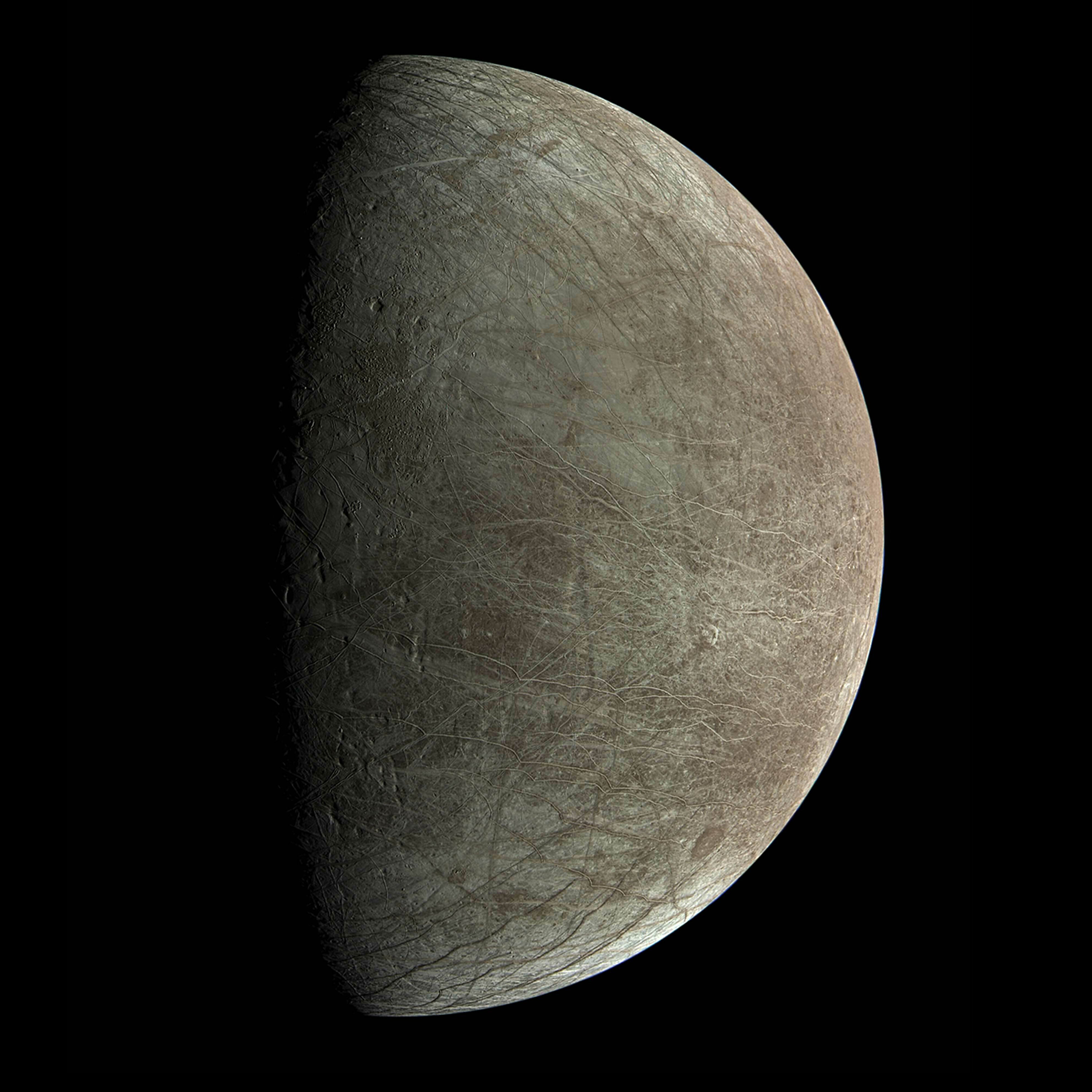
Europa’s quiet seafloor
from Planetary Radio: Space Exploration, Astronomy and Science Hosted by The Planetary Society
What if Europa’s seafloor isn’t alive with activity after all? This week on Planetary Radio, host and producer Sarah Al-Ahmed explores new research that reframes how scientists think about one of the Solar System’s most intriguing ocean worlds. Sarah is joined by Paul Byrne, associate professor of earth, environmental, and planetary sciences at Washington University in St. Louis. Paul is the lead author of a new study suggesting that the seafloor beneath Europa’s global ocean may be geologically quiet today, potentially lacking the hydrothermal activity often associated with habitable environments on Earth. Together, they discuss how scientists investigate places we can’t yet observe directly and why Europa remains a compelling world to explore regardless of what we find. Then, Bruce Betts, chief scientist of The Planetary Society, joins us for What’s Up to explain why Saturn’s moon Enceladus shows strong evidence for active hydrothermal vents beneath its icy crust, offering a fascinating contrast between two ocean worlds. Discover more at: https://www.planetary.org/planetary-radio/2026-europas-quiet-seafloor
Embed this episode
What this episode covers
New research suggests the seafloor beneath Europa’s vast ocean may be geologically quiet today, reshaping how scientists think about habitability on one of the Solar System’s most intriguing ocean worlds. Planetary geologist Paul Byrne of Washington University in St. Louis joins Planetary Radio to discuss.
No transcript yet.