
EPISODE · Nov 7, 2021 · 12 MIN
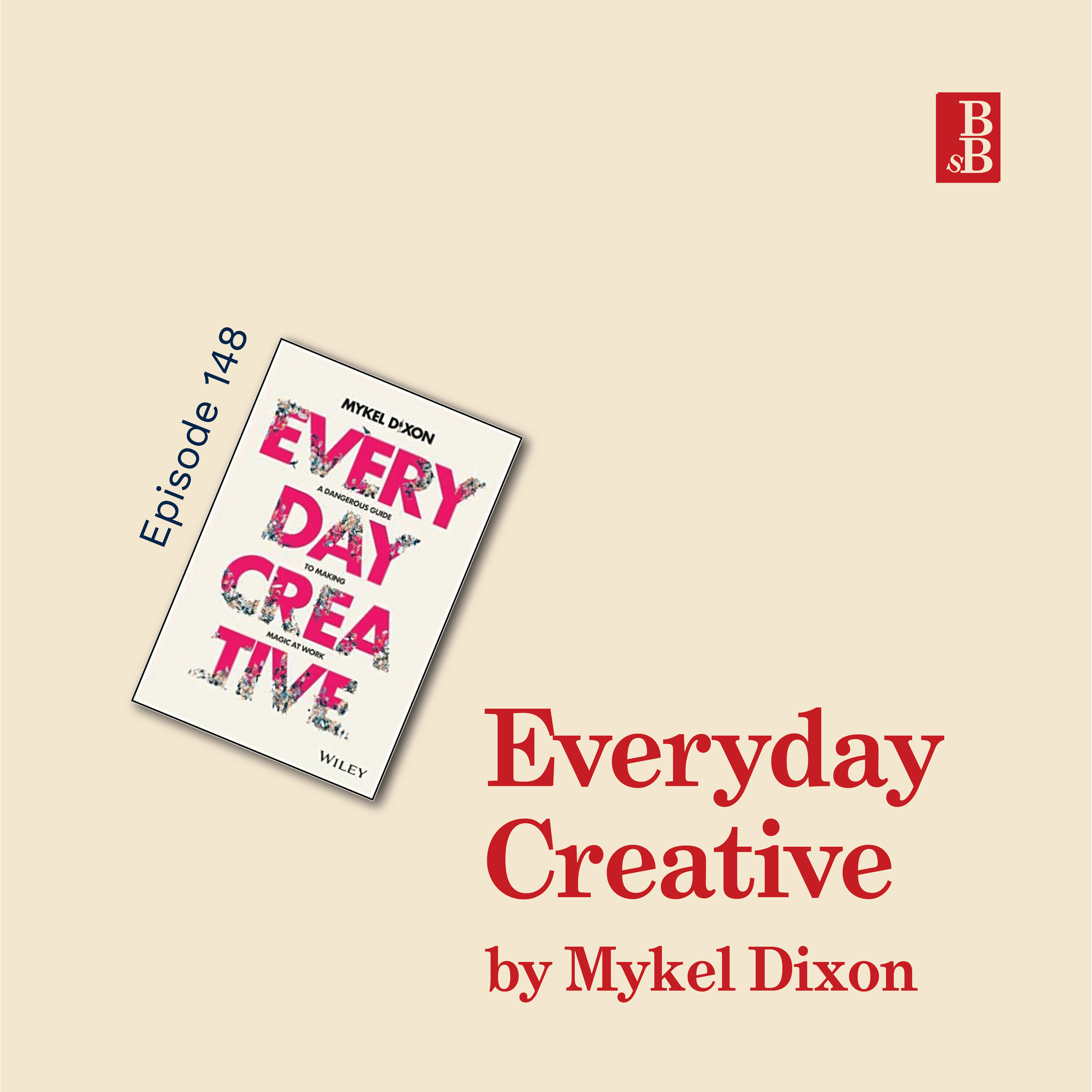
Everyday Creative by Mykel Dixon: how to live courageously with creativity
from Steph's Business Bookshelf Podcast · host Steph Clarke
About the book Want to be more creative? Not sure of where to start? You’re not alone. We all have a dysfunctional relationship with creativity. We love it, value it and want more of it but just can’t seem to find the time or resources to give to it. And despite desperate calls for more innovative thinking, the systems and processes that hold most businesses together don’t allow or enable anything like it. This book is for anyone who feels like they have more to give but struggles to get it out. Packed full of powerful, practical and poetic tools, this inspiring and infectious read will help you cut through the barriers that prevent creativity at work while giving you the clarity and confidence to unleash your wild, untamed self-expression into every pocket of your personal and professional life. Source: https://www.mykeldixon.com/store About the author Mykel Dixon is an award-winning speaker, author, musician and recognised authority of Creativity, Culture and the Human Future of Work. He helps leaders and teams rediscover their natural appetite and aptitude for Creativity with extraordinary success. Through the design and delivery of explosive keynote presentations, immersive team-building activities and transformative talent development programs, Mykel leads a new-wave of entrepreneurial savants showing forward-thinking companies how to reinvent for relevance in a 21st-Century Renaissance. Source: https://www.mykeldixon.com/ Also check out https://www.everydaycreatives.com/ Big idea #1 — Creative, everyday “The future of work will be written by those with the courage to think, feel, and act more creative every day.” There is a lot in the book that says about how and why we need to access courage in order to access creativity, even in times of uncertainty or discomfort. We don’t need to go into all the reasons why creativity is so important. The writing is on the wall that our more socially, politically, and technically complex world requires a lot more creativity in order to solve the big problems that we are facing and will continue to face. We know that the future of AI and robotics rests on the marriage of human creativity and emotion, with the efficiency and power of technology. Therefore we need to inject creativity into our daily lives; from our emails to our CVs, to how we connect with people, even the shoes we wear, and not just into the big stuff. We can’t access creativity for the big stuff and the big problems if we’re not practicing creativity on a regular basis. Plus it makes life and work a lot more fun as well. This book is all about harnessing those tiny ways and those little things that we can do every single day in order to be more creative; to access our creativity and expand our creative minds. Like every book about creativity, it’s so important not to conflate creativity with artistic talent or artistic skill. Those are two completely different things. Big idea #2 — Reclaim your creative identity In the book Mykel says “No one was born boring. No one had dreams of being a buzzkill. It happens slowly, subtly, insidiously”. You’ve probably heard people say that creativity is a skill and that it can be learned, but it’s really more bout relearning. In a famous study led by George Land, 1,600 five-year-olds were tested for their creativity skills; their creative capacity and their ability to access that creative capacity. At just five years old, 98% of those 1,600 children scored as creative geniuses. Five years later, he tested the same children, at 10 years old only 30% were creative geniuses. He tested them again at 15, by then it was just 12%. Most depressingly, by the time these children were 30 years old, just 2% of them showed the same creative genius potential that 98% of them had done 25 years earlier. It goes to show that creativity is bashed out of us slowly but surely throughout our lives. We are taught that creativity and thinking differently is dangerous, that it will make us misunderstood, or isolated, or poor (or all three) and that it’s safer not to be creative. Mykel says that all the post-it note activities in the world that you might do in your team or in a workshop, won’t help if fundamentally, you believe that you’re not creative, and you don’t reclaim the creativity that you, and all of us, were clearly born with. Mykel breaks it down into six creative identities; The never was creative The used to be creative The kind of sorta creative The love to be creative The natural born creative, and The everyday creative. He says the big difference is courage, the everyday creative is not born with more creativity than anyone else. They’re not innately more creative, but they have practiced and make it a conscious, courageous effort to bring creativity into how they’re living and how they’re working. This doesn’t mean doing anything wild, it just means being intentional. Those identities are not fixed. Just because you may currently identify as ‘used to be creative’, doesn’t mean that you can’t move from that. Something worth reflecting on that and thinking about how you move from one level of creative identity to another. Big idea #3 — Make it your own Mykel gives plenty of space and prompts in the book to create your own creativity manifesto and your value proposition; the what, the, how, and the why to set the scene and set your mindset around what creativity means to you? Why is it that you want to access it? What would the benefits be and what is the value or the benefit to you and the others around you. It’s then up to you to create the principles that make your own version of creativity, because by its very nature, it will look and feel different to everyone. So some examples in the book… wearing a more colorful outfit or some crazy socks or shoes (a safe place to start with everyday creativity) using bright stationary to create some different connections and thinking in your brain (when you pick up your bright pink notebook or your bright orange notebook, you might then think, oh yeah, this is where I write my ideas or come up with great questions) going off script (Mykel used to work in a call center and he was always getting told off for going ‘off script’, but he also was the most successful in the call centre, showing that the output of creativity was celebrated, but the practice of creativity was very much admonished and he got told off a lot for going off script) asking more questions saying yes to different things switching your browser / looking beyond the default settings (one study suggested that people who go beyond the default settings on their computers and use a different browser than the default have a touch of extra creativity in them, because they’re not just going with what they’re given) Mykel centre aligns his emails as a way of bucking convention and making people stop and notice making work work for you, maybe mixing up your meetings reading something different, going somewhere different, or meeting someone different, to give yourself exposure to different ideas. There’s just a few examples of some ideas of everyday creativity in the book, there’s obviously a million others that you can come up with to make it your own. I like to think of these as cheeky little nods to yourself and to others around your way of expressing creativity, which builds up over time. And then before long, you’ll be asking different questions without even having to think about it. And when the moment appears that really matters, you’ll be ready to think in a more creative way, as you’ve worked to become the creative you were born to be. Support my book habit: https://www.buymeacoffee.com/stephsbookshelfSee omnystudio.com/listener for privacy information.
Embed this episode
NOW PLAYING
Everyday Creative by Mykel Dixon: how to live courageously with creativity
No transcript for this episode yet
Similar Episodes
No similar episodes found.
Similar Podcasts
No similar podcasts found.