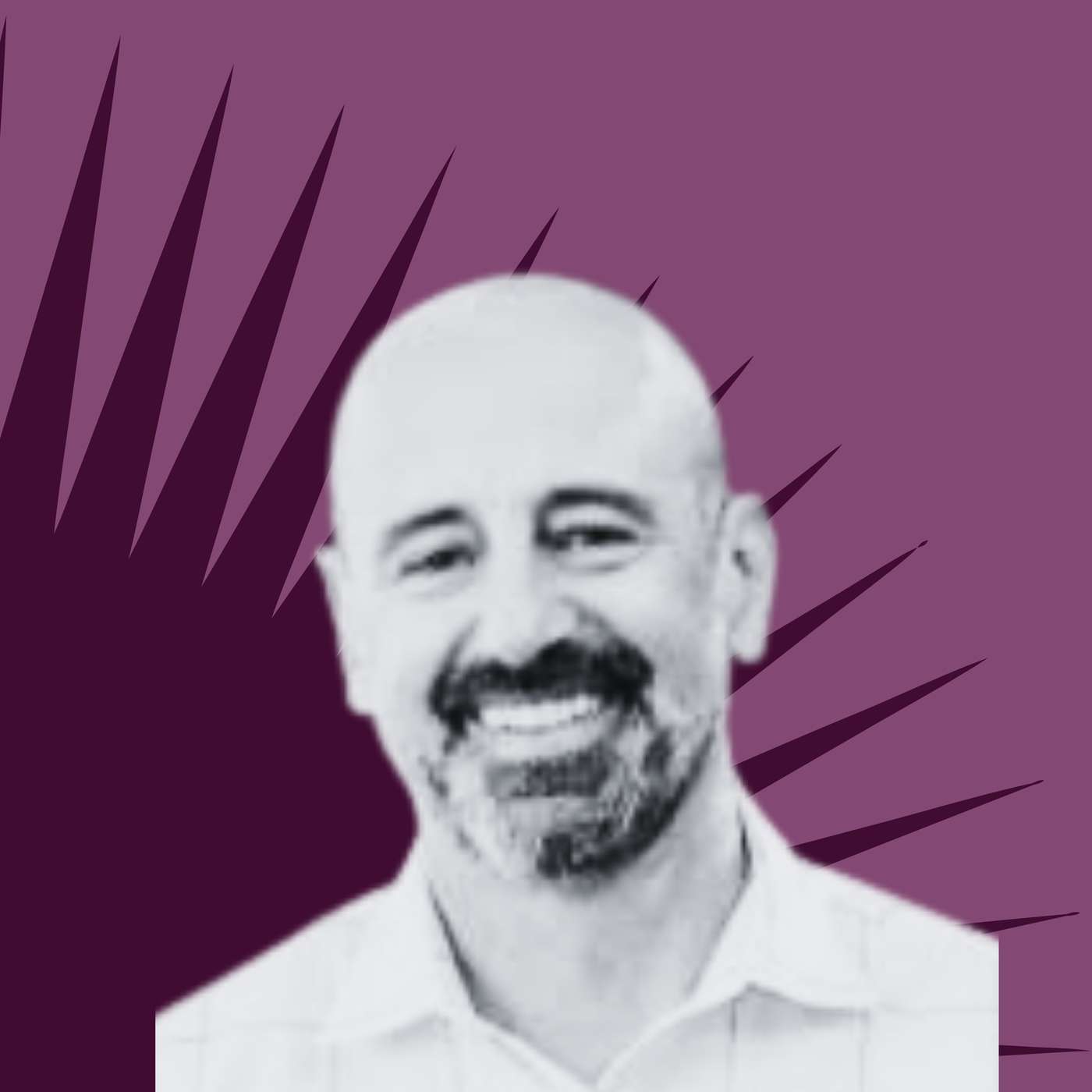
Excessive Wealth Disorder: Glen Galaich on the $2 Trillion That Could Save Democracy episode artwork

EPISODE · Mar 28, 2026 · 42 MIN

Excessive Wealth Disorder: Glen Galaich on the $2 Trillion That Could Save Democracy

from Keen On America · host Andrew Keen

“Why does someone need to be the first trillionaire? The damage it’s doing just to get to that level is extreme.” — Glen GalaichExcessive wealth disorder. It sounds like a disease — which, at least according to Glen Galaich — CEO of the Stupski Foundation and author of Control: Why Big Giving Falls Short, it is. There’s $2 trillion sitting in American charitable accounts Galaich says, mostly invested in hedge funds and real estate. Foundations are legally required to distribute only 5% a year — the bare minimum — and invest the remaining 95% to ensure they can make that back and live forever. The system rewards perpetuity over impact. The money is stuck — like most other things in America. And this philanthropic wealth is predicted to grow to $18 trillion by 2050 — twice the size of the annual federal budget. A truly excessive wealth disorder.Galaich wants to unstick the system. When a donor puts money in a private foundation, they receive up to a 70% tax exemption. The public is forgoing taxation in return for public stewardship. But donors still think it’s their money. That’s Galaich’s Control problem. Carnegie pioneered this idea that the wealthy know best how to distribute their wealth. The Sacklers perfected its dark arts. Bill Gates sits somewhere in between. While billionaires like Peter Thiel and Marc Andreessen reject it entirely.Galaich’s own foundation is giving up control — returning all its resources to communities by 2029. In Hawaii, he gave $15 million to people who actually lived there. They moved all of it within five months to health clinics on neighbouring islands that had never had discretionary money. His deeper frustration is with progressive philanthropy’s failure to coordinate. Conservative donors give around two issues — free markets and liberty — in coordinated fashion. Progressive philanthropy, in contrast, is fragmented, fearful, and obstinately sitting on its capital. There’s a new institute in the Bay Area called the Excessive Wealth Disorder Institute. The disease is real. And so is its cure.•       $2 Trillion Is Sitting in Charitable Accounts: Mostly invested in hedge funds and real estate. Philanthropic wealth in the US is predicted to grow from $2 trillion to $18 trillion by 2050 — twice the size of the annual federal budget. Foundations are required to give only 5% a year. The rest grows. The money isn’t moving because the system rewards perpetuity over impact.•       It’s Not Their Money Anymore: When a donor puts money in a private foundation, they receive up to a 70% tax exemption. The public is forgoing taxation in return for public stewardship. But donors still think it’s their money. That’s the control problem at the heart of Galaich’s book — and why so much of big giving serves the donor, not the community.•       Excessive Wealth Disorder Is Real: Galaich cites the Excessive Wealth Disorder Institute in the Bay Area. Why does someone need to be the first trillionaire? The damage done to society just getting to that level — environmental, human, democratic — is extreme. And the Giving Pledge is collapsing: Peter Thiel and Marc Andreessen have pulled out. Andreessen argues his investments are his philanthropy.•       The Hawaii Example: Stupski gave $15 million to people from Hawaii who lived and worked there. They moved all of it within five months to health clinics on the neighbouring islands that had never had discretionary money. Palliative care, community outreach, home visits — none of which Medicaid allowed. That’s what happens when you let go of control.•       Progressive Philanthropy Can’t Coordinate. Conservatives Can: Conservative donors give around two issues — free markets and liberty — and they give in coordinated fashion over long periods. That’s how you get the Federalist Society, Heritage, ALEC, and possibly Donald Trump. Progressive philanthropy is fragmented, siloed, and in a state of fear that the current administration will freeze their assets. The left has moved into protection mode when it should be distributing. About the GuestGlen Galaich, PhD, is the CEO of the Stupski Foundation, one of the nation’s most ambitious philanthropic spend-down efforts. He hosts the Break Fake Rules podcast and writes the Who Gives? Substack. Control: Why Big Giving Falls Short is published by Wiley, with a foreword by Ibram X. Kendi.References:•       Control: Why Big Giving Falls Short by Glen Galaich (Wiley, 2026) — the book under discussion.•       Who Gives? Substack — Galaich’s newsletter on reforming philanthropy.•       Episode 2845: Let’s Ban Billionaires — Noam Cohen on the Know-It-Alls. Galaich picks up where Cohen left off.About Keen On AmericaNobody asks more awkward questions than the Anglo-American writer and filmmaker Andrew Keen. In Keen On America, Andrew brings his pointed Transatlantic wit to making sense of the United States — hosting daily interviews about the history and future of this now venerable Republic. With nearly 2,800 episodes since the show launched on TechCrunch in 2010, Keen On America is the most prolific intellectual interview show in the history of podcasting.WebsiteSubstackYouTubeApple PodcastsSpotify Chapters:(00:31) - Introduction: Noam Cohen, banning billionaires, and the tide turning (02:33) - What is philanthropy? Carnegie and the love of humanity (05:04) - Sloan, Rockefeller, Stanford: the first generation of know-it-all givers (06:49) - Peter Thiel and Marc Andreessen pull out of the Giving Pledge (09:05) - The Sacklers: the worst argument for philanthropy (09:57) - Bill Gates: for or against control? (11:53) - It’s not their money anymore: the public stewardship illusion (14:00) - Andreessen vs. community: who decides what people need? (15:33) - The Stupski model: $374 million returned to communities (18:47) - Hawaii: $15 million moved in five months to clinics that never had discretionary funds (21:27) - Can philanthropy save democracy? (24:22) - Democracy Forward and the $2 trillion sitting in accounts (29:38) - Excessive Wealth Disorder: why does anyone need to be a trillionaire? (33:00) - Progressive philanthropy’s failure to coordinate (35:14) - The Monty Python troll: the CEO as gatekeeper to the donor

“Why does someone need to be the first trillionaire? The damage it’s doing just to get to that level is extreme.” — Glen GalaichExcessive wealth disorder. It sounds like a disease — which, at least according to Glen Galaich — CEO of the Stupski Foundation and author of Control: Why Big Giving Falls Short, it is. There’s $2 trillion sitting in American charitable accounts Galaich says, mostly invested in hedge funds and real estate. Foundations are legally required to distribute only 5% a year — the bare minimum — and invest the remaining 95% to ensure they can make that back and live forever. The system rewards perpetuity over impact. The money is stuck — like most other things in America. And this philanthropic wealth is predicted to grow to $18 trillion by 2050 — twice the size of the annual federal budget. A truly excessive wealth disorder.Galaich wants to unstick the system. When a donor puts money in a private foundation, they receive up to a 70% tax exemption. The public is forgoing taxation in return for public stewardship. But donors still think it’s their money. That’s Galaich’s Control problem. Carnegie pioneered this idea that the wealthy know best how to distribute their wealth. The Sacklers perfected its dark arts. Bill Gates sits somewhere in between. While billionaires like Peter Thiel and Marc Andreessen reject it entirely.Galaich’s own foundation is giving up control — returning all its resources to communities by 2029. In Hawaii, he gave $15 million to people who actually lived there. They moved all of it within five months to health clinics on neighbouring islands that had never had discretionary money. His deeper frustration is with progressive philanthropy’s failure to coordinate. Conservative donors give around two issues — free markets and liberty — in coordinated fashion. Progressive philanthropy, in contrast, is fragmented, fearful, and obstinately sitting on its capital. There’s a new institute in the Bay Area called the Excessive Wealth Disorder Institute. The disease is real. And so is its cure.•       $2 Trillion Is Sitting in Charitable Accounts: Mostly invested in hedge funds and real estate. Philanthropic wealth in the US is predicted to grow from $2 trillion to $18 trillion by 2050 — twice the size of the annual federal budget. Foundations are required to give only 5% a year. The rest grows. The money isn’t moving because the system rewards perpetuity over impact.•       It’s Not Their Money Anymore: When a donor puts money in a private foundation, they receive up to a 70% tax exemption. The public is forgoing taxation in return for public stewardship. But donors still think it’s their money. That’s the control problem at the heart of Galaich’s book — and why so much of big giving serves the donor, not the community.•       Excessive Wealth Disorder Is Real: Galaich cites the Excessive Wealth Disorder Institute in the Bay Area. Why does someone need to be the first trillionaire? The damage done to society just getting to that level — environmental, human, democratic — is extreme. And the Giving Pledge is collapsing: Peter Thiel and Marc Andreessen have pulled out. Andreessen argues his investments are his philanthropy.•       The Hawaii Example: Stupski gave $15 million to people from Hawaii who lived and worked there. They moved all of it within five months to health clinics on the neighbouring islands that had never had discretionary money. Palliative care, community outreach, home visits — none of which Medicaid allowed. That’s what happens when you let go of control.•       Progressive Philanthropy Can’t Coordinate. Conservatives Can: Conservative donors give around two issues — free markets and liberty — and they give in coordinated fashion over long periods. That’s how you get the Federalist Society, Heritage, ALEC, and possibly Donald Trump. Progressive philanthropy is fragmented, siloed, and in a state of fear that the current administration will freeze their assets. The left has moved into protection mode when it should be distributing. About the GuestGlen Galaich, PhD, is the CEO of the Stupski Foundation, one of the nation’s most ambitious philanthropic spend-down efforts. He hosts the Break Fake Rules podcast and writes the Who Gives? Substack. Control: Why Big Giving Falls Short is published by Wiley, with a foreword by Ibram X. Kendi.References:•       Control: Why Big Giving Falls Short by Glen Galaich (Wiley, 2026) — the book under discussion.•       Who Gives? Substack — Galaich’s newsletter on reforming philanthropy.•       Episode 2845: Let’s Ban Billionaires — Noam Cohen on the Know-It-Alls. Galaich picks up where Cohen left off.About Keen On AmericaNobody asks more awkward questions than the Anglo-American writer and filmmaker Andrew Keen. In Keen On America, Andrew brings his pointed Transatlantic wit to making sense of the United States — hosting daily interviews about the history and future of this now venerable Republic. With nearly 2,800 episodes since the show launched on TechCrunch in 2010, Keen On America is the most prolific intellectual interview show in the history of podcasting.WebsiteSubstackYouTubeApple PodcastsSpotify Chapters:(00:31) - Introduction: Noam Cohen, banning billionaires, and the tide turning (02:33) - What is philanthropy? Carnegie and the love of humanity (05:04) - Sloan, Rockefeller, Stanford: the first generation of know-it-all givers (06:49) - Peter Thiel and Marc Andreessen pull out of the Giving Pledge (09:05) - The Sacklers: the worst argument for philanthropy (09:57) - Bill Gates: for or against control? (11:53) - It’s not their money anymore: the public stewardship illusion (14:00) - Andreessen vs. community: who decides what people need? (15:33) - The Stupski model: $374 million returned to communities (18:47) - Hawaii: $15 million moved in five months to clinics that never had discretionary funds (21:27) - Can philanthropy save democracy? (24:22) - Democracy Forward and the $2 trillion sitting in accounts (29:38) - Excessive Wealth Disorder: why does anyone need to be a trillionaire? (33:00) - Progressive philanthropy’s failure to coordinate (35:14) - The Monty Python troll: the CEO as gatekeeper to the donor

NOW PLAYING

Excessive Wealth Disorder: Glen Galaich on the $2 Trillion That Could Save Democracy

0:00 42:30

No transcript for this episode yet

We transcribe on demand. Request one and we'll notify you when it's ready — usually under 10 minutes.

The Small Business Startup School – Business Notes | Financial Literacy | Retail Psychology – For Professionals & Entrepreneurs The Small Business Startup School Inc. Starting or buying a small business? While personal circumstances may vary, business patterns remain timeless. On The Small Business Startup School, we explore strategies, insights, and practical solutions to help entrepreneurs confidently navigate their journey.Hosted by Ola Williams—a retail entrepreneur, fintech founder, and financial coach with over two decades of experience—this podcast marries financial awareness and retail psychology with optimism to deliver actionable takeaways.Join us to learn, grow, and connect as we uncover the keys to business success.Let’s continue to learn together and be encouraged to keep on connecting! PodQuesting Dwight J Randolph- WolfShield Media PodQuesting: -By WolfShield Media and Dwight J RandolphJoin us on an exciting journey to master the world of fiction podcasting! At PodQuesting, we document our quest to improve and innovate, sharing valuable insights, strategies, and behind-the-scenes tips along the way. Whether you're an experienced podcaster or just starting your first show, our podcast is your go-to resource for everything podcasting.Discover practical advice, creative techniques, and lessons from our own experiences as we explore the ever-evolving podcasting landscape. Ready to level up your skills and embark on this adventure with us? Tune in and join the quest!Have questions or feedback? Reach out to us at [email protected] and visit our website:WolfShield.Media LIGHTS, CAMERA, SMILE! Creatives Club Media Lights, Camera, Smile, is a podcast for anyone with a dream to share something with the world, out of the overflow of themselves - be it their mind, their heart, their personalities, and much more. Each of us are alive in this moment in time, with an innate ability to have ideas and create various things to benefit both ourselves and the people around us for a reason, and here, you will find the encouragement, the inspiration, and the motivation to do just that. Hosted by Cicily, founder of Creatives Club, she dives into various topics surrounding creativity and business. Exploring entrepreneurship for creatives in a corporate reality, sharing tips and tricks in a media centered company, answering questions regarding what a creative actually is are just a few of the things discussed on this podcast. Be encouraged to create for yourself as Cicily gets vulnerable by pivoting the camera to herself for the first time.To submit questions for Cicily to answer, or have her address certain t Kaizen Blueprint Aldo Chandra "Kaizen" is a Japanese term for continuous improvement. This podcast provides a blueprint to learn about health, wealth, relationships and everything else in between. Through our podcast, we strive to inspire, educate, and motivate our audience to cultivate a mindset of lifelong learning, productivity, and personal development. By sharing insights, strategies, and practical tips, we aim to guide listeners on their journey towards realizing their fullest potential, fostering success, and creating lasting positive change.

Frequently Asked Questions

How long is this episode of Keen On America?

This episode is 42 minutes long.

When was this Keen On America episode published?

This episode was published on March 28, 2026.

What is this episode about?

“Why does someone need to be the first trillionaire? The damage it’s doing just to get to that level is extreme.” — Glen GalaichExcessive wealth disorder. It sounds like a disease — which, at least according to Glen Galaich — CEO of the Stupski...

Is there a transcript available for this episode?

Yes, a full transcript is available for this episode. You can read the complete transcript on the episode page.

Can I download this Keen On America episode?

Yes, you can download this episode by clicking the download button on the episode player, or subscribe to the podcast in your preferred podcast app for automatic downloads.
URL copied to clipboard!