
EPISODE · Jun 1, 2026 · 8 MIN
Expert Pipe Welding Services: Finding Quality Solutions
from Industrial Fab, Welding & Machining · host Aaron Sova
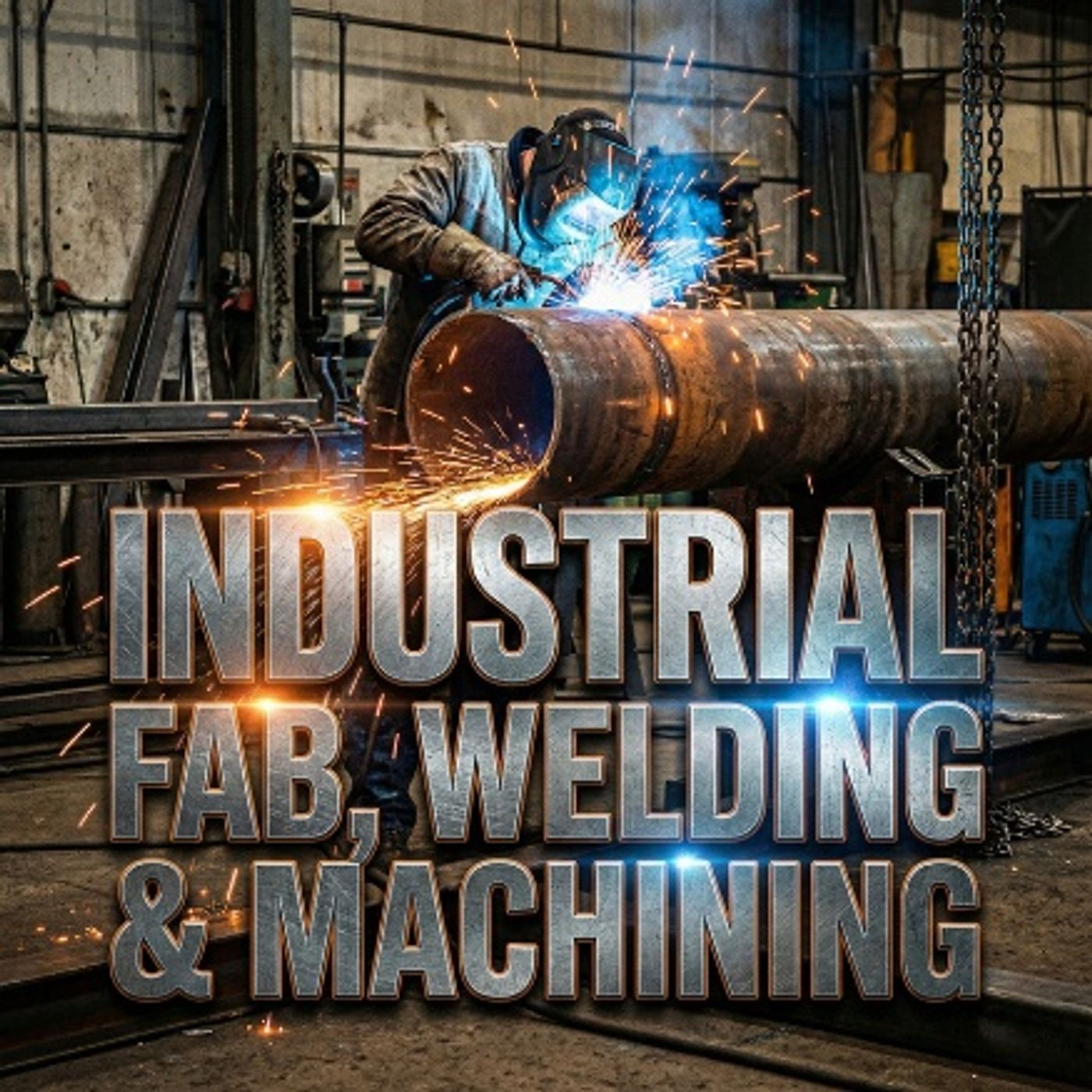
Deconstructing High-Pressure Pipe Metallurgy, Code Weld Volatilities, and X-Ray Quality Assurance StandardsTreating industrial pipe welding as a simple, low-bid maintenance task is an expensive corporate gamble that regularly compromises upstream infrastructure. When vital fluid arrays, hydraulic lines, or high-pressure process piping fail, the resulting mechanical shutdown can easily leak tens of thousands of dollars per hour in field profits. In this heavy-infrastructure edition of The Industrial Fab, Welding & Machining Podcast, the mechanical fabrication engineers at LTJ Industrial Services map out the science of high-integrity pressure welding.Host and the LTJ technical team step past basic welding descriptions to analyze the exact logistics of code-compliant pipe integration. Discover the performance gap between classic SMAW stick welding and the high-precision finish of GTAW root passes on thin-walled stainless steel. We break down the complex safety realities of managing toxic hexavalent chromium fumes, explore how automated orbital welding networks improve shop speeds, and explain how non-destructive testing (NDT)—including radiographic X-rays and ultrasonic scans—safeguards high-stress oil, gas, and mining assets across the Rocky Mountain region.Chapter Sections[00:00] – The Heavy Infrastructure Baseline: Why precision pressure piping acts as the primary life support for global industrial operations.[01:45] – High-Velocity Failure Risks: Tracing the operational impacts of micro-fractures inside hydraulic systems and process lines.[03:20] – SMAW Stick Welding Realities: Utilizing durable stick techniques for remote, rain-swept field repair environments.[05:00] – The GTAW Precision Standard: Mastering TIG root passes on high-purity stainless steel and thin-wall tubes.[06:45] – Shop Production Optimization: Deploying continuous wire-fed MIG (GMAW) and heavy flux-cored (FCAW) loops for rapid shop fabrication.[08:30] – Confined Space and Environmental Safety: Managing strict OSHA ventilation rules and specialized respirators to isolate toxic hazards.[10:15] – Hexavalent Chromium Mitigation: Enhanced safety guidelines for welding stainless alloy compositions.[12:00] – Non-Destructive Quality Assurance: Verifying internal weld soundness through radiographic X-rays and advanced ultrasonics.[13:45] – Regulatory Traceability Frameworks: Organizing written Welder Performance Qualifications (WPQ) and formal procedure books.[15:15] – Closing: Deploying automated orbital welding tech and securing custom quotes at LTJIndustrial.com.Key Episode HighlightsThe Metallurgy of High-Pressure Containment: Pipe welds do not merely hold structural shapes together; they must act as a perfect, leak-proof pressure barrier. Processing corrosive chemicals, hot steam, or pressurized oil requires flawless structural execution to prevent micro-fissures from widening under extreme workloads.The TIG Root Pass Quality Benchmark: For high-spec process lines, relying on high-speed wire techniques for the initial weld layer is a significant risk. Experienced technicians specify manual Gas Tungsten Arc Welding (GTAW/TIG) for the crucial root pass, ensuring complete penetration and a smooth interior profile before filling the joint.Mitigating Hexavalent Chromium Risks: Protecting a shop workforce requires more than basic fan setups. Welding chrome-heavy alloys like stainless steel releases toxic hexavalent chromium fumes, requiring professional smoke-extraction tools and specialized personal respirators to stay fully compliant with modern OSHA health limits.Verifying Joints via Non-Destructive Testing: Never guess on the internal quality of an industrial weld joint. Top-tier operations prove structural soundness by putting completed sections through rigorous non-destructive testing (NDT)—utilizing industrial X-rays and ultrasonic waves to audit the inside of the weld without damaging the metal.The Documented Traceability Matrix: Modern regulatory compliance requires clear proof of workmanship. Every critical pressure weld must be backed by documented Welding Procedure Specifications (WPS) and active certified tester logs, giving engineering managers clear traceability for future maintenance audits.Western Slope Pressure Piping & Code Weld AnalyticsThe Environmental Altitude Coefficient: Welder performance and gas shielding behaviors vary noticeably when moving fabrication loops from sea-level coastal facilities up to high-altitude mountain environments.The Orbital Welding Capacity Yield: Integrating automated orbital welding systems into shop assembly lines significantly cuts production errors on long pipe runs while keeping weld penetration highly consistent.The Total Value Optimization Index: Investing in certified American Welding Society (AWS) talent provides long-term cost savings by minimizing unexpected pipeline joint cracks and reducing facility turnaround delays.Secure Your Production Infrastructure with LTJ Industrial ServicesThe Western United States’ Elite Pipe and Weld Authorities: Located at 22505 US-6, Rifle, CO, LTJ Industrial Services delivers code-compliant metal fabrication, pressure vessel machining, and heavy structural welding across Colorado, Utah, and Wyoming.Turnkey Shop Fabrication and Mobile Field Support: We avoid the typical scheduling delays of sub-contractor networks. Our industrial facility handles your entire pipe fabrication project—from initial design drawings and plasma cutting to multi-process code welding, NDT testing, and heavy on-site mechanical installation.Request an Industrial Pipe Fabrication Quote: Ready to protect your heavy equipment assets from high-cost joint leaks and secure certified, X-ray-verified industrial piping layouts? Visit ltjindustrial.com or call our regional engineering office at (970) 625-9353 to review your pipeline specifications today.Click here to read moreLearn more about LTJ Industrial Services at www.ltjindustrial.com/
What this episode covers
Deconstructing High-Pressure Pipe Metallurgy, Code Weld Volatilities, and X-Ray Quality Assurance StandardsTreating industrial pipe welding as a simple, low-bid maintenance task is an expensive corporate gamble that regularly compromises upstream infrastructure. When vital fluid arrays, hydraulic lines, or high-pressure process piping fail, the resulting mechanical shutdown can easily leak tens of thousands of dollars per hour in field profits. In this heavy-infrastructure edition of The Industrial Fab, Welding & Machining Podcast, the mechanical fabrication engineers at LTJ Industrial Services map out the science of high-integrity pressure welding.Host and the LTJ technical team step past basic welding descriptions to analyze the exact logistics of code-compliant pipe integration. Discover the performance gap between classic SMAW stick welding and the high-precision finish of GTAW root passes on thin-walled stainless steel. We break down the complex safety realities of managing toxic hexavalent chromium fumes, explore how automated orbital welding networks improve shop speeds, and explain how non-destructive testing (NDT)—including radiographic X-rays and ultrasonic scans—safeguards high-stress oil, gas, and mining assets across the Rocky Mountain region.Chapter Sections[00:00] – The Heavy Infrastructure Baseline: Why precision pressure piping acts as the primary life support for global industrial operations.[01:45] – High-Velocity Failure Risks: Tracing the operational impacts of micro-fractures inside hydraulic systems and process lines.[03:20] – SMAW Stick Welding Realities: Utilizing durable stick techniques for remote, rain-swept field repair environments.[05:00] – The GTAW Precision Standard: Mastering TIG root passes on high-purity stainless steel and thin-wall tubes.[06:45] – Shop Production Optimization: Deploying continuous wire-fed MIG (GMAW) and heavy flux-cored (FCAW) loops for rapid shop fabrication.[08:30] – Confined Space and Environmental Safety: Managing strict OSHA ventilation rules and specialized respirators to isolate toxic hazards.[10:15] – Hexavalent Chromium Mitigation: Enhanced safety guidelines for welding stainless alloy compositions.[12:00] – Non-Destructive Quality Assurance: Verifying internal weld soundness through radiographic X-rays and advanced ultrasonics.[13:45] – Regulatory Traceability Frameworks: Organizing written Welder Performance Qualifications (WPQ) and formal procedure books.[15:15] – Closing: Deploying automated orbital welding tech and securing custom quotes at LTJIndustrial.com.Key Episode HighlightsThe Metallurgy of High-Pressure Containment: Pipe welds do not merely hold structural shapes together; they must act as a perfect, leak-proof pressure barrier. Processing corrosive chemicals, hot steam, or pressurized oil requires flawless structural execution to prevent micro-fissures from widening under extreme workloads.The TIG Root Pass Quality Benchmark: For high-spec process lines, relying on high-speed wire techniques for the initial weld layer is a significant risk. Experienced technicians specify manual Gas Tungsten Arc Welding (GTAW/TIG) for the crucial root pass, ensuring complete penetration and a smooth interior profile before filling the joint.Mitigating Hexavalent Chromium Risks: Protecting a shop workforce requires more than basic fan setups. Welding chrome-heavy alloys like stainless steel releases toxic hexavalent chromium fumes, requiring professional smoke-extraction tools and specialized personal respirators to stay fully compliant with modern OSHA health limits.Verifying Joints via Non-Destructive Testing: Never guess on the internal quality of an...
NOW PLAYING
Expert Pipe Welding Services: Finding Quality Solutions
No transcript for this episode yet
Similar Episodes
Mar 28, 2026 ·3m
Apr 29, 2025 ·4m
Apr 29, 2025 ·4m
Apr 29, 2025 ·4m
Apr 29, 2025 ·3m
Apr 29, 2025 ·4m