
EPISODE · Jan 7, 2020 · 1H 5M
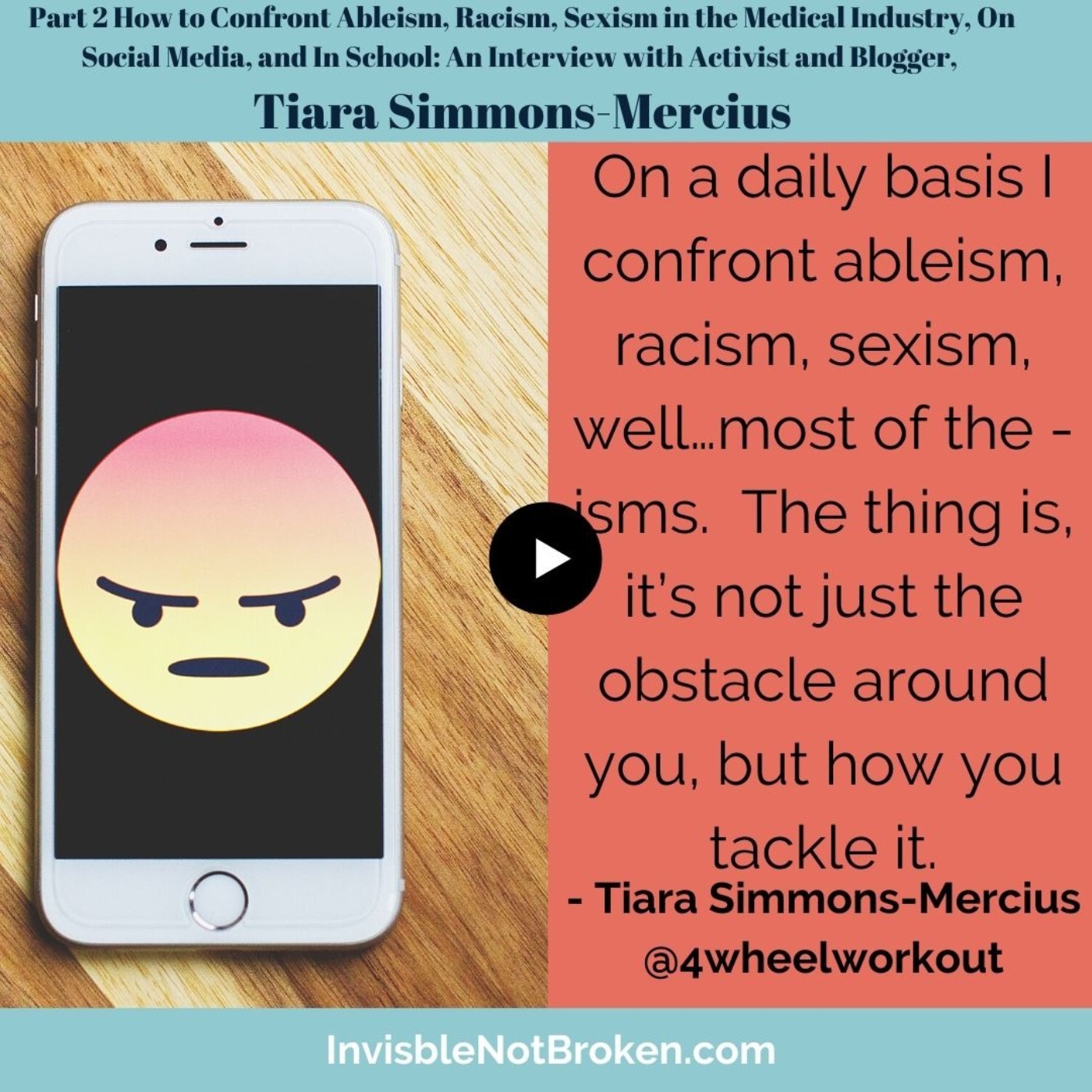
(Explicitly Sick) How to Confront Ableism, Racism, and Sexism: Tiara Simmons-Mercius - Part 2:
from Invisible Not Broken - Chronic Illness Podcast Network · host Hosts: Monica and Eva
Subjects Covered For Part 2Tattoos and DisabilityActivism and DisabilityNew Mother WorldLife Hacks for Disabled MomsDisability Temper TantrumsLabor and Delivery Disability and RacePregnancy and DisabilityInfant and Maternal Mortality Rates for Black WomenMedical Racism and Ableism in the Medical SystemDisability and CustodyBirth StoryDisabled MerchWhen you get to be the test for a surgeon’s sewing skillsDisabled When Your Baby is in NICU Hospitals Need to Prepare for Disabled MothersDoctors Appointments and WheelchairsNightlife and the Danger to Dignity When Clubs and Bars Are Not AccessibleHR620 Law The ADA is not what you think it isMEET WITH YOUR REPRESENTATIVES!!!!!Ignorance is a Curable ConditionThe Straw Ban Please Talk To Disabled People Before Making am OpinionPlease get me a Super Crip ShirtI Was Mixed up and Wrong About Kenya. I am sorry please take a look at Kenya’s Disability LegislationCarrying Us In Our Wheelchairs Does NOT Count As AccessIf It Is One the Ground It is On Our Hands. Wheel LifeTraffic and Driving in the City is a Good Prep forWebsite/Blog, Twitter, & Instagram Handlewww.fourwheelworkout.com, @4wheelworkoutName *Tiara Simmons-MerciusDisorder InfoWhat is your disorder? *I have a disability. Not a disorder. I am a double below-knee amputee. Three fingers on my right hand are partially amputated. I have invisible disabilities as well: Neuropathy and paraplegiaAt what age did your disorder become a daily issue? *1Who were you before your illness became debilitating? *I've always been disabled so, I guess the person I am now is who I've always been, or was growing into.What would you do if you were not dealing with your invisible illness? *Much of the same things as I do now: Advocacy, activism. Working or trying to work. My invisible disabilities only affect me slightly more than my visible.What would you like people to know about your daily life? *It is not a life to be pitied. Yes, I have barriers, but my disabilities are not the barriers, even though they can be draining. Lack of access is; ableism is. What would make living and moving in the world easier for you? *More accessibility. Less pity. More opportunities for involvement.Do you have any life hacks? *Not really. I use anything I can find to help me reach items. I use my wheelchair footplates to help me transport items.What kind of support do you get from family or friends? *My husband is a huge help. He gives me a lot of support both physical and emotional.Have you ever had someone not believe you have an invisible illness because of your appearance and if so are there any examples that stand out? *Sometimes. But I think what makes it more believable is the fact that I have visible disabilities, so it's not a stretch that I'd have more (to those people)How has your chronic illness affected your relationships? *I'm not as social as I used to be. So people do not call me or invite me out as much.Is there anything you are afraid to tell people in your life? *I'm generally pretty open. It's not so much WHAT I'd tell them, it's the HOW. I'm also straightforward and tend to just say what needs to be said.Does the fact that your disease is invisible change how healthcare professionals treat you? *My HCPs put in my records that I'm a chronic pain patient, but they are just paying me lip service I think.What is your best coping mechanism? *Sleep. Sleep and music.What are you the most concerned about and the most hopeful for in the future? *Concerned about being a disabled parent. But also, that's what makes me hopeful. My future career as a lawyer also fits into both categories.Is there anything you *don't* want to talk about? Is there a subject we should avoid during the interview? *Not sure. I will politely let you know during the interview.Is there anything you want to make sure we talk about during the interview? Like an organization you want to promote or something specific that you deal with.I want to be able to speak about medical racism. Being a Black disabled woman navigating healthcare and society.What is the hardest and/or best lesson your condition has taught you?Best lesson: I don't have to do everything.What is the best purchase under $100 that helped your lifeCrockpot. Go figure.RecommendationsCoSleeperSwaddle Me Hosted on Acast. See acast.com/privacy for more information.
Embed this episode
Ready to play
(Explicitly Sick) How to Confront Ableism, Racism, and Sexism: Tiara Simmons-Mercius - Part 2:
No transcript for this episode yet
Similar Episodes
No similar episodes found.
Similar Podcasts
No similar podcasts found.