
EPISODE · Mar 7, 2023 · 40 MIN
Exploring the Cause and Treatment of Negative Thoughts
from Drive On: Helping Veterans Navigate PTSD & Life After Military Service · host Scott DeLuzio
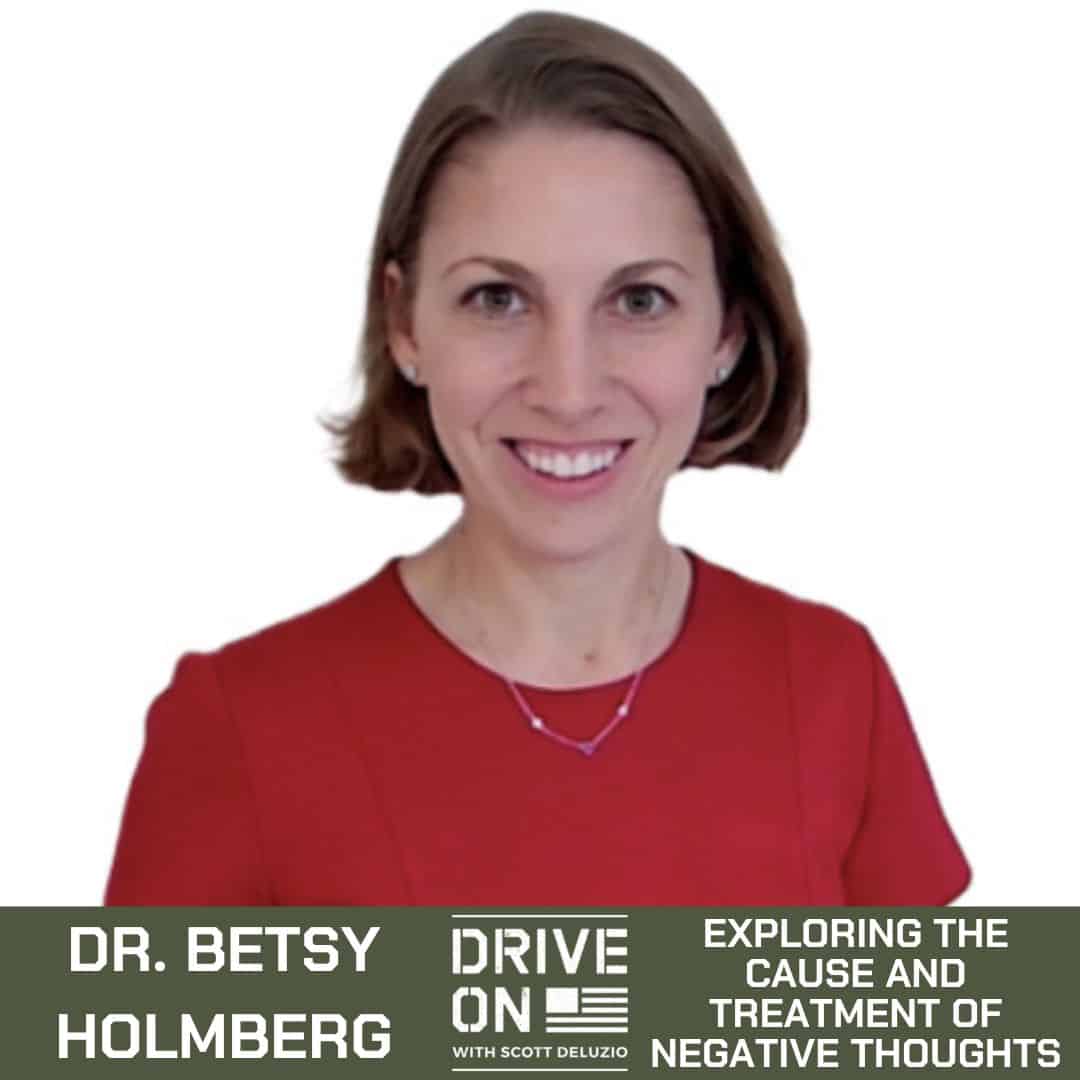
Betsy Holmberg is a psychologist who has focused on various topics, including self-injury and suicide. She is currently focused on the tribal brain, an interesting topic. Betsy has a Ph.D. from Duke and has conducted and published research at Harvard. She also ran the mental health service line for McKinsey and Company. After her husband left her, she had suicidal thoughts and struggled for years after. This led her to discover the neuroscience of thinking and why we think negatively, which shifted her perception of herself and how people interact with each other. Betsy has had a major shift in her mental health after her discovery. She wants to share her newfound understanding of the neuroscience behind why people think negative thoughts. There are two thought networks: the Central Executive Network (CEO brain) and the Tribal Brain (Default Mode). The CEO brain is used for problem-solving and when focused on a task. The Tribal Brain is the network used to form and live in clans. This network started hundreds of thousands of years ago when humans lived in clans and helped them form bonds and survive. Our conversation covers the different ways in which our brains think to keep us safe. It talks about the importance of identifying who is in the clan and who is a threat, the hierarchies and roles that exist within the clan, and empathy. It is mentioned that these thoughts are automatic, and people often mistakenly shape their lives around them, thinking that they will make them happy. It is further explained that this is due to the caveman days when they needed to be the fastest and strongest to survive. Our conversation concludes by suggesting that life can improve by dismissing these thoughts. Our conversation discussed how to stop listening to the tribal brain. It is as simple as identifying the voice and stopping it, but if the tribal brain is persistent, it can lead to severe depression. In these cases, it is important to reach out to family and friends and talk about what one is going through to reduce the feeling of isolation. Links & Resources Betsy Holmberg on Facebook Betsy Holmberg on Instagram Betsy Holmberg on Twitter Betsy Holmberg on LinkedIn BetsyHolmberg.com Transcript View the transcript for this episode.
Embed this episode
NOW PLAYING
Exploring the Cause and Treatment of Negative Thoughts
No transcript for this episode yet
Similar Episodes
Nov 7, 2025 ·27m
Oct 3, 2025 ·19m
Similar Podcasts
No similar podcasts found.