
EPISODE · Jul 7, 2026 · 2 MIN
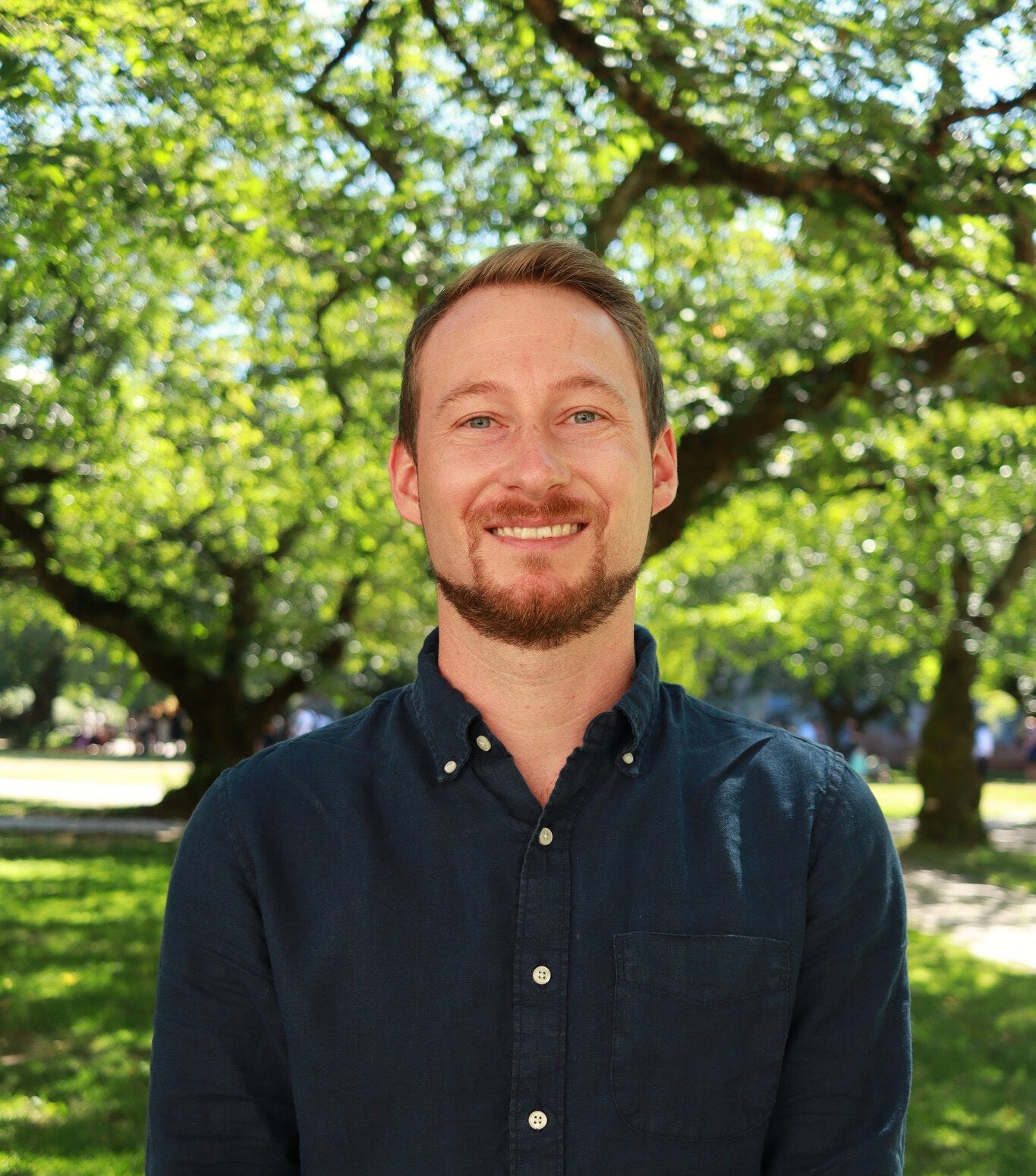
Fabian Klenner, University of California, Riverside - How Do We Search for Life Beyond Earth?
from The Academic Minute · host Academic Minute
How do we search for life beyond Earth?Fabian Klenner, assistant professor of planetary sciences at the University of California, Riverside, explores the cosmos to find out.Faculty Bio:Fabian Klenner is an Assistant Professor of Planetary Sciences in the Department of Earth and Planetary Sciences at the University of California, Riverside. He received his Ph.D. from Freie Universität Berlin (FUB) in Germany. Prior to joining UC Riverside, he held postdoctoral appointments at FUB and the University of Washington. Being involved in various space missions, Fabian Klenner’s research centers around ocean worlds in the solar system. His research group addresses astrobiological questions to advance our understanding of extraterrestrial geochemical processes and the detection of potential life beyond Earth.Transcript:Are we alone in the universe? This is one of the most intriguing questions of mankind. We only know of one example of life, that is, life on Earth. In order to make life, you need the right ingredients, and the main ingredients of life on Earth are liquid water, enough energy and organic chemistry. Organic chemistry refers to chemical processes that involve carbon-containing compounds. When we search for life beyond Earth, we can start by searching for liquid water and then we analyse what is in the water.Within the solar system, so-called ocean worlds are at the forefront of the search for life. Ocean worlds are objects that harbour large bodies of liquid water. Examples include Saturn’s moon Enceladus and Jupiter’s moon Europa. The oceans on these moons do not exist at the surface and instead they are hidden below thick ice crusts in the subsurface. However, Enceladus, and maybe also Europa, emit material from their oceans through geysers into space. Such emissions provide us a unique opportunity to sample an ocean beyond Earth. This can be done by spacecraft flying to these moons and analysing the emitted material.My research at the University of California in Riverside combines spacecraft observations, laboratory experiments and computational efforts to advance our understanding of chemical processes on ocean worlds in the solar system and the detection of potential life beyond Earth. In a recent study, we re-analysed data that was recorded by NASA’s and ESA’s Cassini spacecraft in the geysers of Enceladus. The data contained clear evidence of a variety of organic compounds that came from Enceladus’s subsurface ocean. These organic compounds open up many new pathways for chemistry that may occur inside Enceladus and bolster the case that Enceladus could support life.Read More:[Nature] - Detection of organic compounds in freshly ejected ice grains from Enceladus’s oceanLinkedIn[CBC] - Discovery on Saturn’s moon Enceladus boosts possibility it could support life This is a public episode. If you would like to discuss this with other subscribers or get access to bonus episodes, visit www.academicminute.org
Embed this episode
Ready to play
Fabian Klenner, University of California, Riverside - How Do We Search for Life Beyond Earth?
No transcript for this episode yet
Similar Episodes
No similar episodes found.
Similar Podcasts
No similar podcasts found.