
EPISODE · Nov 25, 2025 · 23 MIN
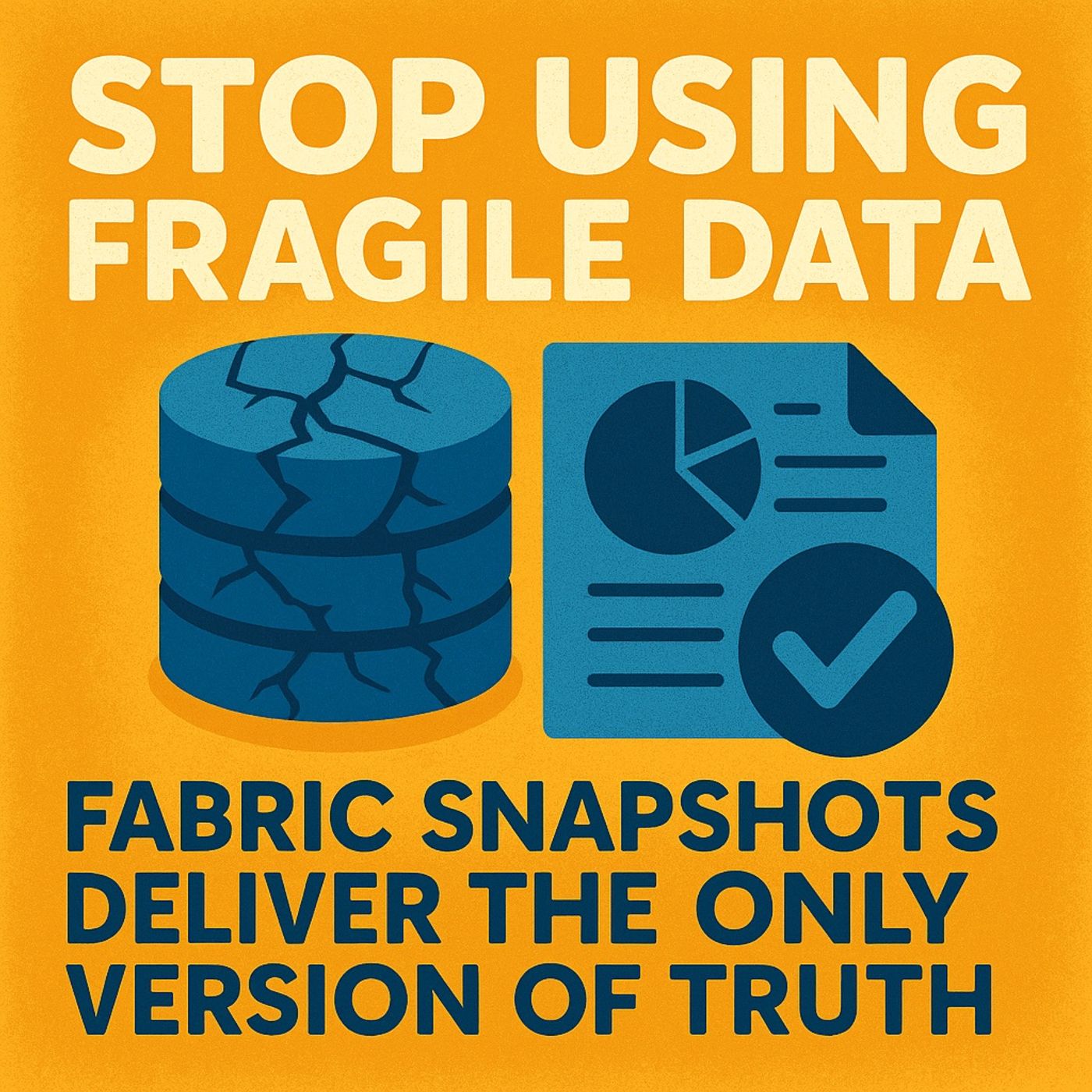
Fabric Warehouse Snapshots: Stop Using Fragile Data and Get One Version of Truth
from M365.FM - Modern work, security, and productivity with Microsoft 365 · host Mirko Peters - Founder of m365.fm, m365.show and m365con.net
(00:00:00) The Fragility of Analytics Data (00:00:33) The Problem with Analytics Data (00:01:37) The Illusion of Read Replicas (00:01:54) The Manual Export Trap (00:02:12) Data Science Instability (00:02:46) The Concurrency Conundrum (00:04:03) Introducing Snapshots (00:04:24) The Power of Snapshots (00:08:22) Implementing Snapshots (00:13:34) Month-End Snapshots in Finance In this episode of M365.fm, Mirko Peters explains why most “live data” platforms quietly betray you — ETL loads rewrite history, schema changes break reproducibility, and dashboards refresh against half-written tables — and how Fabric Warehouse Snapshots finally give you one stable, audit-ready version of truth.WHAT YOU WILL LEARNWhy your current warehouse architecture creates fragile analytics (ETL collisions, schema drift, shifting baselines, and CSV exports with no lineage)The real root cause: concurrency without isolation — analysts querying the construction site while engineers rebuild itWhat Fabric Warehouse Snapshots actually guarantee: point-in-time consistency, no half-written rows, immutable state, and zero-copy metadata pointers instead of cloned dataWhy read replicas don’t save you (they replicate volatility, not truth) and where snapshots prevent real disasters like drifting month-end numbers and false dashboard dipsHow to use battle-tested patterns: pre-ETL snapshots for stable daily reporting, month-end snapshots for reproducible finance, and audit snapshots that replace painful backup restoresHow snapshots plug into Microsoft Fabric: OneLake, Warehouse, Lakehouse, semantic models, Purview governance, and ETL pipelinesHow to implement snapshots with T-SQL and governance: creating and querying snapshots, structuring retention, and enforcing RBAC and Purview labels across your snapshot catalogTHE CORE INSIGHTIf you can’t rerun the same query tomorrow and get yesterday’s answer, you don’t have analytics — you have turbulence. Fabric Snapshots fix this by separating “truth” from “churn”: pipelines keep changing underlying tables, but every snapshot freezes a transactionally consistent state that your dashboards, finance processes, data science pipelines, and auditors can all trust.WHO THIS EPISODE IS FORThis episode is essential for data architects, analytics leads, BI owners, and finance or audit stakeholders who depend on Microsoft Fabric and warehouses for critical reporting. If your organization keeps arguing over “which number is right,” or if audits still involve restoring backups and exporting CSVs, this conversation will give you a clear blueprint for using Fabric Warehouse Snapshots to stabilize truth without cloning your entire platform.ABOUT THE HOSTMirko Peters is a Microsoft 365 and data platform consultant who helps organizations turn scattered, fragile data stacks into governed, audit-ready platforms on Microsoft Fabric. Through M365.fm, Mirko shares practical architectures, snapshot patterns, and governance approaches that help teams replace “live but unstable” analytics with reproducible, trusted numbers everyone can stand behind.Become a supporter of this podcast: https://www.spreaker.com/podcast/m365-fm-modern-work-security-and-productivity-with-microsoft-365--6704921/support.
Embed this episode
NOW PLAYING
Fabric Warehouse Snapshots: Stop Using Fragile Data and Get One Version of Truth
No transcript for this episode yet
Similar Episodes
Similar Podcasts
No similar podcasts found.