KPBS On Demand is supported by the San Diego County Toyota dealers. The Toyota Corolla is a compact sedan with a spacious interior, contemporary design, and features for everyday travel. Visit your local San Diego County Toyota dealer or Toyota.com. Toyota, we make it easy. Welcome back to another edition of the KPBS and Majunki podcast. I'm Beth Accomando. This week.
We are going to be talking about Famous First, because this is going to be the first year that the Film Geeks San Diego are going to be at the Museum of Photographic Arts, and we have a collection of films that are all significant cinematic firsts in some way or other. And to talk about all these films, I have my partner in crime, Miguel Rodriguez, the director of Horrible Imaginings Film Festival. Welcome, Miguel. It's so much fun to be back, and I like the partner in crime thing. It makes me happy. So on January 13th, we are going to be kicking off a year of programming at the Museum of Photographic Arts, and you like to call this a cinema school. One thing that we've always done is we've kind of pigeonholed ourselves as...
real genre things, but you and I are both absolute cine-ests and obsessed with the form, and we're always watching great old films, and not even older films, but films across genres and across decades that... We say to ourselves, wouldn't it be great if we could show this? Or why don't these films get shown anymore or talked about as much as they should? And one thing that we have an audience that has expected a certain kind of film, but we want to open eyes to not only different kinds of films, but also to maybe the traits and the elements that all those films share and why we love all these things and not just one type of film. And I think that looking at famous firsts is a great way to have a cinema school kind of setting because we're looking at the key moments in cinema that a lot of people...
recognized the first time it happened and that gives us the opportunity to look at a huge variety again across genres across decades across eras and different countries too so it's really exciting okay so if you're not in San Diego you may not be able to come to these films at the Museum of Photographic Arts but you can listen to this podcast and get your own little cinema history class and seek out some of these films online or on DVD some might be hard to find some are super easy but we will give you enough information to have fun with these titles on your own So one of the things I want to talk about with you about this particular program, because we faced a few challenges. Right at the beginning. Right at the beginning. I want to talk a little bit about the challenges that we face as programmers. Because in putting together this collection, we wanted to get a diverse array of films. Because this is our first time working at MOPA. We want to test out, see what kind of films their audiences are interested in. And also we wanted to give people who have been coming to our events a broad selection of movie titles. So in terms of looking at diverse films, sometimes it's just hard to figure out who owns them. Then in our case...
Our plan was to kick off in January with the original King Kong from 1933. Tracked it down. Swank was the distributor for that. Booked it for January thinking that, oh, this will be great fun because the new Kong, Kong Skull Island, will be coming out in March and we can get people excited about it and get them to remember the original King Kong. And Miguel, what did Swank tell you about us screening the film in January? It's more complicated than it should be because Kong Skull Island is not being put out by just one studio. You've got Legendary, you've got Warner Brothers, and there's one other studio. I can't remember the other one. But anyway, Warner Brothers is the biggest of them, and they're the ones who own the rights to the original King Kong. And what I mean by rights, I mean public screenings that you're going to show it in a theater, charge tickets, and have people come and watch the film as a regular screening. You have to pay for those rights. Warner Brothers decided in...
light of the new Kong Skull Island, which is coming out in March, to embargo public screenings of the original 1933 King Kong and possibly other versions of Kong as well. And so Swank... got back to me and said that title is now withdrawn. What makes this even more interesting is we've been working with the publicists for Kong Skull Island and were prepared on Friday the 13th to not only show the original movie, but have swag posters promoting Kong Skull Island. So, you know, we weren't trying to fly under the radar. Everything was above water and by the book, but we had the rug pulled out from under us. And now the studio that puts out Kong Skull Island will, you know, miss out on this, albeit small, but...
you know, promotional opportunity that we were giving them for free. And it's kind of kind of wacky. But anyway, so long story short, we can't show King Kong this Friday. Maybe it's because we scheduled it on Friday the 13th. I think that's it. It's Friday the 13th. We doomed ourselves from the beginning. Well, and this raises some interesting questions for us as programmers. If studios can just go in and arbitrarily kind of decide, like, we don't want this to be competition for us or we don't want to distract from the film that we've got coming out and forbidding these screenings makes it difficult to program film series. And it raises some issues about.
Our access to films. I mean, one of the things, you know, nowadays everybody is pushing for like, oh, don't buy a physical copy of a film. Just get it online where you can stream it anytime you want. But if you do buy certain titles from Amazon or someplace like that, you actually don't. own that film for real. They can withdraw those rights and take the film away from you. If you read the fine print, you are not the owner of anything, even when you purchase an HD digital copy of whatever film from Amazon. It is still owned by the studio in conjunction with Amazon. And if they're licensing...
before that decides to expire and it gets pulled off, then it's pulled off of your computer as well. So yeah, it's not like in the old days of getting a VHS or a DVD or a Blu-ray where you have it. It's on your bookshelf. There's the danger of one day it no longer existing. Yeah, it's a scary thing. I mean, me, I still spend too much money on Blu-rays and DVDs and even old VHSs. So I'm safe. Well, and in this case, too, the fact that the original King Kong was pulled, it's not being pulled by the makers of the film itself, which is what we had in essence when George Lucas decided to...
give us the special edition of Star Wars and decided that that original version that a lot of us grew up with in the theaters was no longer available. And he claimed... That print is gone forever. You're never going to see it again. All you have is this version that I've made. And recently, I suppose a 35 millimeter print of that original version has surfaced. It's a bootleg. So I had read one article and it says we can't point you in the direction of where to find this because it's illegal. But that has surfaced. But, you know, with Lucas pulling the print of his own film, at least it was something he had created. It was his own work. But this, it just hurts to not be able to screen King Kong. To be fair, the embargo is only through June. So we are still going to be showing it as part of this program, but we are having to delay it till July.
But the fact that these films can be removed from circulation is just such a troubling thing for people who love films and who want to program them. Yeah, and you know, in the case of King Kong, it was made in 1933. The original creators are all dead. And so you don't have that author voice thing like you do currently with George Lucas still. And Swank classifies us as an educational...
group for the museum, for the Museum of Photographic Arts. We're showing it in a museum with introduction, with context. And so, you know, this isn't just a capitalist venture. In fact, we're making negative money, so it's far from a capitalist venture. But it's something that I think is culturally relevant. And so, I mean, that is another element to why it stings a little bit, because, you know, you're doing, I think, the greater good. The greater good. A disservice. As I mentioned, we were going to be kicking off the famous first program at MOPA with King Kong.
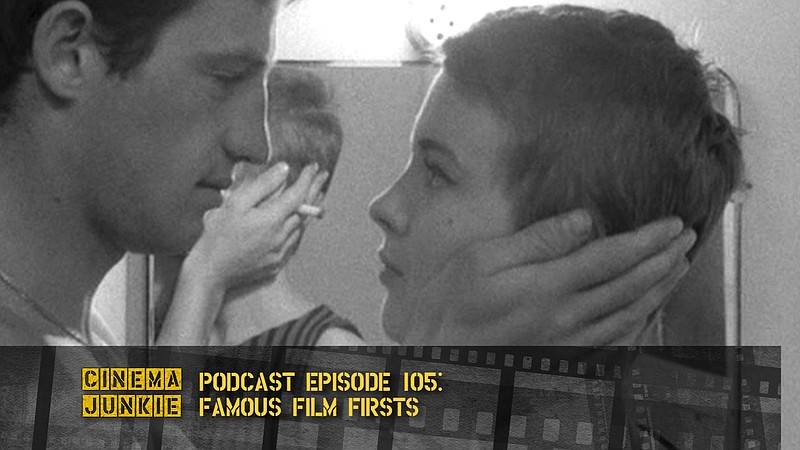
and the documentary Long Live the King, The Legacy of Kong. But instead, we've had to do a switcheroo. And so we're going to talk about this series of films in the order that we're showing it. And now our kickoff film, which is, we're not cutting any corners by showing this one, but we are going to be showing Jean-Luc Godard's Breathless. You really cannot complain about that title. No, this is a fabulous film. And in some ways, it's a really great film to kick off the series with because...
It's not the first film of the French New Wave, but it is the first film that Jean-Luc Godard directed the first feature film. And the French New Wave was a bunch of film critics who turned to filmmaking, and they just blew the dust off of all convention and created a style that just had so much energy and rebellion. And it does leave you breathless. Yeah. Oh, I love this film. And, you know, it is often cited as one of the films that heralded the French New Wave. These are the same guys, this group of French critics, who were very passionate about the form and what could be done with it. And, you know, as a horror fanatic, I have to love them, too, because...
They are the first ones to realize that George Romero's Night of the Living Dead, nine years after Breathless was made, was a work of art and not 42nd Street Garbage. That started with their kind of reviews in France. But what's great is Breathless is iconic, not just in how the story unfolds and how the characters react with one another. It's unlike anything you've seen really prior to 1960, unless you go way back to something like People on Sunday, which is a German... silent film that's a very similar type of style. But after 1960, this explosion of the French New Wave, you start seeing it emulated in Japan with filmmakers like Nagisa Oshima doing the Japanese New Wave over there. So this completely changed the landscape. And we felt its changes in American cinema for like two decades, even as far back down as, you know, Chinatown has elements that, while it's very much heralding back to film noir.
It has everything's intentional, this intentional camera and lingering camera. A lot of these elements you'll see in 1970s cinema from Hollywood as well. So it's something that is influential and important. And it's just like you said, it's fun. These characters are not they're kind of stabs against the bourgeoisie, these young characters. And they're beautiful and and full of life. And I can't wait to see it on the I've never seen this on the big screen. I'm really excited.
Well, and you mentioned these French critics. And in addition to Godard, there's famously Francois Truffaut. You mentioned how they recognize Romero's Night of the Living Dead. But these critics are also responsible for reminding Americans of the level of artistry that a lot of the studio directors had. People like Howard Hawks and Raoul Walsh. And they...
took these directors who were kind of looked at as assembly line workers, people who worked within the studio system, and were cranking out these products. And they recognized that these directors had real artistry. They're the ones who helped us appreciate people like Bogart and people like Howard Hawks and some of his comedies. Like John Ford. John Ford. And so their films have an interesting way of being brash and audacious and brand new while simultaneously having this affection for old American films.
There's this lovely kind of way that that interplays in films like 400 Blows, which was Truffaut's first film, and Godard's Breathless. They definitely were raised on old Hollywood because old Hollywood had its fingers in the international market. These films were shown everywhere. not just in the U.S. And American Hollywood system was definitely an assembly line. You've got contracts and artists and actors and crew members that are tied to certain studios, and each studio had its own thumbprint. But sometimes if a voice like John Ford or Howard Hawks, as you mentioned, can stand out as what would a French term as an auteur, then...
then it's all the more impressive. That spark in the middle of the assembly line is something that was really attractive to Godard and Truffaut and a lot of their contemporaries. And just to mention, Breathless has, as it stars, we have Jean-Paul Belmondo, who was often talked about as the French Bogart, and Jean Seberg, who's an American actress, playing an American in this. So you have this interesting interplay within the characters themselves between the American and the French. And she famously boasted this pixie cut that got her a lot of attention.
Together, they have this great chemistry because they do play off of the differences between the American and the French and also kind of an old Hollywood and a new. And they don't take themselves too seriously either. The Pixie Cat was, it's still really interesting to see on screen because it's still a rare, very short haircut that she sports. But that haircut is iconic. And I think it really shaped what a lot of women wanted to do with their hair after that in the 60s.
One of the things that this film innovated, or at least used in a way that was particularly effective, was the jump cut. And at this time, that was something that felt especially bold to American audiences, where we're used to, like you mentioned, a lot of the Hollywood films were making these Hollywood products, and there were very distinct kind of rules that they went by, and the narrative was fairly straightforward. Goddard famously talked about how every film has a beginning, a middle, and an end, but not necessarily in that order. And so he played with narrative structure and with the jump cut, which was just jarring to some people. very effective and fitting for these characters that were kind of like jumping around in their lives. There's a lot of elliptical narrative and you're not really sure how much times are passing. And sometimes you have to pay attention to sometimes to figure out, oh, what's going on now and what has happened in between then and now. Now I think we're more used to it. But it's very interesting that this is his first feature film. It's just a work of art and I really want to see it now that we're talking about it. Well, the thing that's so great about all the films that came from this French New Wave group is...
This was his first film. 400 Blows was Truffaut's first film. And they were breaking all these rules and they had such confidence. I mean, this film, there's never a moment where you feel like he's uncertain of what he wants to do. I mean, everything is done with this confidence of like, I know what I want to do and I know how I want to break the rules. I'm tired of it looking this way or being this way. It always had to be a certain way. There was a formula to everything that he wanted to break. And you're right. I think that's what really surprises me about it being his debut film, like is the confidence with the way he's telling the story and wielding the camera and directing those actors in such a, both like almost a verite way, but also not. It's very.
fairy tale like as well. It seems so naturalistic, but it's also got this veneer of heightened reality to it. It just changed so much. And it's not, I mean, it's an artful film, but it's not an art film. He was making, he was trying to make a film that would be commercial as well. You know, it wasn't like Alhazard Balthazar by Robert Bresson or something, which is definitely an art film and takes some real attention. This is a fun film. It's artful, but it's not pretentious. Well, and the other thing I think is great about these new wave directors is that
although many of them have passed away now, they worked until, a number of them worked into their 70s, 80s, Alain Rene, Jacques Rivette, and they were making films that were just as bold and audacious at the ends of their career as at the beginning. And I really admire them for being able to keep up this sense of just not wanting to play by the rules, not ever sitting on their laurels and saying, like, this is how I made a film before, this is how I'll make it again. But to constantly be beating their heads against those boundaries that say, this is the way you should make a film, or this is how you've been successful before. Right. A lot of people, I think, of our audience here in San Diego haven't seen it yet. And that's one thing to be very excited about. Hopefully they'll show up and be surprised at how much fun they can have with these movies. Yes. I'm really looking forward to this.
If you haven't been to the Museum of Photographic Arts, I will remind people that it has a most beautiful cinema with these twinkle lights up above. And watching a film in that venue always feels a little more magical than anywhere else. And that's one of the reasons why we're so thrilled to be doing a series there is because of that. And the museum setting is very nice, too, for showing films. Because part of the series, we are going to be talking about some genre films that might not normally be thought of as museum fare. So we're very happy to kind of...
jolt people's expectations in terms of the kind of films that can be shown there. And for February, this is going to be a year-long series. On select Fridays every month, we are going to be showing a famous first. And so for February, for Black History Month, we have a famous first, which is Gordon Parks. He was a photographer, and he moved into filmmaking. And the first feature film he directed was The Learning Tree. Yeah, The Learning Tree. He's more well-known for other movies, but The Learning Tree is definitely, I think it's probably his best film. Well, and we are going to be pairing this. This is going to be one of our, we have a few of these, double bills. And we felt that we really wanted to show Learning.
Tree with Shaft, even though Shaft isn't technically a first. It is Gordon Parks' first black exploitation film. And Shaft is probably one of the first and probably one of the most successful of the black exploitation films that came out in the 70s. So we wanted to pair these together so that you could see kind of both ends of the spectrum in terms of what Gordon Parks was capable of. And he was a really brilliant director. And I wanted to play a couple of clips from The Learning Tree because I don't think it's a film that's as well appreciated. Shaft gets...
has a cult following and gets screened a lot and shown on TV. But The Learning Tree was this realistic drama about everyday life. And sometimes that has a little less cachet in terms of surviving time and being remembered. But it's a really great small film that deals with a lot of issues that are still contemporary. It deals with issues of race. It deals with teen pregnancy. Gordon Parks tackled a lot of issues in that film that were hot-button issues at the time.
Sadly, in some ways, they remain hot-button issues today because they seem to still exist. And the racism underlying the story there has not gone away. So one of the scenes that's interesting is the scene where the main character confronts his teacher, who doesn't seem to think he should be going to college.
And that brings me to another point. I was going through your records yesterday and I was amazed to notice that you've signed up for a college preparatory course. That's right. I plan on going to college. Are you serious? Yes.
Well, let me tell you something. Very few Negro students go to college. They just aren't college material. And the few who do go wind up as cooks and porters in any case. Now, I just think that's an awful waste of money and time. That's not going to happen to me whether I go to college or not. Now, Newton, don't get upset. I'm here to advise you. And I advise you to take a general course. It'll be much easier for you and wiser for you. You just hate us colored kids, don't you? Young man. We hate you too.
Every last one of us. Young man, you and I are going to the principal's office right now. Come on. Okay, so that was a scene where Newt is confronting his teacher regarding his future. And there are other scenes in the film that deal with racism and also with things that are still very realistic problems today, like teen pregnancy. And here he is confronting his parents over an issue of teen pregnancy. What happened between you and that Jefferson girl? Nothing. She's acting kind of funny. I want the truth, boy. You hear me?
It's nothing serious, Pop. Nothing serious? Her pa was here this afternoon saying she's going to have a baby. Ain't that serious? Jack, is that Nude? I want the truth, boy, you hear me? What's going on down there? Sarah, you shouldn't be bothered with this. I want to know what's going on. Well, I might as well tell you. Jefferson was over to see me about his daughter, Arcella. What's wrong with her? She's going to have a baby. I think Nude had something to do with it. Oh, my Lord. Son. Mama. I didn't do nothing like that. You sure, son? I'm sure, Mom. I love Arcella.
He's telling the truth. I'm sure he's telling the truth. We just have to face the girl with him and then see what she says. So these scenes I think show how good Gordon Parks is at getting these realistic performances from his actors and getting the sense of what life is like and getting to real problems that are going on in the world. It's important to remember that Gordon Parks not only directed this film, but he wrote the screenplay and it is an adaptation of his own novel. So this is a story that Mr. Parks obviously had a lot of personal...
attachment to. It's really important as well that it has a significant amount of white cast as well as African-American or black cast because the interplay between the two different races is very important in this film. I don't want to say it's autobiographical because I don't know enough right now to say that or not, but it feels autobiographical. It feels almost like, you know, like a similar to I Know Why the Caged Bird Sings or something like that, where it feels when you watch the film, it feels really personal. And I would not be at all surprised if that.
I mean, if that was true, if a lot of these things that are happening in the film feel so real because really they are. And we are pairing this with Shaft. So let me just play a little bit of the trailer for Shaft because I think that conveys a little sense of what that film feels like. Shaft's his name. Shaft's his name. Listen, Snow White, me and you gonna tingle sooner or later. The mob wanted all of them back. They got Shaft. Shaft. Hotter than Bond, cooler than Bullet. Rated R. If you want to see Shaft, ask your mom.
So Learning Tree was in 1969. Schaaf came a couple years later, 1971. And it was at the forefront of blaxploitation cinema. And this was a really interesting time for black cinema because this was a chance where Hollywood was letting African Americans get behind the camera and in front of the camera for films. They were not necessarily A-movies, but they were films that were getting people into the theaters. And some credit blaxploitation with helping save a number of studios because the 60s and 70s were a difficult time. This was a time of a lot of transition going on in Hollywood.
These type of films were very popular. Yeah, I mean, Shaft was one of those huge popular ones. And it's important to note the behind-the-camera as well, because Gordon Parks directed Shaft, and that's unlike something like Black Caesar, which is directed by Larry Cohen, or even Fox and Brown with Jack Hill behind the camera. This is a black man directing the film. And, you know, as much as I do love those other films, you get that sense in Shaft. And it's not just the director, it's the leading man. You've got Richard Roundtree, really, is as larger than life and as much...
the action hero and the leading man as anyone who we've seen before, Cary Grant or what have you. He's so watchable and he's so, get that Isaac Hayes theme song, every lyric in there nails it. All right, and that did win an Oscar for Best Original Music Score by Isaac Hayes. And I do remember that was one of the first times I ever saw a musical number done at the Oscars where I actually didn't want to walk away and use the bathroom. It has its 70s fashion.
But Shaft, John Shaft himself, I think that his outfit is still cool today. You know, he's got those, like, the tight black jeans and the black t-shirt and that tight leather jacket on top. He's still cool. He's still badass. And you can watch him now. And, you know, just from looking at him, walking down the street and those opening credits of the music, like, I'm with this guy. I'm rooting for him already. He hasn't opened his mouth yet, but it's great. You can tell watching it that you're watching something different. But it's all entertainment. It's really fun.
And in a very different way, it does tackle some racial issues, just as in The Learning Tree, but in a very different kind of context. And here's a little scene from Schaaf regarding that. I'm looking for a nigga named John Schaaf. We just found him. Shaft is one of the genre films that we're going to be screening at the Museum of Photographic Arts, which gives me great pleasure. And at some point, I would love to see a whole blaxploitation program. You've only been talking about it for like three years. I know. We've got to build up an audience for it. We've got to make sure that we can actually sell it out. I want to get David Walker down here, as you said. Yes. He said he was game. He said he was game. David Walker does the Shaft comic, and he actually provided me with a great collection of blaxploitation radio spots that were just...
so much fun to listen to. And I did a whole podcast with him on Blaxploitation Cinema, which I urge you to take a listen to. But we're moving from Shaft to something very different, which is Midnight Cowboy. And this is amazingly the first and the only X-rated film to win a Best Picture Oscar. The winner is Midnight Cowboy. I'd like to thank you all very much on behalf of everyone connected with the making of the film, with a particular thank you to David Picker and United Artists who made it all possible.
Thank you. Yeah. I mean, X-Rated, of course, has had various meanings over the years. But I love Midnight Cowboy. We just mentioned this, too, on the last podcast we did together. Midnight Cowboy winning that Oscar at the end of the decade in 1969. It is emblematic of the radical changes that went on in this country in the 1960s because earlier in that decade, the winners were movies like The Sound of Music. And so...
It's always known as the tumultuous decade. But to see it reflected in pop culture like that so brazenly makes me really happy. In the 60s, this is when you had the official fall of the Hays Code. And you had even going into the comic book realm, the codes that they had, the censorships were starting to become more lax and wild things were beginning to happen. And artists like Robert Crumb were starting to give us underground comics. All of these pop culture things were happening in the 60s. And Midnight Cowboy is of that ilk. It's one of those. John Voight and Dustin Hoffman were...
Well, he's a street hustler to start with. I mean, it's interesting, too, not just because it was an X-rated film, but on many levels, it's a very dark and gritty film. And Hollywood is not known for recognizing that kind of work. And then on top of that, you have some gay themes rolled into it. And you have the idea of a male hustler. And it's so surprising that the Hollywood establishment, because after all, the Oscars are nothing more than the industry itself voting on their own projects. And they tend very often to vote for people that they like.
as opposed to people that maybe are doing the best work. And I think the more of a genius you might be, like the young Orson Welles or Albert Hitchcock, I think those people scared Hollywood because they were so talented, and it was hard for them to win awards. So in this kind of climate of everybody patting themselves on the back and giving awards to their friends, it's really impressive that this film rose to the top and stood out from the crowd to get an Oscar and to get this kind of recognition at the time that it did. And I think in order to do that, it really had to hit hard. Like it's one of those moments in history, lightning in a bottle where something just shouts so loudly that.
Even the people at the top of the mountain can't help but take note. Dustin Hoffman, his performance, I mean, I think it's his best performance. Better than The Graduate. From what I understand, it is true method acting. You know, showing up to the audition in rags because he thought he might look too all-American for the role and coughing so much that he makes himself vomit for real. And he just really threw himself into it. And Jon Voight is interesting in it, too, because it's a role that...
I don't think is really John Voight-ish. Yeah. So I love seeing him in this one and comparing it to, I don't know, like Deliverance or Anaconda. Well, while we're talking about John Voight and Dustin Hoffman, let's hear a little bit from the film, a scene between them. What's the matter? I only talk about a confession. We're not talking about me now. When's the last time you've been to confession? It's between me and my confessor. And I'll tell you another thing. Frankly, you're beginning to smell. And for a start in New York, that's a handicap. Well, don't talk to me about it, Cleen. I ain't never seen you change your underwear once the whole time I've been here in New York. And that's pretty peculiar behavior. I don't have to do that kind of thing in public. I ain't got no need to expose myself. No, I bet you don't. I bet you ain't never even been laid. How about that? Then you're gonna tell me what appeals to women. I know enough to know that that great big dumb cowboy crap of yours don't appeal to nobody except every Jackie on 42nd Street. That's faggot stuff.
You want to call it by its name? That's strictly for fags. John Wayne, you want to tell me he's a fag? You were talking about how in the 60s, films like Sound of Music won. I just want to read the films that were nominated with it for Best Picture because it really is an interesting bunch of films that kind of shows this odd transitional period that Hollywood was in because you had Midnight Cowboy, you had Z, which was a foreign film, very gritty, hard-hitting. But then you also have Hello, Dolly, Anne of a Thousand Days.
And Butch Cassidy and the Sundance Kid. That's another great one. It's another great one, but it's an interesting collection because Butch Cassidy and the Sundance Kid was surprising in some ways, but it had two very attractive Hollywood leading men in it. It was a buddy film. On a certain level, it wasn't breaking a lot of rules, but it was incredibly enjoyable. But the spectrum from like Z to Hello Dolly. Yeah, Hello Dolly is good. It's kind of mind boggling to consider kind of the eclectic group of films that they put up at that point in time.
We are going to be showing that in partnership with Film Out San Diego. And that's going to be in March. Midnight Cowboy follows on the heels of Shaft. And the one thing that these two films do have in common is a fairly memorable theme song. Midnight Cowboy, maybe not as much as Shaft. But Harry Nilsson composed the song Everybody's Talking, which became very kind of emblematic of the film. And so let's just hear a little bit of that to end our conversation on Midnight Cowboy.
I can't see their faces, only the shadows of their eyes. So then coming up in April, we return to Foreign Films, and we are screening Drunken Angel. And this was the first collaboration, a very important first here, of Akira Kurosawa, the director, and actor Toshiro Mufuni. These two, of all the director-actor combos, this is one of the ones to be so grateful for. And I have to say, this is one of the films that I have not seen of theirs, so I am really looking forward to seeing it. Yeah, I actually just watched it maybe a year or two ago, because I always do these Kurosawa.
marathons every other year maybe because those movies are, they just remind me of why I love cinema. And Drunken Angel will be a film that will remind you of why you love Toshiro Mifune because for his acting chops in it are just off the charts. He is... I mean, the man's insane. And what's great is we just have right now out in theaters, and I think it's coming to San Diego in a limited run as a new documentary about Mifune, too. And that just played at the Asian Film Festival here in San Diego. It just played at the Asian Film Festival, and it's coming back, thankfully, for a run. Through Landmark. Through Landmark, yeah. Either at the Ken or at the Hillcrest, for those of you in San Diego. Yes, and anywhere else you are, check Landmark, because I believe they're going to be screening it throughout the country. Highly recommended. Yes. Highly recommended. Great, great documentary. And I hope you do get to see it and keep it in your mind, because it has some memorable stuff. But bring some of that to you when you come see Drunken Asian.
Angel, which is an early collaboration. This is 1948. It's not a samurai film. It's a Yakuza film. But it's a very personal kind of film, even though it's a Yakuza film. Takashi Shimura was in To Live, and he plays the drunken doctor, and he has to help a wounded Yakuza. And the wounded Yakuza is a young, messed up Toshira Mifune.
And Mifune has TB. And so like the story is kind of catalyzed by the doctor revealing to this belligerent young guy that he has TB and that he has to change his lifestyle, which of course involves lots of violence and booze and easy living and stuff like that. But they end up kind of forming an interesting relationship and it follows that relationship, but it also follows the consequences of the kind of... vastly different lives they lead, including involving Mifune's, his crime boss, for the lack of a better term.
I think that the birth of the working relationship between Kurosawa and Toshiro Mifune, it's very obvious why this would be their first leading up to, I believe they had a falling out many years later after many, many, many brilliant, brilliant films like Seven Samurai and Yojimbo and Sanjuro and all the ones that we all know and love. But, you know, Mifune is like, it's like Howard Hawks and John Wayne or, you know, what are some other classic, you know, action stars with their lovely director? Oh, Kurt Russell and John Carpenter. These great pairings that are, they're defining working relationship because. of how they're directed, I believe Mifune and Kurosawa were on this kind of shorthand where he didn't have to give them too much direction after a while. They knew they could read each other's mind. And to see the wellspring, you know, where this began will be a lot of fun. Well, you mentioned some of their collaborations. For me, I always remember Rashomon and Throne of Blood. Throne of Blood, ah! Which is their version of Macbeth. Yes. So those were some of my favorites of their collaboration. But they are so good together. And they just know...
Kurosawa knows how to bring out the best in Mifune, and Mifune just delivers. And he is riveting to watch on the screen. He will put himself in danger. Well, if we want to go into Throne of Blood, where they shot real arrows at him, yes. I guess that goes beyond method acting. It's Mifune style. So after Drunken Angel, we have a much lighter film. Yeah. And this is Woman of the Year, which is the first pairing of Katherine Hepburn and Spencer Tracy. And these are people that...
I adore. I fell in love with their movies from an early age because my dad was a, he loved movies. He introduced me to them. And I remember reading the book about Tracy and Hepburn that was written by Garson Kanin, who had written some of their scripts. And he described the first meeting they had on Woman of the Year, where supposedly Catherine Hepburn, who's rather tall, met Spencer Tracy and reported back to the studio boss or whatever and said something like, he's rather short. And the person said, don't worry, he'll cut you down to size.
And the thing about them that I loved so much is that a lot of times in films you get romantic relationships and you always feel like the male character is somehow superior or better or whatever than the female character. And with Tracy and Hepburn, it was the first time I really felt this sense of equality between them and an equality that was based on them being different. Like they're not, it's not like they're this perfect match. They're exactly the same. They're very...
They're kind of an antagonistic pair. And it was fascinating to watch them. It's great because it's not just about them being a gender difference, although that's definitely there. But there's a class difference. I mean, it's been a while since I've seen it, I'll admit. But I remember she was like an ambassador or an international... Her father was an ambassador, I believe, but she wrote like a political column. And he was a sports writer. Right. So they were both writers. But yeah, he was like the working class, blue collar kind of everyday Joe. And she...
spoke different languages and she was really chic. And it's perfect, actually. And those different elements to their personalities, they're perfect for the actors who play them, too. Because, I mean, Catherine Hepburn can really play that character and Spencer Tracy can really play that kind of like, you know, fedora press hat askew chomping around sports writer. And he's a fish out of water in a lot of their scenes together. I can't wait to see this one because, I mean, if you haven't seen Drunken Angel, then this is going to be one I haven't seen in a long time.
I'll be coming at it with fresh eyes, so I'm really looking forward to it. All right, I had such a hard time pulling clips. We're going to play a few of them to whet your appetite, because I think once you hear them, hear the dialogue, which was written in part by Ring Larder Jr., who's a very good writer, and eventually they would go on to have scripts written by Ruth Gordon and Garson Kanin, which were their best films, I think, Adam's Rib and Pat and Mike. But here is, let's start at the beginning. Here's where they first meet, and you'll get a sense of their differences. Haven't you met Miss Harding? Yes, yes. You get me first. Hello.
So to come directly to the point, I'd like to see you drop this business right away. How about it, Sam? You ready to kiss and make up? I'll kiss. How about you, Tess? Willing to quit? Sure. Okay. Fine. Thank you. I'm always delighted to quit when I'm losing. And then as they get to know each other a little bit, some more of their differences kind of come out. So let's hear a little bit more of kind of their repartee that reveals a little bit about them. I'd like to know what you like and what you don't like. How do you feel about being you? I feel very good about it. Always have. I like knowing more about what goes on than most people. And telling them. Yeah, and telling them. A lot of drinking these. Oh, I don't know.
Well, I'm just mean if you're not used to him, you know. Oh, don't worry about me. As a diplomat, I've had to match drinks with a lot of people. From remittance men to international spars. And I may say I've never warmed up under the table. Well, I want to know the story, you know, behind the story. The girl without a country and how she grew up. She grew up by remote control. I read Uncle Tom in the Argentine and... In the Argentine? Mm-hmm, Argentine. And I read Huckleberry Finn going down the Axie. It seemed like the Mississippi. I'd never seen the Mississippi.
So then I grew older and I went to school in Switzerland and in Leipzig and the Sorbonne. And then I became quite busy and my father decided to come home. So I decided to come home with him. It's interesting that they allow Catherine Hepburn to be a little bit of this kind of like intellectual elitist character. And although she gets ribbed about it from Spencer Tracy, she...
Doesn't portray the character in any kind of a goofy manner. I mean, you get this character who is smart and witty and does amazing things. What is it about the romantic comedies of this era versus the romantic comedies we get now where they're like of different worlds? Why were they so smart? So many of them anyway. I don't think this is a universal thing, but so many of them were so smart and witty and could be about a relationship between two people, a romantic relationship between two people and make it interesting and make it fun and make it biting against the status quo rather than what we have now, which is just like every.
reinforcing everything status quo we have about relationships, you know. I would go see romantic comedies now if they were like this or like the leads in The Thin Man or screwball comedies, like Preston Sturgis' screwball comedies. I would love to see more films like that made now. One of the things this film does that's fun and that plays at the comedy is Catherine Hepburn is shown as having a career and a career that in some ways is more demanding and more time-consuming than her husband's, which is Spencer Tracy. So there's a moment which is such brilliant acting on Spencer Tracy's part, but he comes home.
And he puts his hat on and he kind of looks to her and he's like, honey, you know, what do you notice? And so here's the scene where he's come home and he really wants her to just notice his new hat. Notice anything different? Sure, you've got your hat on. It's a new hat. Oh, I like it. Kind of hoping you'd notice it. I've needed one for quite some time. I said I like it. I think it's a fine hat. I'm glad you wore it. We'll wait in two minutes.
All right, you can't see his face in this, but he's doing this kind of gentle mugging and he looks so hurt when she doesn't realize that he's bought a new hat. And the fun thing about this is on a certain level, it's merely a gag that's doing a gender swap and saying like, oh, look at him. It's funny that he's acting like a woman because she's not noticing his new hat or his new hairstyle or whatever. But on another level, they're playing it in this kind of playful, light way that makes you actually think about those stereotypes. And one last clip from this, I just want to point out, this was 1942, and I'm impressed that they actually talked about feminism. Now, granted, there's this scene where Catherine Hepburn is addressing a crowd and speaking in favor of a candidate, a female candidate, and Spencer Tracy comes in, and of course, you talk about the fish out of water. He's trying to find a seat amongst all these women. And so at the beginning of this clip, you hear a lot of laughter, and so there's a sense at the beginning that you're not taking what she's saying quite seriously. But still, this is an interesting film for 1942. Too many others feel about women's rights the way a girl I know does about her fur coat.
All her life, she dreamt about having one. Finally, she got it, after a pretty tough struggle. I suppose there's a sort of contentment, and I wouldn't quarrel with her about it. I do, however, take issue violently when women try to apply that same reasoning to the rights we finally won 22 years ago. At this very moment, we're facing the first major test of our fitness to shoulder this responsibility. Ellen Whitcomb has pointed out to you this afternoon the deep obligation we have to take a vital part in the crisis confronting our country.
It is our simple duty not only to accept what she has said, but to translate her words into terms of positive action. Ellen Whitcomb represents, as no other individual, the development of the rights women fought for and the responsibilities we must now assume. In her words, what we fought for was not only the privilege of equal rights and a just share in the determination of state policy, but also the grave responsibility which accompanies that privilege. Today, the women of the world are faced with the first major test of their fitness to meet that responsibility. Our place is no longer only in the home. It is also in the first line of battle.
is so little that I can add to her words. There's so little anyone can add. Possibly I'm prejudiced because she's my aunt. I don't think so. Her life and her work speak eloquently enough. Twenty years ago she was the youngest leader in the feminist movement. Today she's a tremendous force in the battle to preserve and extend democracy.
So we'll leave Woman of the Year behind and move on to an interesting first by Alfred Hitchcock. And we are going to be showing Rebecca, which is not the first film he directed, but it's his first film in Hollywood. And what does this film kind of say or do differently that you thought it was worth including in this famous first? I think that when he came to Hollywood, there may have been a sense that his style would shift. And I think it did a little bit. But with Rebecca, I think there is a dark sense of humor in this film. And I think a lot of that is...
is different than what would have been a from his British films that came before it or even the silence that he made before them. And I think a lot of one of the reasons I wanted to say, you know, here's Hitchcock in the U.S. coming across the pond, is to look at some of these more subtle changes in the films that either he put there himself or were part of working with the U.S. studio system. What's that famous line attributed with Churchill? We're two different cultures sharing a common language or something like that? Separated by a common language. Yeah, that line might be, you know, one of the things that made me want to look at.
Hitchcock's first foray into, you know, what Hollywood at the time would have called the big leagues. You know, it's time to play with the big dogs now. We have someone like Laurence Olivier. It's not like that's a huge difference from, but Joan Fontaine is such a presence in the film. And, you know, Hitchcock might be known for... Icy blondes. Yeah, icy would be a word for Joan Fontaine in this film. They're all a little frigid. I think that's one of the things that's come up in a few of his films.
And another first for this is that being the first American film that he worked, he worked with producer David O. Selznick. Yes. Famously, who produced Gone with the Wind. And King Kong. Way back then, which we'll be talking about also. But he also produced a number of Hitchcock's other films, Spellbound and The Paradine Case. So this film is 1940, and it kind of sets the tone for his career in Hollywood. He did work with a lot of big Hollywood stars.
I think he got a bit of a boost in production values coming over to the United States. And I think he thrived in that environment. Oh, yeah. I mean, one thing that... kind of sets Hitchcock apart as a director, particularly for the time. This is a time where directors were definitely firmly behind the camera. But Hitchcock, I mean, everybody knows about the Hitchcock cameo that he puts in a lot of his films. But he has a presence in front of the camera as well. He definitely wanted his own face to be one of the stars. When Hitchcock Presents happened, what, a decade later after this, you have the Hitchcock emblem, which is, you know, as everybody, most people know, is just a few swishes of a line that makes his profile. And when he talks, he is a performer. The man is like Barnum and Bailey.
But instead of shouting and loud and bombastic, he's the opposite of that. But he says things in this dry and hilarious demeanor. Yeah, I think that's one of the reasons he thrives in a town like Hollywood is because he is very much of that kind of, he's a big personality. He's the kind of personality that lives in. what we would think of as classic Hollywood. And you're right, the better production values and having more money and being able to do some of the things that he wants to do because he was definitely someone who wanted things done his way, which you would think Hollywood might not be the town for him. But he was also one of those people who could get away with it. And it happened more and more after the success of films like Rebecca. And I think he was a smart businessman too. He was somebody who knew how to kind of parlay whatever successes he had into bigger ones and to be able to kind of keep...
moving up and ahead. I would recommend, highly recommend the documentary Truffaut Hitchcock, which gives you some really nice insights into him. And the fact that we've been talking about the French New Wave as well, it was Truffaut's chance to show his affection and appreciation for Hitchcock that makes that film so good. Basically, it goes back to these audio tape interviews that Truffaut and Hitchcock did. And Truffaut did this extensive interview over multiple days and really got Hitchcock to open up. And it's a fascinating documentary. So I highly recommend that. And to go out of our discussion on Rebecca, let's just hear some of the trailer for Rebecca.
Announcing the return of the most glamorous motion picture ever made, David O. Selznick and Alfred Hitchcock bring you the Grand Slam Prize winner that made motion picture history. Winner of the Academy Award, voted by America's critics as the best picture of the year. And now, as a result of a national poll, winning new honors, as audiences throughout the country vote to see it again. The Selznick Studios' successor to Gone with the Wind, Rebecca, brought to the screen with all the warmth and emotion that made millions of readers acclaim Daphne du Maurier's bestseller as the most exciting love story of our time.
All right, now we come to July and back to the beginning, so to speak, because now this is when we are going to show King Kong. And we can pretend that it is a first in many ways. But the main reason we are showing King Kong is because Miguel and I love this movie and wanted to see it on the big screen at MOPA. But it does have some firsts. It is essentially one of the very first films, talking film, talking feature films, to put special effects to the best use. So stop motion animation and rear screen projection and matte painting and all of these things.
combined into this film to create an absolutely magical world to give us the eighth wonder of the world, Kong. Wild, weird, wonderful. The stuff for which movies were made. Adventure to make you wonder if it's true while your eyes convince you that it is truly the thrill of thrills. Don't miss it this time.
The innovation that went into this film is astounding, like just the audacity. It's good to go back to Oselznick back in the RKO days when this came out, because the ideas that were being put forth here that they wanted to do on screen, Marion C. Cooper, the co-director Marion C. Cooper, you know, he had a lot of these audacious ideas and Hollywood, the studio system would laugh them away. It's like, no way. But one person, I mean, one person who said, yeah, I think we can do this was David Oselznick at RKO. And that ended up finally being what happened, particularly when they started making a film called.
Most Dangerous Game. And that was a B picture. It was a smaller scale. But they did build all these sweet jungle sets, you know, in typical kind of assembly line fashion. Let's reuse these for some of the jungle stuff we have to do for your Kong picture. And they did. And they even got a lot of the same actors like Robert Armstrong and Fay Wray to be in King Kong, thank God, because they're two huge elements to what makes the original 1933 King Kong so spectacular. But getting Willis O'Brien, who before this, I mean, he did a lot. But before this, in 1924, he did a silent film called The Lost World.
And that had, you know, rampaging dinosaurs and things like that. And he applied the stop motion technique from that film to King Kong and turned this 19-inch armature maquette into the 50-foot ape that we all know and love. And it's imbued that character with such life that you really have to call Willis O'Brien the third director on King Kong after Marion C. Cooper and Ernie Shodosak. As a first, I mean, I can't think of a film before this that...
It was like going to the moon. It was a leap in what you could do with this art form. You know, there were always, if you go back to the beginnings of cinema and like the great train robbery and you have a cowboy shoot at the screen and everybody in the audience duck. When cinema was so new, things like that would be amazing. But to transport the audience into this different world where dinosaurs still lived and a big ape would carry a girl off and then the people would take the ape to New York and he would rampage through the city and climb the Empire State Building, which was a brand new, not even finished.
you know, it was the seventh wonder of the world. So you have the eighth wonder of the world climbing the seventh wonder of the world. It's just unreal that this came out in 1933 when like we were just beyond Vitaphone. This is at the beginning of that talking era. It's amazing to me how well it still holds up. And, you know, there are scenes with you have real human being actors in the foreground and King Kong rampaging in the background, throwing a truck at the foreground and having the truck fall in real time. I mean, what incredible brilliance that went into this.
this masterpiece. I really believe this is a masterpiece. And it's important to remember that this came out in 1933. We were four years into the Great Depression. People were still suffering. And it took something really either lurid or really spectacular to get people to shell out the hardened or, you know, scraped together money to go out to the movies. And this was such a spectacular success that it took something like this at that time to do it. It was either sex or King Kong. And you got both. And in this one, you get a little bit of both. So it's great. Well, you talk about...
you know, this giant ape and how it created this fantasy world. But one of the things that I think makes this film so impressive and gives it its lasting power is that it's not just an ape on a rampage. It's a creature with a soul and you care. This is one of the first times I remember crying at movies and I don't cry very often. But every time I see any snippet of this film, which we saw in A Monster Calls, there's a brief clip of it in there. Like I well up with tears thinking about King Kong.
I have to confess that I always hated Fay Wray because I always felt she could have done more to save him. But that is really one of the miracles of this film is that this 19-inch little creature that they had that they turned into this full-blown character in the movie. There's more life in those eyes than in the eyes of Grand Moff Tarkin in Rogue One. It's amazing how much soul they put into that. And I mean, to me, King Kong and Godzilla are like the two creatures, cinematic creatures, monsters that...
have been able to create such genuine characters that I really feel compassion for and a connection with. And more than the human characters. Yes. Yeah, I mean, it's always that thing. It's like, you need that human character to relate to while you're watching this monster movie. It's like, I relate more to the monsters. Yeah, and King Kong is that.
misunderstood, tragic figure. And you're right, it can be devastating, but what a ride on the way to that. Oh, yeah. Let's hear a little bit from the trailer for the film where you'll get introduced to Carl Denham, who is the man who captures Kong and brings him to New York and is a kind of complex character in this because you both love him and hate him for what he does. So let's hear a little bit of the trailer. We're millionaires, boys. I'll share it with all of you. My in a few months will be up in lights on Broadway. Kong, the eighth wonder of the world!
Carl Denham could be a little bit of an alter ego for Marion C. Cooper, couldn't he? Yeah, I mean, he's a director. He's an adventurer. Marion C. Cooper himself went out and spent time overseas in various strange and exotic locales where he would get his bizarre ideas and bring them to Hollywood. And Robert Armstrong as Carl Denham, I guess you can call him a...
he would be like a caricature of Marion C. Cooper. But I mean, I wonder I mean, I wonder how much of that back and forth complexity you get with do I root for this guy or not was totally intentional. I think they wanted him to be kind of a Barnum and Bailey Marion C. Cooper, just really enthusiastic director who maybe he's too enthusiastic and doesn't think these things through. He does things that that are huge, huge mistakes. But.
He seems really genuine about his excitement about it. And it isn't just, you know, he says we're going to make a million bucks. But you can tell this is a guy who could have made a million bucks back in New York doing something else. You know, he didn't have to do all this. I think that he's enthusiastic about where he is and what he's doing. And it's infectious. And we can't help but kind of kind of like the guy, even though. And he does have that moment where, you know, it's the last moment on Skull Island and they've knocked Kong out with gas. And he's letting this is spoiler alert, I guess. But he's telling all the guys is like.
you know, help me bring this ape to New York. We'll make millions of dollars and I'll share with all of you. That kind of generosity would, maybe that is where he might differ from Marion C. Cooper. I'm not sure. Well, and also the fact that he says share it all, it's not just the money. I feel like it's share the passion, share this dream with me. The glory, yeah. Like you have to be part of this. And it's interesting that they've remade King Kong.
a couple of times, the 1976 one with Jessica Lange and Charles Grodin and Jeff Bridges. And then we also had the Peter Jackson one that had Jack Black and Adrienne Brody and Naomi Watts. But the interesting thing is that neither one of those remakes ever got that complexity to the Carl Denham type character because the character seemed much more of just kind of crass and... you know, in for the money. And none of those other people, Jack Black or Charles Grodin, they were more kind of the villains in it or the people. We never felt conflicted about whether we liked them or not. We just didn't like what they were doing. That was definitely the case with Charles Grodin. Definitely. Yeah. I think Jack Black. A little bit he tries. I think that Peter Jackson, well, Jack Black, I don't think had the acting chops. Exactly. That was part of the problem. But Peter Jackson, I think, was trying too hard to capture what Robert Armstrong was doing as a director. And it seemed just like he was tracing, you know, and it didn't ring true. Whereas with Robert Armstrong, it's you're.
You're completely in there. It's so immersive I forget I'm watching Robert Armstrong. That's Carl Denham. And I recommend that you go listen to Miguel's podcast, Horrible Imaginings, to hear our discussion. strictly about Kong. And Frank Dietz did this new documentary called Long Live the King, the Legacy of Kong, which we will be screening in conjunction with King Kong. And it's kind of a tribute to Kong and how important Kong was to a lot of people who are in the industry, people like Greg Nicotero, who's a makeup artist. So listen to Miguel's podcast and you'll hear a lot more about King Kong. But for now, we are going to move on to our August film, which is A Hard Day's Night. And this was the first film that The Beatles made. It was directed by Richard Lester. Now, The Beatles were wildly successful at this time. They could have done anything. They could have read the phone book and probably had a hit film.
But they smartly decided to find a director who kind of matched their particular style. And they had this, not so much in their music at this point, but in their personalities, they had this real kind of irreverent sense of humor and not taking themselves too seriously. And they saw a film called The Running, Jumping, Standing Still Film, which was the short film made by Richard Lester, which I believe featured Spike Milligan. It had this, it was... Kind of an early Monty Python-esque style of comedy, which had a lot of visual gags and a lot of chump cutting and just a lot of silliness underneath it. And they decided that Richard Lester was the one they wanted and how right they were. This is such a perfect film. Oh, yeah. It's so much fun. I forgot how much fun it was. We saw it recently at the Chinese Theater in Hollywood at TCM Classic Film Festival, I guess, like two years ago. And, you know, this is one of those you can watch again and again and again because it's like, A, it's kind of like hanging out with your dumbest friends. And B, it's just like almost like an amusement park ride at times.
just how goofy and fun and what a sense of playfulness it has. That even for someone who might not listen to The Beatles or like The Beatles, you can't help but be charmed by A Hard Day's Night as a film because there's so many wacky things that go on in it. It's interesting because on one level, it's a cinema verite of a day in the life of The Beatles, or more than a day, but some time with The Beatles and what it's like. And some of the stuff with them feels very much like this is what it must be like to have to have like... thousands of girls chasing you down the street and have to answer thousands of, you know, fan mail every day. But then on the other hand, it has these wild leaps of ridiculousness that just, you know, there's moments where they're sitting inside a train and they're talking to some stuffy British guy.
Give us a kiss. And the next thing you know, they're running alongside the train going, Mr. Mr., can we have our ball back? And it's like, obviously, this can't really happen. But it's so perfect in capturing the tone of it, which is here's this stuffy British guy who comes into the car with them on the train and basically is like, you can't listen to your music. You have to roll up the window. You can't. I ride this train every day. It's mine, you know. And they totally turn their nose up at him and say like, you know, we're not going to take your stuffiness at all. Oh, man, it's so great, especially anyone familiar with with a lot of British comedy, especially British comedy from this era and before, where a lot of it is so based on social awkwardness and a lot of sketches like old Monty Python or even before that sketches that were.
been on television written by someone like Marty Feldman or John Cleese. There's one Marty Feldman John Cleese sketch that's hilarious. It takes place on a train with John Cleese being the stiff upper lip Brit and Marty Feldman being kind of an annoying guy. And you could see hints of this and that, but only this time the Marty Feldman is the Beatles. It's a lot of fun. And I think there is a lot of thumbing their nose up at overt properness. And just the establishment and the upper class and just anything. I mean, they poke fun at the media, too. There's a great party scene where they're being interviewed by different reporters and being asked.
either stupid questions or the same questions. And it's a great satire of what that whole kind of media frenzy about the Beatles was. I've always liked that question. I never noted his nose until about six months ago. And my mother asked me before I left for America for wanting any sandwiches.
I want to plug their in. She just blew up. I mean, yeah, if you look at some of those, like the Shea Stadium footage where it's these, you know, these four little Liverpool guys in the middle of an ocean of screaming maniacs. And I can imagine, like at the time, that was terrifying for the normal, you know, the adult status quo here in the U.S. But sometimes I feel like that might have been a little bit terrifying for the Beatles themselves. It's like, holy crap, look at all this. Yeah, it's you get that. And it is.
kind of poking fun at this new thing. At the time, the Beatles were, even though they were kind of goofy and the music was kind of goofy and it certainly wasn't subversive like it could later get with their lyrics, it was still kind of feared. I mean, like... Remember that joke in Goldfinger? You know, even pop culture would take a jab at the Beatles. Well, and Bond said, you know, it's like drinking warm champagne is like listening to the Beatles without earmuffs. Yes, exactly. Even Bond didn't like them. These new upstarts. And I actually like to call them upstarts. That really is what this movie is. It's just a bunch of young. And, you know, their Liverpool accents, too, lend so much to it.
Every time they say something, it's kind of hilarious. Well, and I think the thing about this film, though, that people need to appreciate also is the Beatles take center stage in terms of the attention that this film gets. It's the Beatles' first film. They come across as wildly appealing and funny and irreverent. And that's what tends to get most of the attention. And poor Richard Lester, who I think is a really underappreciated director. I love his version of The Three Musketeers and I love Hard Day's Night.
But he really has such a clever visual sense and editing sense. And he has this, I mean, I don't know how to pick out scenes to kind of symbolize this, but there's moments where he just understands what film can do that's different from what you can do on stage or somewhere else and have fun with it. So like there's a moment where Ringo puts his jacket down for a woman to walk over these puddles. And so he does it on one and he's so happy and he does it on another one. He does it on one and there's a pit underneath and she falls in. But it's such a visual gag that, you know, you couldn't pull off, you know, somewhere else with Grady's. But he has this sense of the screen space.
And how to use people within it for humor and to find a way to just shoot scenes and edit them to make them feel so kind of fresh and exciting and just fun, just playful. And Ringo, you know, like John Lennon and Paul McCartney tend to get a lot of the spotlight when it comes to the Beatles. Poor George Harrison is way in the background. But Ringo in this movie is such a hilarious kind of unassuming. Like he says dumb things and he does things like the scene. It's like, oh, my gosh, this guy is just hilarious. For me, Ringo is one of the best parts of A Hard Day's Night. And to bring in like one of the things I wonder how much of that was Richard Lester and how much is the Beatles and how much who contributed to what. But they didn't need to do anything too clever for this to be at least financially successful. The Beatle mania was so big when this came out that they could have just filmed a bunch of nonsense and it would have probably been as successful.
They didn't rest on that. They made something completely fun. And I think it's because of going that extra mile that it created this cultural milestone that we've been trying to or that people have tried to emulate over and over and over again to varying degrees of success, including like the Monkees TV show, which did a lot of the same kind of goofy, stupid crap. It felt like, you know, every episode was trying to be a mini hard day's night. Well, and this also kind of goes to the first music videos in a certain respect, because some of them are just film performances on stage. But you get this great piece with Can't Buy Me Love, which to this day, I don't think.
I can't think of many things on film that capture a sense of freedom and exuberance more than that little musical number. Basically, they're supposed to be rehearsing and working, and they see an exit door, and they're like, let's go. And then the whole musical number is not them performing at all, but them just horsing around on an empty field. I just wish I had been there to see what the direction was. How much of it was ad-libbed? Probably a lot of it. Just go out there and do crazy things. Well, it's one of those things where I think it's this great...
combination of talent so you've got richard lester who probably encouraged that you've got john who was definitely incredibly witty and smart and you had alan owen who was the credited screenwriter who probably doesn't get much credit for anything at all but uh you know it's like whoever wrote for the marx brothers you know i forgot which writer it was but he was at one of their live plays and he said something, wait, stop. And they go, what? I think I heard one of my lines. And it's, you know, like people who wrote for the Marx Brothers didn't get much credit. But I think it was a combination of those talents. And I think they all had this same sense of irreverence and lack of, you know, respect for authority that made them all work together just perfectly. Yeah, and so fun. All right, I want to play one of my favorite scenes from this film. And it's when George Harrison comes into an ad agency and they accidentally mistaken him for...
somebody auditioning for a part and he has to meet someone at the ad agency. We'd like you to give us your opinion on some clothes for teenagers. Oh, by all means, I'd be quite prepared for that eventuality. Well, not your real opinion, naturally. It'll be written out and you'll learn it. Can you read? Of course I can. I mean lines, Ducky. Can you handle lines? Well, I'll have a bash. Good. Give him whatever it is they drink. A cocorama? A guitar? Well, at least he's polite. Show him the shirts, Adrian. Now, you'll like these. You'll really dig them, that cab and all the other pimply hyperboles.
I wouldn't be seeing dead in that. The dead grotty. Grotty? Yeah, grotesque. Make a note of that word and give it to Susan. It's rather touching, really. Here's this kid trying to give me his utterly valueless opinion when I know for a fact that within a month he'll be suffering from a violent inferiority complex and loss of status because he isn't wearing one of these nasty things. Of course they're grotty, you wretched knit. That's why they were designed. But that's what you'll want. I won't. You can be replaced, Chicky Baby. I don't care. That closes out too, sonny Jim. The new thing is to care passionately and be right wing.
Anyway, if you don't cooperate, you won't meet Susan. And who's this Susan when she's at home? Only Susan Canty, our resident teenager. You'll have to love her. She's your symbol. Oh, you mean that posh bird who gets everything wrong? I beg your pardon? Oh, yeah, the lads frequently sit round the television and watch her for a giggle. In fact, once we all sat down, wrote these letters saying how gear she was and all that rubbish. She's a trendsetter. It's her profession. She's a drag, a well-known drag. We turn the sound down on her and say rude things. Get him out of here. Have I said something amiss? Get him out. He's knocking the programme's image. Sorry about the shirt. Get him out!
You don't think he's a new phenomenon, do you? You mean an early clue to the new direction? Where's the calendar? It's all right. He's just a troublemaker. The change isn't due for three weeks yet. All the same, make a note not to extend Susan's contract. Let's not take any unnecessary chances. That scene always makes me laugh because it's so typical. I mean, it's satirizing the whole advertising world in this succinct little moment. I think that this is one of the ones that I hope does really well because first of all, to hear that music, like the Can't Bite Me Love scene you're talking about.
With 5.1 strong sound in a theater. It adds a whole lot more to it. Like when we saw it at the Chinese, you just get really excited when that happens. It's so upbeat. This whole experience is so playful that it's one for the crowd. It's one to make everybody happy. And we don't always show movies that make people happy. So this one, you definitely come and dance and have fun in your seats. And I also want people to come so that we can maybe give them a slightly new context for it and say, take a look at it and think about what Richard Lester was doing. Because I do think he's a...
a really underappreciated director, and he deserves a little more credit for the success of A Hard Day's Night. All right, September may be the program that we are both most excited about, and this is showcasing a pair of women directors. And we have Merrily We Go to Hell, which is by Dorothy Arzner. And she was the first woman in the DGA, the Directors Guild of America. And we're pairing it with The Hitchhiker, which is a film directed by Ida Lupino. She had directed some films before. Not all of the films she directed before did she receive credit for. But this one is credited as being the first film noir directed by a woman. So why are you excited about these? There are a couple of reasons, really. First of all, it's two of my favorite eras of film, the pre-code era and film noir. It's two very interesting directors. Ida Lupino is just...
force to be, well, especially at this time, was a force to be reckoned with. And Dorothy Arzner was as well. I mean, these are two women who were fighting against the tide, against a hurricane, and standing strong and winning. And not compromising much. Never compromising. Now, Arzner did it in a very different way than Lupino did it. Lupino, and there are reasons for that. Lupino was directing after the enforcement of the code. The Boys Club got a lot more rigid. And Ida Lupino's directorial efforts were done kind of under the radar. She was doing things independently, which had its own challenges.
has its own reasons for us that she deserves our respect for. And because of that, too, she had a lot more creative freedom, particularly with The Hitchhiker, which can be, especially for the time, a nasty little film. And Dorothy Arzner worked through the system and with the system and was able to succeed in that because, much like Ida Lupino as an actress, by the way, because she made herself a really important part of, I think she worked behind the scenes in a variety of ways as a writer, as crew members, as casting. She wore all these different hats. She made herself so important that a lot of people really just couldn't say no to her. The point I want to make about Dorothy Arzner is she was also really smart in the sense that she rose up through the jobs that were deemed like the roles for women. So she was doing, it wasn't script writing, but she was doing... She was a stenographer. Yeah, she was like copying the scripts. Then she moved into editing, which was also initially seen as a role for women because it was seen as something that was clerical and organizational, something a secretary might do. And so she rose up through these kind of stereotyped roles for women.
To the point where she showed them how clever she could be when she was editing on Valentino's Blood and Sand. She made use of stock footage, which saved them a lot of money. So they saw her, you know, she took those conventional roles and said, I'm going to show you how I can tweak this and make myself valuable so that you can't ignore it. And you as an editor, you have a special insight into this. The editor being not just a clerical role, but really the ultimate director of the film, right? You're taking what was shot and actually turning it into a film. Yeah, I'd love to read more about some of the things that Arzner did because when they handed her the strips and had her cut.
paste, she put them together in a way that, I mean, it was her baby. That's just fascinating. And to know, first of all, she couldn't have gotten noticed if she wasn't good. You know, she was very good. She was very smart. And she was smart enough and had enough clout that she was able to direct and be recognized by the Directors Guild of America at this time. And it was what a time. This is the pre-code time. This is a time, A, when the Great Depression forced studios' hands into...
having more kind of naughty content, quote-unquote naughty. That could either mean lascivious or it could mean just more true and more real feeling. And it was a time when... This is in line with Dorothy Arzner being such a great director. It was a time when female characters were much stronger, too, where women could do things that they would later be punished for. And certainly the film Merrily We Go to Hell falls into that category where, you know, the title is fantastic. It's one of my favorite titles of all time, but it's about a marriage. And it's not necessarily the nuclear family, all-American happy marriage that we would see with, you know, June Cleaver back, you know, later on in the 50s. It's something quite different with a...
female character who's also quite different. And a lot of that is what makes the pre-code movies great and what makes this one a lot of fun to watch. And I think for those of you who aren't very familiar with the films of this era and only know of classic film through films like Gone with the Wind or Singing in the Rain or something like that, it will be a surprise. Well, let's give a little hint of what that surprise is like and play a scene from the film. So what comes up repeatedly in pre-code films is that...
Women who have husbands who maybe aren't the model husband and maybe fool around a little bit, instead of them getting morally outraged, they tend to even the score a bit. And so in this film, Sylvia Sidney plays this young rich woman who marries a what we see is almost continually drunken newspaper guy played by Frederick March. The woman is played by Sylvia Sidney. And so she falls head over heels in love with him, despite all his flaws. And at one point.
He comes home drunk and tells her that he wants to go see this other woman that he was in love with. And he says, if you love me, you'll stop me. And she opens the door and says, I'm not your jailer. You go to her if you want to. And so the morning after, here's the scene between the two of them.
In other words, I'm going to unpack my trunks. You see, I'd rather go merrily to hell with you than alone. Joan, I always said you were swell. Perhaps you won't think so much longer. Because if being a modern husband gives you privileges, then being a modern wife gives me privileges. I'm not worried, honey. I've told you before, you've got the words, but not the tune. Don't forget, I have a musical ear and can pick up tunes easily. I'll have to hurry. Where are you going? I just made a luncheon date with your modern friend, Charlie Baxter. He's been after me for a long time to have lunch with him. Joan. I'll phone you later. Perhaps we'll dine together.
So this sense of women being able to go out and have affairs just like the men do is something that we see in pre-code films that basically vanishes. Yeah, it happened a lot. I mean, there was the Norma Scheer film, The Divorcee, which was, what was her line in that? I've settled the numbers or something like that. She has a lot of relationships in that movie. And she doesn't have to get punished for it. And that's it. I mean, later on, adultery might pop up in films after the...
code became enforced in 1934, the Hays Code, the production code. But punishment was necessary. I mean, there had to be some serious consequences. And it wasn't always adultery. Sometimes it was just that they had a healthy sex life, like in Babyface. Or anything with Mae West. Anything with Mae West, exactly. Yeah. And they could be smartasses and they could talk back and they could tell their own fortunes and then lead their own lives. And a lot of this became, you know, it was so out of line with what people wanted.
the status quo to be, that it got virtually shut down. But smart writers and smart filmmakers could still kind of sneak it in there. And that's where we have films like The Hitchhiker, which came out long after the code was enforced in 1953. Well, before we leave Merrily We Go to Hell, I just wanted to mention one thing about the story, too, is that although Frederick March's character goes off and has this affair with this other woman, the other woman is not your stereotypical other woman because she is shown to be kind of in cahoots with his wife to help her get her husband back. So there's a point at which...
Sylvia Sidney shows up at this party and the other woman says, oh, look, there's your wife. And she like makes this knowing connection, this eye contact with her like, hey, I brought him here. Now go to work. You need to, you know, make him jealous or whatever. But it shows this way of women interacting, which is not like they do in The Women, where there are these bitchy, claws-out, catfight kind of situations. And it's a much more interesting dynamic that's going on in this film. And really unexpected, you know? Yeah. Really unexpected. And kind of deliciously underhanded, too, in a lot of ways, which is a lot of fun. Yeah, I mean, like, you know, Dorothy Arzner, she was out about being a lesbian in a lesbian relationship. And I think she was just, I don't, I mean...
Partly, a lot of people would say she was very courageous and brave. I think she was just doing what she wanted to do. And that, of course, takes courage. I'm not going to underwrite that. Courage is doing what you want to do in the face of fear. And I feel like she was fearless. And it's just awesome. If you look at pictures of her, she looks mean as shit. It's awesome. Well, I think I remember reading that one of the things she felt gave her that fearlessness was that she didn't need to work in the industry.
Like she had other options in her life. And she I think she said that she felt she could always quit if they didn't let her do what she wanted to do. And she implied that that gave her maybe it was a demeanor about her that, you know, people sensed that she didn't care. what they thought. And therefore, if they couldn't hold over her, we're going to fire you as the leverage. I mean, what was the worst threat you could get in Hollywood? You'll never work in this town again. And she was basically saying, OK, I got other options. So I think I think for her, that may have been part of that fearlessness was that she wasn't so entrenched in that industry that she couldn't see a life outside of it or without it. So highly recommend coming to Merrily We Go to Hell because these films don't get screened that often. We have Turner Classic Film Festival to thank for screening a lot of these wonderful pre-code films. And if you like this one.
Again, highly recommend you check out what Turner runs, either on their station or at the festival. And let's move to something a little bit darker, although this does have some dark elements to it. Hitchhiker is kind of unrelentingly dark. But again, this was considered the first film noir directed by a woman. pretty much entirely male cast. It's a gritty, hard-hitting film. So Ida Lupino started directing films that she felt had some sort of social message. So she dealt with polio in a film called Never Fear and with rape in Outrage. And Hitchhiker was taken from a real story about a hitchhiker who had killed a family and gone on this kind of a murder spree. And so it's a very dark, grim kind of scenario. And she, as a woman in Hollywood directing that, although she was outside the Hollywood system making it, I think that must have been quite...
I mean, quite a challenge to expectations and tradition. It's a true crime story. Yeah. I mean, and she made it exactly, well, I don't know exactly, but it came out a year after Billy Cook was actually gassed, executed for his crimes. So this was huge. This was like right out of the headlines. Ripped out of the headlines. She didn't waste a month. I mean, I would just love to see her say, I want to direct that story. Because you're right. I mean, it's very different from when we talk about.
women directors doing chick flicks, for lack of a better term, because this is not that. This is some grizzled ass guys in the desert. I mean, for me, as a woman, I always have this conundrum when women direct, because on the one hand, I want to see that there's something from a female perspective that's brought to a film that makes it different. And on the other hand, I'd also like to see someone go to a film and not be able to tell that the film was directed by a woman or not, which is what I think Catherine Bigelow does so well, is she makes great films and you can't tell if it's directed by a man or a woman. So what I admire her for this is that she...
goes into that men's club and says, I'm going to do one of these film noirs and do it just as good as you or better in a lot of cases. And it's an amazing film. I mean, it's so well shot. It's claustrophobic because we're stuck in the car with basically it's about the main focus is the hitchhiker gets in with these two men who are going fishing. And it shouldn't work.
It's so confined and it works so well. I mean, what's the poster? Would you invite death into your car? It's like, wow, right off the poster, you get chills. It's fast paced. Like, you know, it doesn't feel, it's very short. It's like an hour long, but it doesn't feel like it drags. It reminds me, I mean, it's like another one of the brilliant uber low budget film noirs is Detour by Edgar Ulmer. This one is of that ilk. It's in that same class where it was made for peanuts, but you're so drawn into the tensity of the moment.
This is even different than Detour because Detour has some fun. This has no, like, fun. It's a fun movie to watch. Well, let's give a little taste of the film. And the actor who plays the killer, who is Emmett Myers, is played by William Talman, who you probably know, if you hear his voice, you may recognize it. He was Hamilton Berger, the poor district attorney who lost, I think, every case but one to Perry Mason. But here's Emmett Myers giving a little bit of his backstory so that we kind of get a little insight into who he is. Where'd you get the watch, Bowen? My wife gave it to me. Throw it over here.
Didn't you hear me? I told you to throw it over here. I had a watch like this once when I was 17. Nobody gave it to me. I took it. Knocked off a broken-down jewelry store in a little jerk town outside of Tulsa. It was a cinch. You guys are soft. You know what makes you that way? You're up to your necks in IOUs. You're suckers. You're scared to get out on your own. You always said it good, so you're soft. Well, not me. Nobody ever gave me anything. So I don't owe nobody. My folks were tough. When I was born, they took one look at this puss of mine and told me to get lost.
I didn't need it. I didn't need any of it. Got what I wanted my own way. All right. So that gives a sense of kind of the tough talking way this film functions. I mean, and let's not forget that to get this movie made, not only did Ida Lupino, you know, direct it and work with the actors and set up these dark situations, but she talked, she interviewed people who were held hostage by Billy Cook. Like she went to lengths to really make this as true crime as possible. And any dissimilarities to what really happened are largely due to interference by.
the production code by the Hayes office. She had to reduce the number of people he killed in order to get it coded, to get it rated well. So there was a little bit of censorship there. But yeah, I mean, it's a very early, I mean, how many true crime films were there before this one? Probably a few, but this one stands out. And plus The Hitchhiker, what a great title. Well, you mentioned Edgar Olmer's detour and the low budgetness that both these films had to work with. But I think both these filmmakers knew how to turn that low budget.
aspect to their advantage because it feels so much more realistic and lived in because they're not working on studio sets. They don't have studio lighting. So they're out in Mexico or they're out in the desert or they're stuck in the car. You can actually put cameras on real cars. You know, it's not as much rear projection kind of stuff.
Well, you mentioned putting cameras on cars. She has quite an innovative shooting style. She has a good sense of camera movement and of editing and of really capturing what it is in the scene to kind of build the tension and to find kind of the point of view in the scene that's going to give you that tension. In a car. Yes. Yeah, I mean, it's just like that's very difficult and it's so much fun. And you're right. I mean, this is the era where we could have a B-movie that's only an hour long. And I think that works to its advantage, too. It hits hard, it hits fast, and then it's done.
Well, I mentioned that I thought Dorothy Arzner was really smart in terms of how she worked her way up in Hollywood by using conventional means to get to where she wanted to go. And I think Ida Lupino was also smart in that way. And for her, I think one time she said that she was bored on the set watching other people do the work. But I think what she did was she was working with these great directors like Raul Walsh. And I think she paid attention. And I think she learned the craft from sitting rather than just sitting in her chair.
looking at her lines. I think she was paying attention to what was going on. And then she used the money that she made as an actress. She continued to act even after she was directing. She self-funded. To pay for her films on her own so that she could make, for the most part, the films that she wanted to make. So both these women. You mentioned outrage earlier. And that is, I can't believe what the stuff she got away with with that movie in the time that she made it. A lot of it is flying under the radar because I don't think she sent it to get rated or not. But I'd actually have to research that. But she got away with quite a lot in that film. It's a dark, really powerful film. And I wonder how easy is that to find now?
That film? Yeah, Outrage. A lot of her films are not even available on DVD. Some of them were on VHS, and if you didn't get those, you may have it. So if anyone from TCM is listening to us, we have faith in you to find some of these movies and restore them so that we can get them. You've done us well in the past. But the film is amazing. I just want to play one more scene because this goes to, again, to the character of Emmett Myers and kind of his perception of these other characters that he's kidnapped. Better go fishing when you've got a chance. That's what you came down here for, wasn't it?
You guys are really fools. If you weren't, one of you would have got away. But you kept thinking about each other. So you missed some chances. You got tired. You slowed down. Now it's pretty late. Yeah, tomorrow I'll be in Guaymas. Too bad you're not making the whole trip with me. That'd be kind of silly, wouldn't it? So again, this is a dark film with this kind of hard-boiled character and dialogue. And I think it's interesting that as a woman director, if you look for pictures of Ida Lupino, you find these pictures of her directing with her...
finely manicured nails and her hair done. And I mean, on a certain level, she had to deal with those stereotypes, even when she was promoting these films that she was trying to make on her own terms. But she knew enough to kind of play the game to a certain degree and appear in those kind of pictures that were, you know, obviously that's not what a director was. I think, yeah, partly that's smart. I think she likes it too. She likes getting gusty up and she likes doing her nails and doing her hair. I think that was her kind of appeasing herself too, but she looks great. She did.
So we follow The Hitchhiker with another very low-budget film, but this is the feature film debut of Francis Ford Coppola, and it's Dementia 13. And do you know who one of Francis Ford Coppola's mentors was? Dorothy Arzner. See, it all comes around. It's beautiful. In this case, Roger Corman.
So this is a black and white horror film, which we'll be showing in October. And Coppola was someone who rose up through the ranks. Again, he was someone who was smart. He played whatever he could find into something else and something bigger. And he started at the bottom and worked his way up. And he is the man who directed The Godfather films and Apocalypse Now.
It's a really great film to see, to get some insight into the very early roots of a director who changed a lot. We talked about Godard's first film. I mean, Godard kind of emerged into the world fully formed on a certain level. And it might have been because he was a writer, you know, critiquing films for so long. But, you know, his first film, everything about him you kind of see there. And he progresses and he does interesting work after that. But he doesn't go on this huge trajectory. You look at Dimension 13 and then you compare it to Apocalypse Now and there is a huge ocean of difference in these films. But it's really interesting to see how this kind of Corman start.
you know, worked well for some of these young directors. I mean, you could say that Dementia 13 is a bit of a masterpiece. in comparison to Roger Corman's other films, which, you know, I'm not knocking Corman. I love Roger Corman and I love his movies. But I mean, he would be the first to say he was making some cheap films and that's one of the things he was known for. But yeah, Dimension 13, you know, it has some nice tension. It's a nice mystery to it, but it's very rough around the edges. It's the movie that I call the Magic Underpants movie, not because of any kind of Mormon connection, but there's a scene where I think it's Luanna Anders. I can't remember. Yeah, Luanna Anders.
I don't want to spoil anything, but she goes looking for something in the lake. by this beautiful house where she's staying. And she strips down to her underpants before she goes swimming. And on land, her underpants are white, but in the underwater shots, her underpants are black. So it's the magic underpants. So little things, like lapses in continuity like that are some of the things you can expect from it. But, you know, it has like Patrick McGee, and that's great. But, you know, it's essentially like a ghost slash murder mystery. And it has all the trappings of like an old dark house movie with some surprises at the end. And it also is influential for some similar movies that came after it. And for sure, for...
for sure as our Halloween edition movie, as well as an early look at, you can almost call it Francis Ford Coppola's student film, although that's not fair because it wasn't. But yeah, to look at the same guy who gave us Apocalypse Now and The Godfather and The Godfather Part II and to see this came from the same brain is fascinating. And I love seeing that kind of progression. I almost wish we could show it with Apocalypse Now in the same way. We'll need to do a series called First and Best. Yeah, First and Best. Exactly. Yeah. Let's hear the trailer for Dementia 13.
In this old castle, death is the youngest thing alive, for it is born and reborn 13 times, each time from a different dementia. A miasma of madness hides the one who delivers death, one who walks with silent tread and strikes with ruthless force. Is it the mother, demented by grief, or the attentive daughter-in-law, whose voice is soothingly hypnotic? She'll tell me. I promise you. Is it the son, who with fire creates beauty, or the doctor who can cure and kill?
Or perhaps the new bride, tortured by the ever-present nearness of death. Know the frenzy of a wedding night, in which a marriage is consummated. In a passion of terror, you two will be mesmerized by a world that cannot be, but is. The mystery of the enigmatic leads to a strange running. An attempted escape. A meeting with terror.
From Roger Corman, we also get another filmmaker, which is Martin Scorsese. He did Boxcar Bertha for American International Pictures. But the first time that Scorsese worked with Robert De Niro was in Mean Streets. And we talked about Toshiro Mifune and Akira Kurosawa. This is another classic director-actor relationship that produced so many good movies. And the two of them brought out the best in each other. I think their best works are the ones they've done in conjunction with each other.
So Mean Streets also starred Harvey Keitel, who is brilliant in this film and is essentially kind of Scorsese's alter ego. He's a character who is obsessed with religion and paying your penance on the street. And kind of the cross he bears in this film is Robert De Niro's character of Johnny Boy. So here's a little scene, and this is actually an improvised scene that De Niro came up with. Harvey Keitel's character, Charlie, is trying to be the responsible one. And De Niro's character is trying to get out of paying a debt he owes. Michael's been on my back all night. He's bothering me. Why didn't you make your payment last Tuesday?
What do you mean? I made my payment last Tuesday. What are you talking about? You paid him last week? Yeah, I paid him last week. What did he say? He said I didn't pay him? He's a fucking liar. Where is he? You paid him? Yeah, I paid him. Last week? Yeah. Last Tuesday? Yeah. Charlie, you don't know. He's here. Where? Out front. He's here? Yeah. So what do I do? All right, let me go get him. We'll straighten this thing out, all right? Hey, wait a minute. Wait a minute, Charlie. What? Well, you're right. I'm right. Yeah. Was it last Tuesday? Yeah, that's the Tuesday. That was last week. That's before the one that's about to come up. My mistake. I'm sorry. Forgive me. It was last week. The week before that I was sneaking up. Yeah. Oh, yeah. Was it? That's right. That's right.
What's the matter with you, Johnny? You kick around bullshitting people that way. If you're worried about something, you got to keep it. You don't know what happened to me. I'm so depressed about other things. I can't worry about payments. You know what I mean? I come home last Tuesday, have my money, catch, you know? Blah, blah, bing, bing. I come home, I ran to Jimmy Sparks. I know Jimmy Sparks 700, like, for four months. I got to pay the guy. He lives in my building, hangs out across the street. I got to pay the guy, right? Yeah. So what happened? I had to give some to my mother, and then I wound up with 25 at the end of the week. And then what happened today, you ain't gonna believe, because it's just incredible. I can't believe it myself. What? I was in a game. I was ahead, like, six, seven hundred dollars, right? You're gonna be kidding. Yeah,
They're the same person. Yeah. The way De Niro creates this character and the dialogue and everything in this film is so classic Scorsese and so enjoyable. But this is a really early Scorsese. And if anything, he started stronger. Because it is. It's a masterpiece. And, you know, Taxi Driver and other movies that came later. But Scorsese has always kind of shown the dark underworld of city living.
And to really feel, you know, the grime coming out of the sewers and things like that. The whole atmosphere is there. So I think like, you know, Harvey Keitel is amazing. And De Niro, as the first time working with Scorsese, is just magnetic and a good reason why that relationship continued. But I think the city is a character, you know, of itself. I mean, you get the title Mean Streets. That's the most appropriate title. I love these kinds of movies that have the city that you might not want to find yourself in. So we can go there with these movies.
get to know the characters that populate those areas in a way that humanizes them. Because, you know, everybody, regardless of their moral compass in Mean Streets, is a fully formed character, is a human being with both the devil and the god in them. Sometimes it's just harder to see one or the other. And I think that's kind of one of the things this movie is all about. And I think it's very strong for that.
I like Boxcar Bertha, but it's far removed from Boxcar Bertha. Well, Boxcar Bertha wasn't a personal film. No, it wasn't. And I feel that Mean Streets, the character, Harvey Keitel's character of Charlie, I feel like there's so much of Scorsese. And when you hear him at certain points, it sounds like it could be Scorsese's voice. All right. Okay. Thanks a lot, Lord. Thanks a lot for opening my eyes. We talk about penance and you send us through the door. While we play by you, we'll stop.
Well, don't we? His voice, his tonal inflections, everything. I don't know if Keitel was trying to sound like Scorsese or if they just happened to sound like each other to begin with. But what he says, how he says it. I mean, it's kind of an interesting film to see in light of Scorsese's latest film, which is Silence, which is about these Jesuit priests, which is more overtly dealing with religion. But he's definitely been obsessed with those kind of ideas of redemption and salvation from the beginning. And I've felt that the further he's moved away from...
those mean streets, the less interesting his work has gotten. And we close out, let's get to our closing film for Famous Verse. And this is a beautiful film, East of Eden by Ilya Kazan. And this was James Dean's first feature film, first leading role. And he is such an amazing actor. Even today, these...
his performances. We only have three feature films from him. There's East of Eden, Rebel Without a Cause, and Giant. And they're amazing performances. So we really wanted to go out with something that we felt was special. And James Dean just seemed to be kind of the right thing. Kazan is kind of one of those legendary authors, writers. And to have his words come out of James Dean's mouth, I mean, what did he say about James Dean? There was something particular that got Dean the role in East of Eden. Okay, here we go. Yeah. And what's really interesting is this is actually from Ilya Kazan's
private letter to John Steinbeck, who obviously he wrote the novel that this is based on. But I looked through a lot of kids before settling on this Jimmy Dean. He hasn't Brando's stature, but he's a good deal younger and is very interesting. He has balls and eccentricity and a real problem somewhere in his guts. I don't know what or where. He's a little bit of a bum, but he's a real good actor and I think he's the best of a poor field. Most kids who become actors at 19 or 20 or 21 are very callow and strictly from New York professional school. Dean has got a real mean streak and a real sweet streak. And I think, I mean, that's perfect. Yes. Yeah. Well, and what's interesting too is
East of Eden is a period film, but it is as much about kind of the teenager as Rebel Without a Cause is. And I think that's the chord that he struck so well is this troubled youth. And let's hear a little bit of Dean acting with Raymond Massey, who plays his father. My mother, she's not dead and gone to heaven, is she? Why do I say that? She's not dead at all. She's not buried in East like you said either. She's alive. What makes you think so? I heard from a guy. Who? I don't know his name. He's just passing through.
How come you told Aaron and me she died? I thought it would save you pain. Pain? What was she like? Was she bad? I guess she would. I never really knew what she was like. She wasn't like other people. It was something she seemed to lack. Kindness, Amy. Conscience. I never knew what she was after. How come she left you? I never knew that either. She was so full of hate. Hate for you? For everything. You won't tell Aaron that she didn't die. No. Let's not do anything to hurt Aaron. Talk to me, Father.
I got to know who I am. I got to know what I'm like. I got to know where is she? I'm telling you truthfully, Carol. After she left, I never heard from her. So Dean captures this kind of angst-ridden youth. And although that's become a bit of a cliche now, when he played this part, and even now, his performance still rings so true and so natural. That's what set him apart, because in a way, James Dean and Rebel Without a Cause is more the cause of this. But there is a whole sub-genre of...
youth gone bad movies and juvenile delinquent movies. And it's just this, even to the point of exploitation later on, where it's a caricature of mean kids. But James Dean was very, I mean, in the words of Kazan, he's very real, you know, and relatable. And basically, he's showing a generation gap and a dissonance between his age and the generation that came before him, particularly at that time. Because, I mean, we're coming into the 50s here. And this is already, you know, a decade removed from the greatest generation. But in quotes.
Both sides can be relatable. I mean, for the East of Eden to take place in a time before all this, it just shows how universal it is. We always have the generation that whines about who came before. And it's just like a broken record of old people complaining about young people. And it's always been the case and it always will be the case. But it takes someone, well, it takes a director like Ilya Kazan and it takes an actor like James Dean to tread that path and make it relevant, engaging and powerful enough that we pay attention.
creates a lasting work of art that is still viewed however many decades later. Well, and the fact that he died young, he and Marilyn Monroe both died kind of frozen in time where they never got old and they never got to the point where we saw them as so completely different from the roles that left such an iconic impression on us. Right. We'll never see them like Ida Lupino in Food of the Gods or something like that. Yeah. And so I think on a certain level that freezes those performances even more and kind of makes them...
more iconic and have a greater impact on us. Because we will forever see James Dean as that troubled teen, even though in Giant he got to age within the film, but that was makeup. And he is such an amazing presence in these films. He's still so riveting. When he's on camera, you cannot look anywhere else. He's very cool, but he can lose his cool, you know, especially in Rebel Without a Cause. But in all these movies, he can...
He has range. He's you know, we always in images and the classic, you know, iconic images that we see of James Dean. It's this quiet guy with a curious look on his face with a raised eyebrow and the cigarette and the jacket. And that that only is, you know, a sliver of what we get from him as an actor in these movies. And it is tragic. We only have him as a lead in three feature films. But, you know, there's nothing more to say about that other than than it's tragic. But he is immortal.
Well, and the other aspect of his character that is so appealing is he's not afraid to be vulnerable. So he's cool, but he's also willing to kind of expose himself or open himself to... emotion into being vulnerable to someone else hurting him. So East of Eden, I think, is a great way to end the year and to end this conversation. So hopefully you've enjoyed our little sliver of cinema school and appreciate some of the films we've talked about. And if you can't come out to the Museum of Photographic Arts on Fridays during the year, they are select Fridays at 7.30 p.m. You can check out the schedule at the Film Geeks page on Facebook. We will always be listing the events there. But if you can't do that, then try to find some of these films streaming or online or on DVD or wherever you can. Maybe they're screening somewhere locally by you.
But check them out and think about them in these contexts of being famous first and somehow maybe setting trends or opening up new avenues for filmmaking. And thank you, Miguel. Thank you for inviting me. The year of innovation. Yes. Famous first.
Thanks for listening to another edition of the KPBS Cinema Junkie podcast. Coming up next week, I'll have an archive edition featuring John Carpenter. And remember, Cinema Junkie is one of the co-presenters of Landmark Theatre's Midnight Movies at the Kent Cinema. And on January 17th, it's a special event midnight movie with writer, director, and star Tommy Wiseau appearing in person for The Room. So till our next film fix, I'm Beth Accomando, your resident cinema junkie.
Here in Southern California, we know all too well the devastation wildfires can cause. That's why our mission is to stop the next one before it starts. I'm Brian D'Agostino, leader of SDG&E's wildfire and climate science team, and we've built one of the most advanced wildfire prevention programs in the country with a team of world-class meteorologists using artificial intelligence and real-time weather data, all to help keep our communities safe. We're also building a stronger grid and using public safety power shutoff when necessary, because believe me, I've seen firsthand how unpredictable wildfires can be. But here at SDG&E, we face that uncertainty head-on to help keep you safe. Learn more at sdge.com slash wildfiresafety.