🚀 Faster, Please! — The Podcast #24
from Faster, Please! — The Podcast Hosted by James Pethokoukis
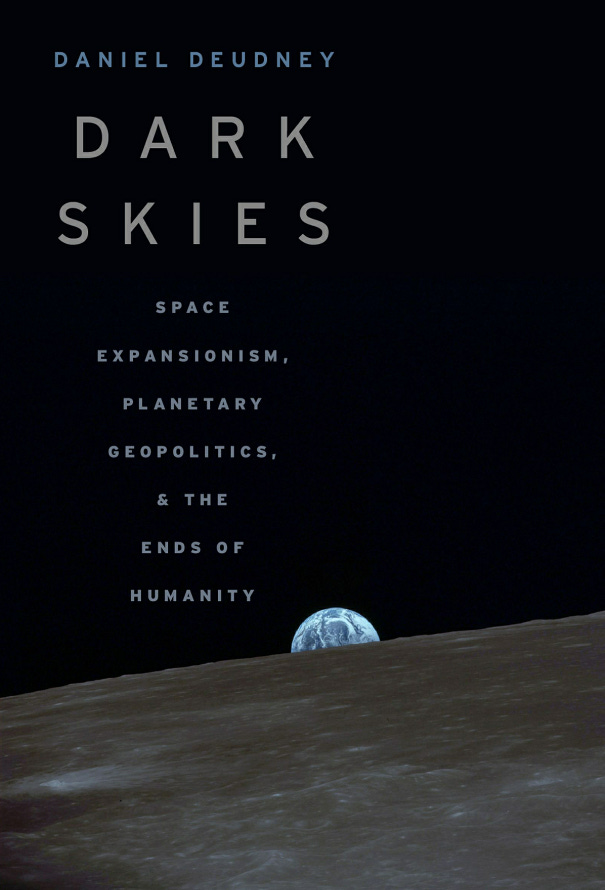
As space enthusiasts and entrepreneurs look to expand human civilization to the Moon, Mars, and beyond, few stop to examine the geopolitical risks of space colonization or the opportunity costs of not fixing problems on Earth. While most Faster, Please! guests advocate further expansion into space, Daniel Deudney offers a different perspective. Deudney is a professor of political science, international relations, and political theory at Johns Hopkins University. He’s the author of several books, including Dark Skies: Space Expansionism, Planetary Geopolitics, and the Ends of Humanity, released in March of 2020. This interview was first released in June 2021 for my AEI podcast, Political Economy, and now I’m sharing it with subscribers to Faster, Please! (Unfortunately, our chat preceded my viewing and reading of The Expanse, which does a great job suggesting Deudney’s concerns.) In This Episode * Space expansionism and its dangers (1:24) * Space infrastructure (13:57) * Hedging existential risk (18:13) * Principles for space policy (30:40) Below is an edited transcript of our conversation. Space expansionism and its dangers James Pethokoukis: My listeners love when I read during these podcasts. I’m going to start by reading two quotes. The first quote is from Elon Musk: “You want to wake up in the morning and think the future is going to be great – and that’s what being a spacefaring civilization is all about. It’s about believing in the future and thinking that the future will be better than the past. And I can’t think of anything more exciting than going out there and being among the stars.” Quote two is from the Blue Origin website: “Blue Origin was founded by Jeff Bezos with the vision of enabling a future where millions of people are living and working in space to benefit Earth. In order to preserve Earth, Blue Origin believes that humanity will need to expand, explore, find new energy and material resources, and move industries that stress Earth into space.” Now, I think you would probably call both those visions “space expansionist”. But that is not your vision, right? So what don’t you like about those visions? Daniel Deudney: Well, Musk and Bezos articulate a vision of space expansionism that was first articulated early in the 20th century and has been subsequently developed. Bezos was actually a student of Gerard O’Neill, who was one of the main visionaries of space colonization in the United States during the 1970s. So they’re articulating a central set of ideas that is held by a large number of people, both in the United States and globally. And my book, Dark Skies, is really a systematic evaluation of the actual impact of space activities to date and a critical assessment of the likely impacts of many of these yet unrealized projects. So to start with the historical record, this is not a simple task because space is just a place. And so there’s a heterogeneity of activities that have gone on there. So it’s like summing up apples, light bulbs, and grenades. But the standard narrative of space activities to date, I argue, is woefully inaccurate. It leaves out one of our major space programs — and, depending on how you count, perhaps our major space program and arguably our most consequential space program — which is the use of ballistic missiles to deliver thermonuclear weapons at global distances in very short periods of time. The standard definition of space weapons is that they are weapons used against objects in orbit or placed in orbit. That’s completely insufficient because it leaves out the use of the frictionless environment of space as a corridor for rapid bombardment at distance. And so I say that we have this major space program that we don’t acknowledge as a space program. It’s what would be called an “unknown known.” Everyone knows that these exist, but they get misplaced or miscategorized. And if we put ballistic missiles back into the ledger sheet for an assessment of space activities to date, I have to conclude that the impact has been to increase the probability of nuclear war, which would obviously be a civilizational, perhaps existential, catastrophe for humanity. Take the Cuban Missile Crisis. The fact that these weapons move so rapidly — are so difficult to intercept — has created this unprecedented situation of vulnerability. And this really points to a more general fallacy of this very optimistic thinking about space, which is to simply neglect the violence potential and the tendencies for this violence potential to be harnessed. It’s like they think that space is good, and if something is not good, then it can’t be involved in space. The reality is that this major space program (that we don’t acknowledge as such) has been a major negative in terms of the survival of our civilization. And so the first step for the space expansionist, I think, is really to be a bit more realistic and accurate about what they’ve actually done and the inherently enormous violence potential involved in this domain. Is that your primary critique then? I mean, those are two very attractive visions. And is your main critique that they are just utterly ignoring how it could all go wrong? That they’re only viewing this as creating a space economy, creating space hotels, creating lunar or Mars colonies, or deflecting asteroids — but they’re ignoring how all these technologies could be used for ill? Yeah, that’s a general summation. The first key point is the ballistic missiles and space weapons. And then, looking at the larger future set of agendas that they advocate, colonization sits really at the center of it — millions, billions, or trillions of people living in space to make humanity a multi-planetary species. And their seemingly ace-in-the-hole argument is that the Earth is fragile — it’s vulnerable, it’s subject to all sorts of disasters. And therefore, we need to get all of our eggs out of this one frail basket. Seems like a good argument. At its surface, it does. And as they say, the reason the dinosaurs went extinct is because they didn’t have a space program. So let’s look at what would be entailed in humanity becoming a multi-planetary species: colonization of Mars, colonization of asteroids, and so forth. This would almost certainly produce an interstate anarchy. The assumption that the advocates make, and I think it’s well-founded, is that any colony which is big enough to provide existential risk insurance will be big enough to become politically independent. And once it becomes politically independent, we have to expect the same types of dynamics that have been characteristic of Earth history and interstate anarchy. Then we read the terrain, and we see immediately that it’s got this inherently enormous violence potential. And that’s because these objects — asteroids, even space debris — are moving so rapidly. The reason these asteroids are so destructive when they strike the Earth is not because of their mass, but because of their mass combined with their velocity. And so this is an environment that is inherently far more violent than any environment that we have dealt with on the Earth. So I asked the question: What is going to be the likelihood that we’ll have — as we have on Earth — wars and violent rivalries in what I call the Solar Archipelago? One factor, of course, would be the issues of mutual vulnerability, which I argue would be extremely high. The ratio of destructive capacity, like on Earth with nuclear weapons, is going to greatly exceed the territorial, habited locations. So saturation of violence capacity will mark solar-orbital space. Even though, of course, there will be a recovery of distance — it won’t all be quick because Mars is tens of millions of miles away, at least. Then you asked the question about rivalries over frontier resources. The historical record on Earth is that frontiers are very violent places. Rivalries for making claims will be very likely. So we have a war-prone argument there. Another factor: To what degree are the u… This is a public episode. If you'd like to discuss this with other subscribers or get access to bonus episodes, visit fasterplease.substack.com/subscribe
Embed this episode
No transcript yet.