Welcome to the Tweep Trends podcast. Hey, Evette, what's trending today? Hey, I'm Evette. Hey, girl.
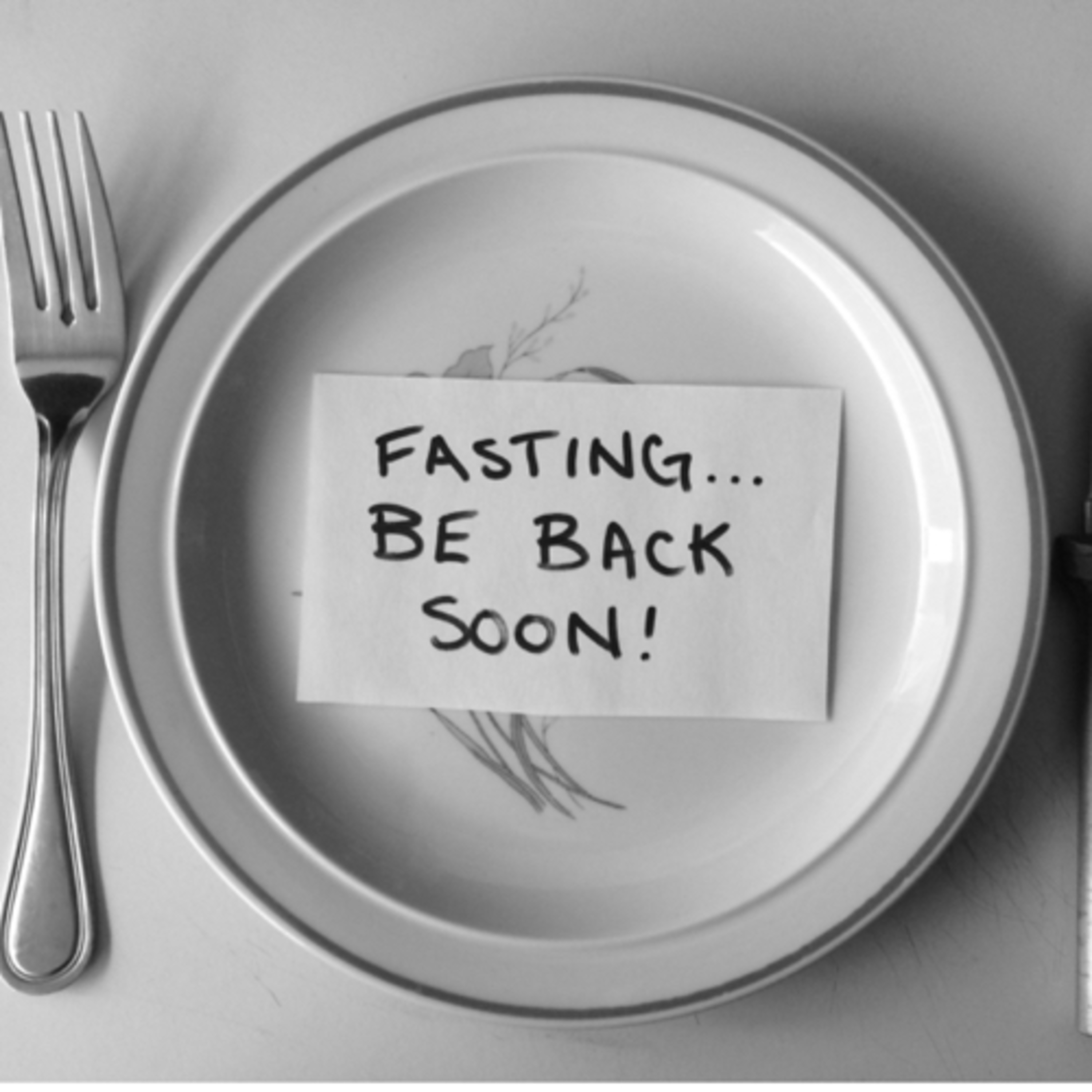
And you are tuned in to Tweep Trends. It's the quickest way to find out what's trending today. Today, let's talk about fasting. Let's get started.
You might be wondering where the topic of fasting came from. So let me tell you, earlier this week, I was listening to this show that comes on SiriusXM channel 126 Urban View, the name of the show was called Heather B Live. And the host of the show, Heather B, she was talking to people about fasting. And I was intrigued by the topic simply because I've heard of fasting a lot.
I know what it is. I've been curious. I've considered doing it myself. But never quite pushed the envelope all the way.
I get close. I might do a little, something close to fasting. But I've always wanted to actually follow a program to fast. And then the more I started thinking about it, I'm like, you know, there's a bunch of different ways and reasons why people do fast.
And it was just one thing after the next. I'm like, you know what? How about let's talk about fasting on the next episode? And then what happened?
I fell into this whole of fasting doing all this research that somehow and Thursday got away from me. And here I am, it's Friday already, Friday night, mind you. And I still hadn't gotten my episode released. And I'm like, what are you doing?
What's happening here? So it's almost kind of like I had a podcast fast. But there's another type of fasting we're talking about here. We're talking about fasting, not so much just food because you don't have to give up food in order to fast.
You could give up anything and be considered a fast. It just depends on what your perspective is, what it is that you're trying to do. So what we're gonna talk about today are two different types of fasting, involuntary and voluntary. Okay, so when I listened to the end part of that last segment, I kind of chuckled because I'm like, you know what, it sounded like I said the same word wise, but I didn't, I was talking about voluntarily fasting and a fast that is involuntary.
So let's talk about the involuntary fast first. First of all, I don't like using the phrase or the term fasting when I'm talking about involuntary stuff. And the reason being is that I guess for me, the term fasting seems like something that you would do consciously. So when I think about early man, how they had to hunt in forage for food.
And if you didn't find the food or you didn't catch it, then you didn't have food to eat. Therefore, you technically could consider that time that they went without food as a fast. But that just seems cruel and unusual to me, to call that a fast. Now, when you think about breakfast or the time that you break the fast, that makes sense to use the term breakfast.
However, when you're sleeping, you're sleeping. Your body is shut down and getting rest. So the idea that that time period is a fast, is it voluntary because you went to sleep like you went and laid down? Or is it involuntary because while you're sleeping, I can't say that I've ever heard of somebody like sleep walk and then sleep eat, even though I'm sure it's probably possible.
Is that a thing? I don't know. Bottom line is, I don't really like the idea of using the term fast, which is great. The reason why we have these dictionaries, they have a gazazillion words in it.
And there are a lot of words that mean the same thing. I feel like I have to use a different word other than fasting because then I get the image of people who are maybe homeless and don't have food or maybe they live in a food desert or they're food insecure. When those people aren't eating, do we look at that as a fast? Like they were fasting?
I struggle with that. I have a hard time calling that a fast. Even though technically that is what it is. And then once they have a meal after that time period, then they would be breaking their fast.
But to me, I don't know, I feel like the term fast works better when we're talking about something that you're doing voluntarily. Fasting voluntarily is a completely different animal in my mind. And so what I did was I went online, did a search for like the history of fasting. And when I tell you the majority of the articles that came up dealt with intermittent fasting, I was blown away.
I'm like, I don't want to just know about intermittent. I want to know about fasting in general. And intermittent was the big word, the big phrase. And I can only assume that intermittent fasting is really popular because there are a lot of celebrities that swear by intermittent fasting, that when they're going from whatever their regular weight is to having to drop a whole bunch of weight for a roll or whatever, that a lot of them do that.
And some of them just do it just to maintain the sexy. And I'm not mad at them for that if that's what they have to do to keep that look about them. Because I realize they're in the public eye and people expect a certain standard from them. Now, because celebrities are doing that, people are doing the same thing.
But outside of weight loss, there's also fasting for religious and spiritual reasons. And that was actually the reason why they were talking about it on Heather Beelive the other day. They were talking about when people fast how you're not really supposed to go around telling everybody that that's what you're doing. And you're not supposed to go around looking all haggard and hungry because that defeats the purpose.
You're not going around trying to get sympathy from people for them to then ask you, hey, are you all right? What's going on? You look hungry. That's not what you want to happen.
You still want to present as your best. But this is something that you're doing spiritually, that you are using the time that you're fasting to pray and meditate and try to get right with God. But let me say this too, that type of fasting does not have to just be about food. It can be about whatever your vices are.
If maybe you are hooked on reality television, like that's something that you got to watch every day, then you may want to fast from television completely. Don't turn it on. And in that time that you would normally be sitting and watching the television, you're going to take that time now to sit and be quiet. You're going to pray.
You're going to meditate whatever the things are that are on your mind, the things on your plate that you're struggling with. Maybe you have a question that you're looking for an answer for. That would be the time that you would then dedicate to trying to get an answer from God or whoever it is that you pray to. That would be that type of fasting.
Now, there's also passive resistance where people go on hunger strikes. Now, I've often wondered about hunger strikes, because in my mind, I'm thinking, do people really care if I don't eat? Like, you hear about people in jail sometimes who go on hunger strikes? And in my mind, it's just kind of like, so does the jail warden and everybody else that work, do they really care if you're not eating?
They gave you the opportunity to eat. And if you're choosing not to eat, that's on you. That's how I've always looked at it. So please, if that's not how that works, feel free to fill me in.
Let me know, because seriously, I've never really understood that, but I've heard it happen several times. I don't really know what the end result was as far as I did. Whatever the reason was why the people were fasting. Did they get the result that they were hoping for?
I don't know. I've got to do some more research on that. But that type of fasting, it's intriguing to me, because yeah, I don't give that. Thank you for joining me for today's episode about fasting.
It's funny, because I keep thinking about the religious and spiritual aspect of fasting and how people will fast with their churches. They may do group fasts and have pamphlets and directions and everything. And that's how I always view fasting to be, that there's rules to it, but there are really no rules to it. The idea is to give something up.
And in that time that you would normally do in that thing, dedicate it to something else, to meditating, to praying, or whatever. Yeah. So have you done a fast before? Was it individual?
Was it something you did on your own? Did you do it to get an answer? Did you get your answer? I'm just really intrigued right now by fasting and about fasting and whatnot.
So if you have any information that you'd like to share with me, you know where to find me, Twitter, Instagram, Facebook, YouTube at hevat. And that's at hevat. Or just look for the hashtag tweet trends. Thank you, please.
And thank you for your information ahead of time, because I know you're not going to leave me hanging. And even if there are doctors out there, is it true that there's really no harm in intermittent fasting? Goodness, can't even get the word out. I'm interested in that too, because you can't believe everything that you look up online.
You know? So let me know. You know where to find me. Have a great weekend.
See you back here on Tuesday.