
EPISODE · Apr 10, 2026 · 1 MIN
Festus, Missouri Just Showed America How to Fight Back Against Big Tech
from Education is Elevation · host The Conscious Lee
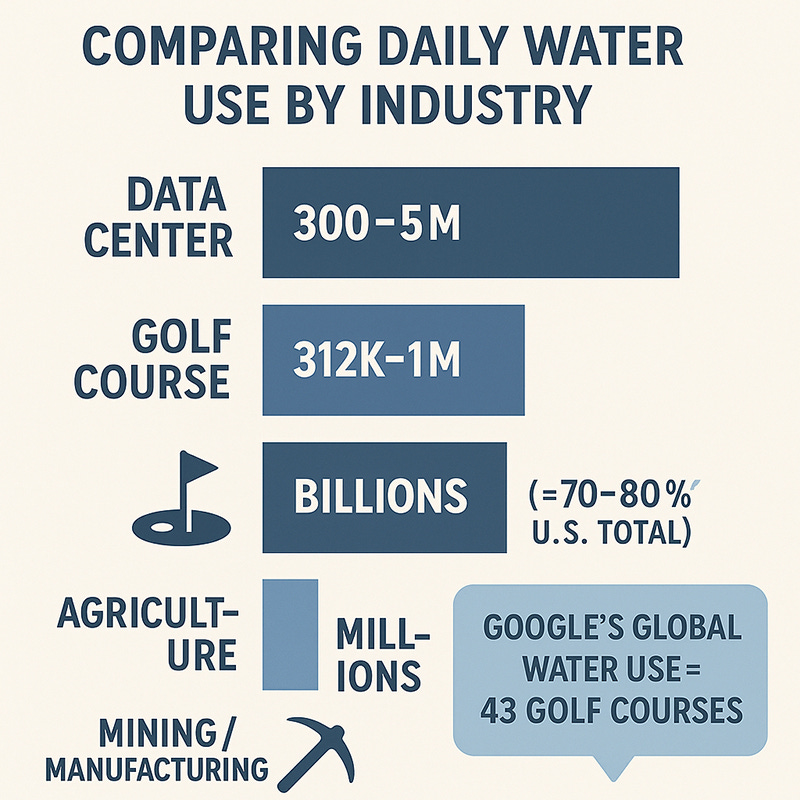
Education Is Elevation is a reader-supported publication. To receive new posts and support my work, consider becoming a free or paid subscriber.Let me tell y’all about the city of Festus, Missouri, because this story right here is the blueprint.The residents of Festus told their city council — clearly, explicitly, on the record — that they did not want a data center built in their community. The council ignored them. Voted to approve it anyway. So the people of Festus did what democracy is supposed to let you do. They voted out every single council member who approved that data center. Every. Single. One. Lost their job. That’s accountability from micro to macro, and that’s the energy we need to be studying right now, because what’s happening with data centers in this country is one of the most underreported environmental justice crises of our generation.And I need y’all to understand why those folks in Festus were so adamant, because this isn’t about being anti-technology. This is about understanding what these facilities actually do to the communities that have to live next to them.The Numbers Don’t LieHere’s the fact that should stop every single one of us in our tracks: all data centers worldwide, combined, now consume 32% more electricity than the entire nation of Great Britain. Let that marinate. We’re talking about server farms — buildings full of machines — using more power than a country of nearly 70 million people. And that matters because power generation is already the single largest source of CO2 emissions on the planet. Every time that energy demand climbs, so do the emissions. So do the health consequences. So does the suffering in the communities closest to the plants generating that power.And it gets worse. A single Google data center — one facility — consumes approximately half a million gallons of water per day. Per day. In a country where Flint, Michigan went years without clean water. In a country where Jackson, Mississippi’s water system collapsed. In a country where Black communities from the rural South to the urban Midwest have been fighting for decades just to get water that won’t poison them. Big Tech is draining aquifers to cool servers so somebody can ask ChatGPT to write a poem.The cooling systems alone in these data centers account for over 40% of their total electricity usage. So not only are they consuming massive amounts of power, a near-majority of that power is just keeping the machines from overheating. That’s the part nobody in Silicon Valley wants to put in the press release. They’ll tell you about the jobs. They’ll tell you about the tax revenue. They won’t tell you about the 40% energy overhead just to manage the heat their own infrastructure produces.Environmental Racism Has a New AddressNow here’s where I need y’all to really lock in, because this isn’t just an environmental story. This is a race story. It’s always been a race story.The pattern of where data centers get built follows the exact same cartography of disinvestment and disposability that has defined Black life in America since Reconstruction. Robert Bullard — the father of environmental justice — documented this architecture of harm back in 1990 in Dumping in Dixie. He showed how hazardous waste facilities, landfills, chemical plants, and polluting industries were systematically sited in Black communities. Not by accident. By design. Because those communities had been politically weakened by decades of disenfranchisement, economically hollowed out by redlining and capital flight, and socially rendered invisible by a media ecosystem that didn’t care what happened south of the highway.That was the playbook then. The playbook hasn’t changed. The product has. Instead of a petrochemical plant, it’s a data center. Instead of toxic sludge, it’s diesel exhaust from backup generators and the constant hum of industrial cooling systems. But the targeting logic is identical: find the community with the least political power, the fewest resources to fight back, and the lowest likelihood of making the evening news.Look at what happened in Prince William County, Virginia — one of the largest data center corridors in the world. The communities adjacent to those facilities have documented persistent noise pollution, diesel emissions from backup generators, and strain on local water and electrical infrastructure. When residents pushed back, they ran into the same wall communities of color always run into: the economic development narrative. The jobs argument. The tax base argument. The same arguments that were used to justify putting a highway through the middle of Black Bottom in Detroit, or a garbage incinerator next to public housing in Chester, Pennsylvania.And let’s talk about those backup generators, because this is the health piece that is getting buried. Diesel exhaust from data center backup generators contains fine particulate matter — PM2.5 — that embeds itself in your lungs and enters your bloodstream. We’re talking about documented pathways to heart disease, lung disease, stroke, and premature death. The American Lung Association has been clear on this. The EPA has been clear on this. The science is not in dispute. What’s in dispute is whether anyone in power cares enough to act on it when the people breathing that air are Black and brown.The Historical PlaybookIf you understand the history of environmental racism in this country, none of this surprises you. It follows a lineage that is as American as the Constitution itself.In 1982, residents of Warren County, North Carolina — a predominantly Black community — fought against the state’s decision to dump 6,000 truckloads of soil contaminated with polychlorinated biphenyls in their backyard. That protest, which saw over 500 arrests including Dr. Benjamin Chavis and Congressman Walter Fauntroy, is widely recognized as the birth of the environmental justice movement. The community lost that particular fight — the landfill was built — but the resistance catalyzed a national reckoning that led directly to the landmark 1987 United Church of Christ study, Toxic Wastes and Race in the United States, which proved empirically what Black folks already knew: race was the single most significant predictor of where hazardous waste facilities were located. Not income. Not land value. Race.President Clinton signed Executive Order 12898 in 1994, directing federal agencies to address environmental justice in minority and low-income populations. But executive orders are only as durable as the administration that issues them. The enforcement mechanisms have been gutted, restored, and gutted again depending on which party holds the White House. Meanwhile, the facilities keep getting built. The permits keep getting approved. The pattern keeps reproducing itself with new technology and the same old geography.The data center boom is just the latest iteration of what Dorceta Taylor calls “the environmental justice framework” — the systematic distribution of environmental hazards along racial and socioeconomic lines. Taylor documented in Toxic Communities how zoning laws, land use decisions, and permitting processes function as mechanisms of racial sorting, ensuring that the communities least equipped to resist are the ones most likely to bear the burden.The Water Crisis Within the CrisisI want to come back to the water piece because I don’t think people fully grasp the scale of what’s happening.When a data center consumes half a million gallons of water a day, that water is being drawn from the same municipal systems and aquifers that serve residential communities. In regions already experiencing drought or water stress — and climate change is making that an expanding category every year — data center water consumption directly competes with household water needs. This isn’t theoretical. This is happening right now in places like Mesa, Arizona, where residents have raised alarms about data center water permits being approved while the state faces historic drought conditions along the Colorado River Basin.And here’s the structural piece that ties it all together: the communities most vulnerable to water scarcity are, once again, disproportionately communities of color. The water infrastructure crisis in this country — from Flint to Jackson to the Navajo Nation — maps onto the same racial geography as everything else we’ve been talking about. So when a data center moves into a water-stressed region and starts consuming hundreds of thousands of gallons a day, it’s not an equal-opportunity extraction. It deepens existing inequities that were already shaped by decades of racialized disinvestment.Communities Fighting BackBut here’s what I want to leave y’all with, because the story of environmental racism in America has never been just a story of victimization. It has always, simultaneously, been a story of resistance.Festus, Missouri is one example. But it’s not the only one. Across the country, communities are organizing against data center expansion using every tool available — from municipal elections to zoning board challenges to state-level legislative advocacy.In Virginia, grassroots coalitions have pushed for stricter noise ordinances and emissions standards for data center facilities. In Georgia, community organizers have demanded environmental impact assessments before new data center permits are approved. In Oregon, environmental groups have challenged the water permits granted to large tech companies. These fights are happening in real time, and they are being led, disproportionately, by the same communities that have always been on the front lines of environmental justice: Black communities, Indigenous communities, working-class communities that understand what it means to have your health and your resources sacrificed on the altar of someone else’s profit.The playbook that Festus used — direct electoral accountability — is one of the most powerful tools available. When elected officials understand that approving a facility the community doesn’t want will cost them their seat, the calculus changes. That’s democracy doing what democracy is supposed to do. And it shouldn’t take an extraordinary act of civic mobilization to make that happen, but in this country, for communities of color, it always has.Policy That MattersThere are real policy interventions that could change the trajectory of this crisis. The EPA’s Office of Environmental Justice needs to be empowered — not just funded, but empowered with enforceable regulatory authority — to review data center siting decisions through an equity lens. The National Environmental Policy Act should require comprehensive environmental impact statements for any data center above a certain energy or water consumption threshold. State legislatures need to pass legislation mandating that data center developers conduct community health impact assessments and make those assessments public before a single permit is approved.At the federal level, the Justice40 initiative — which commits to delivering 40% of the benefits of certain federal investments to disadvantaged communities — should be expanded to include data center infrastructure oversight. If the government is going to incentivize the construction of these facilities through tax breaks and infrastructure spending, then the communities bearing the environmental and health costs need to be at the table, not as an afterthought, but as the first voice heard.And the tech companies themselves need to be held to account. The same corporations posting net-zero pledges and ESG reports are the ones building facilities that consume more electricity than entire nations. Facts over feelings — if your sustainability report says one thing and your energy consumption says another, the community has a right to call that what it is.The Bigger FrameThis is what I mean when I say education is elevation. Understanding the data center crisis isn’t just about understanding technology or environmental science. It’s about understanding how power operates in this country. It’s about understanding that the same logic that put a chemical plant in Cancer Alley puts a server farm in a water-stressed Black community in the South. It’s about understanding that the systems we’re told are neutral — zoning laws, permitting processes, economic development incentives — are, in fact, operating exactly as they were designed to operate: to distribute risk downward and profit upward along racial lines.The people of Festus understood that. They didn’t need a policy briefing or an academic lecture. They understood it because they live it. And they acted. That’s the model. That’s what fighting back looks like at the local level. From micro to macro, that’s how we get accountability with these folks.Research over MeSearch. Facts over feelings. Feel me?EXPLICIT ASK TO BECOME PAID SUBSCRIBER I’m fighting to fill a critical void left by the retreat of public education media. I document and teach the histories, legal frameworks, and cultural knowledge that are being systematically erased or distorted. With no corporate backing or wealthy sponsors, this work depends entirely on readers like you. As a Black educator and researcher my work depends entirely on a community of readers, not corporate sponsors. If everyone reading this became a paid subscriber, we could build a full-time digital sanctuary: a new, independent source of PBS-depth reporting and curriculum, centered on Black expertise. But right now, less than 1% of my followers are paid subscribers.This article — tracing the line from Warren County to Festus, from Cancer Alley to Data Center Alley, from Robert Bullard’s research to the backup generator running next to someone’s home right now — is the kind of work that doesn’t get funded by the same corporations building those data centers. It gets funded by you. Every paid subscription keeps this work independent, rigorous, and accountable to the community, not to advertisers or algorithms.Education Is Elevation is a reader-supported publication. To receive new posts and support my work, consider becoming a free or paid subscriber.5 Key Takeaways1. Data centers are an environmental justice crisis hiding in plain sight. These facilities consume more electricity than entire nations, drain hundreds of thousands of gallons of water per day, and emit diesel exhaust from backup generators that causes heart disease, lung disease, and stroke — and they are disproportionately sited near communities of color.2. The siting of data centers follows the exact same racial geography as every other environmental hazard in American history. From toxic waste dumps to petrochemical corridors, the pattern documented by Robert Bullard in 1990 holds: race is the primary predictor of who lives next to industrial harm. Data centers are the latest product in a centuries-old playbook.3. Festus, Missouri proved that local electoral accountability works. When every council member who voted for a data center the community opposed was voted out of office, it demonstrated the most direct and replicable form of community power — making elected officials pay a political price for ignoring the people they serve.4. The regulatory framework is decades behind the technology. Data centers operate in a gray zone — consuming energy and water at industrial scale while being regulated as commercial buildings. Without mandatory environmental and health impact assessments, communities have no formal mechanism to evaluate what’s being imposed on them.5. Environmental justice has always been, and remains, a racial justice issue. From Warren County in 1982 to Data Center Alley in 2026, the distribution of environmental harm in America is inseparable from the distribution of racial power. Understanding that connection is the first step toward changing it.Bibliography / Related ReadingsBullard, Robert D. Dumping in Dixie: Race, Class, and Environmental Quality. Westview Press, 1990. The foundational text of environmental justice scholarship. Bullard documents the systematic siting of hazardous waste facilities in Black communities across the American South, establishing that race — not income — is the primary predictor of environmental hazard proximity.Taylor, Dorceta E. Toxic Communities: Environmental Racism, Industrial Pollution, and Residential Mobility. NYU Press, 2014. Taylor expands the environmental justice framework to examine how zoning laws, land use decisions, and permitting processes function as mechanisms of racial sorting, producing disproportionate environmental burden for communities of color.Rothstein, Richard. The Color of Law: A Forgotten History of How Our Government Segregated America. Liveright, 2017. Essential for understanding how federal, state, and local government policies — including zoning — created and maintained residential segregation. Provides the legal and historical context for understanding why data centers are sited where they are.United Church of Christ Commission for Racial Justice. Toxic Wastes and Race in the United States. 1987. The landmark report that provided the first national empirical evidence that race was the strongest predictor of hazardous waste facility siting in the United States. A foundational document of the environmental justice movement.Rodney, Walter. How Europe Underdeveloped Africa. Bogle-L’Ouverture Publications, 1972. Rodney’s analysis of the extractive relationship between Europe and Africa provides the framework for understanding the global dimension of data center expansion — how technological infrastructure reproduces colonial patterns of resource extraction.Robinson, Cedric J. Black Marxism: The Making of the Black Radical Tradition. University of North Carolina Press, 1983. Robinson’s concept of racial capitalism — the idea that capitalism has always been organized through racial hierarchy — is essential for understanding why the data center economy distributes its benefits and burdens along racial lines.Fanon, Frantz. The Wretched of the Earth. Grove Press, 1961. Fanon’s analysis of how colonial infrastructure is repurposed under neocolonial conditions provides theoretical grounding for understanding data center expansion in the Global South as a continuation of extractive logics.Sze, Julie. Noxious New York: The Racial Politics of Urban Health and Environmental Justice. MIT Press, 2007. Sze examines how environmental racism operates in urban contexts — relevant for understanding how data center siting in metropolitan areas follows the same political dynamics that have concentrated environmental harm in communities of color.Pulido, Laura. “Rethinking Environmental Racism: White Privilege and Urban Development in Southern California.” Annals of the Association of American Geographers 90, no. 1 (2000): 12-40. Pulido’s influential article argues that environmental racism must be understood not just through intentional siting decisions but through the structural dynamics of white privilege and urban development — a framework directly applicable to data center corridors.International Energy Agency. “Data Centres and Data Transmission Networks.” IEA Energy System Reports (updated annually). The authoritative source for data on global data center energy consumption, providing the empirical foundation for claims about electricity usage relative to national consumption levels.Education Is Elevation is a reader-supported publication. To receive new posts and support my work, consider becoming a free or paid subscriber. This is a public episode. If you'd like to discuss this with other subscribers or get access to bonus episodes, visit theconsciouslee.substack.com/subscribe
Embed this episode
NOW PLAYING
Festus, Missouri Just Showed America How to Fight Back Against Big Tech
No transcript for this episode yet
Similar Episodes
No similar episodes found.
Similar Podcasts
No similar podcasts found.