
EPISODE · Jul 4, 2026 · 13 MIN
FIELDNOTES Report: Riparian Duo, Aspen & Cottonwood
from Cliff Crego · host Cliff Crego
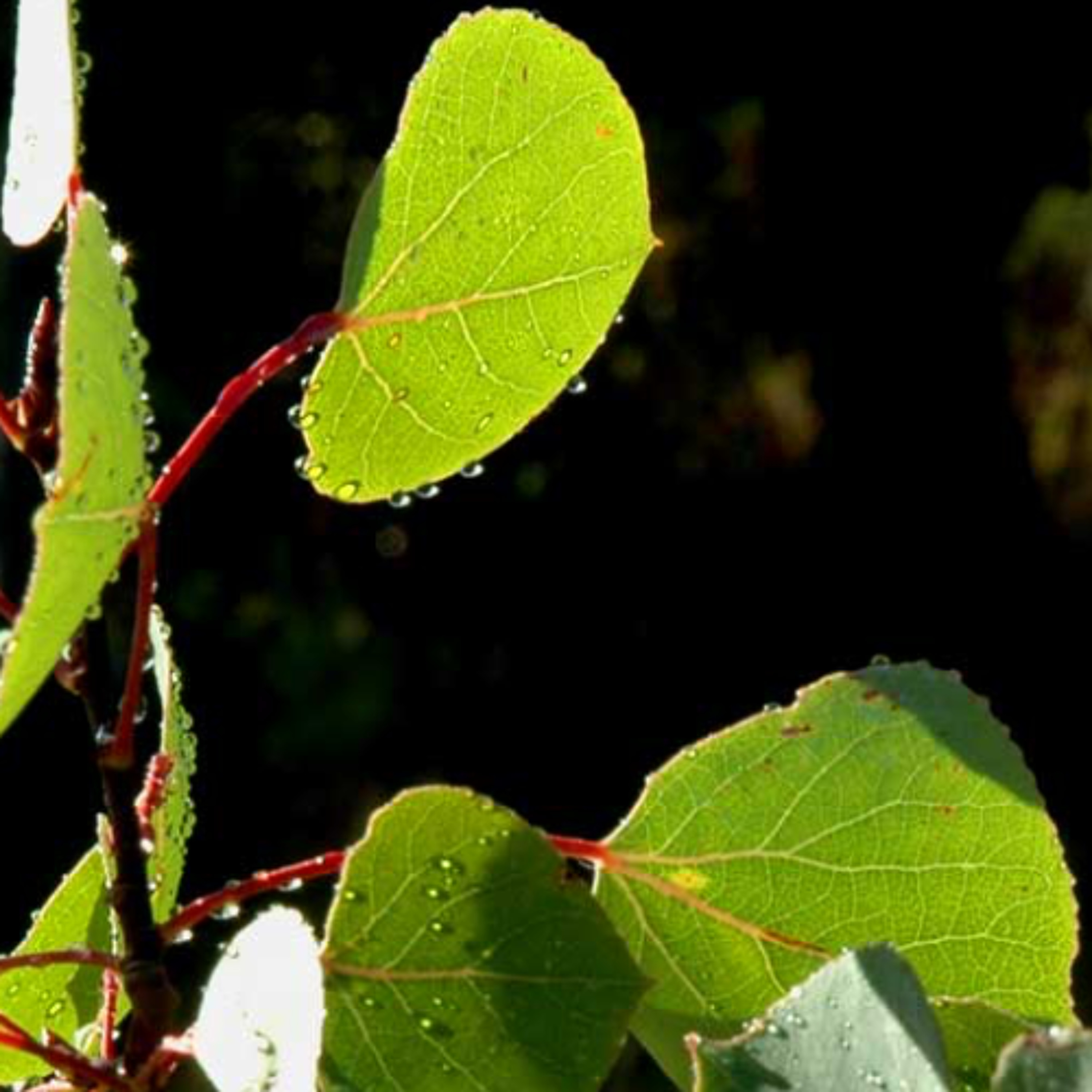
IMAGE: Quaking Aspen leaves, after mountain rain, MONTANA, (Lost) Glacier National Park. RIPARIAN DUO, Aspen & Cottonwood Aspen and Cottonwood are close cousins in the willow family (Salicaceae), thriving as foundational riparian species across the Pacific Northwest. They stabilize streambanks, regulate water temperatures by casting shade, and create vital microclimates for aquatic and terrestrial wildlife.Their similarities, ecological roles, and key differences define these western woodland giants: Shared TraitsThe Willow Connection: Both are poplars that feature smooth, pale young bark, fuzzy spring seeds, and flat leaf stalks that allow the foliage to flutter in the wind. Sunlight Requirements: Neither species tolerates deep shade. They rely on disturbances—like seasonal flooding or wildfires—to clear canopy gaps and deposit the bare, moist sediment their seeds need to germinate. Clonal Growth: Both can reproduce vegetatively. Aspens are famous for sprawling underground root systems that produce massive, genetically identical groves, while fallen cottonwood branches carried downstream can sprout roots to form new colonies. Key DifferencesFeatureQuaking Aspen (Populus tremuloides)Black/Plains Cottonwood (Populus spp.)
Embed this episode
NOW PLAYING
FIELDNOTES Report: Riparian Duo, Aspen & Cottonwood
No transcript for this episode yet
Similar Episodes
No similar episodes found.
Similar Podcasts
No similar podcasts found.