
EPISODE · Nov 3, 2025 · 54 MIN
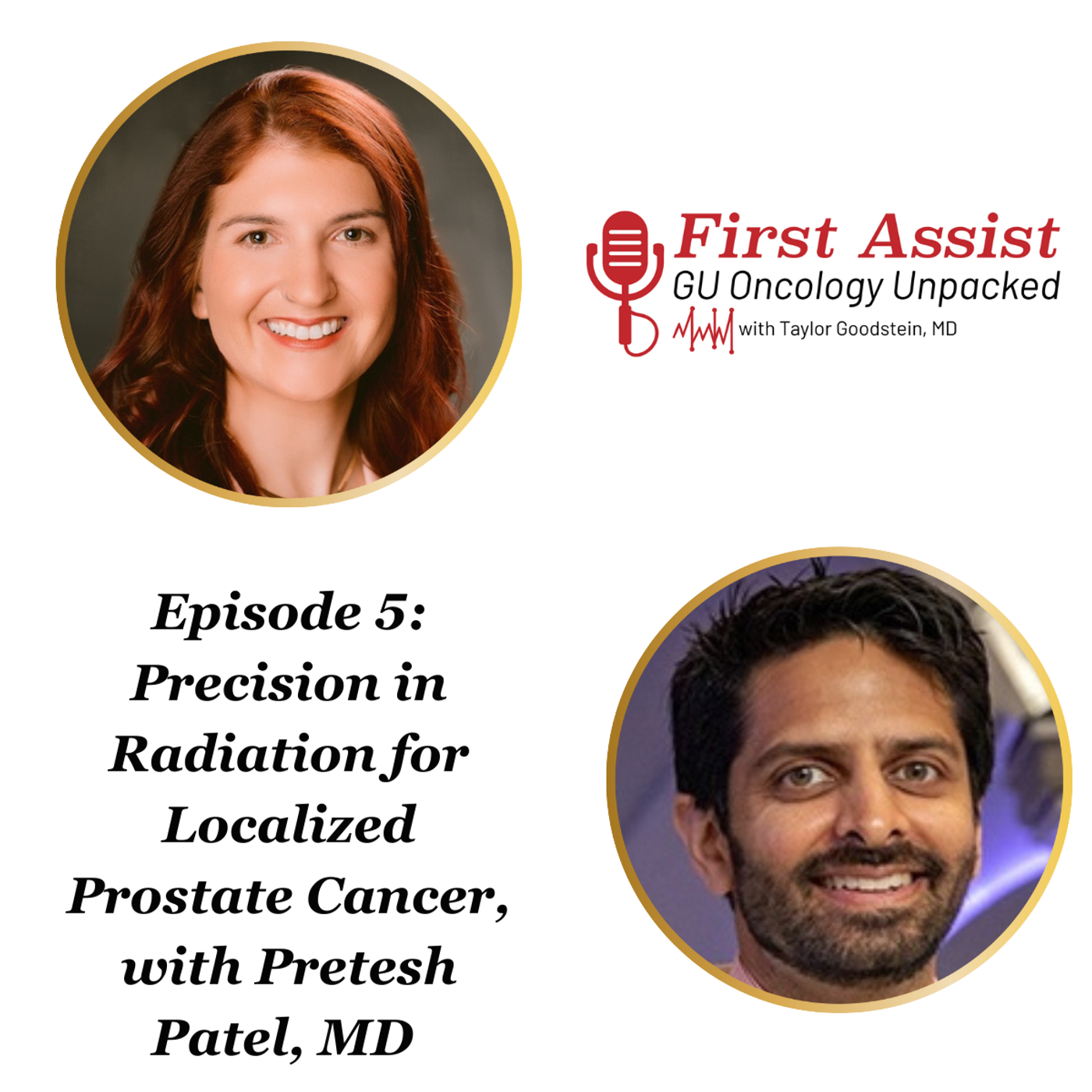
First Assist: Precision in Radiation for Localized Prostate Cancer, with Pretesh Patel, MD
from Urology Times Podcasts · host Urology Times
In this episode of First Assist: GU Oncology Unpacked, host Taylor Goodstein, MD, sits down with Pretesh Patel, MD, associate professor of radiation oncology at Emory University, for an in-depth conversation about modern approaches to radiation therapy in prostate cancer. Patel breaks down complex terminology, evolving technologies, and patient-centered strategies for delivering precise, effective, and individualized radiation care.The discussion begins with an overview of radiation modalities — from external beam radiation (IMRT, SBRT/SABR, proton therapy) to brachytherapy (LDR and HDR). Patel explains how imaging advances, fiducial markers, and rectal spacers have made treatments safer and more accurate, and how hypofractionation—fewer sessions with higher daily doses—has become standard for many prostate cancer patients.Goodstein and Patel explore how image guidance and adaptive radiation planning have revolutionized precision, even allowing real-time treatment plan adjustments. They also discuss patient experience, outlining what to expect from fiducial placement to simulation scans and the short, painless daily treatments that define SBRT.Patel highlights how biologic factors like the prostate’s low alpha-beta ratio make it especially responsive to higher-dose, shorter-course radiation. He details patient-specific considerations—such as urinary function, prostate size, and median lobe anatomy — that help determine whether external beam, brachytherapy, or combination therapy is best.As the conversation deepens, Patel outlines treatment paradigms for different risk groups:Low-risk: active surveillance preferred; if treated, short-course SBRT or brachytherapy without ADTFavorable intermediate-risk: radiation alone often sufficientUnfavorable intermediate-risk: radiation plus 4 to 6 months of ADT, guided by genomic and AI-based classifiers like Decipher and ArteraAI.High-risk: combination approaches—brachytherapy boost plus external beam—and longer-term ADT (18 to 36 months).Patel shares insight into ADT decision-making, comparing GnRH agonists and antagonists, discussing cardiac considerations, flare effects, and recovery timelines.The episode concludes with an honest conversation about toxicities and survivorship—urinary and sexual function, bowel changes, and the dramatic reduction in rectal injury seen with modern imaging and rectal spacers. Patel emphasizes the importance of shared decision-making, balancing cancer control with quality of life, and integrating patient priorities into every step of radiation planning.Chapters00:22 Defining radiation in prostate cancer6:44 IGRT guidance12:30 The patient's experience with radiation21:27 When hypofractionation is not recommended28:10 Risk groups35:15 Timing of ADT40:10 High-risk prostate cancer52:31 Timing of sexual dysfunction
Embed this episode
NOW PLAYING
First Assist: Precision in Radiation for Localized Prostate Cancer, with Pretesh Patel, MD
No transcript for this episode yet
Similar Episodes
No similar episodes found.
Similar Podcasts
No similar podcasts found.