
EPISODE · Sep 19, 2025 · 57 MIN
First Assist: The Historical Context of NMIBC, with Kamal S. Pohar, MD
from Urology Times Podcasts · host Urology Times
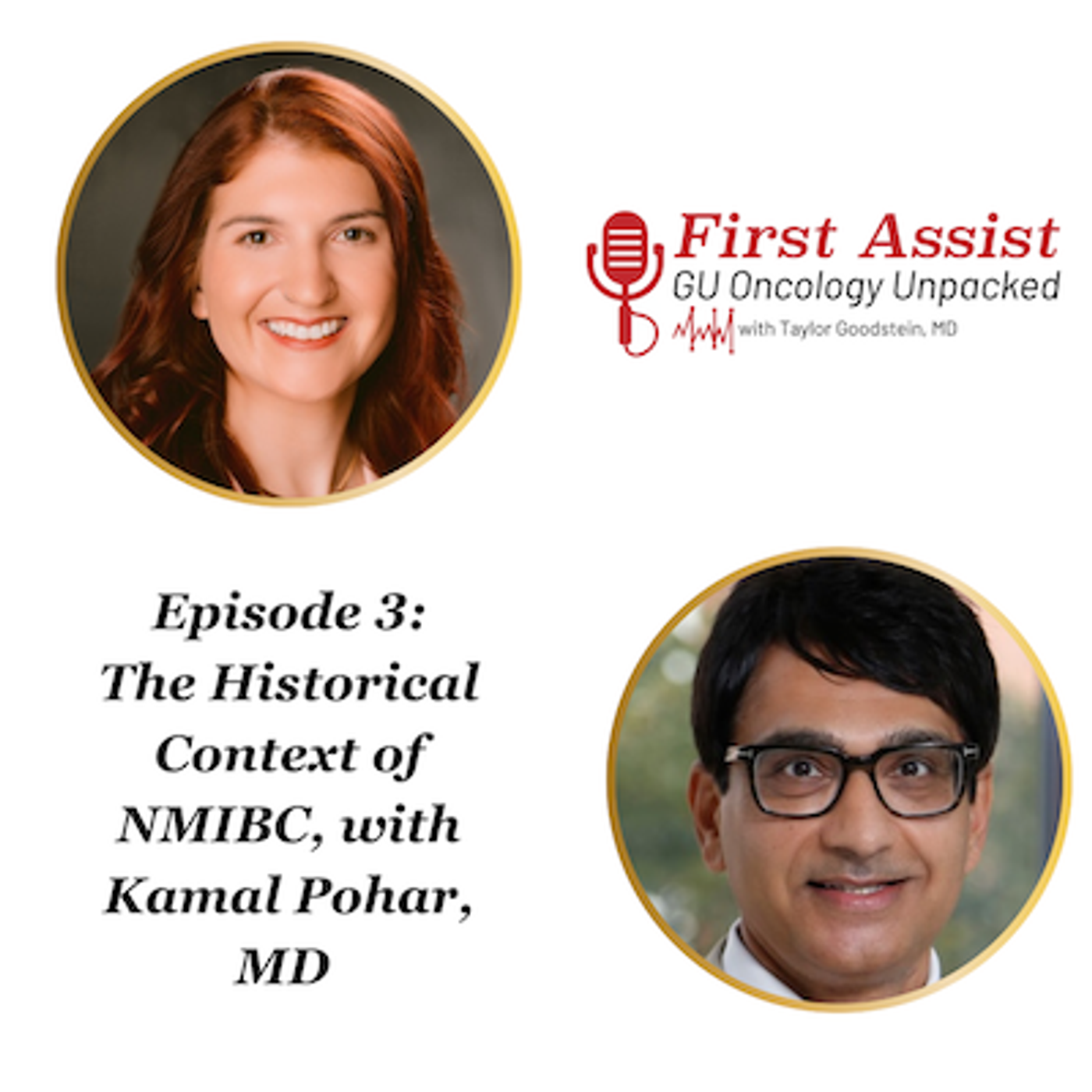
In this episode of First Assist: GU Oncology Unpacked, host Taylor Goodstein, MD, speaks with Kamal Pohar, MD, associate professor in the College of Medicine at The Ohio State University in Columbus, about the evolution of management and surveillance for non–muscle invasive bladder cancer (NMIBC).Pohar begins by tracing the origins of intravesical therapy. Before BCG became standard, chemotherapy agents delivered directly into the bladder showed modest benefits in reducing recurrence. The pivotal moment came in the 1970s, when autopsy observations linking tuberculosis with lower cancer incidence, coupled with animal studies, laid the groundwork for Morales’s landmark trial introducing BCG for bladder cancer. Early randomized studies quickly confirmed its benefit, transforming the field.The discussion moves to BCG dosing and maintenance regimens. Interestingly, the 6-week induction course arose from the number of vials available in a package rather than strong biologic rationale, yet it has persisted across therapies. Maintenance protocols were later shaped by cytokine response studies and solidified through SWOG-led trials.Surveillance strategies, repeat transurethral resection of the bladder tumor for T1 tumors, and the introduction of enhanced cystoscopy techniques such as blue light and narrow band imaging are also reviewed. Pohar notes their proven impact on tumor detection and recurrence, with blue light holding stronger evidence and FDA approval for both OR and office settings.The episode also covers biomarkers, from traditional cytology—refined by the Paris Consensus—to newer adjuncts like UroVysion FISH, used selectively to adjudicate difficult cases. Risk stratification models (EORTC, CUETO) are examined for their contributions and limitations, particularly in the modern BCG era.Finally, Pohar addresses perioperative intravesical chemotherapy, the impact of BCG shortages, and exciting frontiers such as recombinant BCG and en bloc resection techniques. He emphasizes that although NMIBC management has come far, clinical trials and technological innovation continue to shape a rapidly evolving field.Chapters0:41: The emergence of BCG9:20: The origin of the 6-week induction cycle13:06: Understanding the maintenance schedule of cystoscopy21:41: The advent of hexaminolevulinate38:18: Risk groups45:14: Perioperative chemotherapy
Embed this episode
NOW PLAYING
First Assist: The Historical Context of NMIBC, with Kamal S. Pohar, MD
No transcript for this episode yet
Similar Episodes
No similar episodes found.
Similar Podcasts
No similar podcasts found.