Fisherman's Blues
from Don't You Dare To Think Out Loud! Hosted by Javier Truben
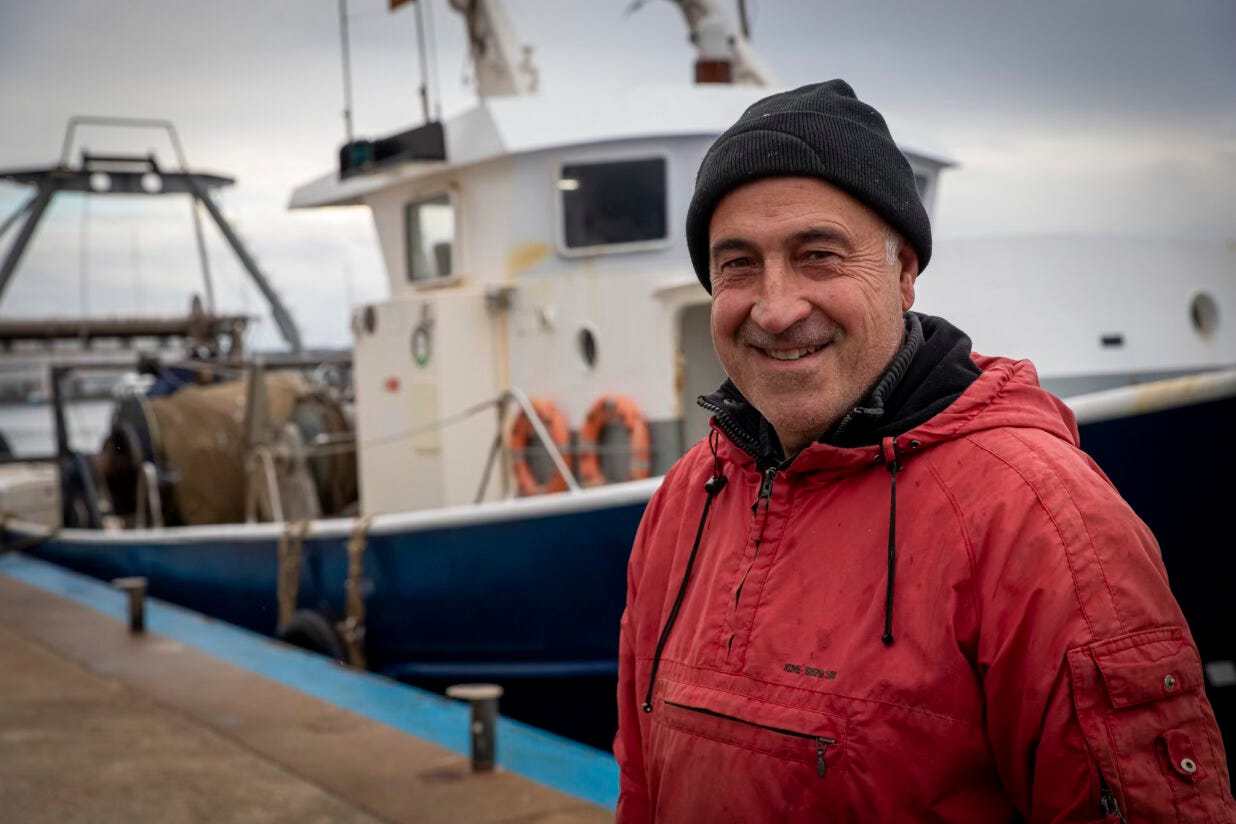
Farmers, ranchers, and fishermen, the pillars of the primary sector, have been frequently depicted in literature throughout history. Growing up along the shoreline, from the Caribbean to the Mediterranean Sea, and even the Atlantic Ocean for extended periods, I’ve developed a stronger connection with those who make their living as fishermen. Yesterday, I was stunned while reading an interview with Vicenç Comí Gurnés, the skipper of the trawler Sinera. He has been struggling to survive the absurd regulations imposed by the bureaucrats of the European Union. However, the most recent decision, slashing his fishing days from 180 a year to 27, effectively sealed his fate. According to the documents he has been diligently collecting in archives, his family has been engaged in fishing for four centuries, spanning seventeen generations since 1600—and he only stopped looking further back because the oldest ledger was crumbling in his hands. After two adventurous years in the airborne, where I experienced military skydiving without any sense of mortality, due to my youthful age and the boldness that came with it, I landed a plum job as a seaman, which allowed me to read all I could for ten consecutive years, averaging twelve novels per week. I blissfully called it my own PhD in Comparative Literature. Back then, in the glorious ’90s, I was convinced that the essence of being a fiction writer was more about reading than writing, lest I resort to overused clichés and conventional themes, because the word novel itself means something new or unusual told in an interesting way. From the dock of the marina, surrounded by slender sailboats and formidable motorboats, I witnessed the trawlers every day embarking on their journeys before sunrise and returning at five in the afternoon, preparing the boxes on deck for the fish auction. Sometimes, they raced each other to moor their boats before the price of the fish dropped, and the masts of the sailboats began to rock amid the clanging of the halyards, because they didn’t obey the three-knot speed limit of the roadstead. And those trawlers were lucky ones, given that purse-seine fishing was conducted during the night shift, sailing at ten in the evening and returning to port at eight in the morning. It goes without saying that fishing boats raised a ruckus when they were informed by radio on their way back about the prices dropping at the fish auction, requiring them at the mouth of the port to throw boxes overboard full of fresh sardines and whatnot that the tide sent to the marina dock, in order to avoid losing money. I’m not getting political to affirm that the European Union previously uprooted vineyards to satisfy the jealous French and did not lift a pinky to protect the textile industry against China. But if the ultimate intention of those bureaucrats is to put Vicenç Comí out of business, maybe it is reason enough to leave the Union like the British did before. As incredible as it sounds, farmers, ranchers, and fishermen have to comply with a bureaucratic rigmarole or be fined. Estimate your shrimp catch for Madrid by computer before docking and miss by ten percent, or let your net mesh slip by a single millimeter, and they fine you. I’m not surprised at all that youngsters—starting with Comí’s own son—don’t see any future in the primary sector that their fathers once had. Vicenç Comí is certain that the people who control his fate are a bunch of dumbheads, corrupt officials, or simply ignorant of his ancient craft. Perhaps they intend to outsource the capture of fish to distant seas and transform the Mediterranean coastlines into a massive tourist destination, like they already did with the Balearic Islands, catering to the preferences of pale northern Europeans. Who knows? But it’s certainly not a positive development. After Skipper Comí, the fishmonger will follow, and their demise will condemn us to consuming frozen fish for the remainder of our lives, sending all the restaurants of the port to a new level of blandness. My memories are filled with the tantalizing fragrance of barbecued sardines and red mullets, which I always ate by hand, just like the fresh shrimp. I also remember hitting the living octopus against the floor before placing it in the boiling pot. To give you an idea of this, in this beach town, we cook the freshly caught squid in October, even with chocolate! I only experienced this devotion to seafood in France, with oysters, and in Norway, with wild salmon, not the farmed salmon that they serve in supermarkets. When I was a kid, I spent all day long at the beach diving with a speargun to catch octopus and snacking on the clams I spotted on the bottom, as if I were living in paradise. I’m still recovering from the shock I experienced when I discovered that someone had thoughtlessly mined sand from the sea, not realizing that they had destroyed the centuries-old clam-fishing grounds. All for nothing, because the sea always reclaims what belongs to it. Do you think they learned from this mistake? No, because the demand for a square meter of beach with beautiful sand is still high. Perhaps I should stop whining and instead swiftly start writing a fisherman’s novel. But, as I mentioned earlier, reading has revealed to me that conventional themes such as this have already been explored in literature. I recall Herman Melville’s Moby-Dick, which depicted a world centered on whale oil with the island of Nantucket as its capital, predating the fossil fuel era. And Ernest Hemingway’s The Old Man and the Sea, maybe the greatest novel ever written about repeated failure and resilience beyond human limits. During my ten years as a sailor, I had written numerous sketches about the characters I encountered, with the hope of finding Captain Ahab. But sailboats and yachts operate in a completely different realm, characterized by leisure and relaxation. Consequently, my sketches only depicted mundane, bourgeois individuals lacking any remarkable qualities that could ignite the reader’s imagination, unless they worshiped plutocrats like gods. These characters were either sun-kissed and carefree, driving expensive Italian or German cars escorted by bimbos, or they were intoxicated and clumsy, endangering divers with their motorboats while sailing dangerously close to the shoreline with their twin propellers spinning like a meat grinder. No kidding, I had to deal with that once. Only three characters passed the filter of infinite boredom: a drug dealer who was lavishly generous with me when I saved his ass as a defense witness from an unlawful police raid, a yacht broker with an ancient lineage that harked back to the long-vanished School of Pilots—opened while trade with Cuba was thriving—and the last lighthouse keeper with whom I shared plenty of books and unforgettable nights in his humble abode. Get full access to Don't You Dare To Think Out Loud! at javiertruben.substack.com/subscribe
Embed this episode
No transcript yet.