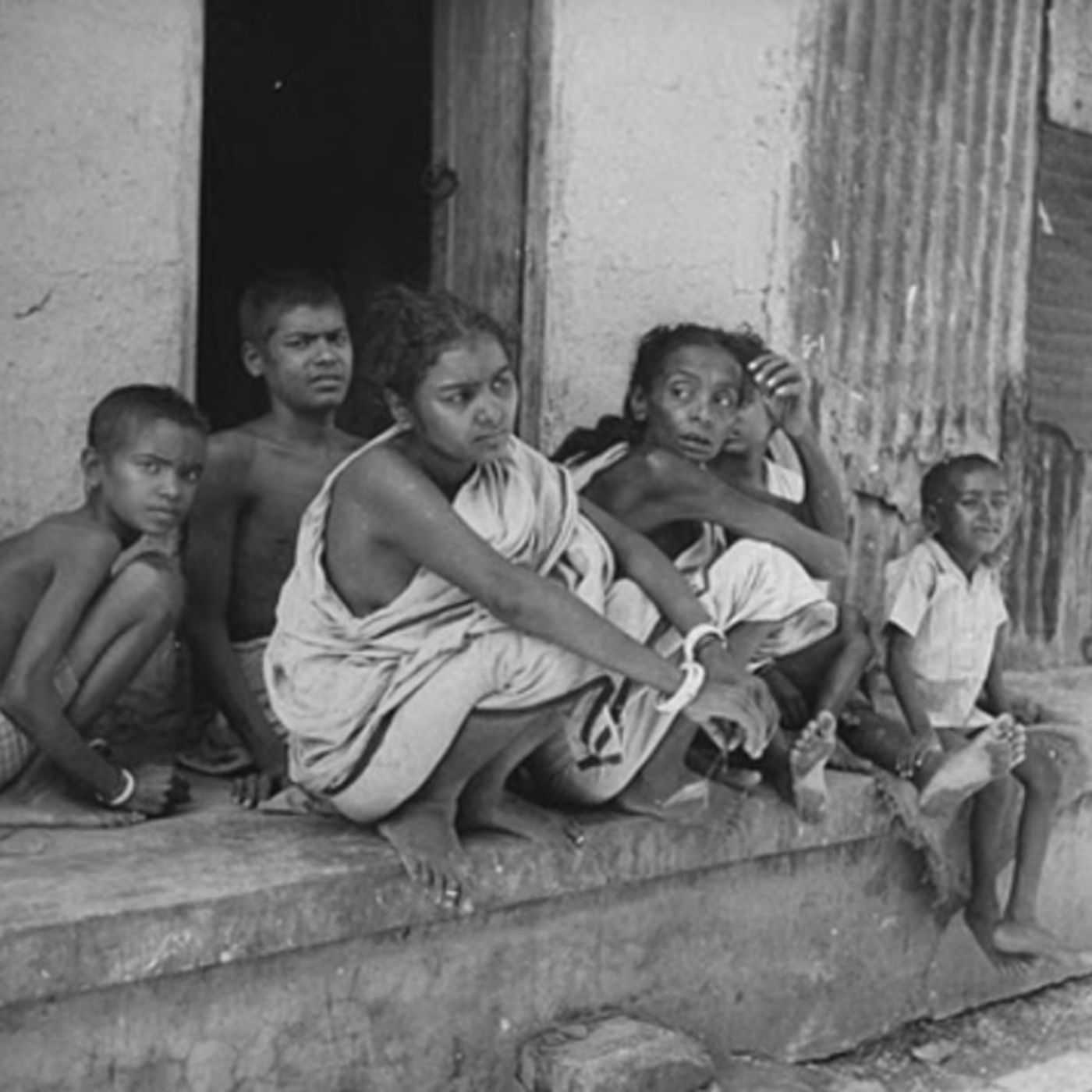
FLASHBACK: Colonialists used starvation as a tool of oppression episode artwork

EPISODE · Aug 1, 2024 · 30 MIN

FLASHBACK: Colonialists used starvation as a tool of oppression

from Don’t Call Me Resilient · host James Daschuk, Janam Mukherjee, Vinita Srivastava, Ateqah Khaki, Krish Dineshkumar, Jennifer Moroz

In this episode of Don’t Call Me Resilient, we continue our conversation about forced famine and its use as a powerful tool to control people, land and resources. Starvation has, for centuries, been a part of the colonizer’s “playbook.”We speak with two scholars to explore two historic examples: the decimation of Indigenous populations in the Plains, North America, which historian David Stannard has called the American Holocaust and in India, the 1943 famine in Bengal. According to a recent BBC story, the Bengal famine of 1943 killed more than three million people. It was one of the worst losses of civilian life on the Allied side in the Second World War. (The United Kingdom lost 450,000 lives during that same war.)Although disease, environmental disasters and famine were features of life before colonialism, decades of research has shown how these occurrences were manipulated by colonial powers to prolong starvation and trigger chronic famine. In other words, starvation has been effectively used by colonial powers to control populations, acquire land and the wealth that comes with that. This colonization was accompanied by an “entitlement approach” and the belief that Indigenous populations are inferior to the lives of the colonizer.According to scholars, prior to the arrival of colonialists, both populations at the heart of today’s episode were thriving with healthy and wealthy communities. And although disease and famine existed before the arrival of Europeans, it cannot be denied colonial powers accelerated and even capitalized on chronic famine and the loss of life due to disease and malnutrition.As the famous economist Amartya Sen has said, famine is a function of repression. It springs from the politics of food distribution rather than a lack of food. Imperial policies such as the Boat Denial Policy and Rice Denial Policy meant that, as curator Natasha Ginwala wrote: “freshly harvested grain was set on fire, or even dumped into the river.”Joining on this episode were two experts on the North American and Bengal famines.James Daschuk is an Associate Professor in the Faculty of Kinesiology and Health Studies at the University of Regina. He is the author of Clearing the Plains: Disease, Politics of Starvation and the Loss of Aboriginal Life.We also spoke with Janam Mukherjee, an Associate Professor of History at Toronto Metropolitan University, and the author of Hungry Bengal: War, Famine and the End of Empire. Mukherjee was recently a primary historical advisor on the BBC Radio 4 series “Three Million,” a five-part documentary on the Bengal famine of 1943.For more information and resources about this, go here: SHOW NOTESA full transcript of this episode can be found here: TRANSCRIPT

Vinita speaks to two famine scholars about the use of starvation as a tool in the colonizer's playbook through two historic examples - the decimation of Indigenous populations in the Plains, North America and the 1943 famine in Bengal, India. This episode is part of our Summer Flashback: it originally aired in March 2024. This flashback was recommended by Vinita Srivastava, the Host + Producer and Senior Editor of The Conversation Canada.

NOW PLAYING

FLASHBACK: Colonialists used starvation as a tool of oppression

0:00 30:59

No transcript for this episode yet

We transcribe on demand. Request one and we'll notify you when it's ready — usually under 10 minutes.

LIGHTS, CAMERA, SMILE! Creatives Club Media Lights, Camera, Smile, is a podcast for anyone with a dream to share something with the world, out of the overflow of themselves - be it their mind, their heart, their personalities, and much more. Each of us are alive in this moment in time, with an innate ability to have ideas and create various things to benefit both ourselves and the people around us for a reason, and here, you will find the encouragement, the inspiration, and the motivation to do just that. Hosted by Cicily, founder of Creatives Club, she dives into various topics surrounding creativity and business. Exploring entrepreneurship for creatives in a corporate reality, sharing tips and tricks in a media centered company, answering questions regarding what a creative actually is are just a few of the things discussed on this podcast. Be encouraged to create for yourself as Cicily gets vulnerable by pivoting the camera to herself for the first time.To submit questions for Cicily to answer, or have her address certain t Chewing the Fat with WorkForge WorkForge Bite-Sized Conversations for Building a Stronger Workforce Welcome to Chewing the Fat, a podcast delving deep into the world of food manufacturing. Dive into real conversations around critical topics like staffing, retention, onboarding, and career development in this essential industry. Subscribe now to gain insights from your peers, subject matter experts and more on the biggest issues facing food manufacturers today: -Hiring and retaining employees -Addressing the challenges of the Silver Tsunami -Improving time to productivity of new employees -Engaging employees from hire to retire And more... Tune in to Chewing the Fat, a WorkForge podcast, and join the conversation on how to build and sustain a resilient, high-performing workforce in food manufacturing. The Field Priest Methodius Chwastek The Field is a place of cultivation and of battle. In the Church, we learn to cultivate a life pleasing to God. This life is shaped in the spiritual battle. This series examines, chapter by chapter, the Christian classic The Field, by Saint Ignatius Brianchaninov. Please join me as I explain this great work in terms the modern Orthodox Christian can understand.  The 48 Laws of Power by Robert Greene (Full Audiobook) Robert Greene Amoral, cunning, ruthless, and instructive, this multi-million-copy New York Times bestseller is the definitive manual for anyone interested in gaining, observing, or defending against ultimate control – from the author of The Laws of Human Nature.In the book that People magazine proclaimed “beguiling” and “fascinating,” Robert Greene and Joost Elffers have distilled three thousand years of the history of power into 48 essential laws by drawing from the philosophies of Machiavelli, Sun Tzu, and Carl Von Clausewitz and also from the lives of figures ranging from Henry Kissinger to P.T. Barnum.Some laws teach the need for prudence (“Law 1: Never Outshine the Master”), others teach the value of confidence (“Law 28: Enter Action with Boldness”), and many recommend absolute self-preservation (“Law 15: Crush Your Enemy Totally”). Every law, though, has one thing in common: an interest in t

Frequently Asked Questions

How long is this episode of Don’t Call Me Resilient?

This episode is 30 minutes long.

When was this Don’t Call Me Resilient episode published?

This episode was published on August 1, 2024.

What is this episode about?

In this episode of Don’t Call Me Resilient, we continue our conversation about forced famine and its use as a powerful tool to control people, land and resources. Starvation has, for centuries, been a part of the colonizer’s “playbook.”We speak with...

Can I download this Don’t Call Me Resilient episode?

Yes, you can download this episode by clicking the download button on the episode player, or subscribe to the podcast in your preferred podcast app for automatic downloads.
URL copied to clipboard!