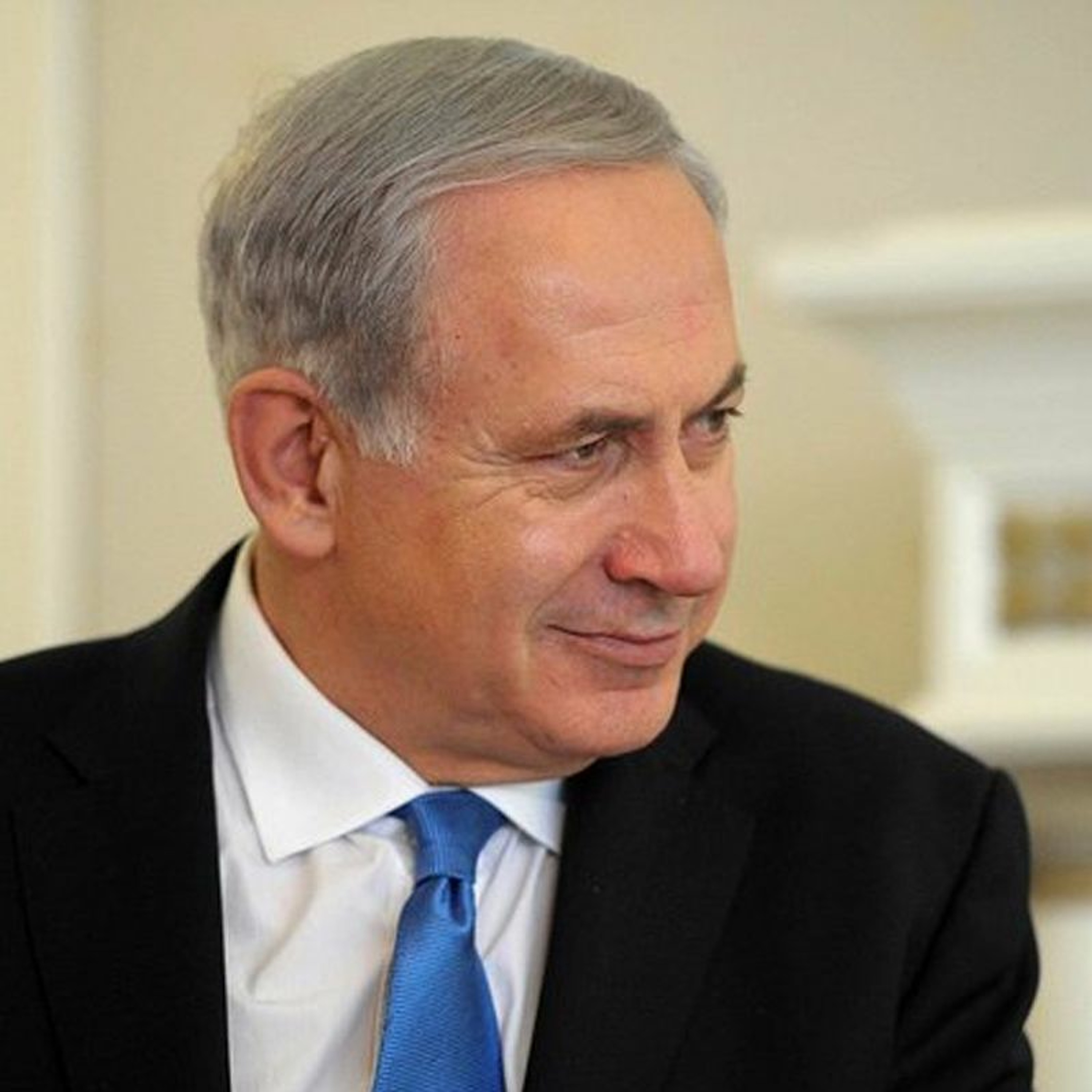
So we're here today to discuss the upcoming summit between President Trump and Israeli Prime Minister Netanyahu. So we're here today with Michelle Flournaway, CNAS, the CEO, who was recently returned from Israel and along Goldenberg, the Director of our Middle East Security Program, who has written a number of reports on this, including the U.S. strategy after the Iran deal, a security system for a two-state solution, and lessons from the 2013-2014 Israeli-Palestinian Final Status Negotiations, which are all available at CNAS.org. So Michelle, let me start with you.
You're recently returned from Israel. What are your impressions from being on the ground? Well, first of all, I think this trip comes in a very interesting time in terms of the domestic political context in Israel. Beebe Netanyahu has been Prime Minister, seems like forever.
He's been sort of seen as undefeatable, and yet now for the first time, he is facing two very serious corruption charges, cases that are being pursued against him. And so what was interesting when I attended the INSS conference was just about every politician who came to speak when they spoke, they seem to be running for Prime Minister. So there is some sense of vulnerability for him, which is not something he's had very often in recent years. But more prevalent was the political reaction in Israel to Trump's election, and it really spanned the spectrum.
On the far right, you had something close to an initial sense of euphoria that all constraints were off. We could start thinking about annexing territory, pursuing settlements unchecked. This perception that the U.S. would no longer put any pressure on Israel whatsoever on any issue.
On the left, and in the center, I think you had a little bit more uncertainty and anxiety about, well, where would that take us? I think there's a still pretty strong consensus inside Israel for a two-state solution. But the debate that's emerging is if the right were to pursue a number of these unilateral actions, what's the end state of that? What does that take Israel long-term?
I think what was probably underestimated in the discussion in Israel is Trump's unpredictability. And we've seen even since in recent days new statements on his views on settlements, on the embassy and so forth, that maybe contrast with some of what those around him, some of his advisors have said, which had contributed to this sense of euphoria on the right. I think they've also not really thought through how Trump's moves in other foreign policy areas might affect Israel's interests. For example, what if Trump pursued a deal with Russia on Syria?
Is Israel's interests on the outcome of that deal fully in mind when that's negotiated? The last thing I'll say is still very high confidence across the board, and I think rightly so in the security relationship. President Obama left an unprecedentedly strong legacy in that regard. Everybody expects Trump to maintain that despite his rhetoric about America first and his general skepticism about U.S.
security assistance to allies. I think everybody expects that Israel will be treated as an exception. And then lastly, expectations are very large in terms of how U.S. policy will change on Iran.
Let me stop there and let Iran. And, along, let me follow up then. What does Prime Minister Netanyahu need out of this meeting? And then what does President Trump need out of this meeting?
Well, I think Prime Minister Netanyahu is going to show up and, first and foremost, focus on Iran. That's what I expect issue number one to be for him. He's indicated that all along. He, in some ways, is his way off.
He's been chasing it for a long time. I think you have a lot of security officials who are recommending to Netanyahu that maybe he not pursue this approach, that he continued to, that he support the agreement or at least look for other areas to focus on. But Netanyahu has said publicly and privately that he plans to encourage Trump to renegotiate the agreement. It's not exactly clear how Trump administration is going to react to something like that.
Publicly, Netanyahu has been, or Trump and his team, have been supportive of pushing back on Iran. The president discretists as a nuclear deal, but you've also seen them say that they're going to respect the agreement and keep America's word. So we're going to have to see about that. On the Palestinians, I think it's going to be even more unpredictable and unclear.
As Michelle referenced, we had this interview that President Trump did with the Israeli at Paper Aesrai, Al-Mashal-Din-Adelson's paper in Israel. And the language there on settlements was pretty interesting. He seems to be criticizing settlements, but at the same time leaving the Netanyahu government a lot of flexibility with which to continue to build pretty much everywhere in the West Bank, just don't build new settlements. So importantly, the language on settlements does not say don't build in areas where we expect likely you're going to have to evacuate.
Still okay to build there and continue to build very deep in the West Bank, just don't start any new settlements. So in front of the other one, somebody's got a dream scenario. He's looking for some criticism of settlements that he can take to check his right wing, because he's worried that if they go too far, you're going to end up with an international backlash. On the other hand, he wants the space to be able to build where he wants to build.
And so I think that that allows him to do that. The other thing I'll say when it comes to the Palestinians on the Jerusalem embassy and the decision by the US to move the embassy to Jerusalem, it's clear that that seems to be being punted by the administration. Netanyahu, my guess, is not going to say anything about that. He's going to basically, by not saying anything, he's going to indicate that he is planning on not making this a big issue.
That's the hint. But he can't actually come out and say, I'm against this. If he comes out and does that, I think he puts himself in a politically liable situation. Then the other thing I'll just say with the Palestinians is the Trump team has said, at the least there have been some indications that they're going to try to do this negotiation with the Arab states, bring the Arabs into some kind of triangle, then with the Palestinians.
I think that's a good idea, that the Arab states and Israel have a lot of interest in common. But I just don't see it working with this Israeli government, because the Arab states are going to need some kind of a political concession from Israel to the Palestinians in order to be able to take a relationship more public. There's a lot that you can do, Israel, US, Egypt, but expanding beyond that into Saudi Arabia, UAE, other countries, much more questionable. Finally, I think, as Michelle mentioned on Syria, that'll also be an issue.
I think if Netanyahu is wise, he'll come and at least lay out some red lines for what Israeli positions would be in the event of negotiations with the Russians. And the two big ones I see are ensuring Israel still has a freedom of action to take action against and strikes against weapons that are being moved from Damascus into Lebanon, as well. And the other is ensuring that border between Israel and Syria, not something that's been jointed in Syria, is controlled by, not controlled by either IRGC-Kud-Swarz or al-Qaeda or ISIS. And right now it's controlled by moderate opposition groups and keeping those groups in place should be part of any negotiated now.
And so maybe I'll stop there. Sure. Let me ask both of you, given how much of JCPOA is more or less locked in, how much room to maneuver, do Trump or Netanyahu really have vis-a-vis Iran? I think that, you know, on the one hand, the JCPOA, I like to say, is a lot like the Obamacare of foreign policy.
They talk a lot about unwinding it and breaking it apart. It's really difficult to do, even if you don't like it in the first place, because it's not just a deal between Iran and the United States. It's a deal between the United States, Iran, and all the great powers. So I think they're going to run into some serious complications there.
But it seems like the way that Trump and Netanyahu might try to unwind the deal is just being really tough on the Iranians and trying to force the Iranians to walk away from the deal. But they're doing it, at least thus far in such a hand-handed and clumsy way. I mean, when Trump comes out and criticizes the agreement, when Flynn and his public statement says that we don't like the deal, that Iran is on notice. Well, I think Iran is on notice is okay if you have a plan for what you're going to do if we violate that notice.
But I think criticizing the nuclear agreement is a big problem. You should say we're going to abide by the deal. That should be the public American posture, even if you want to kill the deal. That should be the public American posture.
Because the signal that Trump is sending when he does this and Flynn and Netanyahu is to the entire world is if this collapses, it will be up all because we wanted it to collapse. And I think that based on the confirmation hearings for people like General Mattis or Sajatramatis, Sajatramatis, Sajatramatis, even Mike Pompeo, they've suggested that their advice to Trump will be don't rip up the deal. If you want to get tough on Iran, there are all kinds of things that we can do to put pressure on them for their destabilizing activities in the region. We can work much more closely with Israel on countering Hezbollah or the goods force or proliferation and activities or so and so forth.
And the same is true with the Gulf States. So there are ways to get tough on Iran without taking the constraints off of Iran's nuclear program, which would not serve anybody's interest at this point. And what are the ways to gain leverage over Iran or to push back on Iran? Do you see Netanyahu pushing the US to do that during this summit?
Yeah, Iran's written a report on this all at hand. Yeah, sure. How to push back on Iran? I mean, I think the most effective way to push back against the Iranians is in the region.
That's the area I get most concerned about. Iran's support for terrorism, Iran's support for proxies. And we're a lot less about the ballistic missiles, even though everybody focuses on that ballistic missile is not nearly as meaningful if you're not going to put a nuclear warhead on it, and the deal mostly addresses that. But there's a lot of things you can do at the – you can do sanctions, which is what we all default to, but I think there's things that can be done sort of at the low grade level, things the US military could do with the Israelis, things that could be done at the intelligence level to send signals.
We had experiences like this. For example, in 2012, we had the situation in the Strait of Fort Mooza, the Iranians were conducting all the different types of operations or problematic – Secretary Panetta came out and said, this is a red line for the United States. We sent some private and public messages, did some exercises, and we had some indications that those messages got through loud and clear, and the Iranians pulled back. I sometimes sort of joke that Iranian foreign policy is sort of a little bit like four-year-old foreign policy, like test, test, test.
It's a brilliant strategy. It's not meant to be condescending. I think I'm important to note that. It's just test until you get pushed back.
So there's ways to do that. If you intercept weapons going – I would love to see, for example, Secretary Mattis sitting in the Middle East doing a press conference with a bunch of Iranian intercepted weapons behind him, drawing attention to this issue, bringing these types of weapons and actions to the UN, drawing attention, trying to send a signal to the world, anti-Iranians. We're getting more aggressive. We're not going to tolerate this while staying short of direct military confrontation that starts to go up the escalation line.
So do you then see anything that Netanyahu might push for where Trump might push back or Trump's team might push back that they're not willing to go along with? Do you want me to – are we talking Iran or we can talk about all of the above? So on Iran I would say, I think there's this connector right now between Trump and his advisers. So the question is who wins the argument.
I mean, even if you saw the interview with Israel Hayom, on Iran Trump and BB seem to be in the exact same place and that's not where Trump's advisers appear to be based on what's been out there. So there that could be an interesting dynamic in terms of what actually comes out of the White House. On – you know, I actually think on settlements and the peace process, they'll probably be at the same place. I don't think BB wants a settlements bonanza.
I don't think he wants to take steps like legalization bill last week. Yeah. And I would say for both sides, the primary objective of this meeting is to change the political theater of the relationship, to change the vibe, the feeling, the perception that it's all kumbaya. And so I think to the extent there are differences, they will – those will be sort of down-platers subordinated or, you know, not talked about publicly and that this is really about, you know, sort of cementing a sort of feel-good political relationship between these two leaders.
And to what extent then is this for both Netanyahu and for Trump really more for domestic audiences than even for each other? I think for Netanyahu, this is – I mean, the domestic audience piece is huge. If he wants the political relief of not having to be in constant fight with the new president, the way he was with Obama. So this has been a traditional attack of everybody on the – all of his opponents in Israel.
You know, I mean, they even tried – this was one of his cockamamie things where the Israeli left was attacking Netanyahu for a $38 billion arms deal because his policies meant we didn't get more. I mean, that's crazy to him, you know? But that's where we are. You know, for Trump, yeah, I don't know.
I mean, probably less important for him from a domestic location. It's also a great way to change the subject for a couple of days for Netanyahu. You know, when you are under investigation, your predecessor sitting in jail for corruption charges, you're now under investigation for corruption charges, having a positive trip to the United States, which is the number one ally for the state of Israel and having the headlines at home before that. You know, painting you as a statesman, that's a good day for BB.
And you think the great likelihood for both of them is that they tout this meeting is a large success? Yes. Oh, yeah. It will be a large success, no matter what.
Yeah. Sure. I'm Tracy Wilkinson from the Los Angeles Times. I'm sorry, I was doing a raid.
I was our Jerusalem bureau chief from NIH 2003. So I have a lot of interest in this topic. Can you be understanding as I came in and I'm not into the library? We're talking about how this idea of Trump and Israel working with the Arab states like Egypt and Saudi Arabia.
And you said I don't see it happening with this government. This is really good. We could do a lot of that a little bit. Sure.
I don't think that would work. Sure. So, look, there's already a lot of great security cooperation between, you know, the quiet security cooperation, especially between the ship and Israel. And that's really booming in the last couple of years.
But also with the Gulf states, in many cases. But some, Emiratis and others, more. But to take that public, they need something on the politics of the Palestinians. Let me clear, they don't really care about the Palestinians.
But, you know, when I was working for Secretary Kerry on the negotiations in 2013 and 2014, we tried to get some, basically tried to get the Arab states and the Gulf states to invest some on the Unabos. We asked about $600 million to take some pressure off. Now the $600 million, we got $100 million. This is why I'll CC got $23 billion from that same period, which seems to a clear sense of where their priorities are.
So they're happy if they want to engage with the Israelis. They realize there's value there. But they can't do it with their publics. You know, they aren't democracies, but they do not expose themselves politically.
And with Bennett and that group, you know, if you had a national unity government on the Peres-Aub, yeah, this would be great. If you, you know, LePied would be the dream candidate to do this with. I mean, if this is what Trump wants to pull, I could see a year from now. You have Israeli elections and Trump and his team support quietly rooting for LePied.
I mean, who would have thought that when this all first started? But that's what, and he's the one more than anyone in Israel carrying this mantle of the regional question. So I just, I think that most likely you walk out this meeting on the Palestinian front with ideas and maybe some commitments from the Israelis to take a bunch of economic steps. And I'm hearing that the White House is asking the broader bureaucracy to look at all those types of things.
But those economic steps, once they become politicized, they're much less likely to happen. Israeli bureaucracy gets in the way and a lot of promises get made and a lot of stuff don't get it. You know, it's a BB making any of these concessions, any of these political steps that the parents would need to be able to go public. I don't think you can do it and hold this coalition.
I mean, unless, unless you bring in hers all again. I think that that ship is sort of sailed to this point, sailed about six months ago. Okay. Do you see much movement in the next six months or a year on the Israeli-Palestinian relations or is that pretty much stuck in mud?
A second of mud, until you have your leadership, I think, on both sides. That would be my... I think that's right. I think the question is how in that period of being stuck, you know, the Israelis continue to take unilateral steps.
And the real question is how do you ensure that those unilateral steps do not further complicate or undermine the prospects of the two-state solution long-term? There are unilateral steps that you could take that would be actually be helpful to setting the conditions for a solution. But a lot of what's being pushed up, particularly on the right, would be, well, just getting a deal more difficult, even if you posited Israeli and Palestinian leadership that was willing to take, you know, had the political resolve and the political will to actually deliver the deal. And there's a very low chance I take it that those unilateral steps come up on Wednesday during the summit.
Yeah. I think some of them might actually. Really. At least on the economic side, right?
Because I think that is more doable and less politically problematic. So some unilateral steps of area C, some... Where are we to build for instance? I would be surprised that they would allow them to build them.
Maybe. That's been a big one on everybody's plate for a number of years now. So what kind of economic steps are just opening up roads? Opening up roads, allowing them to build an area C, new investments in Kinkan Daza electricity plant, for example.
You can see stuff there. You can see... It's quite a request for limitations on construction, but I don't think that that's really going to happen. Although Trump seems to be somewhat...
At least not totally opposed to that concept. You can also see more investments in security on that side of the equation. East Jerusalem could use some kind of a governing structure. You know, right now it's basically a no man's land.
The Arab neighborhoods in East Jerusalem. You know, the Israeli police don't go in there and the Palestinian security forces are allowed to go in there. And so maybe some kind of an agreement on something there. Because yeah, it's the two most dangerous things, the two state solutions are settlements and the collapse of the Palestinian Authority.
So you want to do things on both sides or strain the settlement like everybody but also try to make the Palestinian stronger. When I say building areas, I mean like building by the Palestinians in areas. Yes. You don't think that that's the least areas of what people know about that?
Here's like, they might even say that they'll allow it, but then the bureaucratic process is just so... The problem with any of these economic steps is they're actually much more likely to happen when they're quietly negotiated between Kogat and the Palestinians and nobody gets in the way. The second actually becomes a political give to the President or to the Palestinians. Suddenly there's this, what am I getting in return?
And so, and we were going to give this in the carry process. We took things that, we were advised that people not to do it, but things that we were going to do it, that we took things that were slowly starting to happen or these really seem willing to do. And so, yeah, we can make this part of the, moving forward and confidence building measures and when second you do it, suddenly it moves from quiet professionals working on it to the Minister's office and the President's office negotiating it and it's, you see the dynamic again and again and again. So, actually I'm worried.
I can see the new team making the same exact mistake now. You know, maybe comes here with a whole suite of wonderful economic things he can do. And Trump and his team thinks that's great, but it would have been better if none of it had ever been. It's a little bit much more likely to happen.
Speaking of economics in foreign policy meetings, one of President Trump's largest priorities has always been what can a foreign country, how can a foreign country help the U.S. economy. Do you see any discussion of that coming up vis-a-vis Israel? It's interesting to be a smart thing for them to talk about.
I don't know where it is in the list. I think we've got very healthy relationship and very healthy ties between particular parts of the economy, particularly the tech sectors. There's a lot of cross investment between the U.S. and Israel and the tech sector.
So that might be. I think what's striking is actually that despite the fact that Israel is the number one recipient of U.S. security assistance by far and is also probably the wealthiest country on the list. It's not going to be subject to the sort of America first, why aren't the allies doing more kind of thinking?
It's kind of the exception. You did keep it ready to do that in March, right before we spoke to A.C.I. I don't know. Yeah, I mean, it's just cura- I think it's sort of- I think the all indication so far is that Israel is sort of an exceptional case and he's not going to go down that road.
But we'll see. Sort of a good thing. It's interesting. It's so hard to parse him right now, I think, on this particular issue because you look at like free men and you look at the statements greenblaz making and you contribute that to Trump and you put them in one very specific place.
But then you see, for example, the C-Soor al-Hayom interview and it's such a different place. And it's a place he's also spoken about. And so which one is he? I think everybody is seeing what they want to see, but it's not clear.
I think the other thing is, in a normal situation, in the run-up to a visit like this, you would have a very extensive interagency process where you'd have cabinet officials and departments weighing in to develop the U.S. position and talking points and so forth and kind of get everybody on the same sheet of music. That discipline process does not yet exist within the administration. And so it's these inconsistencies, apparent inconsistencies in policy for the moment are allowed to coexist because there's no process in place to really bring into resolution at this point.
Let me ask one last question. So Ambassador Designit Friedman is supposed to have his congressional hearings, I believe, the day after in the near future. He's still tentative. One could argue that's when the rubber will begin to meet the road on U.S.
policy vis-a-vis Israel. Do you imagine the execution and the words that have come out this far aligning well? Or is that an impossible question? Friedman is a very different place than Trump seems to be on a whole bunch of these things.
The American ambassador to Israel is not the policy maker or the policy determiner ultimately. It's much more people like Mattis, Tillerson, Flynn, and Trump will be making, Kushner will be making many more decisions about American policy, the role of the ambassador is to weigh in on all those things but also to execute. Though, again, as Michelle said, without a sort of normal healthy policy process, you can see a lot of creativity. But coming on the heels of the beauty visit, I think the Israelis will rightly take their cues from what the Prime Minister hears from the President.
And that combined with Trump's statements for all of his appointees is, oh, I want them to express themselves in their confirmation hearings. And they don't really, you know, it's fine if they have different views. Those are their views. They're not necessarily speaking for me.
I mean, I think it means that wherever Friedman does say in the confirmation hearing will be that much less of an indicator of what U.S. actual policy will end up being. And I think we'll get a better sense of that from the visit itself. Any last statements or words of advice or encouragement?
This is a critical relationship. And despite all the ups and downs in terms of the political theater, I really think we should keep in mind the sort of rock solid foundation that we have in terms of the security relationship and the long-term commitment across multiple administrations. It's going to take time for this administration to sort itself out and for all of these questions to be answered. But I think the relationship is actually in a good place.
I think the biggest kind of points of concern are, you know, the Iran policy and whether these two leaders decide to go down a track that could be very harmful, frankly, to their own interests long-term. And then second, on the peace process, whether they, you know, keep their eye on the ball and make sure that, you know, unilateral actions are not taken that undermine the chances of a two-state solution long-term. Terrific. Well, thanks so much, Michelle and Delan.
We'll be doing a transcript of this, which we will send out. And we'll be making, we'll be hearing a lot in the coming days. Thanks a lot. Thank you.