If this coffee isn't good, I'm gonna be right pissed. It's been a while since we talked about my sister's case, Theresa Elor. I mean, when we get to the end of this episode, I promise I'll reveal something new about the case. This is Who Killed Theresa.
One of the fun things about doing this weekly is get the opportunity to provide, you know, to hear feedback and then respond to the feedback while it's still fresh in your mind. A lot of interest on last week's episode about the lost down military aircraft in the lake recovered by a group of bikers. I thought it would be, I thought it might tweak some interest, which is always good. You know, no one, I don't think anyone cares about a case like Andre Villett or Andre Vassart or the rock forest massacre as much as I do.
It's not gonna stop me, but I certainly know where my bread is buttered. It doesn't mean I'm gonna go full court Bundy on you, but it does mean I need to drop every once in a while. These segments, these stories that, uh, tell late. And not that there's, everything that's coming up is good, but there's one in particular coming up and about four cycles that I think you'll enjoy.
Some of the feedback that was presented, you know, from people with firsthand experience with this, people who were, a lot of people who were there, people who remembered it, it was suggested of those five bikers that Brian Powers was probably not the leader. He was more of the spokesman that day. He's the one in front of the mic who was probably leading it was Michael French and Michel Villett. And then of course they brought up the last initials, FV, Frenchy Villett, FV, I love you.
These, again, may have been the guys responsible in the cutting up Theresa Martin and succeeding her. The other thing that was pointed out was the mystery of what the heck a military aircraft was doing there. In the first place and something I didn't know was during that time in the late 60s, there was a company there in the area called Space Research Corporation, which was founded by Gerald Bull. He got cut off in his major funding from the Canadian US government in 67.
And then shortly thereafter started this Space Research Corporation at a timings exquisite because 68 is one of the aircraft crashes, of course. Responsible for basically what he did was he built a munitions factory along the Canadian US border there near Highwater or Mansonville. Many people know Mansonville. You can go down to Rabbit Hill with Gerald Bull front line years ago.
PBS front line did a documentary on him called Super Gun. He's certainly the guy responsible for the innovation of creating these long guns. You saw a lot of them in the Iraq war, I believe. And Bull had kind of a shady history of doing the US's dirty work.
He would sell munitions and arms and explosives to countries in South Africa in particular. Whether the US really had no business doing business. This kind of thing. Bull was assassinated mysteriously.
Again, it's often questioned whether he was tied to the mob, whether his hit was tied to the mob. But people came forward who had worked in these munitions factories at the time. And remembered the long gun at Mansonville, was discovered after the factory was abandoned. So as I say, you can go down that rabbit hole, which I'll spare you today.
The other thing that's brought to my attention, it should be painfully obvious. I just, you know, if it's not, Quebec is weird. You know, I didn't mean to be offensive in calling the episode, Calexico. It's quite reasoned to call it that.
Number one, in slang, it's called Calexico simply because, you know, Ontario high school students. Because, I don't know if it's still this way, but in the day, the drinking age in Calex was lower than in Ontario. So much the way you go from L.A. to Tijuana.
You know, you would go from Toronto to Montreal in order to legally drink and have a good time. The other thing is, you know, the areas well earned reputation. Montreal is an open city, referred to as a red zone, investigators referring to it as my Chinatown in the day. So calling it Calexico is, it may be offensive, but it's certainly appropriate.
The other thing is that's what cops call it. The OPP, Ontario Provincial Police, refers to Quebec as Calexico, whenever they have to get involved in a good bunk hop, bad cop situation, as they did with the Ogo for that affair. And that, you know, if you don't know, I mean from AEGOG, you know, I didn't explain it, but I've talked about it many, many times. It's a strange lake.
The lake shamp lane is more well known, but I mean from AEGOG also dips into the United States. So, yes, there are, you know, there's the smuggling element there. Long tradition of smuggling to places up the lake, at Nolton Landing, Brian Landing, these places. I mean, I can say it now because it's no longer the case, but for years, recently I had vacation at Vale Perkins, which is across from Georgeville where the plane crashed a little south.
And if you're on the lake in Vale Perkins and you need provisions or something, you really have two options. One is to go north to AEGOG, to the metro state, you know, the metro grocery store. But that's a longer hike. The more expeditious route is to cut on over to Masonsville, or Masonsville.
It keeps Masonsville. It keeps Masonsville. You know, and you know, that's where Bull's munitions place was. And it's weird.
I mean, if you cross the border, we'll get to smuggling. I'm glad somebody brought up the smuggling trade across the river because we're going to get to the smuggling element eventually. We're just not there yet. You've got to be a little patient.
But if you cross the border at Champlain or Kingston or Buffalo, that routine is, you know, they're the kiosks and it's very ordered and very well-resourced. You cross the border at places like Stanstead or Masonsville or Stan Hope, if you're coming south from Lennoxville Compton, East Teriford, these places, it's a very porous border from Quebec into New York State, Vermont and Maine. Ontario has no knowledge of this experience because 95% of their border is a lake or a river, not the case in Quebec. So there's a long history of shady operations going on between across the border into the country, which has led over the years to all kinds of conversations about an international serial killer and things like that.
Or is something as innocently as we talked about with Tracy Wing, I think when we had her on, when I was a kid at hockey camp in Stanstead, you could just walk across the border to the other American candy bar. No one was going to blink an eye or stop you or anything like that. So we're going to get into this because we're going to, you know, for a while we've been in Montreal for the large part. I don't, not really intending to return to Montreal.
I want to stay in the eastern townships, Canton-Leste S3 for a while here. And I have an intention behind that. I have no desire to reveal today. Your job is to be entertained and engaged and to come along for the ride.
My job is to make sure that all of that is engaging. So for today, let me start by saying, yeah, the journey here for a while is it's going to be much more episodic and seemingly random. It's only after you take several bites that you'll realize that there's an association with intention behind the stories I'm telling. So although a downed aircraft and bikers recovering it in 1976 may not seem directly related to what we're going to talk about today, in a sense it is.
And this has come from a lot of work, not only from me, but from some very gifted and dedicated listeners who wish to remain anonymous. I'll respect that, who kind of helped me distill down some of these stories that I've heard and read and experienced over the years. And what I'm going to do is report out of course the best stuff. So it's a little like dumpster diving, right, except you don't have to do it.
I've gone through the trouble of sifting through all the crap and I pulled out all the best stuff for you. And that also means that not everything we talk about is going to have a neat conclusion. So last time these bikers recover a safe and an old plane. So what's in the safe?
What does it mean? Somebody posted online, well there must have been drugs in the safe or in the plane and that's what they were after. Because that was the game in the 60s and 70s. Why else would they be there?
It wasn't prostitutes. So it must be drugs, counterfeit money. That was a big trade. It can only be a couple of things.
What's in that sort of Kiss Me Deadly Briefcase, the Pulp Fiction Briefcase, it can only be a limited number of things that is shining back at you. But we're never really going to know what they are. I don't know. I don't know the purpose of that story.
If anyone has seen the movie, Shop Around the Corner, it's Ernst Luebitch film, which I watched in the Holiday because it's also Christmas movie. Pepe, who's sort of the lowest guy on the ladder in that movie. It's all very class oriented that way. In a very sophisticated way that only Luebitch can do.
At some point Pepe says, draw your own conclusions. And that's what I would say to you. What does it mean? I don't know, draw your own conclusions.
In regard to my sister's case, there's one of the theories that have been put forward, of course, and it's in the book. I wish you were here. Is that a serial killer by the name of Luke Gregwar, who grew up in the townships in that era and had a history of crime and violence in the area. And then later went on to murder in Calgary, that he murdered three women in 1977, 1978.
Louise Cameron, Madame du Beis, Theresa Lour. And the reasoning behind that is, in the words of a very prominent Canadian criminologist, it's statistically improbable that he didn't do these things. Because this type of murder is fairly uncommon in the area. And serial murder is, despite what the headlines may tell you, is pretty uncommon.
And it's pretty uncommon in Quebec, from what we know. And that's an idea I floated, but I'm capable of holding two ideas in my head at the same time. So I'll float another idea at you. That in the face of that, it's equally possible that all sorts of people were getting away with very bad things, including murder, in that era of these three murders.
That also is a possibility, because it's Cabexico. It's the view and the narrative history of that place, flies in the face of things like metrics and statistics and probabilities. You need to throw all of that out. You need to throw out criminology 101, because you really don't understand the place.
Two ideas in conflict with each other. Now, one of the theories that has persisted over the years that I've never really gone into in detail is the theory of a foliade de more than one offender, committing these murders as a shared escalating experience with one partner, in some cases, being more dominant, possibly older than the other. Classic foliade can be seen in the Papain sisters, two maids who murdered their employer in La Manos France, 1933. The case became the subject that Jean-genes play, the maids.
I don't know if there's a documentary on the Papain side. There should be. It's a fantastic story. The most popular, well-known American version of this foliade is the murder of the 14-year-old boy by two university Chicago students, Sleepled and Loeb.
The most popular thing that I've ever seen in the past is that they did it for kicks, just to prove to themselves in some sense that they could get away with it as a sort of rite of passage, not unlike what we know of biker gang initiation rituals in that era. In the classic foliade, it's never entirely clear, which of the partners is in control, but there always seems to be this element of one person dominating and then aiding the other one on in a shared psychosis. In the case of the Alfred Hitchcock films rope strangers on a train, the one foliade that we've talked about fairly recently is the case of the twin New York gynecologists Stuart and Cyril Marcus. In this case, the drug addiction moved them to a symbiotic self-destruction and suicide is made popular in David Cronenberg's film Dead Ringers.
The foliade theory was introduced to me very early in Theresa's investigation shortly after the publication of the Who Killed Theresa Stories in the National Post in 2002. A woman came forward with this very, very strange tale. At first glance, it appeared unrelated, it appeared to be out of time, out of place, and out of character, but she felt that it might have been connected to the township murders of Elor, Jubei and Camarone. And this is this is this story.
In the summer of 1976, this woman was a teenager and she's hitchhiking with friends along, she says the highway, but at that time it would have been Sherbrooke Street, I believe, in Montreal's East End. And they're headed in the direction of what today is Canadian forces based longpoint, which is on the shore of Lake St. Lawrence River, just before the intersection of the city of St. Lawrence River.
Just before the intersection of Route 25, and they're picked up immediately by two men, a young man with a military haircut who was driving and an older man riding in the passenger seat, dressed in a suit with greased back hair. These two girls, they climb in the back of this, what is described as a brown American car with construction rags hanging out of the trunk. Almost immediately the older man reaches in the back of the car and he knocks the girls heads together and he begins beating them. He tells them that they're going to die and at this point the girl who told me this story, she sticks her cigarette in the older man's cheek.
The two girls jump from this moving vehicle, so shades of the Peggy Coleman case here, which is 76 Coleman, happened in 70, 71, and they try to hide in a nearby field. The vehicle turns around and it makes several attempts to run them over before racing off into the night. A couple of things for dis replacement and things like that. CFP Longpoint, I believe, is where Dominion Park, the amusement park, was at the turn of the century.
Dominion Park has kind of forgotten. People remember Park Le Fontaine when it had rides, it doesn't anymore. Belmont Park on the north side of the island, which was then eclipsed by Laurent amusement park during XO67, but the original amusement park in Montreal was Dominion Park. They had a flume and exhibits and things like this.
That was at CFP Longpoint. The other thing I think is interesting to track. This is the summer of 1976. This same summer of the bikers recovering the plane, that was June 76.
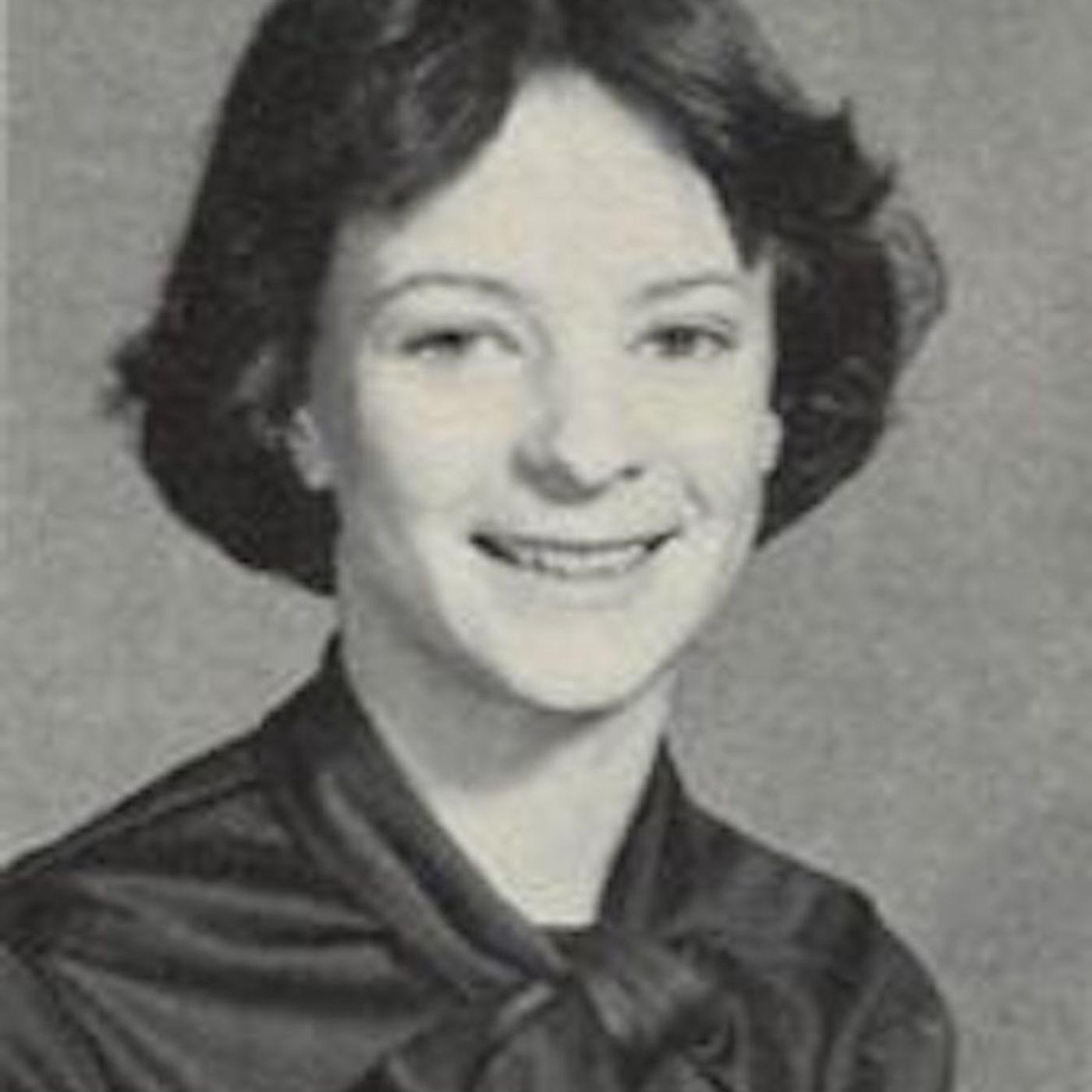
Summer of 76, my sister would have just graduated from high school in Daphone comprehensive high school in the west island of Montreal. I've posted a photo of Teresa from that high school yearbook on the website, www.tereceller.com. I've never published this photo before. I'm a little tired of the stock photos.
I certainly don't want to reveal every photo of my sister. There's some that are just for the family, but this one, because it was public, it was in a yearbook. I thought it would be interesting for people to see. It gives you a different look.
She's got a short hair in this. That is also in the summer of 76. She's graduated from high school. I'd say that this horrifying account captures your imagination because it contains elements that hint at the narrative threads in the Allure Camera Survey stories.
There is a young man with a military haircut and a car going in the direction of the Montreal Canadian Forces Base, CFP Longpoint. We know that in the summer of 1976, Summer of the Montreal Olympics, Cadets from the Sherbrooke-Hissars were sent to Montreal to work at the Longpoint Base, building like lockers and making themselves busy in preparation for the Olympic Games. I posted a photo of that online of a couple of Sherbrooke-Hissars, Cadets working the Olympic Games. Luke Gregoir, we just mentioned, may have been one of those Cadets with the Sherbrooke-Hissars.
We definitely know that Louis' camera worked for the Hissars at that compound in Sherbrooke. So is it possible that Luke Gregoir was the young man at the wheel of the car in this Montreal 1976 attack? One of the reasons the Faliadu is so compelling in the case of Luke Gregoir is it helps to justify one of the major obstacles in the theory of him being the murderer of Theresa Lour Menel De Bay. Louis' camera, his age.
In 1976, Luke Gregoir would have been 16. Certainly the right age to be off for a summer in Montreal doing cadet training, but is that the right age for a murderer? And if the theory holds, Gregoir was just 17 when he committed the brutal sexual assault mutilation and strangulation murder of Louis' camera. That's not impossible, but it's troubling.
However, I'd remind you that Richard Bullion, long suspected in the disappearance of Julie Seprano in his deathbed confession, he admitted to her murder. And Bullion raped dozens and brutally attacked dozens of young girls before the age of 16, so not impossible. But the probability that it's Gregoir is elevated if we consider that Gregoir may have been groaned and tutored at the hands of an older, more experienced offender. So if this is Gregoir in Montreal in 1976 in this car abduction case, and I don't think it is, maybe clear on that.
We're just doing an exercise here. But if it is Gregoir, then who is the greasy older guy? Someone once suggested that it might have been Jean-Luc Pulio, the patriarch of the Pulio clan, thought to have orchestrated the shotgun murders committed in Compton in 1984, recall that my sister was found in Compton. And it's an interesting idea, all kinds of curious associations.
The Pulioates had a cottage on Lake Man from Aigog near where the body of Louise Kenro was found. Ultimately, I do think that this running with this theory is a case of cherry picking, people to fit the information. We know Gregoir, we know Pulio, because I've discussed them at length, so now we put them together because they're offenders that we know. And in an answer to that, what I would say is I can tell you of hundreds of older and younger guy offenders combinations in the Eastern Township, Sonera, who could equally qualify and be considered as possible suspects in a folio death.
And I'll leave you with one further thought before we move on. Although I do not think that Gregoir and Pulio were the pair in the 1976 Montreal Folly Order, simply by introducing that possibility allows for that idea to penetrate your imagination. Perhaps a better approach, and this is an exercise I went through, was to look at some of the cases we've covered in the 70s and consider which of them may have been committed by more than one person. Sharon Pryor, from Montreal in 1975, seems like a case of more than one offender.
It's believed that she was held captive for a number of days before being dumped in Long Gay. Louise Kenro is very similar. The dump site is near Meghog, it's not where she was tortured and murdered. And in both those cases, Pryor and Kenro, police have always held the contention that more than one person committed those murders.
Jocelyn Huul, who disappeared on a night out in Montreal, she's last seen at the Old Munich in 1977, this appears to have been a gang rape. She was dumped in St. Calixt, where many bikers lived and were known to dump bodies. And so I put a little table on the website, but I can just explain it to you.
It's not very sophisticated. I put a pivot table online, which you're welcome to peruse. No, table is generous. It's two columns, okay?
And I put some victims into two groups. And it's not all the cases, just a couple of cases that I thought it would be interesting to play around with. And if there's some case that you say, well, surely you must consider that. I don't know anything.
If I didn't put somebody up here, don't be offended. It's because I've not made up my mind where they fall. But when you look at these two groupings, something else becomes really apparent. So in the single offender groupings, where I believe it was only one person who committed the crime, and that I include Catherine Hawks, Lise-en-Dley, Nicole Goudreau.
These are all urban murders. They all took place in Montreal. And then the more than one offender groupings, they're all rural, Sharon Pryor, Lise Cameron, Jocelyn, who will treat Elor. And in considering this, I would say that it's easier for one person to commit a murder in a city.
The work can be done undetective with all the the muscle and the pace. You can be on your way on a bus or a metro rather quickly. It also implies something perhaps of the motive, perhaps a personaging that escalates or a personage that is the initial justification to mask a more sexual intention. I believe in all of these cases, Hawks's purse was missing.
There was a place where Blaise-pers is missing. Goudreau's, I don't quite recall. And we don't put a pin on that too closely because what I'm going to say is going to fall out of line. We get to the next group.
The other group, where I think it's a group murder that is rural, it suggests the joyride, the gangbang, something that's done for kicks, because these women were expendable. As I said, I don't want to get too attached to these distinctions. A big outlier. He's constantly the outlier that I go to when people say, well, surely this is a trend.
And then I go, yeah, what about Gikrutto? He can be used as an example for all kinds of things. Gikrutto acted alone when he murdered in 1987, Sophie Laundry. He picked her up at a long day bus station and he stabbed her 173 times and he dumped her in a cornfield north of Montreal.
Not that far away from St. Collex. And from all we know of Gikrutto, who's currently serving a life sentence, he was a one guy murder. Why might my sister Theresa Lour be a matter of a foliar du?
Why not? And why not? I'm slightly embarrassed to admit this, but in the early 2000s, I consulted a psychic named Lori Campbell. She's known for, she's profiled in the book The Afterlife Experiments.
And I did a session with Lori. I think I paid her $200. And she described Theresa as being picked up just outside of King's Hall, the residence she was staying in at Compton. In fact, in what she saw, she was picked up right at the mailbox, actually, which is still there to this day.
It places creepily untouched. And there was a large car with more than one person in it, and she was persuaded to get in this vehicle. We all know, take that with a pound of salt. It's just information.
It's not evidentiary. And I've sat on that for a while. I don't even think I told the police that, because what are they going to do with it? I think the more compelling reason to believe that more than one person was involved in Theresa's murder is because of what the evidence tells us.
We know she was last seen in Lennoxville. We know she wanted to get to her residence 10 miles away in Compton. We know there was no bus service, and she didn't have a car. And we know she was prone to hitchhiking, which you did in that day.
We also know that over the years there have been several first-hand reports of horror show hitchhiking experiences along that Lennoxville Compton corridor that ended in sexual assaults or attempted sexual assaults. Most notably, the account of Catherine Dawe, which is in which she was here, was orally raped in the parking lot of King's Hall in 1977. Finally, we know this. We know that shortly after the publication of which you were here, the Quebec police received a phone call from a witness documenting something they observed in the fall of 1978.
And the Sartagia Quebec considered this account very credible. This person was driving in the area of Lennoxville, Compton, as I say, in the fall of 1978. And they observed a vehicle with three individuals inside, chasing a young woman who was running down the road screaming. So that too is just information.
And now that terrifying idea is out of my head and into yours. This is who killed Theresa. If you like the podcast, you can follow us on social media. We're on Twitter, Instagram, Facebook, etc.
Let's go to the website so you can hook yourselves up through that. Other news, I started a French podcast. It's all in French. I started.
Basically, I translate the text. I send it to Tracy Wing. Tracy Wing is the host. I kind of do a little soft shoe intro outro in my broken French for it.
But then Tracy takes over and does a French version of these posts, giving her own thoughts or personal angle to it. And it's really good. There's a number of reasons why I wanted to do that. So she records that she sends me the file.
I put it up. So far it's not catching on like wildfire or anything. It's a slow build. But it's often difficult to penetrate that market.
Tracy is wonderful. She's the mother of Riley Ferrum, who we had her on this show to talk about the murder of Riley shot by a surthicabec police officer. And I had the opportunity to meet Tracy over the holiday. Here's something nobody knows.
So I met with the South Daticabec in December. We met at their long gay offices. I was not alone at that meeting. I met with two cold case investigators.
Tracy was with me. I wanted to bring one other person just to kind of like be above, not to not be in the discussion, to be above the discussion and to take notes, which she did. It was my first time meeting her in person when she walked in the door. I didn't know where she was.
But so in meeting her and then we met later again in Nolton, where the Nolton-Brom area where she lives, decided that this was a good fit, that this was the right thing to do. She's the right voice to carry this message. So it's called a kenexiek. It's a good name.
It's a sort of sham FM name when they used to do like, I think on Sunday nights they do all French programming. Kebek-Seek, don't go, mitt-nong, shansel-hot. Say, armonium, pewee, bitteth-lamp-ed, oftenbak, yseo, kebek-seek. So yeah, that's my routine.
So kenexiek is the French podcast now. You can find that on, well, you guys are all anglers, you don't care. But it's also on the Ricker platform available on Audible and Spotify. It is the same deal.
It's all produced through the same podcast platform. I've done a soft opening with it. I've not really gone full-court promoting, because I want to build. There's two episodes, two episodes so far.
Mirror these two episodes with slightly different flavor, because it's a very different host, obviously. And that's great. I hope Tracy continues it. We'll see how long we'll be able to keep up the pace, the momentum of things.
That's it. I think for today, I kind of jipped you, I feel, last week. I want them to be shorter. I don't want them to be that short.
Wait, was it 12 minutes or something? I think the sweet spot would be about 30 minutes. I don't know how this is going to turn out, but that would be good. This is Who Killed Theresa?
I'm your host, John Alor. Have yourselves a great, great day.