
Meet Shark Cryoglo, the new medspa inspired mask with under eye cooling, IQ LED technology, using high-powered LED and deep infrared for visible results in just eight weeks. Better aging treatment boosts collagen and is clinically tested to reduce fine lines and signs of aging. Skin clearing provides chemical-free acne treatment on and beneath the surface, and even visibly tightens under eyes in one use, developed with dermatologists for radiant results at home. Learn more at sharkninjot.ca.
While every other channel is finding for your customers' attention, podcasts are where they've already given it. No one accidentally listens to a podcast for 45 minutes. They choose to be here. They trust the voice in their ears, and when that voice talks about your brand, it doesn't sound like advertising.
It sounds like a recommendation from a friend. ACAST gives you that trust at scale. Digital precision, post-read authenticity, and performance data that proves it worked. Don't fight for attention.
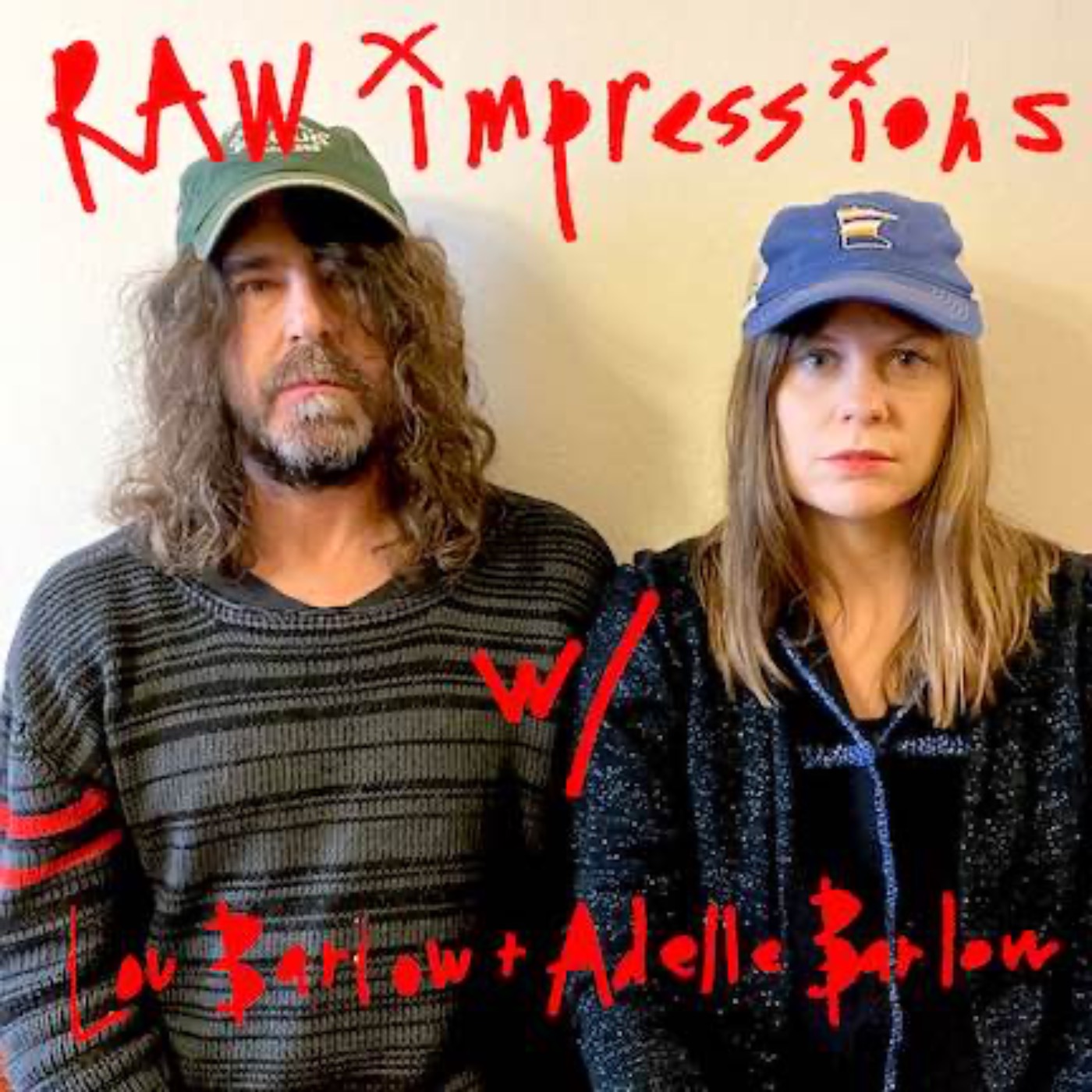
Buy it with ACAST. Learn more by visiting ACAST.com slash advertise. Hello and welcome to Row Impressions. Hello.
You're frozen for me, so this is sort of like a flashback to. We're breaking up. We're- we're- we're- we're- we're- we're- we're- we're- we're- we're- we're- we're only referring to the audio in our podcast. We are not literally breaking up our audio.
Our audio is breaking up. Well, you're not even breaking- I mean, you're just simply frozen. Am I moving for you? Yes.
Okay. You're just like, you're stuck in this position where you're like playing- The bell is not moving out. The bell is not moving out. I know you're feeling stuck, but But, um, and we're breaking up and give frozen.
I worked out a whole new intro to the episode. Great. Now give me all give me your impressions. Now I know I'm under the gun.
I can't remember what I was going to do. Oh, I hate my brain. I hate my brain. Why does it work against me?
I'd worked out this whole new song and then I was going to play it just now. And it all flew out of my head. Now give me all give me your rock. I can't even do that.
I feel like there's something wrong with my brain. Well, I can tell you that you're frozen. I want to see. He's an experimental folk artist named Sam Amadon last night.
Yes. Yes. And I went. There's an article in the New Yorker about him right now.
And I didn't read it. All I did was read the introduction to the article and it said experimental folk artist Sam Amadon visits New York or he was he got a new album out. But there was some article about him hanging out in New York. It was like in talk of the town or something, right?
No, there's a little drawing of him. But I was I was so I was like, what is experimental folk? Because when I began playing my when I started when I adapted a baritone ukulele to my own little special tuning and put my little special strings on it, I considered myself experimental folk. And I to this day, I'm the only person that has ever referred to my music as experimental folk.
And I have to admit that I was jealous that there was someone in the New Yorker being referred to as experimental folk. So I decided to find out more about Sam Amadon. I've heard about him before. I heard his name.
He is from Rattleboro from a family of musicians, the Amadon. That's Vermont. Vermont, Rattleboro, Vermont. So I went and I started listening to his music and I kind of fell in love with it.
I fell in love with the music and I understood why it was experimental. And then I understood why maybe I was maybe me considering myself experimental folk is a stretch or it's just not obvious or it's not my it's not my time yet. Anyway, so it turned out that he was actually playing in London last night. Mm hmm.
Because I just kept following these breadcrumbs about Sam Amadon. As we do we do. And I bought tickets for a show, but then it turned out that I bought tickets for the wrong show for tonight. You brought tickets for tonight, right?
Which are playing a show tonight. So you can go. I can't go. So but I was able to cancel them online, which was actually a great relief.
That is nice. And then I was like, okay, I contacted Vanessa or junior, Junior's booking agent. Actually, he's my booking agent. He's been my booking agent for since the 90s.
And I said, Hey, I never do this. I was like, Hey, I really want to go see Sam Amadon at Stone Nest last night. Sure enough, they got me on the list. And not only that, they said, make sure they want you to say hi afterwards.
I'm like, they it's like Beth and Sam. That turns out that he's married to Beth Orton, who is also could be very well and accurately described as an experimental blood guard is I would feel comfortable calling her that. Yeah. So music is really dreamy.
And it's been consistently interesting and dreamy for a very long time. So I was like, what? I'm like, I don't, you know, so I went and I took I took Jake our guitar roadie. And boy, it was a good show.
And he played with a drummer and the standup bass player. So there was a jazz element, but I wouldn't say it was jazz. I would say it was the drums and the bass were there to color, create the sort of impressionistic backdrop to these traditional songs that he was playing. What was his main instrument?
He went between violin. Oh, and saying, well, playing violin. Yeah, he would sing and play violin. And then he played banjo.
Nice. And he played guitar. He sang and it was great. That's really great.
And then yesterday, while I was when I read about him and I was listening to his music, I started I just wrote this rip. Because I rarely do stuff that is like, I I I I prevent myself from playing things that are like really folky sometimes. Like I don't want to seem to. That was lovely.
Like I'm affecting that, but I do. But that stuff kind of comes natural to me. So you fight things that come natural to you instead of just why don't anybody think I'm being pretentious? Wow.
OK, how are those thoughts helping you? Oh, they're not at all. For the whole song, I was going to play for the introduction of the of this Ron Prussian podcast. And then I tried to start playing in my brain.
I can step right in my way and said, fuck you, Lou. That damn. I remember that. You and I have been discussing this.
There's so much there's we've even tried to sort through information where we feel like we're kind of bombarded with information. And it's hard. It's been hard lately to kind of sort through to know what to listen to, to know what to do. And this could be just little things like picking something up off the floor.
It could be writing an email. It could be anything doing something to make you to be a better parent, to do something to be a better friend. You know, there's, I don't know, there's just there's a lot of information that we came through. I'm having a hard time prioritizing that information and beginning.
So yeah, it's. I mean, like a heightened kind of mental and emotional state right now where I have an overwhelming number of thoughts that I'll feel really highly important. And then they are there with these feelings that are really heightened as well. And I'm yeah, I mean, like a weird place, you know, so I'm sure I mean the rest of the world.
But that's just how I'm feeling. And I'm you're feeling a lot of feelings too. I always feel relieved when I see that your ukulele arrived in one piece. It's totally it's this one's actually broken.
It's cracked. I bring this one because it's the way it's my. It's already cracked. What do you call like a car that you're like a junker?
What's what's that? What's that? Is that your road ukulele? Yeah, beater.
Call it a beater. You know, like it's like the car you inherited from your brother and your like, a company. Now, give me all give me your impression. Now, tell me all that you want me to know.
I am in London, you're in Massachusetts. I am your husband. You're my darling wife. You are safe here.
I'm me and I am safe here too. And soon I'll cross the ocean. Soon I'm coming home to you. Planes are safe.
Don't worry. Safer than cars or bikes. We can speak across the ocean. It's the miracle of modern life.
Me all give me your impressions. What sort of it? That was lovely. That would be great to hear a whole song of that.
Yeah, done traditionally like folk with like maybe some banjo added. That would be so I love a banjo. So I think I got to get a banjo. And I know the banjo that I want to get.
There was a guy years ago, I played a banjo that had nylon strings on it. And this has nylon strings and there's nylon. Of course, it's like a soft strings. It's kind of meant to they used to make these strings out of gut, like animal gut.
You know, that's what things were. So banjos would actually have gut strings. And I'm sure you could still probably get them. But I mean, probably sound great.
That's not. But a long time ago, I was in a very famous guitar shop in Nashville called Grunes and they had these neat shark cryo glow, the new med spot inspired mask with under eye cooling IQ LED technology using high powered LED and deep infrared for visible results in just eight weeks better aging treatment boosts collagen and is clinically tested to reduce fine lines and signs of aging. Skin clearing provides chemical free acne treatment on and beneath the surface and even visibly tightens under eyes in one use developed with dermatologists for radiant results at home. Learn more at sharkninja.ca.
Great question. When was the last time a display ad changed your mind? Now think about the last time a friend told you about something they loved. Different feeling, right?
That's how podcast advertising works. A host who's built real trust with their audience talks about your brand and their own words and their own voice. It doesn't interrupt the experience. It's part of it.
With a cast, you can access the world's largest podcast marketplace. Choose the right shows, the right audiences, the right format. Then watch the data to tell you it worked. You're not buying impressions.
You're buying influence. Learn more by visiting acast.com slash advertise. Nylon string banjos that sounded like they were from fucking Mars. They sounded so beautiful.
And I didn't buy one about the opening act for Sam Amadon. His name escapes me, but he mentioned a nylon string banjo on stage. And I was like, oh my God. Because his banjo sounded incredible.
Bromi gets here, is it? So good. I was like, Oh, God. Because what I play right now is like it's not dissimilar from a banjo.
It's a four string instrument. It's buying a banjo. This is something you should do in person, right? Do you want to play it and see if it speaks to you?
Ideally, we do live in the modern world and we just buy shit online and just get it and deal with it. We're sending back, I suppose, but I don't know. Yeah, I need a book to try. What's that guitar shop in Northampton that we've been to?
I wonder if they would have a banjo. I don't know if they'd have a nylon string banjo. They seem relatively rare. I'm saying this because I know almost nothing of it.
I've done no research. But Sam Amadon said a fucking fire under me yesterday. I was just really like, you know what? Maybe it's time to just embrace those things that come.
That comes natural to me, which is I do gravitate towards traditional music. Like really traditional. And even just the way that I play four strings and that's what I'm comfortable with. And I do have that kind of strumming and picking style that's so I get intimidated because people get so they're so picky.
They're so particular about their folk music. It's a tough crowd. It's a tough folk crowd. Like people who are really into pure music and they really, I get scared.
It's very intimidating. Whereas I think the music is obviously meant to be very easy to play and accessible. I think that the actual culture, the sort of the almost academic culture that surrounded, I find very, very imitating and intimidating. I can see that.
You can see that. Yeah. I don't want to imitate anything. That's the other thing.
It's like, I don't want to be someone who like, I'm going to learn the. I just want to do what comes natural. And so. I think calling yourself experimental folk, if you were to do like a folk album or a folk song is a good way that I would just use that description to.
Because I think it would be a good heads up to the folk community who does. Who can sometimes be very serious, maybe and how the other. Receive music or like that's not traditional or that's not, you know, maybe you'd feel nervous about delivering that music to that community. Maybe that's what's what kept you, I don't know, from doing it, right?
Yeah, I'd rather. But I think that's the key right is because it does scare you. You just have to go. I'm not going to worry about them.
I'm going to do folk music in a way that feels good and interesting to me and. Try it. Right. Yeah.
I you're reminding me a lot of that that scene, those scenes in Don't Look Back where Bob Dylan was. Playing with this idea of folk music, right? And what does folk music really mean? And can you add electric guitar?
Can you do all these different? You know, can you play with this idea of it? And he got a lot of pushback from the folk community. I feel like this folk thing that you're sharing for me has been really.
Interesting because we've been together for a while and I don't think of you as being someone who loves folk music or has this interest in traditional folk music. And so it's sort of like this part of you that I didn't really know. And I was kind of afraid to share certain bands and songs with you because I thought that you wouldn't like them or you would kind of make fun of them or something. And so I was surprised when recently I played you Blue Mountain and you really liked it.
And I was thinking, gosh, there's a lot of banjo in this. I wonder how he's going to like it. And then you really, really liked it. And I thought, oh, OK, is either just opening up now?
Is he more available to this now? Or I don't know. I think I had a real problem when the term Americana started being bandied around. I had a real problem with the term Americana.
I thought it was snobby. And I thought because music was just happening. It's like you didn't because there were things that were like country, like being country influenced. I'm totally into that.
I'm really into country music. I love country rock. I love cosmic country. I love classic country.
I do love like, you know, there's very old recordings, very old folk recordings. There was this guy, Alan Lomax who went and recorded all of these. And I visited this guy, Joe Buzzard. Wait, you finished your sentence?
You're saying Alan Lomax and then you stopped the sentence. He recorded. There's a lot. They went.
There was a real movement in the 50s and 60s to capture, to record and capture folk music, like real mountain music to really document it. And then there's also during the 20s and 30s, there were there were people capturing that music, like Hill music, you know, and I mean, it's such a fascinating thing. And I visited this guy named Joe Buzzard, who had the largest, like he owned the rarest records in the world. Yeah, right.
Because he and this guy, John Fehe, who was a very famous folk guitarist, like a free form folk guitarist, collected 78 records and documented all of this historic American music. And I got to visit Joe Buzzard's house and he sat and he played us these incredible records of and I'll just say mountain music, you know, and blues, music was blues. And then also it's like, it's like also like black and white music. And it was one of the most incredible musical experiences of my life that day.
And his house, while he just played us record after record and I heard things that just blew my mind that I'll never hear again. Because it was one after the other. And he was playing these 78 records and then he was playing it with a wooden needle on the records and through one big speaker. And it was.
And so much of it is so much of like real like bluegrass is actually a modern music. It's not an old music. Bluegrass was like they sort of did this turbo version of folk music and that's a modern invention. So when people, I really feel like people took bluegrass and like, this is it.
This is the real. I'm like, it's not actually it's like it's it's modern. It's not when I say modern. I mean, it's in the 20th century.
It's not. But the real tradition is like these folk songs, these ballads that were passed on like from Scottish and Irish settlers and slaves from Africa and like all of the and this kind of all these things coming together. So it's and of course the history of it is far more complicated than than people who throw labels on them and Americana really tweaked me. So I did have a thing about Americana, but when you played when you and I sat down a couple of weeks ago and we had that wonderful night where we're doing dishes and we're playing music and you played me some Americana acts from them.
Americana bands from the from the 90s that I was not familiar with. And I was like, holy shit, it was good. And that's that band, Blue Mountain are great. Do you think that they would consider themselves Americana or I don't think so because it was just it wasn't it wasn't it.
What no one that term didn't exist. You know, like in the 80s, there were plenty of bands that were country punk and they even called cow punk. They called it was like there was bands that were just they were kind of maybe they were inspired by punk and new wave, but they, but they really also love country music and they played all that stuff together. And it was it was it was pretty organic.
I mean, in dinosaur Junior, that was our thing. That was our thing too. We were we were influenced. We loved because, you know, there's Neil Young and the birds and, you know, all that stuff was there.
I guess I just I did I did have a room when Americana that term came up. I was like, God damn it. I just felt like it just it was just a way people were like labeling something genuine more genuine than something else and they were trying to. And I just found that so it was just seems so simplistic and kind of knowing.
Well, it's I guess I then wonder what would you have called that music then at the time because there was like shoe gays or this. I mean, like there are different genres, right? So what would you have? I always thought college rock fit fit the bill for everything.
I was like, it's just college rock or it's just rock or country rock country rock fits. I would I would lean more towards country rock too. I think that like I would call the Jayhawks like country rock, you know, or like why not, right? And sure, like, you know, I'm reading Mike Campbell from Tom Heddes from the Heartbreakers.
I'm reading his book and fascinating. So cool, you know, because he was really influenced by the flying Berea brothers and country music and bluegrass and but he, you know, fused all kinds of other things into it that he loved, you know, anyway. I wonder what they call Tom Petty's. Is that really like just classic rock rock just American rock?
They thought they were kind of called new wave at first, which is oh, doesn't make a whole lot of sense. But it was it was edgier. I think that's the thing it was edgier music. And so they lumped all this kind of edgy music that didn't necessarily sound a lot alike.
Would the cars also have been considered new wave? Oh, yeah, right. Before the cars were the cars, they were country rock. They had a country rock thing.
Well, pretty fascinating. I always I just get so when I try to I'm not a historic I'm not a musicologist. I'm not a historian, but I get I do my heart rate increases when I'm trying to explain what music is. And I words get jumbled up because I just always feel like it's so much more complicated than people than people know, you know.
Now give me all give me your impressions. Now tell me all that you want me to know. I'm in London. You're in that situation.
I am your husband. You're my darling wife. Meet shark cryo glow, the new med spa inspired mask with under eye cooling, IQ, led technology using high powered led and deep infrared for visible results in just eight weeks. Better aging treatment boosts collagen and is clinically tested to reduce fine lines and signs of aging.
Skin clearing provides chemical free acne treatment on and beneath the surface and even visibly tightens under eyes in one use developed with dermatologists for radiant results at home. Learn more at shark ninja dot c a while every other channel is fighting for your customers attention. Podcasts are where they've already given it. No one accidentally listens to a podcast for 45 minutes.
They choose to be here. They trust the voice in their ears. And when that voice talks about your brand, it doesn't sound like advertising. It sounds like a recommendation from a front.
Acast gives you that trust at scale digital precision, post red authenticity and performance data that proves it worked. Don't fight for attention. Buy it with Acast. Learn more by visiting acast.com slash advertise.