
EPISODE · Mar 3, 2026 · 1H 10M
Food Forests: Design, Production & the Future of Food
from Discover Permaculture - The Podcast · host Discover Permaculture
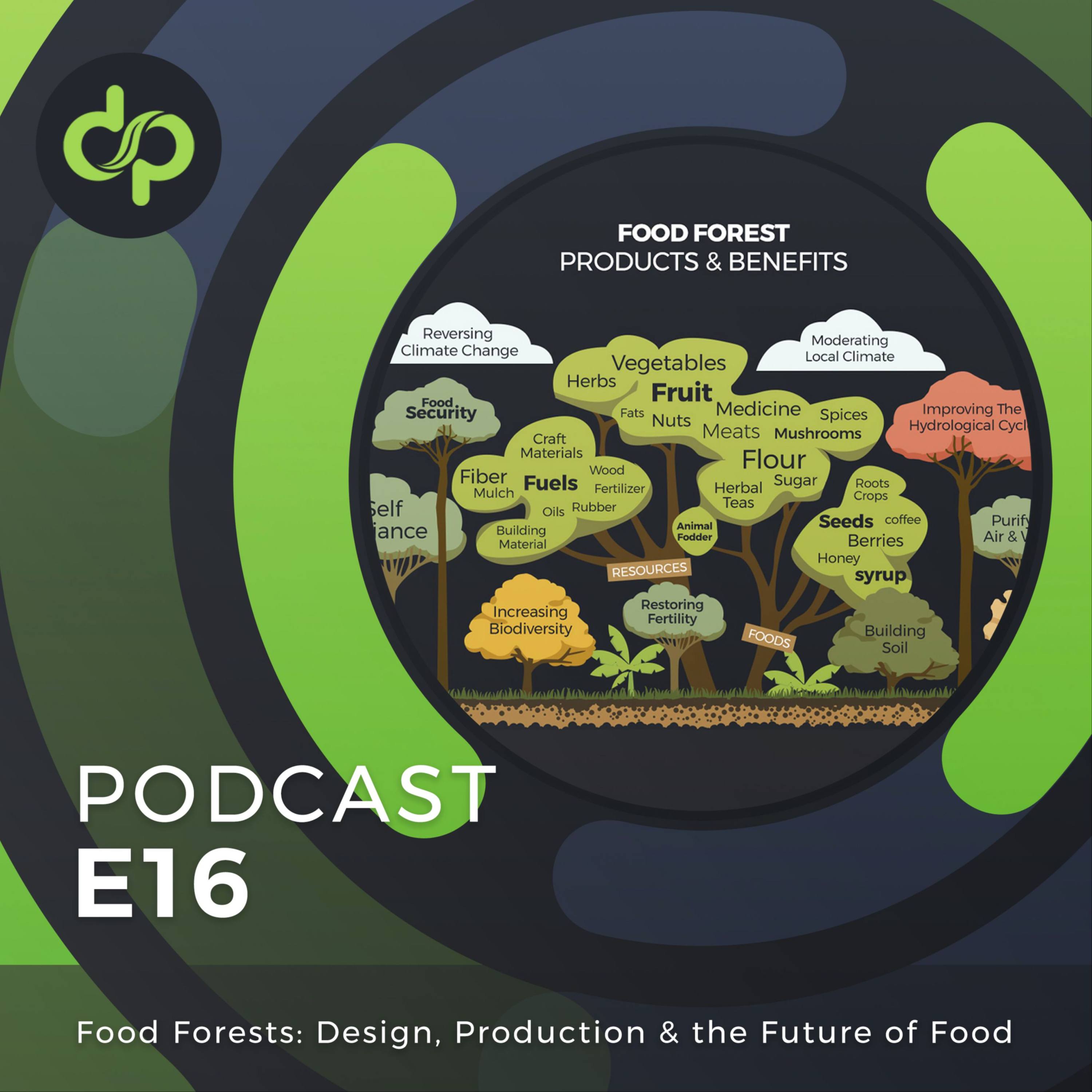
What if our food systems worked like forests? In this episode, host Geoff Lawton and the team explore food forests—long-term, tree-based systems that produce food while restoring ecosystems. From perennials and succession to microclimates and legumes, this conversation breaks down why food forests are one of the most stable and productive systems humans have ever designed. Watch the video episode here. Key Takeaways: 00:00 – 01:20: Why food forests matter Food forests challenge short-term agriculture by prioritizing long-lived systems that build stability, resilience, and food security over time. 01:20 – 02:05: What a food forest is A food forest is not a fixed layout or layer diagram. It’s a living system that adapts to climate, land, and time rather than following a template. 02:05 – 06:40: Perennials vs annuals Annual crops require constant disturbance and replanting, while perennials invest once and continue producing for years with fewer inputs. 06:40 – 07:40: Strategic neglect and plant resilience Strategic neglect allows systems to reveal which plants can survive with minimal care, selecting for resilience rather than dependency. 07:40 – 08:50: Trees, legumes, and long-term productivity Trees operate on long timelines, supported early by legumes that build soil, fertility, and structure before stepping aside. 08:50 – 13:10: Succession — from support species to food trees Food forests evolve through succession, where early, fast-growing plants prepare the conditions for slower, long-lived food species. 13:10 – 18:10: Maintenance vs yield trade-offs Maximizing yield often increases labor and inputs, while lower-maintenance systems can deliver more reliable long-term returns. 18:10 – 24:40: Wildlife returns when systems heal As ecological function improves, wildlife returns naturally — not through intervention, but because habitat and balance are restored. 24:40 – 33:00: Microclimates inside food forests Trees, water, and landform create protected microclimates that allow a wider range of species to grow beyond their expected limits. 33:00 – 52:00: Trees, people, and long-term settlements Human settlements have historically endured where tree cover stabilized food systems, water cycles, and living conditions. 52:00 – 57:45: Designing for generations, not seasons Food forests require patience, but their real value emerges over decades as systems mature and self-maintain. 57:45 – End: The bigger picture Food forests reframe agriculture from extraction to participation, asking how long a system can function — not how fast it can produce.
Embed this episode
Ready to play
Food Forests: Design, Production & the Future of Food
No transcript for this episode yet
Similar Episodes
No similar episodes found.
Similar Podcasts
No similar podcasts found.