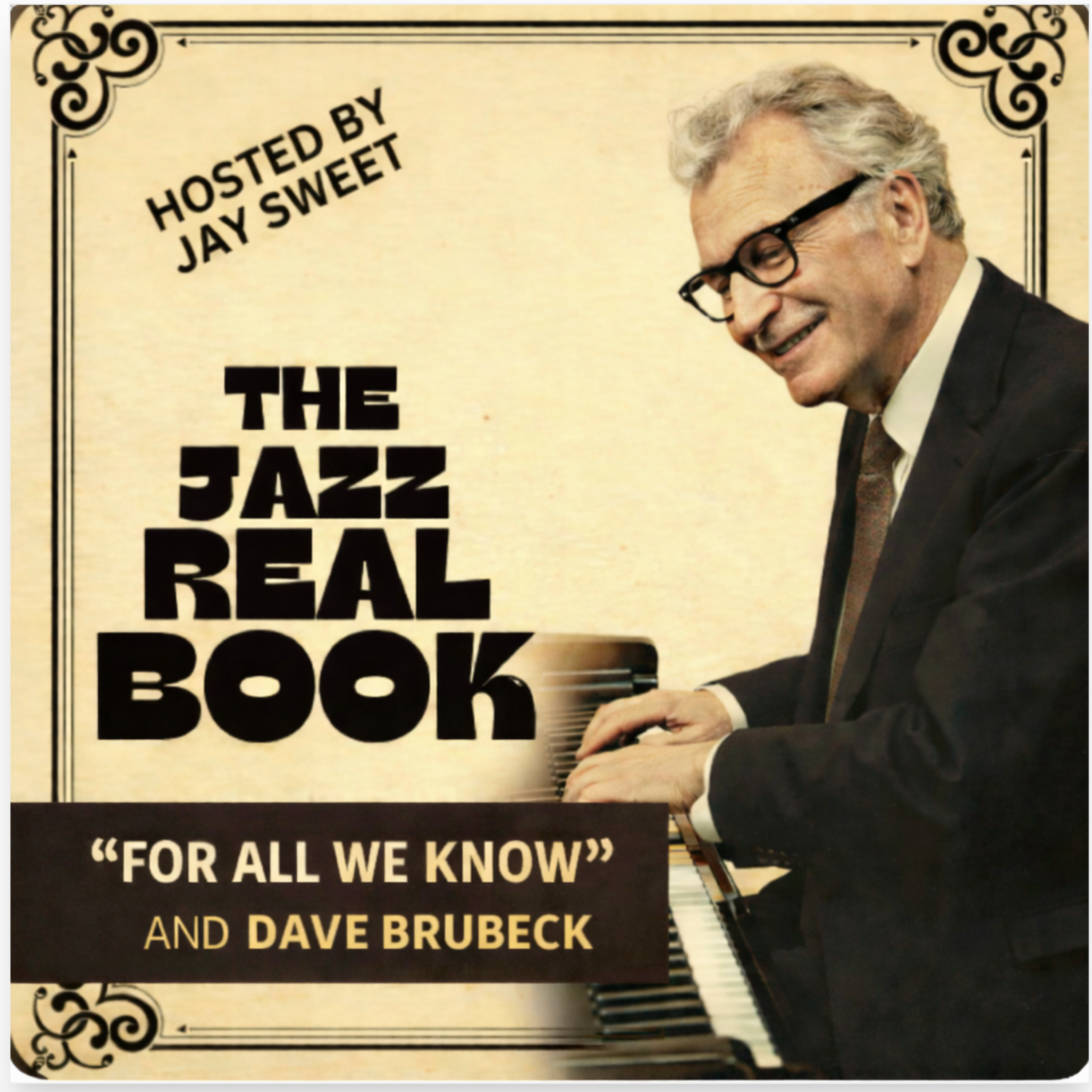
For All We Know and Dave Brubeck  episode artwork

EPISODE · Apr 19, 2026 · 22 MIN

For All We Know and Dave Brubeck

from The Jazz Real Book · host Jay Sweet

“For All We Know”and Dave Brubeck (120) “For All We Know” is a reflective ballad that has become a lasting part of the American Songbook and the jazz repertoire. Written in 1934 by composer J. Fred Coots with lyrics by Sam M. Lewis, the song first gained popularity through dance-band recordings such as Hal Kemp’s version featuring Skinnay Ennis. Its melody is graceful and understated, built on a classic 32-bar with lyrics that  focus on the fragile and uncertain nature of love. The opening line—“For all we know, we may never meet again”—immediately establishes the theme of impermanence and emotional vulnerability. Because of this introspective quality, the tune has appealed to both vocalists and instrumentalists, eventually becoming a favored ballad vehicle for jazz musicians.A memorable instrumental interpretation appears on the Dave Brubeck Quartet’s At Carnegie Hall (1963). Paul Desmond presents the melody with his characteristically warm, airy tone and relaxed phrasing, before moving into a lyrical improvisation. Brubeck follows with a solo that begins in his cool, understated style before expanding into rhythmic interplay and subtle syncopation. Known for his interest in unusual meters and structural experimentation, Brubeck still shows here how effectively he could interpret a traditional standard. Backed by Eugene Wright on bass and Joe Morello on drums, the quartet creates a sophisticated yet accessible performance that highlights the song’s melodic beauty while allowing space for improvisational development. (Episode 120) Billie Holiday Dave Brubeck The Jazz Real Book Vol. 2 

“For All We Know”and Dave Brubeck (120) “For All We Know” is a reflective ballad that has become a lasting part of the American Songbook and the jazz repertoire. Written in 1934 by composer J. Fred Coots with lyrics by Sam M. Lewis, the song first gained popularity through dance-band recordings such as Hal Kemp’s version featuring Skinnay Ennis. Its melody is graceful and understated, built on a classic 32-bar with lyrics that  focus on the fragile and uncertain nature of love. The opening line—“For all we know, we may never meet again”—immediately establishes the theme of impermanence and emotional vulnerability. Because of this introspective quality, the tune has appealed to both vocalists and instrumentalists, eventually becoming a favored ballad vehicle for jazz musicians.A memorable instrumental interpretation appears on the Dave Brubeck Quartet’s At Carnegie Hall (1963). Paul Desmond presents the melody with his characteristically warm, airy tone and relaxed phrasing, before moving into a lyrical improvisation. Brubeck follows with a solo that begins in his cool, understated style before expanding into rhythmic interplay and subtle syncopation. Known for his interest in unusual meters and structural experimentation, Brubeck still shows here how effectively he could interpret a traditional standard. Backed by Eugene Wright on bass and Joe Morello on drums, the quartet creates a sophisticated yet accessible performance that highlights the song’s melodic beauty while allowing space for improvisational development. (Episode 120) Billie Holiday Dave Brubeck The Jazz Real Book Vol. 2

NOW PLAYING

For All We Know and Dave Brubeck

0:00 22:58

No transcript for this episode yet

We transcribe on demand. Request one and we'll notify you when it's ready — usually under 10 minutes.

Frequently Asked Questions

How long is this episode of The Jazz Real Book?

This episode is 22 minutes long.

When was this The Jazz Real Book episode published?

This episode was published on April 19, 2026.

What is this episode about?

“For All We Know”and Dave Brubeck (120) “For All We Know” is a reflective ballad that has become a lasting part of the American Songbook and the jazz repertoire. Written in 1934 by composer J. Fred Coots with lyrics by Sam M. Lewis, the song first...

Can I download this The Jazz Real Book episode?

Yes, you can download this episode by clicking the download button on the episode player, or subscribe to the podcast in your preferred podcast app for automatic downloads.
URL copied to clipboard!