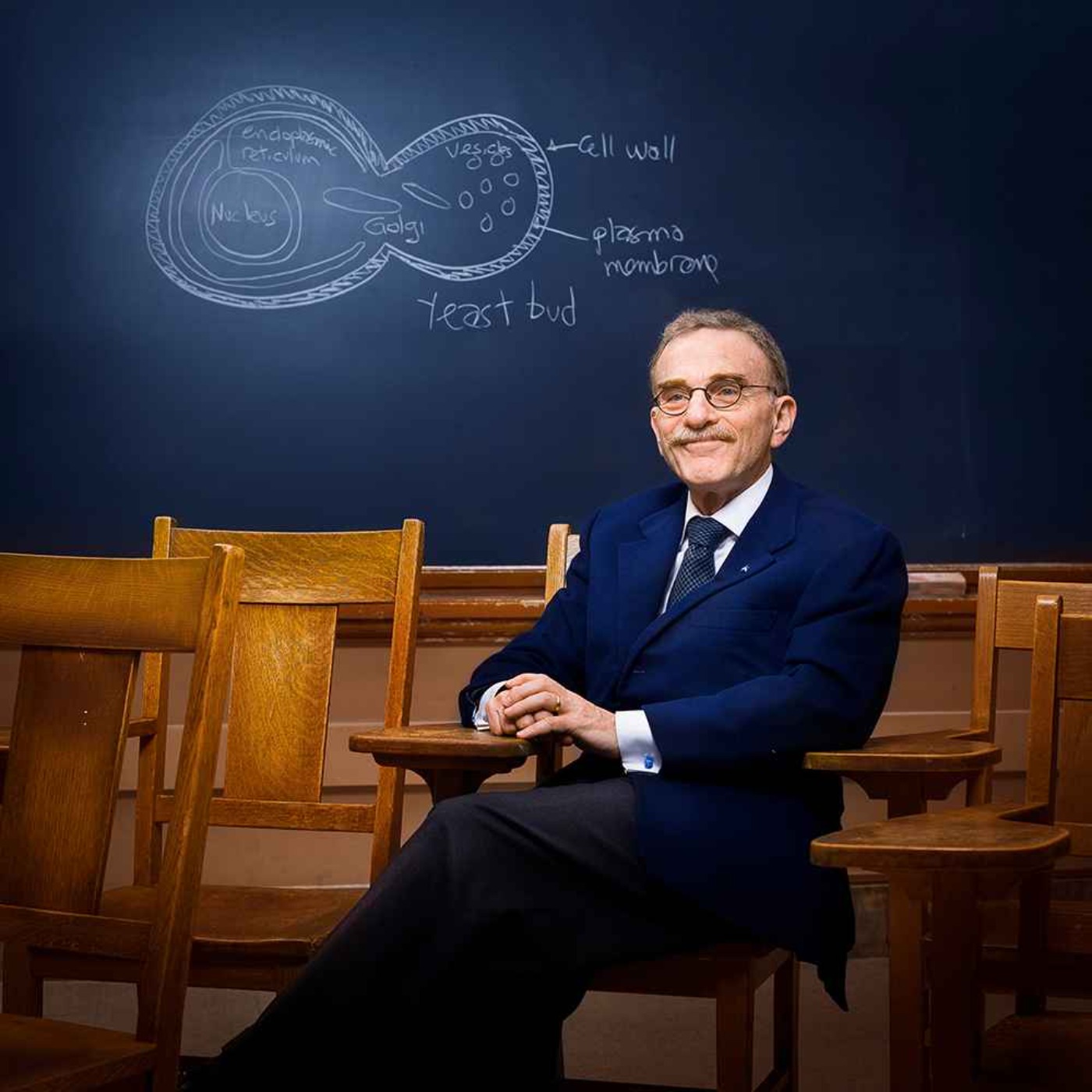
For Nobel laureate Randy Schekman, it began with pond scum and a toy microscope episode artwork

EPISODE · Nov 28, 2025 · 1H

For Nobel laureate Randy Schekman, it began with pond scum and a toy microscope

from Berkeley Talks

When UC Berkeley Professor Randy Schekman was 12, he scooped up a jar of pond scum and examined it under his toy microscope.“I just could not believe the world that was revealed,” he said during a campus event earlier this month. “This complex set of creatures that you can't see with your naked eye, and yet are moving and somehow mechanically independent, and able to do amazing things. And this was so fascinating.”Schekman went on to become a professor of molecular and cell biology at Berkeley and win the Nobel Prize in Physiology or Medicine in 2013 for his discovery of how yeast membranes work. His research has led to advances in food and fuel production, as well as life-saving drugs and vaccines. In this Berkeley Talks episode, Schekman explains the molecular building blocks that define who we are, the cellular processes that drive health and illness, and how curiosity-driven research leads to revolutionary insights into disease and opens doors to new possibilities for medicine and human health.This lecture, which took place on Nov. 7, was sponsored by UC Berkeley’s Osher Lifelong Learning Institute. Watch a video of Schekman’s talk.Listen to the episode and read the transcript on UC Berkeley News (news.berkeley.edu/podcasts/berkeley-talks).Music by HoliznaCC0.UC Berkeley photo by Elena Zhukova. Hosted on Acast. See acast.com/privacy for more information.

When UC Berkeley Professor Randy Schekman was 12, he scooped up a jar of pond scum and examined it under his toy microscope.“I just could not believe the world that was revealed,” he said during a campus event earlier this month. “This complex set of creatures that you can't see with your naked eye, and yet are moving and somehow mechanically independent, and able to do amazing things. And this was so fascinating.”Schekman went on to become a professor of molecular and cell biology at Berkeley and win the Nobel Prize in Physiology or Medicine in 2013 for his discovery of how yeast membranes work. His research has led to advances in food and fuel production, as well as life-saving drugs and vaccines. In this Berkeley Talks episode, Schekman explains the molecular building blocks that define who we are, the cellular processes that drive health and illness, and how curiosity-driven research leads to revolutionary insights into disease and opens doors to new possibilities for medicine and human health.This lecture, which took place on Nov. 7, was sponsored by UC Berkeley’s Osher Lifelong Learning Institute. Watch a video of Schekman’s talk.Listen to the episode and read the transcript on UC Berkeley News (news.berkeley.edu/podcasts/berkeley-talks).Music by HoliznaCC0.UC Berkeley photo by Elena Zhukova. Hosted on Acast. See acast.com/privacy for more information.

NOW PLAYING

For Nobel laureate Randy Schekman, it began with pond scum and a toy microscope

0:00 1:00:19

No transcript for this episode yet

We transcribe on demand. Request one and we'll notify you when it's ready — usually under 10 minutes.

Carnivores Don't Get Sunburn - Carnivore Diet Talks Carnivores Don't Get Sunburn - Carnivore Diet Talks Welcome to “Carnivores Don’t Get Sunburn,” where we have fun and explore the carnivore diet and its transformative power. Join us as we uncover real stories from individuals who have thrived on this diet, defying convention and embracing optimal health. Plus, stay tuned for our upcoming documentary featuring diverse carnivores overcoming health challenges. Learn more at www.carnivoredietdocumentary.com.Excitingly, we’re working on an upcoming documentary where we’ll feature carnivores from various walks of life, conquering diverse health challenges. Join us on this journey and learn more at www.carnivoredietdocumentary.com.Join us in uncovering the power of the carnivore diet. Prepare to be inspired, informed, and empowered to embrace optimal health and well-being.Welcome to “Carnivores Don’t Get Sunburn: Unveiling Real Stories of the Carnivore Diet.” Stay tuned for our upcoming documentary. Discover how this lifestyle can transform lives. Learn more at www.carnivoredietdocumentary.com IT IS WHAT IT IS with SHALLZ - SHALLY ZOMORODI Shally Zomorodi What?  "It is what it is" with ShallZ – Shally ZomorodiWhen? WeeklyHow long? 35 minutesEvery week, Mother of 4, wife, morning TV news anchor and ultimate hostess, Shally Zomorodi talks about life - its up's and downs and how to stay on track in her weekly podcast, ‘It is what it is.’  Known for her high energy, infectious smile and ability to see the cup as half full Shally talks about all things in life and how to work through its challenges. From parenting, marriage, friendships, current events to how to smile when it just seems impossible ‘It is what it is’ is the perfect podcast to help inspire you to dance through the rain. Tracking Nuclear Weapons Programs Center for Strategic and International Studies The CSIS Proliferation Prevention Program talks to experts about transparency and nuclear weapons. Cover Stories with Chess Life US Chess Chess Life Editor John Hartmann talks to the authors of each month's Chess Life cover story.

Frequently Asked Questions

How long is this episode of Berkeley Talks?

This episode is 1 hour and 0 minutes long.

When was this Berkeley Talks episode published?

This episode was published on November 28, 2025.

What is this episode about?

When UC Berkeley Professor Randy Schekman was 12, he scooped up a jar of pond scum and examined it under his toy microscope.“I just could not believe the world that was revealed,” he said during a campus event earlier this month. “This complex set...

Can I download this Berkeley Talks episode?

Yes, you can download this episode by clicking the download button on the episode player, or subscribe to the podcast in your preferred podcast app for automatic downloads.
URL copied to clipboard!