
EPISODE · Jun 8, 2026 · 13 MIN
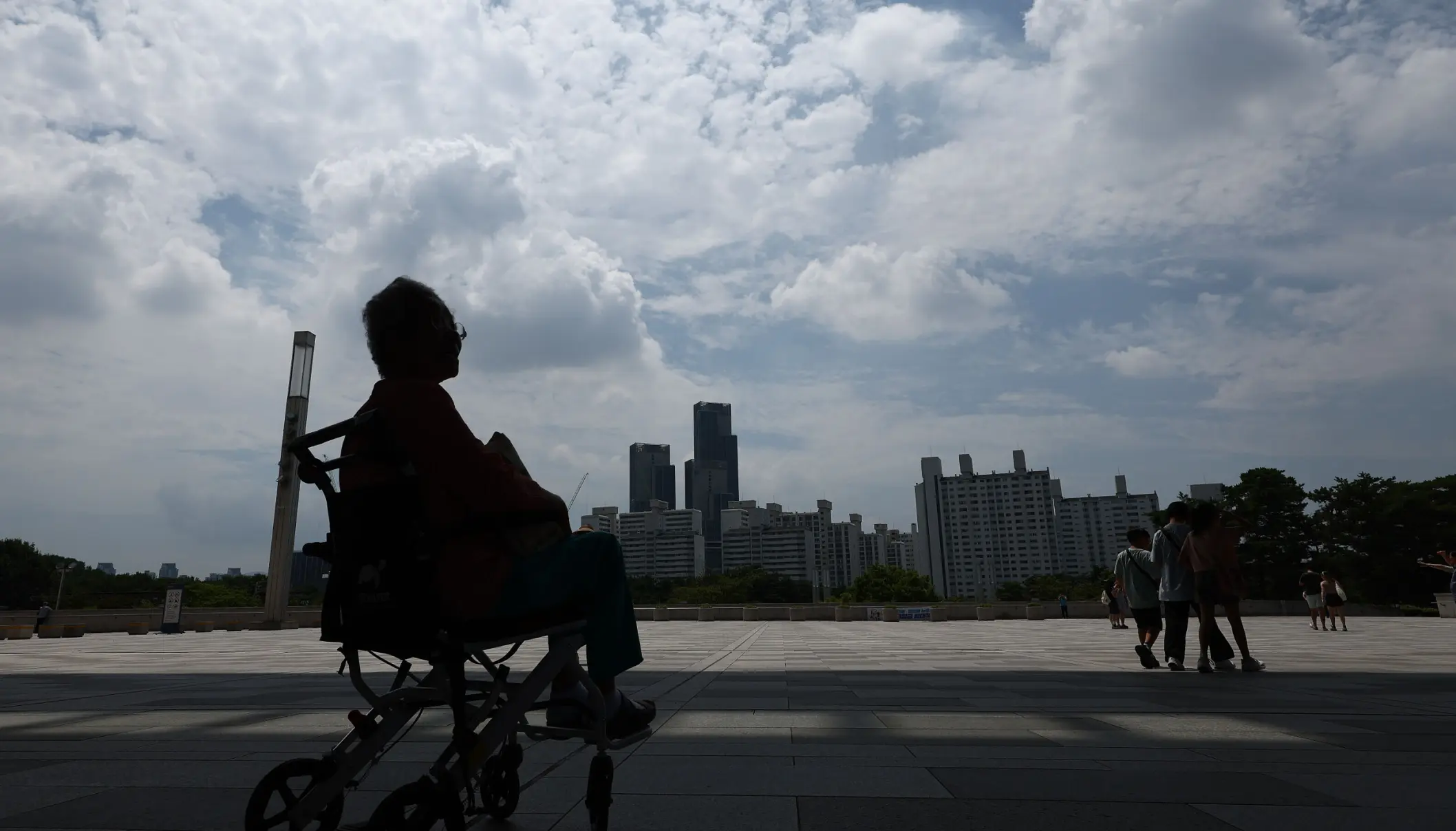
For the disabled, public art spaces remain largely out of reach amid accessibility limitations
from Korea JoongAng Daily - Daily News from Korea
Can Korea call itself a cultural powerhouse when some of its largest public art institutions have gone years without running a single program accessible to disabled visitors? Can the arts sector truly be considered democratic and inclusive when certain people are routinely left out? A few years ago, Chung Young-seok — a wheelchair user who lectures and researches arts management — went to Museum SAN in Wonju with a friend, the very place where another wheelchair user was denied entrance in April this year. They tried to enter the James Turrell hall, which houses one of only a handful of Turrell installations in the world. There was an elevator, but just as he was about to hop in, a staff member came over and told them they couldn't ride it, without explaining why. "I could understand if there were no facilities for the disabled at all," Chung said. "But to be told I couldn't use a facility that was already there — that felt like an entirely different problem. It made me realize this isn't about whether facilities exist. It's about how access is operated and how it's understood." Korean museums face a gap between access and inclusion Korean public art spaces often meet legal accessibility rules on paper, but many disabled visitors still cannot fully use them. A survey of major museums found that few offered sustained barrier-free programs, and many services were limited, temporary or hard to access. One key issue is staffing, not just facilities. Museums need dedicated workers and better understanding of different disabilities so access becomes part of daily operations, not a response to public criticism. This factbox was generated by Labrador AI and proof-read by a journalist. Museum SAN is, by Gangwon's official designation, a barrier-free tourist site — wheelchair rentals included. The episode, which Chung recounted after last month's incident that ignited a brief flurry of public attention, points to a broader conversation on accessibility that Korean arts institutions have not quite caught up to. The question is no longer whether ramps and elevators exist. They mostly do. The question is whether the access they imply actually works. Law is there, but programs, less so Korea has legally mandated accessibility at public buildings since 1998, when the Convenience Promotion Act was enacted, requiring public facilities to install ramps, accessible restrooms, tactile paving and similar fixtures. A barrier-free certification system, introduced in 2008, then layered a voluntary grading system on top of the act, evaluating buildings against more demanding criteria for everything from circulation paths to signage. The Korea Disability Arts & Culture Center (KDAC) also administers a grant program that funds accessibility content and operations at public exhibition and performance spaces, with awards ranging from 50 million ($34,500) to 80 million won per institution for up to three years. This grant program has also expanded in the number of recipients, with six institutions receiving 500 million won in 2024 and 22 institutions receiving a total of 1.6 billion won this year. The issue is that physical and programmatic accessibility move on separate tracks — one supported by the state, the other left to whatever budget an institution can find. To get a sense of how this plays out, the Korea JoongAng Daily asked the country's 20 largest art museums by visitor count to share their accessibility programming over the past five years, as well as their staffing levels. Of the 20 surveyed, 13 museums responded, and among them, only six could point to more than one exhibition over the past five years that was designated barrier-free from the start. The rest reported accessibility measures bolted onto otherwise standard programming — a sign-language caption here, a tactile catalog there, a braille leaflet at the gate. The National Museum of Korea, Busan Museum of Art and Daelim Museum were among those that did not give responses. The poi...
Embed this episode
NOW PLAYING
For the disabled, public art spaces remain largely out of reach amid accessibility limitations
No transcript for this episode yet
Similar Episodes
No similar episodes found.
Similar Podcasts
No similar podcasts found.