From African coups to Japanese consensus
from Somali Waa kuma Podcast Hosted by MI
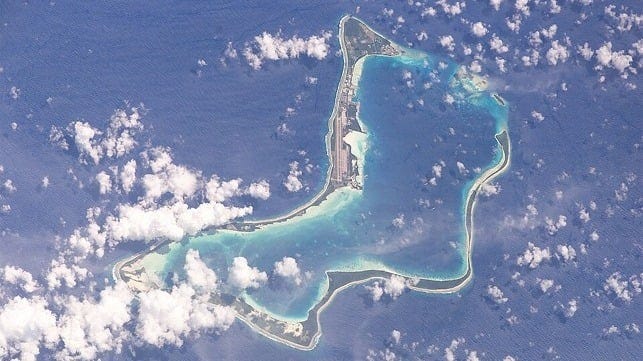
Week 42 of MI’s 5 minutes of fame spans continents, from the turquoise waters of the Indian Ocean, the heart of Africa to the political corridors of Tokyo, capital of the rising sun of Japan. Two worlds bound by ambition and transformation. After an eventful trip across Africa, my planned hop from Mauritius to Madagascar was abruptly derailed by the unfolding coup in Antananarivo, a reminder of how fragile democracy remains in many parts of our world. Stranded in the serenity of Port Louis, I took time to explore Mauritius’s uneasy history with the Chagos Islands for some aka Diego Garcia, a story of displacement and geopolitics that still echoes today. Meanwhile, halfway across the globe, Japan made history with its first female Prime Minister, a milestone redefining not only gender and governance but also the global conversation on leadership and legitimacy. From Mauritius’s lost islands to Japan’s new dawn, this week’s reflections connect the personal and the political: moments of stillness, struggle, and transformation. Mauritius and the United Kingdom formally signed the sovereignty handover agreement on May 25, 2025, but the ratification process is not yet complete. The deal envisages continued U.S. use of the Diego Garcia Naval Support Facility, but under a lease-back arrangement once the UK has closed down the British Indian Ocean Territory. The Chagos Archipelago is a group of over 50 (sometimes cited over 60) islands in the central Indian Ocean, lying roughly 1,250 miles (≈2,000 km) north-east of Mauritius. It is the largest atoll/island in that archipelago, and since the late 1960s has been home to a joint United Kingdom–United States military base. Mauritius itself became independent in 1968. Prior to that, in 1965, the United Kingdom detached the Chagos Archipelago from Mauritius’ colonial territory, thereby creating the British Indian Ocean Territory (BIOT). Mauritius has consistently claimed that the Chagos Archipelago (including Diego Garcia) forms part of its territory, including as stated in its constitution. The UK’s retention of the islands, and the forced removal of the Chagossian population in the 1970s to make way for the military base, have been the basis of longstanding legal and diplomatic contention. To summarize my thoughts on the Mauritius’s link with Diego Garcia, both as place and as vantage point to view Indian-Ocean geopolitics, I want to highlight: * The fact that Mauritius asserts that the Chagos Archipelago has always been part of its territory, and the detachment in 1965 is seen as a colonial legacy. * That the disputes are not just legal/territorial but involve people (the Chagossians), strategic military considerations, and regional/geo-political dynamics. Postscript: In May 2025 the UK and Mauritius reached an agreement under which Mauritius would regain sovereignty over the archipelago, but the UK (and US) would retain the base on Diego Garcia under a long-term lease of 99 years (with possible extension) to maintain military operations. The military base on Diego Garcia is highly strategic for Western power projection in the Indian Ocean, the Middle East and the Indo-Pacific region. For Mauritius, recovering sovereignty over the archipelago is framed as correcting a colonial injustice, regaining territorial integrity, and enabling future economic/environmental opportunities (including possible resettlement of Chagossians) under its flag. African coups In this week’s reflection, I’ll let Faisal Ali - a distinguished journalist, editor, and writer - enlighten us on the resurgence of Africa’s military regimes. His recent essay, “Africa’s Militaries Re-Enter the Driver’s Seat,” see below offers a masterfully argued and elegantly written analysis of how the continent’s democratic experiments are being tested by renewed military assertiveness. Japan revisited… I found myself reflecting on Japan’s own historic moment: the rise of its first female Prime Minister, Sanae Takaichi. Her ascent signals not just a political milestone, but a reimagining of leadership itself, one that echoes the voices of reform and inclusion resonating across continents. From Antananarivo to Tokyo, change is in the air, and this week’s reflections connect these distant yet converging currents of global renewal. Sanae Takaichi might be too conservative for mainstream voters not because of only her idolisation of former UK prime minister Margaret Thatcher who she looks as her political hero. She also sort of said things like Japan's moral fibre depends on the traditional family structure which many interpret as encouraging more karoshi. She also supports aggressive monetary easing and big fiscal spending, echoing the economic policies of her political mentor, assassinated ex-prime minister Shinzo Abe. She has also voiced her strong concerns about crime and the economic influence of foreigners in Japan, a very sensitive issue globally. However, I have no problem (for entirely different reason) with her regular visits to the Yasukuni Shrine, which honours convicted war criminals along with 2.5 million war dead and is seen by Asian nations as a symbol of Japan’s militarist past. I have a beef with her revisionist views of Japan's wartime history which may complicate ties with Beijing and Seoul. Iron Lady 2.0 Rock and rule: Japan’s first woman PM, Sanae Takaichi was once a drummer in a college heavy metal band and this might attract the young generation’s attention towards her. I am for PM who still drums and loves Metallica. Let the music play, and enjoying ushering new political era in Japan. Japan ranked 118 out of 148 in the World Economic Forum's 2025 Gender Gap Report, chiefly because of the under-representation of women in government, while Iceland, Finland and Norway occupied the top three places. Ms Takaichi also recently acknowledged her struggles with menopausal symptoms and stressed the need to educate men about female health to help women at school and work. Women comprise only about 15 per cent of Japan’s lower house, the more powerful of the two parliamentary chambers, and only two of Japan’s 47 prefectural governors are women.... Ms Takaichi opposes revising a 19th-century law requiring married couples to share the same surname, a rule that overwhelmingly results in women taking their husband’s name. That book….. Adolf Hitler’s book haunts the forthcoming new PM. Her past links to extreme-right ideology have emerged online again since her appointment last week, causing a bit of embarrassment. Not for me, my position on this is that yeah, she endorsed the book in a blurb but didn't write it herself. And she later denied any knowledge or memory of writing it. It was also 31 years ago which is a lot of water under the bridge.... so let us move on. There is nothing more to see or say here, I reckon.. Or are they? Fifty-Six Years Ago: A Revolution in Hours, a Legacy in Generations Fifty-six years ago or, if one prefers to sound mathematically precise, 672 months, 2,922 weeks, or roughly 490,000 hours ago, Somalia experienced what was politely called a “bloodless revolution.” On 21 October 1969, a cadre of young military officers led by Major General Mohamed Siad Barre quietly seized power while the rest of the nation was still mourning the assassination of President Abdirashid Ali Sharmarke. It was a coup without gunfire but not without consequence. What followed was a sweeping attempt to remake a young nation, one barely nine years out of colonialism into a disciplined, modern socialist state. Barre’s regime promised to abolish tribalism, illiteracy, and corruption, replacing them with scientific socialism, mass literacy campaigns, and a sense of pan-Somali destiny. In the short term, it worked wonders: literacy soared, the Somali script was standardized, and a bold national pride took root. Yet, as history often reminds us, revolutions age faster than their ideals. Over time, the same government that once championed equality and progress became … This is a public episode. If you would like to discuss this with other subscribers or get access to bonus episodes, visit somalia.substack.com
Embed this episode
No transcript yet.