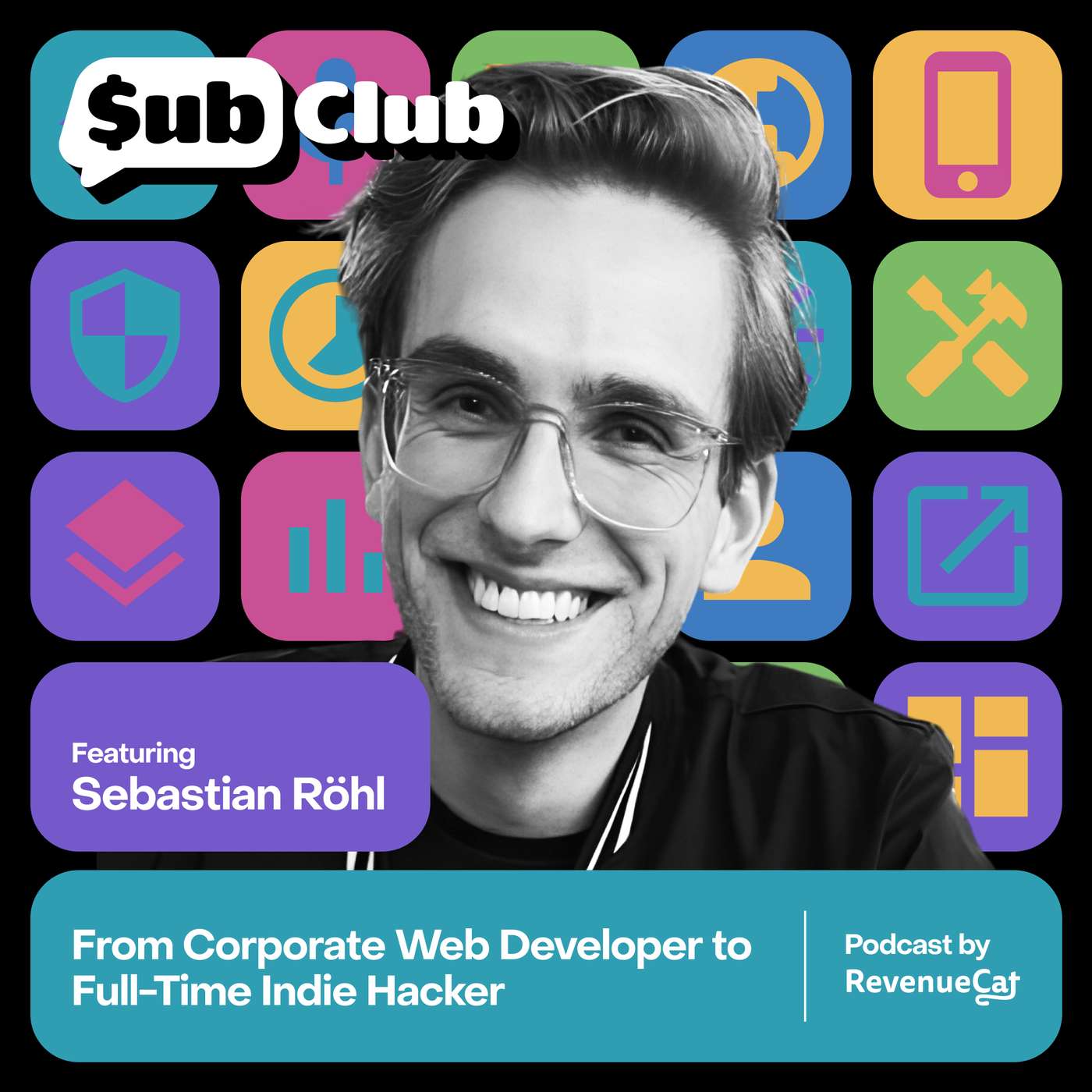
From Corporate Web Developer to Full-Time Indie Hacker — Sebastian Röhl, HabitKit episode artwork

EPISODE · Jun 26, 2024 · 51 MIN

From Corporate Web Developer to Full-Time Indie Hacker — Sebastian Röhl, HabitKit

from Sub Club by RevenueCat · host David Barnard, Jacob Eiting

On the podcast: Quitting a job to build your own apps, returning to that job after failing to gain traction, and the inflection point that allowed our guest to finally quit for good.Key Takeaways:💡If your first side project doesn’t take off, try again — Reviving a lackluster launch can be tempting, but it might indicate a lack of demand. Instead, start fresh with a new idea and watch for early signs of product-market fit.💰Invest more in your product once you have “pull” and a channel — Achieving early product-market fit and having a reliable acquisition channel allows you to focus on enhancing your product and experimenting with monetization strategies.🔞Avoid relying solely on one acquisition channel — While a dependable early channel like ASO is crucial, it comes with risks outside your control. Diversify by investing in owned or paid channels to adapt to changes more effectively.🧑‍💻Building in public offers numerous advantages — Developing your app publicly immerses you in a supportive community of indie developers, providing motivation, inspiration, and valuable feedback. However, it can also attract copycat competitors.📈"Test higher prices" should be at the top of your to-do list — Raising your app’s price may seem risky, but many indie developers are overly cautious. A/B testing can help you safely explore the impact of different price points without significant customer backlash.About Guest👨‍💻 Independent app developer and creator of HabitKit and Liftbear.💡Sebastian began his career as a corporate web developer and became a full-time indie app developer after his habit-tracking app HabitKit took off.👋 LinkedInFollow us on X:David BarnardJacob EitingRevenueCatSub ClubEpisode Highlights[1:04] Web versus mobile: What motivated Sebastian to switch from web to mobile app development.[4:17] Free solo: Having a corporate day job might not let you stretch your creative muscles as much as building your own concepts.[6:43] Drive: If you’re going to build an indie app or venture-backed startup, make sure it’s something you need to do.[12:13] Risky business: The riskiness of leaving a full-time job to pursue an indie venture is different for everyone, depending on life stage, finances, and family obligations.[16:39] Just ship it: Your first idea might not be great, but getting started will lead to new, better ideas.[24:04] If at first you don’t succeed: Sometimes it’s better to give up on an idea that isn’t working so you can focus on one with better product-market fit.[28:38] Doing the (side) hustle: Making the decision to keep your day job or fully commit to your side gig can be tough.[34:45] Changing the channel: The app stores are a black box — it’s a good idea to invest in additional acquisition channels in case of algorithm changes.[38:26] Building in public: Having a following on social media can be a great source of support and user loyalty outside of the app stores.[45:00] Raising prices: Don’t be afraid to experiment with higher prices — many apps are leaving money on the table.

On the podcast: Quitting a job to build your own apps, returning to that job after failing to gain traction, and the inflection point that allowed our guest to finally quit for good.Key Takeaways:💡If your first side project doesn’t take off, try again — Reviving a lackluster launch can be tempting, but it might indicate a lack of demand. Instead, start fresh with a new idea and watch for early signs of product-market fit.💰Invest more in your product once you have “pull” and a channel — Achieving early product-market fit and having a reliable acquisition channel allows you to focus on enhancing your product and experimenting with monetization strategies.🔞Avoid relying solely on one acquisition channel — While a dependable early channel like ASO is crucial, it comes with risks outside your control. Diversify by investing in owned or paid channels to adapt to changes more effectively.🧑‍💻Building in public offers numerous advantages — Developing your app publicly immerses you in a supportive community of indie developers, providing motivation, inspiration, and valuable feedback. However, it can also attract copycat competitors.📈"Test higher prices" should be at the top of your to-do list — Raising your app’s price may seem risky, but many indie developers are overly cautious. A/B testing can help you safely explore the impact of different price points without significant customer backlash.About Guest👨‍💻 Independent app developer and creator of HabitKit and Liftbear.💡Sebastian began his career as a corporate web developer and became a full-time indie app developer after his habit-tracking app HabitKit took off.👋 LinkedInFollow us on X:David BarnardJacob EitingRevenueCatSub ClubEpisode Highlights[1:04] Web versus mobile: What motivated Sebastian to switch from web to mobile app development.[4:17] Free solo: Having a corporate day job might not let you stretch your creative muscles as much as building your own concepts.[6:43] Drive: If you’re going to build an indie app or venture-backed startup, make sure it’s something you need to do.[12:13] Risky business: The riskiness of leaving a full-time job to pursue an indie venture is different for everyone, depending on life stage, finances, and family obligations.[16:39] Just ship it: Your first idea might not be great, but getting started will lead to new, better ideas.[24:04] If at first you don’t succeed: Sometimes it’s better to give up on an idea that isn’t working so you can focus on one with better product-market fit.[28:38] Doing the (side) hustle: Making the decision to keep your day job or fully commit to your side gig can be tough.[34:45] Changing the channel: The app stores are a black box — it’s a good idea to invest in additional acquisition channels in case of algorithm changes.[38:26] Building in public: Having a following on social media can be a great source of support and user loyalty outside of the app stores.[45:00] Raising prices: Don’t be afraid to experiment with higher prices — many apps are leaving money on the table.

NOW PLAYING

From Corporate Web Developer to Full-Time Indie Hacker — Sebastian Röhl, HabitKit

0:00 51:03

No transcript for this episode yet

We transcribe on demand. Request one and we'll notify you when it's ready — usually under 10 minutes.

MG Show MG Show The MG Show, hosted by Jeffrey Pedersen and Shannon Townsend, is a leading alternative media platform dedicated to uncovering the truth behind today’s most pressing political issues. Launched in 2019, the show has grown exponentially, offering unfiltered insights, comprehensive research, and real-time analysis. With a commitment to independent journalism and factual integrity, the MG Show empowers its audience with knowledge and encourages active participation in the political discourse. That Hoarder: Overcome Compulsive Hoarding That Hoarder Hoarding disorder is stigmatised and people who hoard feel vast amounts of shame. This podcast began life as an audio diary, an anonymous outlet for somebody with this weird condition. That Hoarder speaks about her experiences living with compulsive hoarding, she interviews therapists, academics, researchers, children of hoarders, professional organisers and influencers, and she shares insight and tips for others with the problem. Listened to by people who hoard as well as those who love them and those who work with them, Overcome Compulsive Hoarding with That Hoarder aims to shatter the stigma, share the truth and speak openly and honestly to improve lives. Flottengeflüster ALD Automotive Österreich | LeasePlan Beim Flottengeflüster powered by ALD Automotive | LeasePlan präsentieren Jörg Janik und Peter Gutenbrunner alle zwei Wochen spannende Informationen rund um das Thema nachhaltige Mobilität. Beide beschäftigen sich schon lange mit der Thematik und bringen umfangreiches Fachwissen mit. Sollten sie aber doch einmal nicht weiter wissen, werden unsere Expert*innen hinzugezogen, die ihnen gerne mit Rat und Tat zur Seite stehen. The Small Business Startup School – Business Notes | Financial Literacy | Retail Psychology – For Professionals & Entrepreneurs The Small Business Startup School Inc. Starting or buying a small business? While personal circumstances may vary, business patterns remain timeless. On The Small Business Startup School, we explore strategies, insights, and practical solutions to help entrepreneurs confidently navigate their journey.Hosted by Ola Williams—a retail entrepreneur, fintech founder, and financial coach with over two decades of experience—this podcast marries financial awareness and retail psychology with optimism to deliver actionable takeaways.Join us to learn, grow, and connect as we uncover the keys to business success.Let’s continue to learn together and be encouraged to keep on connecting!

Frequently Asked Questions

How long is this episode of Sub Club by RevenueCat?

This episode is 51 minutes long.

When was this Sub Club by RevenueCat episode published?

This episode was published on June 26, 2024.

What is this episode about?

On the podcast: Quitting a job to build your own apps, returning to that job after failing to gain traction, and the inflection point that allowed our guest to finally quit for good.Key Takeaways:💡If your first side project doesn’t take off, try...

Can I download this Sub Club by RevenueCat episode?

Yes, you can download this episode by clicking the download button on the episode player, or subscribe to the podcast in your preferred podcast app for automatic downloads.
URL copied to clipboard!