
EPISODE · May 19, 2026 · 55 MIN
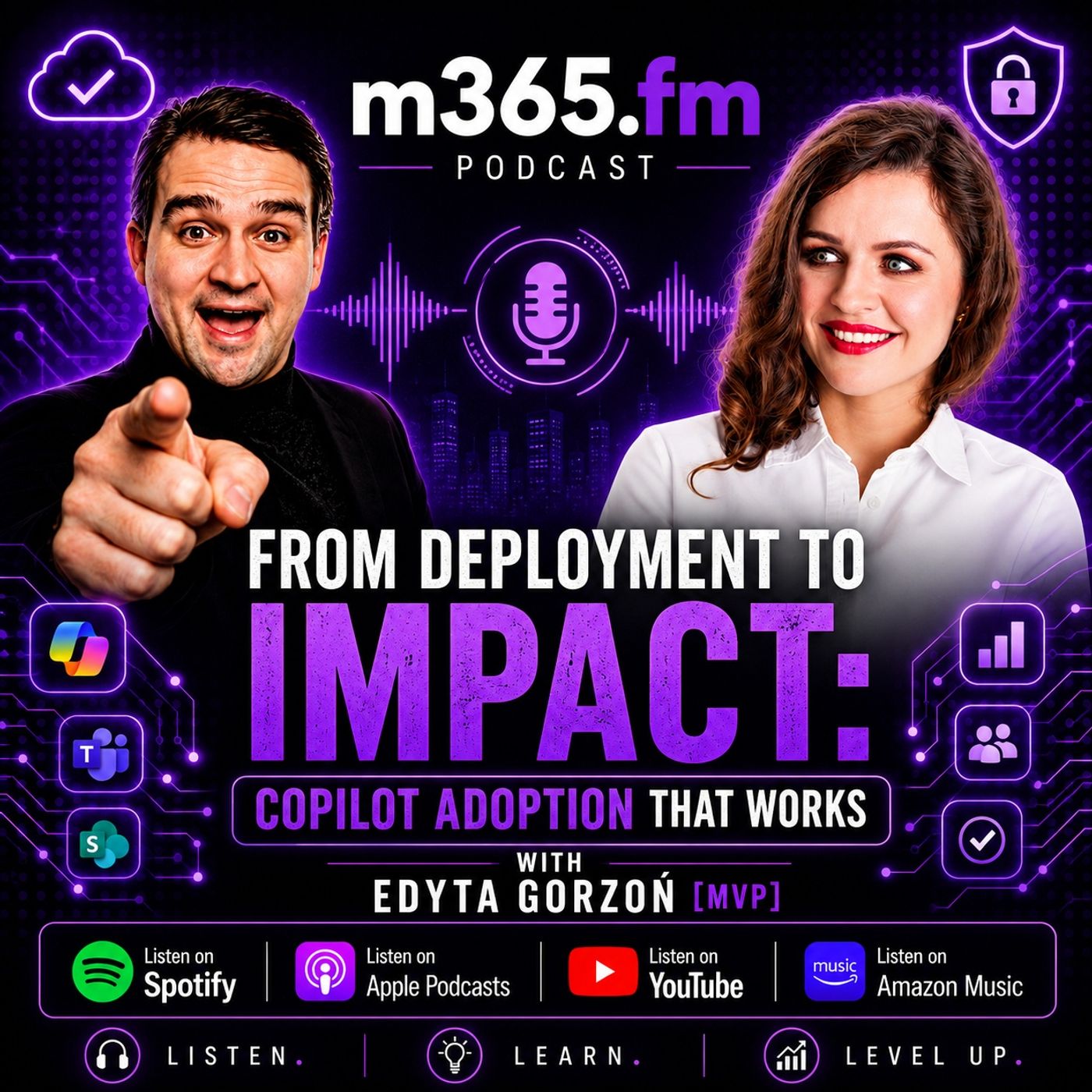
From Deployment to Impact: Copilot Adoption That Works with Edyta Gorzoń (MVP)
from M365.FM - Modern work, security, and productivity with Microsoft 365 · host Mirko Peters - Founder of m365.fm, m365.show and m365con.net
Deploying Microsoft Copilot is easy. Driving real adoption, measurable impact, and long-term behavioral change across an organization? That is the real challenge. In this episode of the m365.fm podcast, Mirko Peters sits down with Microsoft MVP, Copilot Architect, adoption expert, and Copilot Team Lead at Billennium, Edyta Gorzoń, for a deep and highly practical conversation about what truly makes Copilot adoption successful inside modern organizations. While many companies focus heavily on licensing, governance, and technical rollout, Edyta explains why successful AI transformation is ultimately about people, communication, culture, and change management. Throughout the episode, she shares real-world lessons from customer projects, common mistakes organizations continue to make, and practical strategies that help companies move from simply deploying AI to genuinely transforming the way employees work. With more than a decade of experience in Microsoft technologies and a strong business background, Edyta brings a unique perspective to the AI conversation. Her focus is not just on technology itself, but on understanding users, organizational behavior, productivity patterns, communication strategies, and how businesses can create sustainable adoption models that actually deliver ROI.WHY COPILOT ADOPTION IS MORE THAN JUST TRAININGOne of the strongest themes throughout the episode is that Copilot adoption cannot be solved through generic feature-based training sessions alone. According to Edyta, many organizations mistakenly believe that purchasing Copilot licenses and scheduling a few training sessions automatically guarantees success. In reality, adoption requires a much broader strategy that includes governance, communication, behavioral change, scenario-based enablement, leadership involvement, and continuous support. She explains that organizations often experience temporary spikes in Copilot usage immediately after training sessions, only to see activity quickly decline again afterward. This happens because users never fully integrate AI into their daily workflows and routines. Building sustainable habits becomes far more important than simply delivering technical knowledge. CHANGE MANAGEMENT IS THE REAL DIFFERENTIATOR Edyta believes change management has become one of the most critical success factors for AI transformation projects. In previous Microsoft 365 adoption waves, organizations focused heavily on enabling tools like Teams, SharePoint, and OneDrive. But AI introduces entirely new emotional and cultural challenges:Fear of job replacementConcerns around data privacyDistrust in AI-generated contentResistance to changing workflowsUncertainty around productivity expectationsSome employees even feel that using AI is somehow “cheating” or replacing their own expertise. Because of this, Edyta emphasizes the importance of understanding user sentiment early in every Copilot project. Organizations need to understand how employees actually feel about AI before they can create effective communication and adoption strategies.COMMUNICATION IS EVERYTHING One of the most powerful insights from the episode is the importance of communication. According to Edyta, poor communication remains one of the biggest reasons why digital transformation projects fail. Organizations frequently launch AI initiatives using technical jargon, generic messaging, or overly abstract business language that employees simply do not connect with. Instead, communication must be:Tailored to different user groupsPractical and scenario-focusedEasy to understandBusiness relevantContinuous and visibleSupported by leadershipEdyta explains that IT professionals often unintentionally speak in highly technical language that business users do not understand. Terms like “tenant,” “connectors,” “governance,” or “grounding” may confuse non-technical employees immediately and create unnecessary resistance from the very beginning.WHY GOVERNANCE MATTERS BEFORE COPILOT Another major topic throughout the discussion is governance and technical readiness. Edyta strongly warns organizations against rushing into Copilot deployments without first reviewing their existing Microsoft 365 environments. Oversharing, poorly managed SharePoint permissions, inconsistent governance, and outdated collaboration structures can create major security and compliance risks once AI systems gain access to organizational data. She explains that:Copilot respects existing permissionsAI surfaces information dramatically fasterLegacy governance problems become visible instantlyPoorly structured data creates AI chaosDocumentation and governance become essentialOne particularly important recommendation is creating clear governance documentation that both technical and business stakeholders can understand. As AI teams increasingly combine IT, security, business, and compliance roles, organizations need a shared “single source of truth” around policies, configurations, responsibilities, and AI readiness.PROMPTING IS A NEW SKILLThroughout the conversation, Edyta repeatedly describes prompting as an entirely new professional skillset. Most end users are not naturally comfortable interacting with AI systems. Unlike IT professionals or AI enthusiasts, many employees have never worked with prompt engineering concepts before. That is why Edyta strongly advocates for hands-on prompting workshops that allow users to experiment, learn, and build confidence with AI tools in real-world scenarios. According to Edyta:Prompting should be treated like a modern workplace skillUsers need practical exercisesGeneric examples rarely workTraining should reflect real business processesHands-on experimentation is criticalShe even describes prompting as an “art” that employees gradually learn through repetition and guided experimentation.THE POWER OF SCENARIO-BASED TRAINING One of Edyta’s strongest recommendations is building scenario-oriented adoption programs instead of generic platform training. Rather than showing random demos or disconnected features, organizations should teach Copilot within the context of actual business processes. Examples include:Teams meeting preparation and follow-upsOutlook email managementPowerPoint presentation creationHR onboarding workflowsSales proposal generationMarketing content productionDaily reporting processesKnowledge management scenariosThe more realistic and tailored the training experience becomes, the more likely users are to integrate Copilot naturally into their daily work.WHY LEADERSHIP INVOLVEMENT MATTERSAnother major insight from the episode is the importance of leadership visibility. According to Edyta, executives often approve Copilot budgets and then completely disengage from the adoption process afterward. This creates a major problem because employees need visible signals from leadership that AI adoption matters strategically to the organization. Successful organizations involve leadership through:Town hall communicationChampion programsAI adoption messagingSuccess story sharingTraining participationInternal evangelisBecome a supporter of this podcast: https://www.spreaker.com/podcast/m365-fm-modern-work-security-and-productivity-with-microsoft-365--6704921/support.
Embed this episode
What this episode covers
Deploying Microsoft Copilot is easy. Driving real adoption, measurable impact, and long-term behavioral change across an organization? That is the real challenge. In this episode of the m365.fm podcast, Mirko Peters sits down with Microsoft MVP, Copilot Architect, adoption expert, and Copilot Team Lead at Billennium, Edyta Gorzoń, for a deep and highly practical conversation about what truly makes Copilot adoption successful inside modern organizations. While many companies focus heavily on licensing, governance, and technical rollout, Edyta explains why successful AI transformation is ultimately about people, communication, culture, and change management. Throughout the episode, she shares real-world lessons from customer projects, common mistakes organizations continue to make, and practical strategies that help companies move from simply deploying AI to genuinely transforming the way employees work. With more than a decade of experience in Microsoft technologies and a strong business background, Edyta brings a unique perspective to the AI conversation. Her focus is not just on technology itself, but on understanding users, organizational behavior, productivity patterns, communication strategies, and how businesses can create sustainable adoption models that actually deliver ROI. WHY COPILOT ADOPTION IS MORE THAN JUST TRAINING One of the strongest themes throughout the episode is that Copilot adoption cannot be solved through generic feature-based training sessions alone. According to Edyta, many organizations mistakenly believe that purchasing Copilot licenses and scheduling a few training sessions automatically guarantees success. In reality, adoption requires a much broader strategy that includes governance, communication, behavioral change, scenario-based enablement, leadership involvement, and continuous support. She explains that organizations often experience temporary spikes in Copilot usage immediately after training sessions, only to see activity quickly decline again afterward. This happens because users never fully integrate AI into their daily workflows and routines. Building sustainable habits becomes far more important than simply delivering technical knowledge. CHANGE MANAGEMENT IS THE REAL DIFFERENTIATOR Edyta believes change management has become one of the most critical success factors for AI transformation projects. In previous Microsoft 365 adoption waves, organizations focused heavily on enabling tools like Teams, SharePoint, and OneDrive. But AI introduces entirely new emotional and cultural challenges: Fear of job replacement Concerns around data privacy Distrust in AI-generated content Resistance to changing workflows Uncertainty around productivity expectations Some employees even feel that using AI is somehow “cheating” or replacing their own expertise. Because of this, Edyta emphasizes the importance of understanding user sentiment early in every Copilot project. Organizations need to understand how employees actually feel about AI before they can create effective communication and adoption strategies. COMMUNICATION IS EVERYTHING One of the most powerful insights from the episode is the importance of communication. According to Edyta, poor communication remains one of the biggest reasons why digital transformation projects fail. Organizations frequently launch AI initiatives using technical jargon, generic messaging, or overly abstract business language that employees simply do not connect with. Instead, communication must be: Tailored to different user groups Practical and scenario-focused Easy to understand Business relevant Continuous and visible Supported by leadership Edyta explains that IT professionals often unintentionally speak in highly technical language that business users do not...
NOW PLAYING
From Deployment to Impact: Copilot Adoption That Works with Edyta Gorzoń (MVP)
No transcript for this episode yet
Similar Episodes
No similar episodes found.
Similar Podcasts
No similar podcasts found.