
EPISODE · May 26, 2026 · 47 MIN
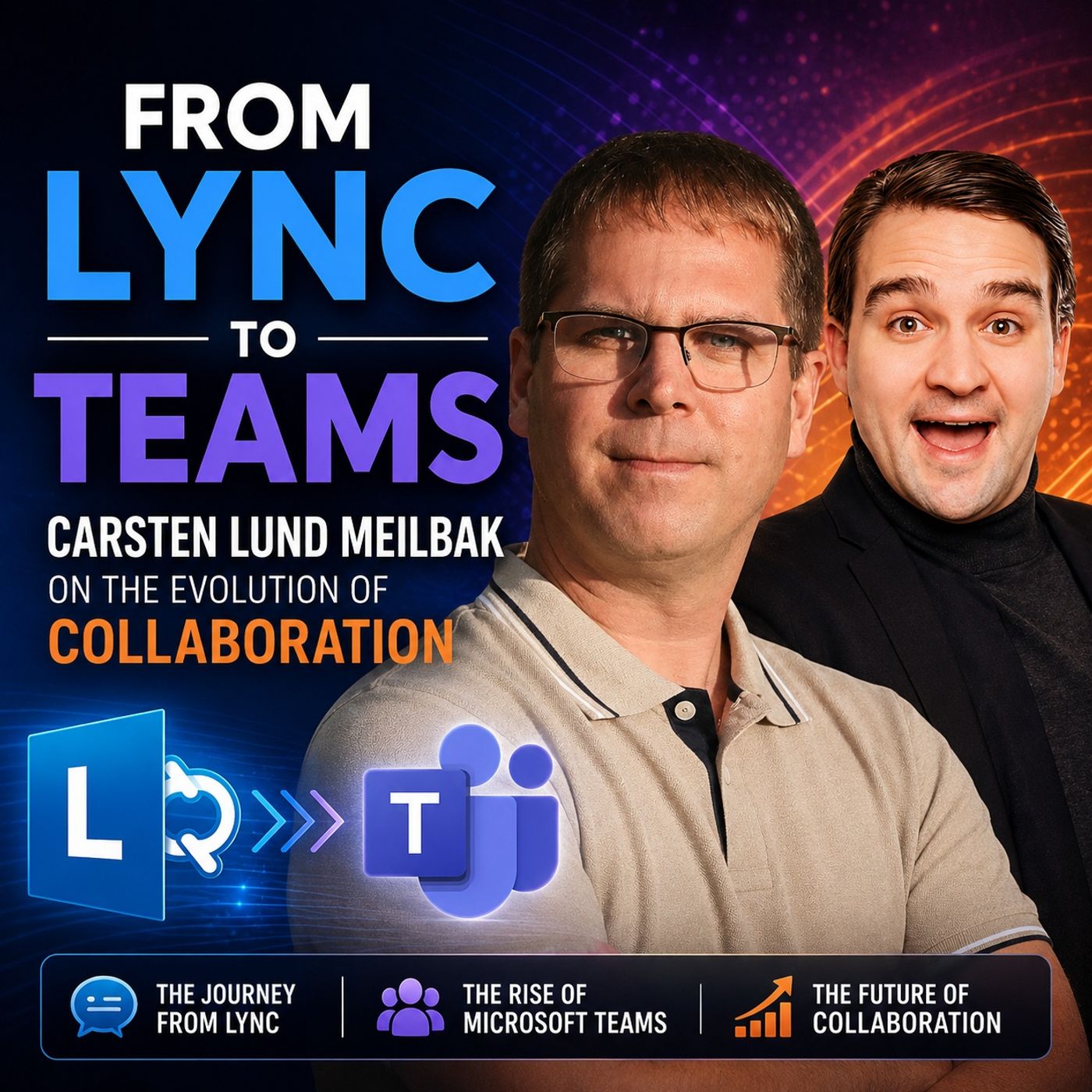
From Lync to Teams: Carsten Lund Meilbak on the Evolution of Collaboration
from M365.FM - Modern work, security, and productivity with Microsoft 365 · host Mirko Peters - Founder of m365.fm, m365.show and m365con.net
The world of enterprise communication has transformed dramatically over the last two decades — from traditional PBX systems and on-premises infrastructure to cloud collaboration, AI-powered meetings, and Microsoft Teams. In this episode of the M365 FM podcast, Mirko Peters is joined by Microsoft Teams MVP Carsten Lund Meilbak for an in-depth conversation about the evolution of collaboration technology and what the future of communication looks like inside Microsoft 365. Carsten shares his fascinating journey from the early days of PBX systems and telephony infrastructure to working with Microsoft Lync, Skype for Business, Teams Voice, Microsoft Teams Rooms, and AI-powered communication experiences. With decades of hands-on experience in unified communications, Carsten provides unique insights into how enterprise voice and collaboration platforms have evolved — and why Microsoft Teams has become the center of modern workplace communication.THE JOURNEY FROM PBX TO MICROSOFT TEAMS Before Microsoft Teams became the standard for collaboration, organizations relied heavily on traditional PBX systems, physical telephony hardware, and complex on-premises deployments. Carsten discusses how Microsoft disrupted the communication market with Lync and Skype for Business, even when those early products lacked many enterprise-grade capabilities at the beginning. The episode explores how unified communications slowly evolved from experimental cloud services into the fully integrated collaboration ecosystem we know today. THE EVOLUTION OF LYNC, SKYPE FOR BUSINESS, AND TEAMS The migration journey from Lync to Skype for Business and eventually Microsoft Teams was not always smooth. Mirko and Carsten revisit the challenges organizations faced during the transition period, including feature limitations, hybrid deployments, migration complexity, interoperability issues, and user adoption struggles. The discussion highlights how Microsoft gradually transformed Teams from a lightweight collaboration platform into a fully enterprise-ready communication solution. The episode also reflects on the unique era when companies had to operate both Skype for Business and Teams simultaneously — creating confusion around meetings, chat platforms, and collaboration workflows during Microsoft’s cloud transition. HOW COVID ACCELERATED THE CLOUD TRANSFORMATION One of the biggest turning points in modern collaboration came during the COVID-19 pandemic. Organizations that once planned slow, cautious migrations to the cloud suddenly had to enable remote work at massive scale almost overnight. Carsten explains how the pandemic dramatically accelerated Teams adoption and forced businesses to rethink collaboration, meetings, connectivity, VPN infrastructure, and hybrid work strategies. The conversation explores how Teams became the backbone for communication during one of the most disruptive workplace transformations in modern history. IS MICROSOFT TEAMS PHONE REALLY ENTERPRISE READY? Carsten shares strong opinions about the future of traditional PBX systems and why he believes Microsoft Teams Phone has matured into a true enterprise-grade communication platform. The episode explores:Teams Phone vs traditional PBX systemsEnterprise telephony modernizationTeams Voice architectureCloud-first communication strategiesContact center integrationsThird-party telephony solutionsReal-world enterprise voice deploymentsCarsten explains why many legacy telephony systems are slowly becoming niche technologies while Teams continues to dominate the modern collaboration landscape.DIRECT ROUTING VS OPERATOR CONNECT One of the most practical sections of the episode focuses on Microsoft Teams telephony architecture. Mirko and Carsten break down the differences between:Direct RoutingOperator ConnectMicrosoft Calling PlansHybrid voice environmentsCarsten explains why Direct Routing still plays a major role in enterprise voice deployments — especially for organizations with complex infrastructure, global telephony requirements, migration scenarios, or advanced customization needs. The discussion also highlights common misconceptions around Teams telephony and how organizations can choose the right architecture based on their business needs.MICROSOFT TEAMS ROOMS AND THE RETURN OF THE MEETING ROOMMeeting rooms are becoming strategic again. As organizations continue balancing hybrid work and office collaboration, Microsoft Teams Rooms have exploded in popularity. Carsten explains why companies are investing heavily in modern meeting spaces and how AI-powered room experiences are transforming collaboration inside physical workplaces. The episode covers:Teams Rooms deployment strategiesAndroid vs Windows-based meeting roomsHybrid meeting experiencesAI cameras and intelligent framingMeeting room security and governanceZero-touch provisioningDevice management with Intune and AutopilotThe conversation also explores how organizations often underestimate the complexity of meeting room security, compliance, and identity management.AI IS CHANGING VOICE AND MEETINGS One of the most exciting parts of the episode focuses on the future of AI inside Microsoft Teams. Carsten explains how Microsoft is introducing AI-powered assistants, intelligent call handling, meeting facilitators, automated recaps, Copilot-powered phone experiences, and voice-based AI interactions that could fundamentally reshape enterprise communication. The discussion explores the next generation of collaboration experiences, including:AI-powered meeting summariesIntelligent meeting facilitatorsPersonal AI assistantsCopilot for Teams PhoneReal-time voice intelligenceAutomated task trackingAI-driven contact center experiencesThe future of communication is no longer just about voice or video — it is about intelligent collaboration powered by AI.GOVERNANCE, SECURITY, AND USER ADOPTION Technology alone is never enough. Carsten emphasizes the importance of balancing user experience, governance, security, and adoption when organizations deploy Teams Voice and Teams Rooms solutions. The conversation highlights how collaboration platforms now require much deeper integration between IT departments, security teams, compliance experts, and communication specialists. As Teams devices become deeply connected to identity management, Intune, compliance policies, and cloud governance, organizations must rethink how they manage modern communication infrastructure. WHAT THE FUTURE OF MICROSOFT TEAMS LOOKS LIKE This episode provides a fascinating look into where Microsoft Teams, enterprise voice, hybrid meetings, and AI collaboration are heading next. From passwordless meeting room accounts to intelligent meeting agents and advanced AI-driven communication workflows, the future of collaboration is evolving rapidly — and Microsoft Teams is at the center of that transformation. Whether you work with Teams Voice, Microsoft Teams Rooms, hybrid work solutions, enterprise telephony, or Microsoft 365 architecture, this episode delivers valuable insights into the technologies shaping the future of modern communication. Become a supporter of this podcast: https://www.spreaker.com/podcast/m365-fm-modern-work-security-and-productivity-with-microsoft-365--6704921/support.
Embed this episode
What this episode covers
The world of enterprise communication has transformed dramatically over the last two decades — from traditional PBX systems and on-premises infrastructure to cloud collaboration, AI-powered meetings, and Microsoft Teams. In this episode of the M365 FM podcast, Mirko Peters is joined by Microsoft Teams MVP Carsten Lund Meilbak for an in-depth conversation about the evolution of collaboration technology and what the future of communication looks like inside Microsoft 365. Carsten shares his fascinating journey from the early days of PBX systems and telephony infrastructure to working with Microsoft Lync, Skype for Business, Teams Voice, Microsoft Teams Rooms, and AI-powered communication experiences. With decades of hands-on experience in unified communications, Carsten provides unique insights into how enterprise voice and collaboration platforms have evolved — and why Microsoft Teams has become the center of modern workplace communication. THE JOURNEY FROM PBX TO MICROSOFT TEAMS Before Microsoft Teams became the standard for collaboration, organizations relied heavily on traditional PBX systems, physical telephony hardware, and complex on-premises deployments. Carsten discusses how Microsoft disrupted the communication market with Lync and Skype for Business, even when those early products lacked many enterprise-grade capabilities at the beginning. The episode explores how unified communications slowly evolved from experimental cloud services into the fully integrated collaboration ecosystem we know today. THE EVOLUTION OF LYNC, SKYPE FOR BUSINESS, AND TEAMS The migration journey from Lync to Skype for Business and eventually Microsoft Teams was not always smooth. Mirko and Carsten revisit the challenges organizations faced during the transition period, including feature limitations, hybrid deployments, migration complexity, interoperability issues, and user adoption struggles. The discussion highlights how Microsoft gradually transformed Teams from a lightweight collaboration platform into a fully enterprise-ready communication solution. The episode also reflects on the unique era when companies had to operate both Skype for Business and Teams simultaneously — creating confusion around meetings, chat platforms, and collaboration workflows during Microsoft’s cloud transition. HOW COVID ACCELERATED THE CLOUD TRANSFORMATION One of the biggest turning points in modern collaboration came during the COVID-19 pandemic. Organizations that once planned slow, cautious migrations to the cloud suddenly had to enable remote work at massive scale almost overnight. Carsten explains how the pandemic dramatically accelerated Teams adoption and forced businesses to rethink collaboration, meetings, connectivity, VPN infrastructure, and hybrid work strategies. The conversation explores how Teams became the backbone for communication during one of the most disruptive workplace transformations in modern history. IS MICROSOFT TEAMS PHONE REALLY ENTERPRISE READY? Carsten shares strong opinions about the future of traditional PBX systems and why he believes Microsoft Teams Phone has matured into a true enterprise-grade communication platform. The episode explores: Teams Phone vs traditional PBX systems Enterprise telephony modernization Teams Voice architecture Cloud-first communication strategies Contact center integrations Third-party telephony solutions Real-world enterprise voice deployments Carsten explains why many legacy telephony systems are slowly becoming niche technologies while Teams continues to dominate the modern collaboration landscape. DIRECT ROUTING VS OPERATOR CONNECT One of the most practical sections of the episode focuses on Microsoft Teams telephony architecture. Mirko and Carsten break down the...
NOW PLAYING
From Lync to Teams: Carsten Lund Meilbak on the Evolution of Collaboration
No transcript for this episode yet
Similar Episodes
No similar episodes found.
Similar Podcasts
No similar podcasts found.