
EPISODE · Aug 2, 2025 · 6 MIN
From Poverty to Prestige: How an Uneducated Peasant Overcame Russian Slavery to Create a Global Liquor Legacy
from Just One Good Idea: What Wasn't Written · host Sandra Franks
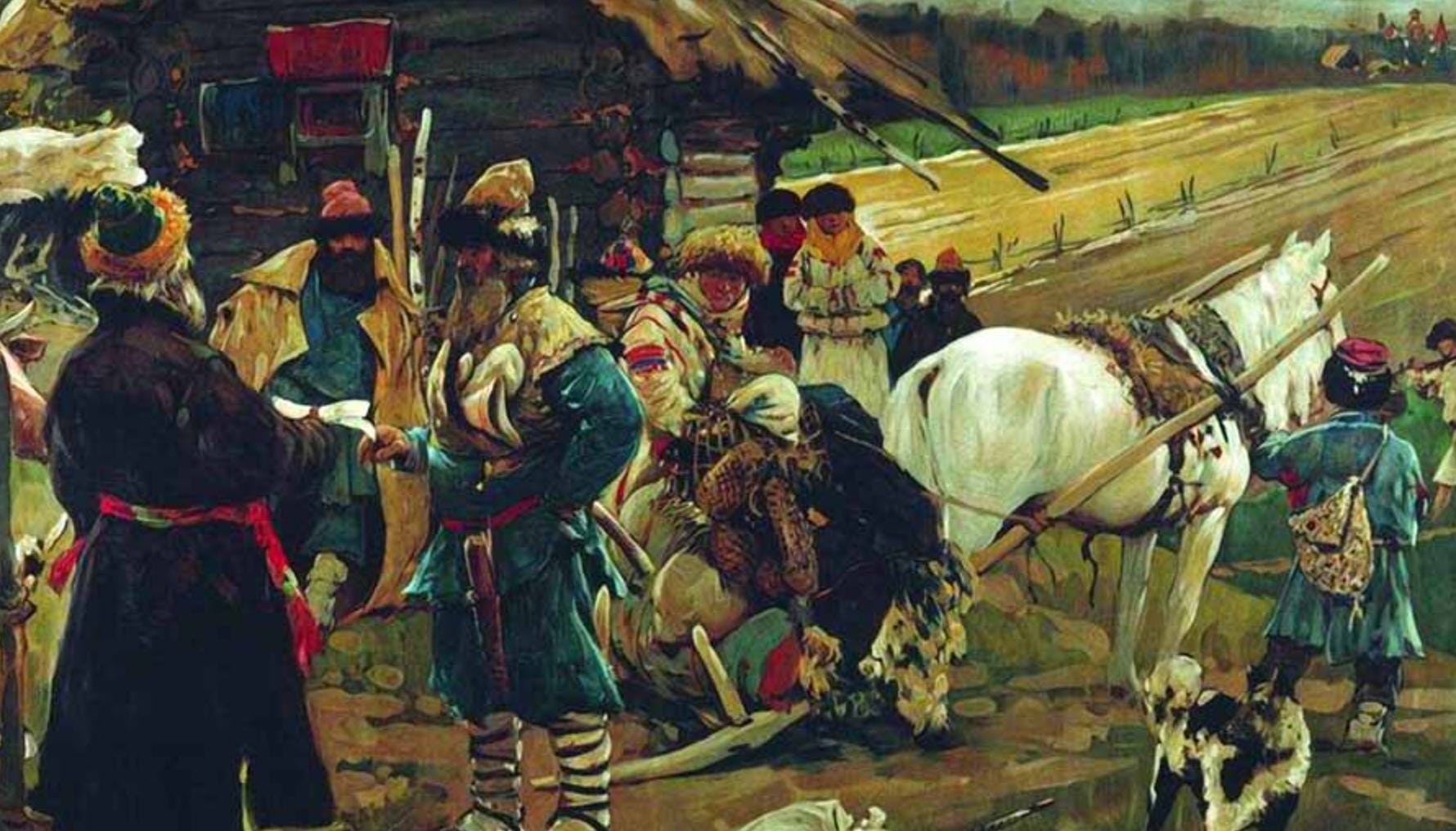
Editor’s Note: Let me apologize for you not receiving this issue as normally scheduled. But I had some technical issues that prevented me from sending this to you as it’s regularly scheduled time. The problem has been fixed. So here’s the issue, just a little late.Life was incredibly harsh … especially if you were a peasant living in Russia in the early part of 1800s. You see back then there were distinct classes of people: Tzars, nobles, merchants, clergy, and peasants (also known as serfs). In fact serfdom was a critical part of the Russian Empire. If you were unfortunate enough to be a serf, you had to work on the estate of a noble or lord, either farming the land or performing labor-intensive tasks such as plowing, sowing, harvesting, or maintaining estate roads and fences. You also had an obligation to pay hefty dues in the form of crops, money, or labor. A serf could own some property but could not leave the estate without permission, marry freely, or pursue independent livelihoods without the landowner’s consent.When you weren’t working on the estate, you were busy growing crops like rye, barley, oats, or vegetables just to feed your family and also to pay the dues you owed the landowner. Those dues amounted to about one third of what you produced. Serfs faced long working hours, poor living conditions, and were vulnerable to famines and harsh winters. And basic necessities such as housing, clothing and the little bits of crops you grew were sparse. And things got much worse during the cholera epidemic of 1830–1831, which originated from India and spread via trade routes through Central Asia. The epidemic killed an estimated 100,000–200,000 Russians, which caused even more financial distress for serf families. Basically being born into a serf family meant starting life in poverty, with restricted rights and little access to education or other vital resources.But in this issue, I’m going to tell you about a man, born in 1831 to a poor peasant family, who had no formal education or access to advanced machinery, yet overcame severe social and economic constraints serfs faced and went on to create what is now one of the best-selling brands of liquor.Not only is the best selling brand but it generates a whopping $7.2 billion in revenue for distillers. A Royal Coat of ArmsIn 1831, Nicholas 1 was the Tzar of Russia and a member of the House of Romanov, which ruled Russia for over three centuries. His reign was one of preserving serfdom, while fostering a secret police state. After his death, on March 2, 1855, his son Alexander II became Emperor of All Russia. Alexander was known as the "Tsar Liberator" because he was all about reform and even abolished serfdom in 1861.Yet of the many things he changed, the one thing he didn’t was continuing to issue warrants. Now Dear Reader we’re not talking arrest warrants, we’re talking the kind of warrant that is an official recognition granted by a monarch to a company or individual for supplying goods or services, signifying quality and prestige.Called a Royal Warrant, it allows the recipient to display the royal coat of arms or a similar emblem on their products, advertising, or premises, signaling royal endorsement.Most monarchies … even modern day ones have a Royal Warrant, including United Kingdom, Denmark, Sweden, Norway, Belgium, Spain and host of other countries. For the House of Romanov, the royal coat of arms included a black double-headed eagle with outstretched wings, each head wearing a gold imperial crown. The eagle holds a gold scepter and orb in its talons. Above it is a larger crown, symbolizing the Tsar. On the eagle’s chest is a red shield with a gold-armored St. George on horseback, spearing a dragon … a symbol of Moscow and Russian Orthodoxy. Any business who received a Royal Warrant considered it an honor. It meant the Royal family considered the goods you produced to be of the highest quality.One of the most recognized items that received the Russian Imperial Royal Warrant were the Fabergé eggs created by the House of Fabergé, and founded by Gustav Fabergé. If you’re note familiar with them, they were a series of elaborately designed and jeweled eggs given as Easter gifts to the Tzarina. Each one is a unique work of art, featuring intricate details like guilloché enamel, precious stones, gold, and hidden surprises that could be anything from miniature portraits and watches to elaborate mechanical objects such as singing birds or miniature trains.(As a side note, my father who was born in Moscow Russia 1932 inherited a silver Fabergé triptych from his mother, born in Moscow in 1914. His story is incredible - one of being separated from her at age five, to finding lost relatives after an 80 year search. Perhaps one day I’ll tell you all about it.)But other products received the Royal Warrant as well and one of those just happened to be a brand of vodka created by the man I mentioned earlier … the one who was born into serfdom in 1831. That man was Pyotr Arsenievich Smirnov.A National PastimeWhen a country consumes around 6–10 liters of alcohol per year, you can call it a national pastime. And in Russia vodka was the alcohol of choice. However back in the 1800s it was called khlebnoe vino ("bread wine") or polugar, referring to its traditional distillation methods. Those methods involved fermenting grain (mostly rye), and then distilling it to concentrate alcohol.Grains were milled into coarse flour or meal and then mixed with hot water to create a mash. The hot water was added to break down starches into fermentable sugars, a process called saccharification.The mash was then cooled and mixed with wild or cultivated yeast, which then turned fermented sugars into alcohol. The resulting braga (fermented mash) had an alcohol content, typically 5–8% ABV, and a cloudy, grainy texture with a sour taste.But even with the sour taste, Russians drank it regularly. In villages like Kayurovo where Pyotr was born, serfs paid for vodka with their meager earnings or bartered for goods, since cash was scarce.However in cities like Moscow vodka was more accessible through state-regulated taverns or private sellers. Merchants and artisans consumed vodka socially, often in taverns, which were hubs for trade and networking.The upper classes on the other hand drank a higher-quality vodka, often produced by estate distilleries with serfs doing most of the work. It was served at banquets, alongside imported wines, and was considered a status symbol especially when presented in ornate bottles.When Alexander II got rid of serfdom, it freed 23 million serfs, allowing them to own businesses and move move freely. By 1961 Pyotr Arsenievich Smirnov was a freed serf. As an adolescent, he moved to Moscow, where he began to educate himself about business, particularly the production and marketing of alcoholic beverages.But he wasn’t starting from scratch. He already had some knowledge because Pyotr inherited a distillery from his uncle Ivan Smirnov, who had been making estate vodka for years. Pyotr also had experience selling it as well because he was known as a “vodka peddler.”Go Big, Go RoyalAfter moving to Moscow Pyotr Smirnov opened a small liquor store using the funds he managed to save from his vodka peddling business.The store was more than likely a simple shopfront, possibly with a small storage area for barrels or bottles. Pyotr faced competition from state-controlled taverns (kabaks) run by tax farmers (otkupshchiki), who often sold cheap vodka. Established distillers and merchants also dominated the market as well.But Pyotr had a secret weapon that made the vodka he produced more popular than his competitors. He focused on purity, using high-quality grains and clean water, which was sourced from Moscow’s rivers or wells. While other vodkas were cloudy, his was clear. Pyotr also developed a charcoal filtration system, which helped distinguish his vodka for its smooth taste rather than the traditional sour taste of most other brands. In fact by 1866 his vodka was so popular that Pyotr established a distillery on Moscow’s Ovchinnikovskaya waterfront, employing about 25 workers. The distillery operated under the name PA Smirnov.Although the distillery was small in size compared to state-backed operations, he managed to produce 50–200 liters of vodka a day.By the 1870s, Pyotr expanded his business offering a variety of vodkas, from affordable options for peasants to premium spirits for the nobility, all the while broadening his market to reach other cities in Russia.He also built a network of retailers and taverns to sell his vodka, leveraging Moscow’s notoriety as a major trade hub. And he began labeling his vodka with the name Smirnov embossed in red at the top of the bottle … something other distillers weren’t doing.By 1886, Smirnov’s distillery was among Moscow’s largest, capturing two-thirds of the city’s vodka market. His focus on quality earned awards at international exhibitions, like Vienna (1873) and Philadelphia (1876).That kind of recognition gets easily noticed and the Imperial Royal Family was well aware of his accomplishments. So in 1886, Smirnov’s company was named “Purveyor to the Imperial Court,” allowing him to use the double-headed eagle emblem. This boosted sales and prestige, as consumers associated his vodka with royal endorsement.By Smirnov’s death in 1898, his company was Russia’s leading vodka producer, with over 1,500 employees, multiple distilleries, and exports to Europe. His fortune made him one of Russia’s richest men, with his distillery generating $20 million annually (in today’s terms)..Pytor left a fortune to his family worth around $8.7 million gold rubles, which, adjusted to 2025 values, equates to approximately $130 million. As for his vodka company, that was taken over by three of his five sons: Pyotr Petrovich Smirnov, Nikolai Petrovich Smirnov, and Vladimir Petrovich Smirnov.Under their leadership, PA Smirnov remained Russia’s top vodka producer. The company retained its Imperial Warrant under Tsar Nicholas II and expanded its product line, including flavored vodkas and premium spirits.Disruption From The Revolutionary Kind Things were going extremely well for the Smirnov brothers until they weren’t … or at least until The Bolshevik Revolution of 1917 led by Vladimir Lenin.The Bolsheviks a faction of the Russian Social Democratic Labour Party, took control of power in Russia. Their actions included: seizing key government buildings, dissolving the Constituent Assembly, and initiating a civil war against anti-Bolshevik forces. Tzar Nicholas II and his family were placed under house arrest in Tsarskoye Selo, then moved to Tobolsk and later Yekaterinburg as the Bolsheviks consolidated power.In July 1918, amid the Russian Civil War and fears of a White Army advance, the Bolsheviks executed Nicholas II, his wife Alexandra, their five children, and their retainers in Yekaterinburg to prevent their rescue or use as a rallying point for monarchists.For Pyotr’s family it meant seizing their assets including the distillery, and thus ending the family’s control in Russia. Pyotr Petrovich and Nikolai remained in Russia but of course lost complete control of the business. While details on their fates are less documented, some accounts suggested they faced a life of hardship.However Vladimir Petrovich Smirnov fled to Europe, first to Constantinople (Istanbul) and then to France, where he re-established the brand as “Smirnoff” (using the French spelling) in the 1920s.Vladimir opened a distillery in Paris but struggled financially due to limited market recognition and not having the help of his brothers. Facing financial difficulties, Vladimir sold the rights to the Smirnoff brand to Rudolf Kunett, a Russian émigré in the United States. Kunett attempted to market Smirnoff in America but saw limited success. That’s because Smirnoff’s Russian heritage, tied to Pyotr Smirnov’s imperial legacy, had little recognition in the U.S., and Prohibition’s repeal in 1933 had flooded the market with competing spirits.So he sold the rights for $14,000 to Heublein Inc. a Connecticut-based spirits and food company in 1938. The company had a breakthrough with Smirnoff vodka in 1941 with the invention of the Moscow Mule. It is a combination Smirnoff vodka, ginger beer, and lime, served in a copper mug.The drink was actually a collaboration between Heublein’s president, John Martin, and a Los Angeles bar owner, Jack Morgan, who needed to sell excess ginger beer.Heublein also positioned Smirnoff as the go-to spirit for cocktails like the Bloody Mary, Screwdriver, and Vodka Martini, capitalizing on the 1950s cocktail boom.By the 1960s, Smirnoff was the best-selling vodka in the U.S. Ten years later, Heublein expanded Smirnoff to Europe, Latin America, and Asia, capitalizing on post-war economic growth and the global rise of cocktail culture. In 1987 Heublein was acquired by Grand Metropolitan, a British conglomerate, in 1987. Smirnoff remained a flagship brand, benefiting from Grand Met’s global distribution network.But in 1997, Grand Metropolitan merged with Guinness to form Diageo, a global beverage giant. Smirnoff became one of the British company Diageo’s core brands, retaining its position as the world’s best-selling vodka.It still holds that title today, leading other competitors such as Grey Goose, Ketel One, and Belvedere. In truth Smirnoff's sales volume is more than double that of its closest competitor, Tito's.In the face of serfdom’s crushing weight, one man dared to dream beyond the fields of Kayurovo. Through ingenuity, relentless determination, and an unwavering commitment to quality, he transformed a humble grain spirit into a symbol of excellence that graced the tables of tsars and taverns alike. Pyotr’s journey from poverty to prestige was not just a personal triumph but a beacon of hope, proving that even the most daunting obstacles can be overcome with vision and grit. Today, every bottle of Smirnoff carries the echo of that bold spirit—a reminder that from the darkest of beginnings, a single spark of ambition can ignite a legacy that shines for centuries, inspiring dreamers everywhere to rise, create, and endure.Amazing Quotes By Amazing People“The greatest glory in living lies not in never falling, but in rising every time we fall.” – Nelson Mandela Get full access to Just One Good Idea at justonegoodidea.substack.com/subscribe
Embed this episode
NOW PLAYING
From Poverty to Prestige: How an Uneducated Peasant Overcame Russian Slavery to Create a Global Liquor Legacy
No transcript for this episode yet
Similar Episodes
No similar episodes found.
Similar Podcasts
No similar podcasts found.