
EPISODE · Sep 2, 2025 · 1H 6M
From serendipity to global impact: a conversation with Glenn Denning
from Devpolicy Talks · host Robin Davies, Glenn Denning
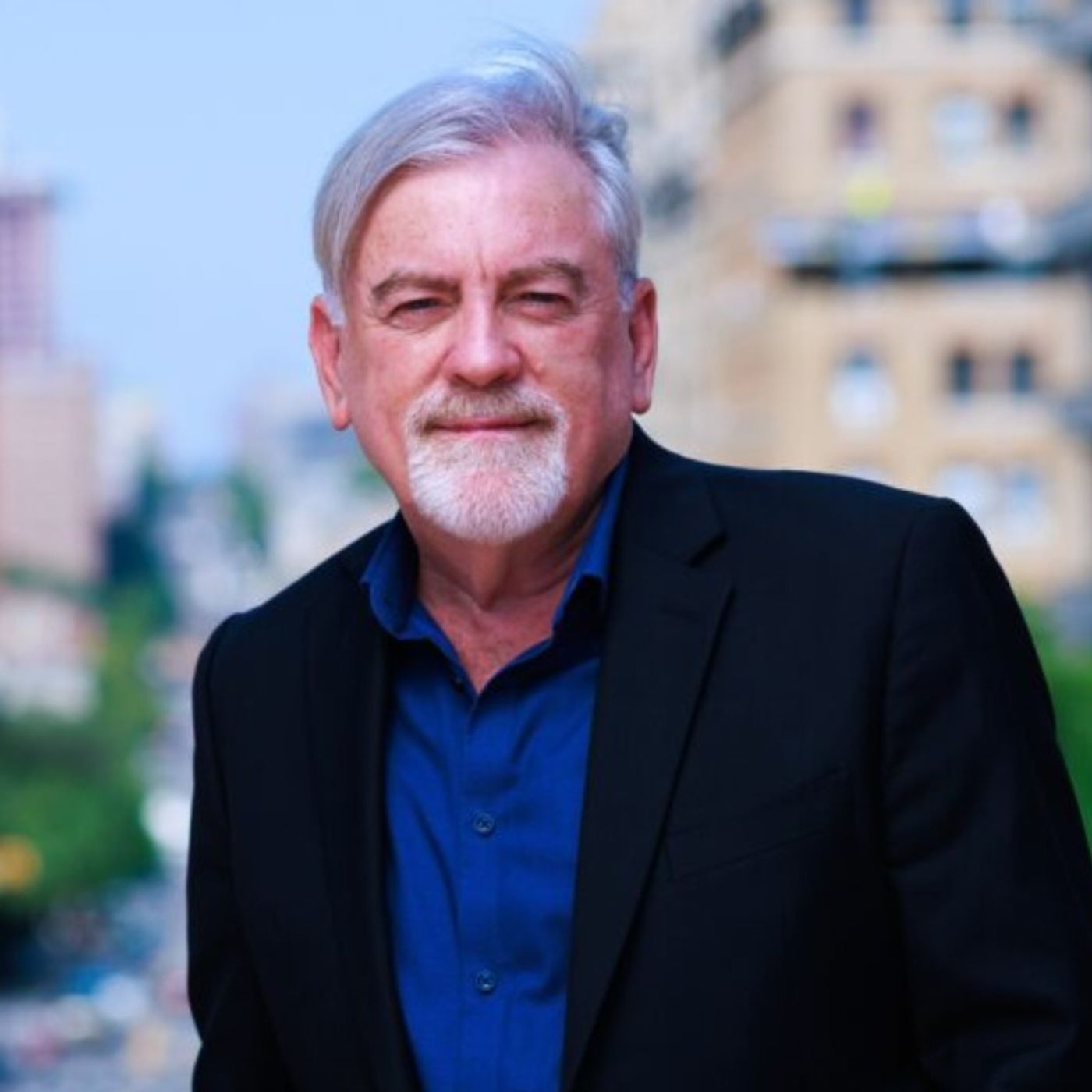
Glenn Denning, Professor of Practice at Columbia University's School of International and Public Affairs and founding Director of the Master of Public Administration in Development Practice program, reflects on his remarkable 40-year career in international agricultural development. From his serendipitous start, Denning has become one of the world’s leading experts in food security and sustainable development. He has advised governments and international organisations on agriculture and food policy in more than 50 countries, served on the UN Millennium Project Hunger Task Force, and played key roles in transforming agricultural systems from post-Khmer Rouge Cambodia to the Millennium Villages across Africa. In 2023, he won the Global Australian of the Year Award, and in 2024 was honoured as Alumnus of the Year by the University of Queensland. His recent book, "Universal Food Security: How to End Hunger While Protecting the Planet", synthesises decades of experience into a comprehensive framework for ending global hunger.The conversation begins with Denning’s unexpected path into agriculture, starting as a suburban Brisbane student with no farming background who chose Agricultural Science at the University of Queensland simply because he enjoyed growing things and wanted to work outdoors. His international career began through pure serendipity when he overheard a fellow student saying he could no longer take up a research opportunity in Indonesia. Within minutes, Denning had volunteered for the position, leading to a year in Bali studying pasture science at Udayana University under the Australian Asian Universities Cooperation Scheme in 1975.This led to his next role with the Philippine Australian Development Assistance Program (PAAPP) in Zamboanga del Sur, Mindanao, during the conflict-affected 1970s. As one of only two agriculturalists among 40 Australian expatriates working primarily on road construction, Denning quickly learned that simply demonstrating new technologies to farmers was insufficient without addressing their fundamental constraint: lack of access to credit. Working with a modest $25,000 Australian government guarantee fund, he helped design a credit program through the Philippine National Bank that achieved approximately 90% repayment rates among hundreds of farmers, proving that small-scale farmers would responsibly utilise credit when given the opportunity.Denning’s 18-year tenure at the International Rice Research Institute (IRRI) began through another case of substitution when he was asked to cover for someone taking sabbatical leave. His most significant achievement during this period was his work in post-Khmer Rouge Cambodia, where IRRI had preserved 766 traditional Cambodian rice varieties in their gene bank, collected just as the intense bombing of Cambodia began in 1972-73. Working with the Cambodian government from 1986, Denning helped establish the Cambodian Agricultural Research and Development Institute and contributed to a remarkable transformation that saw rice production increase from two million tons to nine million tons over three decades, turning Cambodia from food aid-dependent to a rice exporter. For this work, he was honoured by the Government of Cambodia as Commander of the Royal Order of Sahametrei in 2000.After 18 years at IRRI, institutional changes led Denning to accept a position with the World Agroforestry Centre in Nairobi, where he spent six years directing African development programs. This positioned him to join Jeffrey Sachs in establishing what would become the Millennium Villages Project. Rather than accepting an offer to head the Mekong River Commission, Denning agreed to establish a Technical Support Centre in Nairobi that would work across multiple sectors — agriculture, health, infrastructure, energy, and education — to support African nations in achieving the Millennium Development Goals.The Millennium Villages Project represented a blueprint-based approach to integrated rural development, working in 12 countries with a strict budget cap of $100-110 per person per year. The project was designed as “a bold, innovative model for helping rural African communities lift themselves out of extreme poverty” and was intended to prove the merits of a holistic, integrated approach to rural development. Denning witnessed transformational changes in villages where agricultural production doubled, school attendance improved, and maternal mortality decreased. However, he acknowledges that the project’s main weakness was insufficient engagement with middle levels of government — working effectively with presidents and village leaders but not adequately involving district and provincial authorities who were crucial for sustainability and scale.Despite criticism regarding evaluation methodology and sustainability concerns, Denning defends the project’s “sense of urgency” approach, arguing that waiting to establish perfect monitoring and evaluation systems would have delayed critically needed interventions. He points to several innovations that did scale nationally, including anti-malarial bed net distribution programs and locally-sourced school meal programs that were adopted by the World Food Programme.Denning’s 2023 book on food security emerged from his involvement in developing the Sustainable Development Goals around 2014, when he was asked to address how to actually end hunger rather than simply reduce it. His framework identifies five major investment areas: sustainable intensification of agriculture, market connectivity, post-harvest stewardship (addressing the one-third of food that is wasted or lost), dietary shifts toward healthier consumption patterns and social protection systems for the 1.5 to 2 billion people who cannot guarantee their own food security. Underpinning these technical interventions, he emphasises the critical importance of transformational leadership at all levels of society.The interview explores the evolution of integrated rural development from the 1970s-80s era that saw projects like PAAPP to modern approaches emphasising localisation and community ownership. While supporting the principle of greater local leadership, Denning argues that the core concept of integrated rural development remains sound, with implementation challenges stemming from insufficient engagement with sub-national governance levels and over-reliance on top-down project structures.Denning concludes with reflections on Australia’s current role in regional food security, arguing that the country has unique qualifications for leadership in the Indo-Pacific region given its track record of agricultural innovation in challenging environments, long history of agricultural aid programs, and the strong demand for solutions from regional partners. He points to China’s prioritisation of agriculture as national security, Indonesia’s ambitious school meal program reaching 83 million children, and Pacific nations’ new focus on food security resilience following COVID-19 disruptions as evidence of convergent interests that Australia should engage with more actively.Universal Food Security: How to End Hunger While Protecting the Planet by Glenn Denning (Columbia University Press) Devpolicy Talks is the podcast of the Australian National University's Development Policy Centre. Read and subscribe to our daily blogs at devpolicy.org.Learn more about our research and join our public events at devpolicy.anu.edu.au.Follow us on Twitter, Facebook, LinkedIn and Instagram for latest updates on our blogs, research and events.You can send us feedback, and ideas for episodes too, to [email protected].
Embed this episode
What this episode covers
Glenn Denning, Professor of Practice at Columbia University's School of International and Public Affairs and founding Director of the Master of Public Administration in Development Practice program, reflects on his remarkable 40-year career in international agricultural development. From his serendipitous start as a suburban Brisbane student who overheard a conversation about a cancelled research trip to Indonesia, Denning has become one of the world’s leading experts in food security and sustainable development. He has advised governments and international organisations on agriculture and food policy in more than 50 countries, served on the UN Millennium Project Hunger Task Force, and played key roles in transforming agricultural systems from post-Khmer Rouge Cambodia to the Millennium Villages across Africa. In 2023, he won the Global Australian of the Year Award, and in 2024 was honoured as Alumnus of the Year by the University of Queensland. His recent book, "Universal Food Security: How to End Hunger While Protecting the Planet", synthesises decades of experience into a comprehensive framework for ending global hunger.
NOW PLAYING
From serendipity to global impact: a conversation with Glenn Denning
No transcript for this episode yet
Similar Episodes
Jan 27, 2026 ·39m
Dec 30, 2025 ·43m