
EPISODE · Jul 25, 2025 · 6 MIN
From Stolen Secrets to Protective Bubbles: How Two Visionary Engineers Solved Industry's Toughest Puzzles
from Just One Good Idea: What Wasn't Written · host Sandra Franks
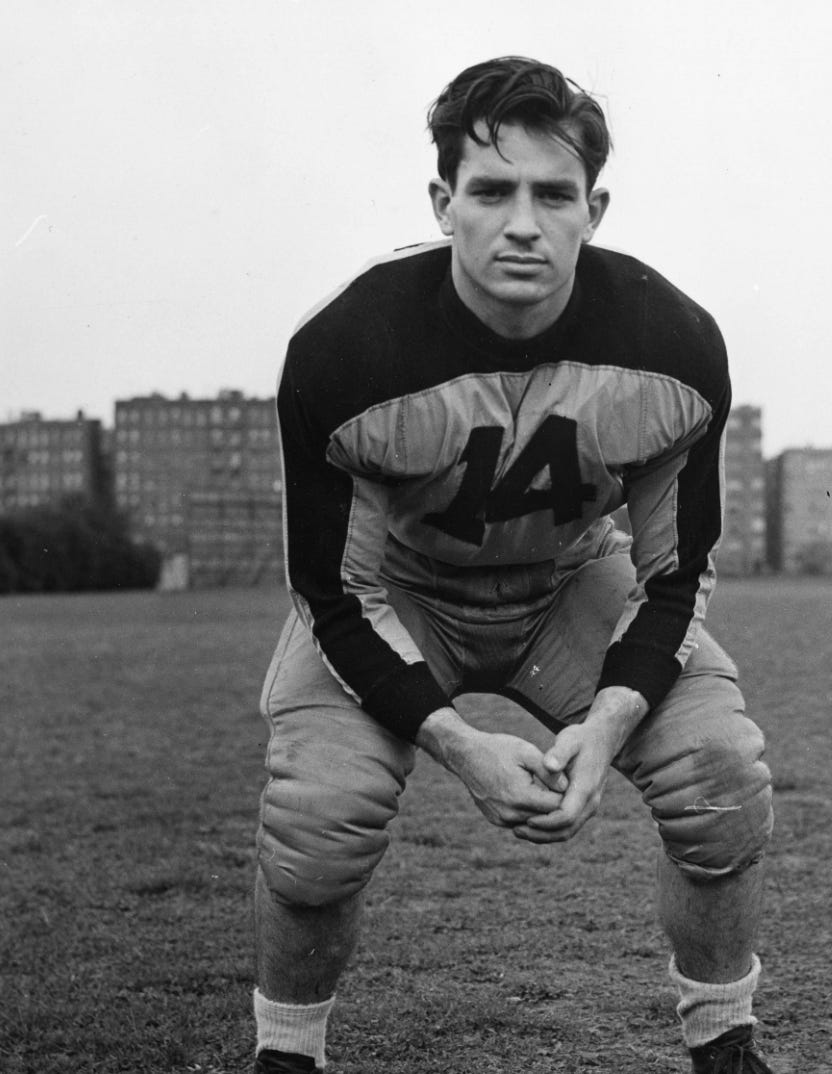
Few people know his name and fewer still know the critical role he played in America’s Industrial Revolution.In fact he helped advanced the U.S.’s textile industry, with multiple innovations while setting up a unique labor model - one famously dubbed the “mills girls,” which I’ll tell you more about in just a minute.For now, let’s talk about the man who had a huge impact on our country’s industrial revolution. That man is Francis Cabot Lowell born in the city of Newburyport, Massachusetts, on April 7, 1775, to a somewhat wealthy family.As a young teen, he attended Phillips Academy, a private, co-educational, boarding-and-day, college-preparatory school. After graduating from the Academy in 1876, he then enrolled at Harvard Law School.Francis wanted to be a shipping merchant and for a short time worked in the family business. But after graduating from Harvard, he decided to travel abroad to France. He spent a year touring France, but in July 1796, he returned to Boston because the French were undergoing their own revolution.When he arrived back home, Francis set up as a merchant on Long Wharf, one of Boston’s up and coming commercial waterfronts. His business specialized in importing silks and tea from China, as well as hand-spun and hand-woven cotton textiles from India.When his father died in 1802, Francis used his inheritance to buy a bunch of merchant ships and also developed the India Wharf and its warehouses on Boston Harbor, which became the center of the trade with Asia.He also set up the Boston Manufacturing Company with the specific goal to manufacture cotton textiles.You see despite its independence, the U.S. was still heavily depended on imports from other countries, particularly textiles. That weakness showed up during the Embargo of 1807, which was an attempt to prohibit imports from countries such as France and Britain who purposely targeted American merchant ships, especially those carrying textiles.Now Francis realized that if the U.S. had any hope of being less dependent on foreign nations for trade, the country would need to start making the things Americans loved here in America.But there’s was just one problem. The country didn’t have the necessary machinery. Francis figured the only way to solve this problem was find out how the equipment was made and then replicate it back here in the U.S.So in June 1810 he traveled to England, and then to Scotland. He took special notice of the spinning and weaving machines, which were operated by water or steam power. In truth, he secretly studied the machines, memorizing all the workings of the power looms without writing anything down.Why no notes? He couldn’t take the chance of being caught “stealing” trade secrets, which is why he memorized every aspect of every power loom.When he returned to the U.S. Francis hired machinist Paul Moody to assist him in designing efficient cotton spinning and weaving machines, based on the British and Scottish models he memorized. But he also added technological improvements that suited the conditions of New England. He then set up The Waltham mill, where raw cotton was processed into finished cloth. And the workers he hired - women, typically between 15 and 35. They came from farming backgrounds, seeking economic independence, educational opportunities, or to support their families.They were known as “the mills girls.” And unlike the harsh conditions of British mills, the system Lowell set up aimed to be more humane, offering relatively high wages ($3 to $4 per week), company-supervised boardinghouses, and educational opportunities. His labor system was designed to attract respectable young women by providing a structured environment with chaperones, mandatory church attendance, and a moral code.The milling systems Lowell created were technological leaps that increased productivity and lowered costs, making textiles a cornerstone of American industry. By 1840, the Lowell mills employed over 8,000 workers, mostly women, producing millions of yards of cloth annually.Francis died on August 10, 1817, at the age of 42 from pneumonia only three years after building his first mill. However, his partners carried forward his ideas, eventually founding the city of Lowell.The City That Shapes YouLowell was a growing industrial hub - one that shaped the city’s identity as a working-class community. One person that was influenced by the city’s identity was Jean-Louis Lebris de Kéroack born in Lowell, Massachusetts, to French-Canadian parents, Léo-Alcide Kéroack and Gabrielle-Ange Lévesque.He’s known mostly today as Jack Kerouac, an American novelist and poet. As a teenager, Jack is said to have been an avid reader, drawn to adventure stories like The Shadow and the works of Thomas Wolfe, whose lyrical style influenced his own. In fact he began writing stories and keeping journals, showing early signs of his literary ambition. Jack was also a bright student and a standout athlete, particularly in football. He went to Lowell High School, where he excelled academically and wrote for the school newspaper. His athletic prowess earned him a football scholarship to Columbia University in New York City.During World War II, he served in the United States Merchant Marine and also enlisted in the Navy in 1942. But here’s where things get odd. He was discharged for psychological reasons, labeled as having a “schizoid personality.”But it’s also while serving in the Navy that he completed his first novel The Sea Is My Brother. The book, which oddly enough was published 40 years after his death, is about his time serving as a merchant marine.Jack allegedly thought that the book was "a crock [of s**t]” as literature, which is why he never bothered to shop it around for a publisher.But that wasn’t his only book because in total, Jack has 36 books published under his name. Some of his most popular and influential books include On the Road, The Dharma Bums, and Big Sur.Many of his books are reflections on his life growing up in Lowell, his travels and the hardships he endured. For instance, at age four, Jack experienced the death of his older brother, Gerard, who died from rheumatic fever.Many people who have studied his work say this loss profoundly affected Jack, fostering a sense of melancholy and spiritual searching. In fact he later wrote about Gerard in Visions of Gerard (1963), portraying his brother as a saintly figure.In 1939, Jack attended Horace Mann School in New York to prepare for college. Founded in 1887, the school is known for its rigorous academic program and commitment to developing well-rounded citizens. It is consistently ranked among the best private schools in New York, particularly for college preparation.In 1940, Jack enrolled at Columbia University but dropped out after a year due to a football injury. He then decided to travel across the U.S., often hitchhiking or taking odd jobs.While traveling he met Allen Ginsberg, William S. Burroughs, and Lucien Carr. I’m telling you these names Dear Reader because they along with Jack started the Beatnik era.The Beat GenerationThe post-World War II era in the U.S. was a time of economic prosperity, Cold War tensions, and social conformity.But people like Allen Ginsberg, William S. Burroughs, Lucien Carr, and Jack Kerouac rejected the materialism and conformity of the “American Dream,” seeking authenticity and meaning in a world they viewed as spiritually hollow. And they created a growing movement in America, known as "Beats” or “Beatniks.” In fact Jack was considered the champion of the movement that was centered in urban areas like New York City (Greenwich Village and Columbia University) and San Francisco.The Beats drew from diverse sources, including jazz (bebop and Charlie Parker), Romanticism (Walt Whitman, William Blake), existentialism, and Eastern philosophies (Zen Buddhism, Taoism). Their work reflected a blend of American individualism and global spiritual traditions.The Beats favored personal freedom over traditional career paths. They celebrated outsiders—hobos, jazz musicians, and drifters—as embodiments of authenticity.Heck they even laid the groundwork for the 1960s hippie movement, influencing figures like Ken Kesey, Bob Dylan, and the Grateful Dead.And they created their own type of “beat” lingo with terms such as:* Beat: A state of being, often associated with weariness, alienation, or a rejection of conventional life.* Cool: Admirable, good, or enjoyable.* Square: A person who is conventional, unhip, or uncool.* Hip: Knowledgeable, sophisticated, or in tune with the latest trends.* Dig: To understand or appreciate something.* Cat: A jazz musician, or a cool person.* Daddy-o: A term of address for a man, often a beatnik.They rejected most everything was associated with “Americana,” instead seeking new things and different experiences. And those new things even included how they dressed, and how they decorated their houses.Make It Cool, Daddy-OFounded in 1870, Stevens Institute of Technology (SIT) is one of the oldest technological universities in the United States and was the first college in America solely dedicated to mechanical engineering.The school consistently appears in top rankings, including those from U.S. News & World Report, The Princeton Review, and Forbes. As for return investment (ROI) it ranks 18th nationally, which is comparable to some Ivy League schools. This basically means that graduates earn high salaries relative to the cost of their education, making it a worthwhile investment.SIT has a large and established alumni network, with graduates working in diverse fields, including government and non-government organizations.One of those alumni was Alfred W. Fielding, born in 1917 in Hackensack, New Jersey. He graduated from SIT in Hoboken, New Jersey, in 1939 with a degree in mechanical engineering and later earned a master’s degree in science from the same institution in 1943.With degrees in hand, Alfred operated a modest machine shop on Wagaraw Road in Hawthorne, New Jersey, along the industrial corridor near the Passaic River.I say modest because he was doing small-scale engineering and manufacturing work. But it was enough work for him to support his family, which included his wife Virginia and young son Howard.Now the industrial corridor along the Passiac River was really a hub of activity, with engineers and scientists working on a variety of projects. And as you would expect, those engineers and scientists go to know one another, sometimes voicing their opinions and adding their expertise on projects.Think of it as a little community network willing to help a fellow scientist or engineer out. That’s probably how Alfred met Marc A. Chavannes, a Swiss chemical engineer, born in 1914.Specific details about his early life, such as his birthplace in Switzerland or family background, are scarce in the sources but we do know that he left Europe around 1939.Some articles I read suggest the reason he left was to distance himself from Nazi-controlled regions, possibly due to his work on lightweight, permeable, waterproof fabrics that could have been of interest to the German war effort.As early as 1948, Marc Chavannes had been experimenting with embossing thermoplastic film and developing textured plastic sheeting.Being quite aware that the Beat generation was looking for bohemian, avant-garde aesthetic and bold, unconventional designs, Marc conceived the idea of a textured, insulating wallpaper, which he pitched to Alfred in 1957.Alfred thought the idea was “right on” for the Beat generation and so the two began collaborating on a textured plastic wallpaper. Working out of Alfred’s garage, they sealed two plastic shower curtains together, trapping air bubbles to form a three-dimensional pattern.Thinking they had created something beatniks would absolutely want, they started marketing as a new kind of wallpaper. Except no one … not even beatniks wanted to put plastic wallpaper filled with bubbles on their walls. Fail Again Until You Get It Just RightThen they tried to market it as a type of insulation material for greenhouses. You know … those transparent structures used to cultivate plants in a controlled environment. But the ventured failed too. While commercial greenhouses were used by florists, vegetable growers, and nurseries, particularly in regions with harsh winters like the Northeast, it was such sub-niche market that the idea of insulation just wasn’t viable.And it certainly wouldn’t work for the consumer market. A glass greenhouse back then would have ranged in price starting at $300–$500, definitely a luxury items for most households.So what else could you do with plastic wrap filled with air bubbles? Maybe … just maybe you could wrap it around delicate items to protect them from getting damaged.That’s exactly what Marc and Alfred decided to do - market their new plastic material as protective packaging. In 1960, March and Alfred founded the Sealed Air Corporation based in Saddle Brook, New Jersey.Alfred would serve as executive vice president and director, while Marc worked primarily as a consultant.To mass produce their new protective packaging, and hire employees, they raised $$85,000 (equivalent to $900,000 in today’s money). They were now ready to roll out their plastic bubble wrap but just needed customers.Their lucky break came 1961 when Frederick W. Bowers, working as a salesman for the company, pitched the material to IBM to protect its delicate 1401 computers during shipping.You see in October 1959, IBM launched the IBM 1401 computer, a groundbreaking “Model T” of mainframe computers that became widely popular, with approximately 10,000 units sold or leased by the mid-1960s. But these machines, leasing for $2,500/month ($18,000 in 2025 dollars), were delicate and required vigorous protection during shipping. Crazy as it seems, back then the computers were shipped protected with materials such as newspaper, sawdust, or horsehair.Yes, horsehair! When Frederick told IBM his company had a much superior protective wrapping, they didn’t flinch to order it. While exact figures are unavailable, the order was likely in the range of thousands of square feet, considering the scale of IBM’s operations and the 1401’s market penetration.IBM’s adoption of Marc and Alfred’s packaging material was significant enough to accelerate bubble wrap’s rise as an industry standard. In fact because of the contract with IBM, it allowed Marc and Alfred to establish the Sealed Air Corporation as a viable business.And Bubble wrap, patented by Alred Fielding and Marc Chavannes, was Sealed Air’s flagship product.Building a Bubble EmpireNow that Sealed Air had gained recognition as a leader in packaging, Marc and Alfred decided it was time to gear up - that is hire more people. So on March 1, 1971, they hired T.J. Dermot Dunphy as the company CEO.One of the first things he did was expand Sealed Air’s line of products. He realized the company could grow bigger and faster if they had more protective packaging materials than just bubble wrap.Some of the new products included: * Instapak Foam: A polyurethane foam-in-place packaging system that expands to cushion products, introduced in the 1960s and widely used for industrial and consumer goods.* Jiffy Mailers and Padded Envelopes: Protective mailing solutions for smaller items, complementing bubble wrap’s applications. * Cryovac Shrink Films: High-performance plastic films for food packaging, particularly for meats and perishables, which became a major revenue driver after Sealed Air acquired Cryovac in 1998 (post-Fielding and Chavannes’ direct involvement).* Other Protective Packaging: Variations like air pillows, foam sheets, and customized packaging solutions for industries like electronics, automotive, and e-commerce. By 1970’s, Sealed Air had become a truly diversified packaging company. And it showed in the numbers too: Sales reached $3 billion annually, with bubble wrap accounting for 10% of revenue ($400 million annually by recent estimates).And the numbers kept going up an up. By 1979, Sealed Air’s annual sales reached more than $70 million. By 1983 sales grew to $124 million, despite a recession in 1982.By 1988, annual sales reached $346 million, with profits of $42 million. And in 20020, they reached the billions mark for the first time with a whopping $4.9 billion in sales.Today Sealed Air Corporation sales revenue sits at $5.39 billion.Alfred Fielding and Marc Chavannes’ ability to transform a twice rejected idea into a ubiquitous product reflects the same innovative spark that drove Lowell’s mills and Jack Kerouac’s prose. Their story is one that inspires entrepreneurs to embrace setbacks as opportunities, showing that a single idea, reimagined with purpose, can change industries and touch lives worldwide. Just as Jack Kerouac’s On the Road captured a generation’s restlessness, bubble wrap’s satisfying “pop” has become a cultural icon, proving that true innovation, whether in literature or industry, leaves a lasting mark on the world.Key Take-Aways and Lessons for Success. And of course, there are lessons we can learn from Marc and Alfred’s story:* Embrace Failure as a Stepping Stone: Alfred Fielding and Marc Chavannes’ initial failures with wallpaper and greenhouse insulation highlight the importance of learning from setbacks. Entrepreneurs should view unsuccessful ventures as opportunities to refine ideas and explore new applications, as the pivot to packaging led to bubble wrap’s success.* Adapt to Market Needs: The inventors’ shift from a niche Beat Generation market to a practical industrial application (packaging for IBM) underscores the need to align products with real-world demands. Understanding customer pain points, like IBM’s need for better shipping protection, can turn a novel idea into a market leader.* Leverage Complementary Skills: The partnership between Fielding (mechanical engineering) and Chavannes (chemical engineering) shows the power of combining diverse expertise. Entrepreneurs should seek collaborators whose strengths complement their own to drive innovation.* Build on a Strong Foundation: Sealed Air’s growth under Dunphy, from $70 million in 1979 to billions by the 1990s, was built on Fielding and Chavannes’ bubble wrap foundation. Entrepreneurs should create scalable systems that allow future leaders to expand and diversify.* Stay Open to Serendipity: Bubble wrap’s success as a packaging material was an unintended outcome of a failed design. Entrepreneurs should remain open to unexpected opportunities, as accidental discoveries can lead to transformative breakthroughs.Amazing Quotes from Amazing People“I have not failed. I’ve just found 10,000 ways that won’t work.” - Thomas Edison Get full access to Just One Good Idea at justonegoodidea.substack.com/subscribe
Embed this episode
NOW PLAYING
From Stolen Secrets to Protective Bubbles: How Two Visionary Engineers Solved Industry's Toughest Puzzles
No transcript for this episode yet
Similar Episodes
No similar episodes found.
Similar Podcasts
No similar podcasts found.