
EPISODE · Mar 7, 2025 · 24 MIN
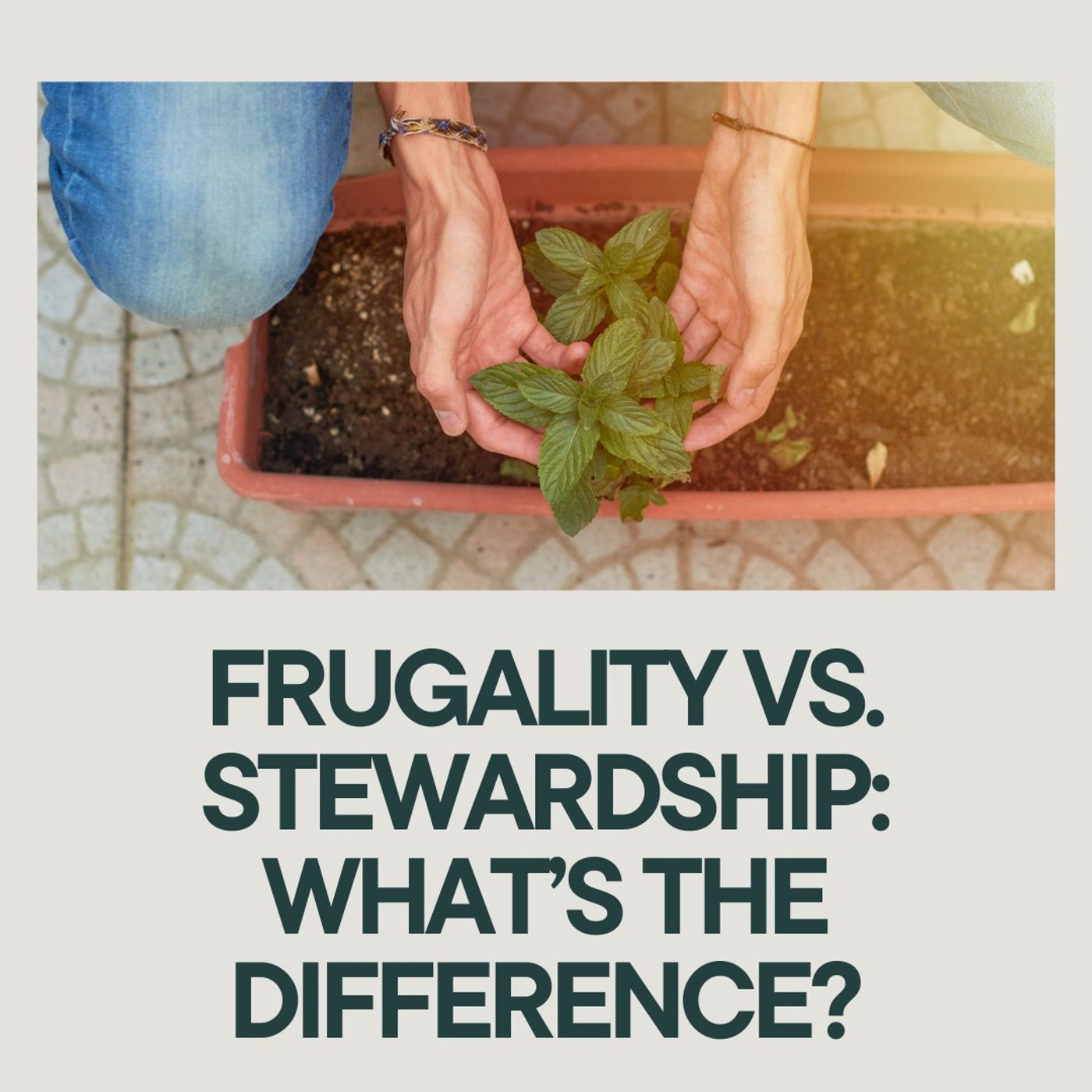
Frugality vs. Stewardship: What’s the Difference?
from Faith & Finance · host FaithFi
Many people consider frugality to be a Christian virtue—but is it, really?We often equate frugality with good financial stewardship, but they’re not exactly the same thing. While frugality can be a wise practice, it doesn’t necessarily lead to true peace or biblical financial wisdom. Let’s explore the key differences and signs that frugality might be going too far.What Is Frugality?Frugality is about being careful with resources—spending less than you earn, saving money, and making economical choices. If you or someone in your household is a conscientious penny-pincher, you likely embrace frugality as a lifestyle.Frugality certainly has virtues, such as self-control and patience. Benjamin Franklin’s well-known phrase, “A penny saved is a penny earned,” supports the idea that being financially cautious is a wise practice.At Faith and Finance, we encourage people to:Save for the futurePay down debtsAvoid overspendingHowever, biblical financial stewardship is much bigger than frugality.The Biblical Perspective on StewardshipFrugality alone does not guarantee peace—because, from a biblical perspective, we aren’t the owners of our money or possessions. God is.Psalm 24:1 reminds us:“The earth is the Lord’s, and everything in it.”Recognizing Christ’s Lordship over our finances shifts the focus from simply cutting costs to honoring God with our resources.Jesus teaches in Matthew 6:19-21:“Do not lay up for yourselves treasures upon earth, where moth and rust destroy, and where thieves break in and steal. But lay up for yourselves treasures in heaven… for where your treasure is, there will your heart be also.”Frugality can help you save money on earth, but eternal rewards come from a different approach—surrendering your finances to God and using them for His purposes.Frugality is a tool, but it must be used in a way that aligns with faithful stewardship. If pursued for its own sake, it can lead to selfishness, greed, and even pride.Signs That Frugality Has Gone Too FarHow do you know when frugality has shifted from wise stewardship to financial foolishness? Here are a few red flags:1. You Spend Hours Each Week Just to Save a Few DollarsDo you spend excessive time clipping coupons, hunting for deals, or driving across town to save a few cents on gas? If frugality has become an obsession, it may be time to reassess how you're using your time.2. You Go Without Essentials Just to Save MoneyAre you skipping necessary expenses—like a bed to sleep on—just because you don’t want to spend money? Being wise with money doesn’t mean depriving yourself of basic needs.3. You Hoard Items Just Because They’re a “Good Deal”Stocking up on necessities is fine, but filling your home with excess items (like a closet overflowing with toothpaste) may indicate a deeper issue—a lack of trust in God’s provision.4. You Compromise Safety for the Sake of Saving MoneyEating expired food, skipping necessary medications, or refusing to fix important home repairs just to save a few dollars can be dangerous. Stewardship includes caring for yourself and your family, not just minimizing costs.5. Frugality Feels Like a Competition or an ObligationDo you stress out over every dollar spent? If spending any money at all causes anxiety, you may be placing too much faith in frugality rather than trusting God to provide.6. You Struggle to Be GenerousIf penny-pinching kills your generosity, that’s a warning sign. Hebrews 13:16 reminds us:“Do not neglect to do good and to share what you have, for such sacrifices are pleasing to God.”True peace comes not from saving every penny but from trusting in God’s provision and using money for His glory.Finding the Right BalanceEvery financial habit stems from an underlying mindset. In many cases, extreme frugality results from a lack of balance.Here’s how to restore a healthy perspective on money:Use your time wisely—Clipping coupons is fine, but not if it consumes hours each week.Prioritize health and well-being—A healthy family is more valuable than a few extra dollars saved.Give generously—God calls us to share, not hoard.Trust God’s provision—Money is a tool, not an idol.As Jesus teaches in Matthew 6:33:“Seek first God’s kingdom and His righteousness, and all these things will be added to you.”When you put God first, true peace isn’t found in penny-pinching but in faithful stewardship and reliance on Him.The Greater Purpose of StewardshipStewardship isn’t just about spending wisely—it’s about using God’s resources for His purposes. Our finances should reflect His kingdom priorities, not just our desire to save money.Ultimately, financial stewardship isn’t about how much we save—it’s about trusting God, managing resources wisely, and giving generously to advance His Kingdom. If your frugality has become a burden, it’s time to release it to God and find true peace in His provision.On Today’s Program, Rob Answers Listener Questions:I'm trying to open a Roth IRA but getting stuck on questions about adding margin, options trading, and enabling advanced trading features. I don't have a 401(k) or pension, but my house is paid off. How can I open a simple Roth IRA without those extra features?I want to buy a brand-new vehicle for my sister and give her either $20,000 or $30,000 to do so. I would like to know if she has to report this gift on her taxes or if I have to report it on my taxes.My mother and uncle recently sold their property in Oklahoma. The paperwork shows that the sale proceeds were distributed to people who are not family members. I'm concerned the property may have been stolen, or the sale mishandled. How can I investigate to see if the funds that should have gone to me and my deceased brother were taken inappropriately?I would like to know when it would be a good investment to upgrade or remodel my home. If the improvements cost around 25% of my retirement investment, would that be a wise use of that money? I would also like to know if investing 25% in the home is a good idea since it could increase its value.Resources Mentioned:Faithful Steward: FaithFi’s New Quarterly MagazineSchwab Intelligent PortfoliosWisdom Over Wealth: 12 Lessons from Ecclesiastes on Money (Pre-Order)Look At The Sparrows: A 21-Day Devotional on Financial Fear and AnxietyRich Toward God: A Study on the Parable of the Rich FoolFind a Certified Kingdom Advisor (CKA) or Certified Christian Financial Counselor (CertCFC)FaithFi App Remember, you can call in to ask your questions every weekday at (800) 525-7000. Faith & Finance is also available on Moody Radio Network and American Family Radio. You can also visit FaithFi.com to connect with our online community and partner with us as we help more people live as faithful stewards of God’s resources. Hosted by Simplecast, an AdsWizz company. See pcm.adswizz.com for information about our collection and use of personal data for advertising.
Embed this episode
What this episode covers
Many people consider frugality to be a Christian virtue—but is it, really? We often equate frugality with good financial stewardship, but they’re not exactly the same thing. While frugality can be a wise practice, it doesn’t necessarily lead to true peace or biblical financial wisdom. Let’s explore the key differences and signs that frugality might be going too far.
Ready to play
Frugality vs. Stewardship: What’s the Difference?
No transcript for this episode yet
Similar Episodes
No similar episodes found.