
EPISODE · Jun 9, 2025 · 24 MIN
Galactic Collision Uncertainty: New Insights on the Milky Way and Andromeda
from SpaceTime with Stuart Gary · host Stuart Gary
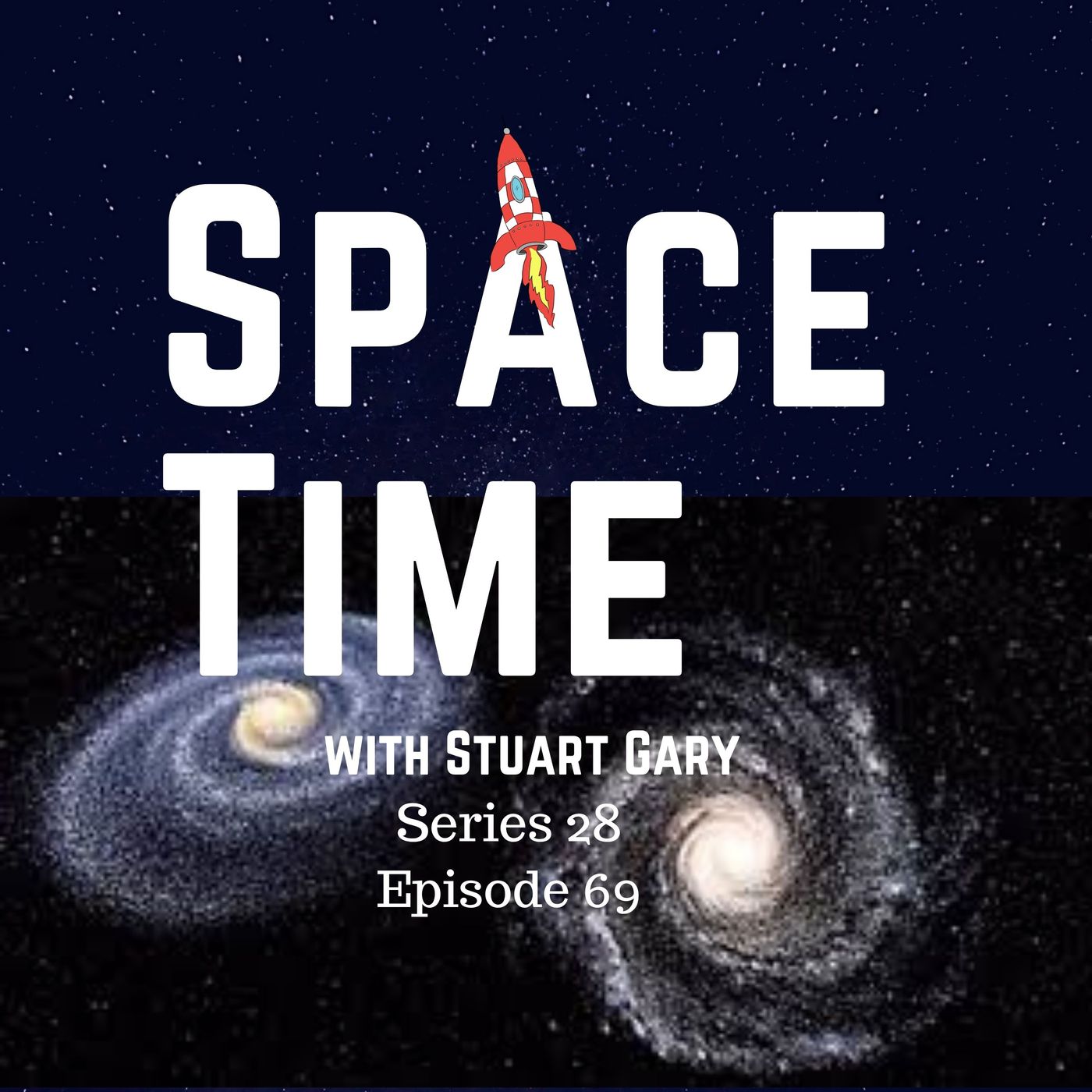
Sponsor Details:This episode is brought to you with the support of NordVPN - SpaceTimes official VPN service. When it comes to your online privacy, use the one we use and help support the show. To claim your special SpaceTime bonus deal, visit nordvpn.com/stuartgary or use the coupon code STUARTGARY at checkout.In this episode of SpaceTime, we delve into groundbreaking revelations that challenge our understanding of cosmic events and planetary formation.New Insights on the Milky Way and Andromeda CollisionRecent studies utilizing data from NASA's Hubble Space Telescope and the European Space Agency's Gaia spacecraft cast doubt on the long-anticipated collision between our Milky Way and the Andromeda Galaxy. New simulations indicate only a 2% probability of a merger occurring within the next 3.7 to 5 billion years, suggesting that both galaxies may continue to evolve largely unperturbed for a much longer period. We explore the implications of these findings and the variables that have altered previous predictions about our galactic future.Understanding Seismic Wave Acceleration in Earth's D LayerA fascinating new study sheds light on the behavior of seismic waves deep within the Earth. Researchers have discovered that the unique crystal structure of minerals in the D layer, located near the core-mantle boundary, influences the acceleration of seismic waves. This breakthrough not only clarifies the mystery behind seismic wave behavior but also provides insights into the dynamics at play in the Earth's depths.Discovery of Embryonic Exoplanets Using Advanced TechniquesAstronomers have unveiled a new technique that has successfully identified five new embryonic exoplanets, offering a glimpse into their early formation stages. Utilizing the ALMA radio telescope, researchers can peer through dense protoplanetary disks to detect these young planets, which are forming rapidly in dynamic environments. This revolutionary method opens new avenues for understanding planetary evolution and the processes that govern the birth of new worlds.www.spacetimewithstuartgary.com✍️ Episode ReferencesNature Astronomyhttps://www.nature.com/natureastronomy/Communications Earth and Environmenthttps://www.nature.com/commsenv/Astrophysical Journal Lettershttps://iopscience.iop.org/journal/0004-637XBecome a supporter of this podcast: https://www.spreaker.com/podcast/spacetime-space-astronomy--2458531/support.00:00 This is Space Time Series 28, Episode 69 for broadcast on 9 June 202501:00 New insights on the Milky Way and Andromeda collision12:15 Understanding seismic wave acceleration in Earth's D layer22:30 Discovery of embryonic exoplanets using advanced techniques30:00 Science report: AI systems refusing to turn off
Embed this episode
NOW PLAYING
Galactic Collision Uncertainty: New Insights on the Milky Way and Andromeda
No transcript for this episode yet
Similar Episodes
No similar episodes found.
Similar Podcasts
No similar podcasts found.